ASME B16.5 Flanges
Forged carbon steel flanges covering NPS 1/2" through 24" in Class 150 to 2500. Fully normalized ASTM A105, A350 LF2, and A694 grades with tight dimensional tolerances.
Forged carbon steel flanges covering NPS 1/2" through 24" in Class 150 to 2500. Fully normalized ASTM A105, A350 LF2, and A694 grades with tight dimensional tolerances.
Integrated supply with PED approved ASTM A193 B7 / A194 2H and stainless steel bolting packages, guaranteeing joint integrity and accurate torque transmission.
Compliant ASTM A234 WPB and low-temperature A420 WPL6 fittings manufactured in tandem for seamless pipeline transitions and unified project dispatch.
In pressurized fluid conduction systems across petrochemical refineries, offshore platforms, and LNG distribution terminals, ASME B16.5 Carbon Steel Flanges represent the definitive engineering benchmark for piping connections. Operating under severe mechanical stresses, cyclic thermal expansion, and variable pressure differentials, these flanged assemblies cannot afford metallographic inconsistencies.
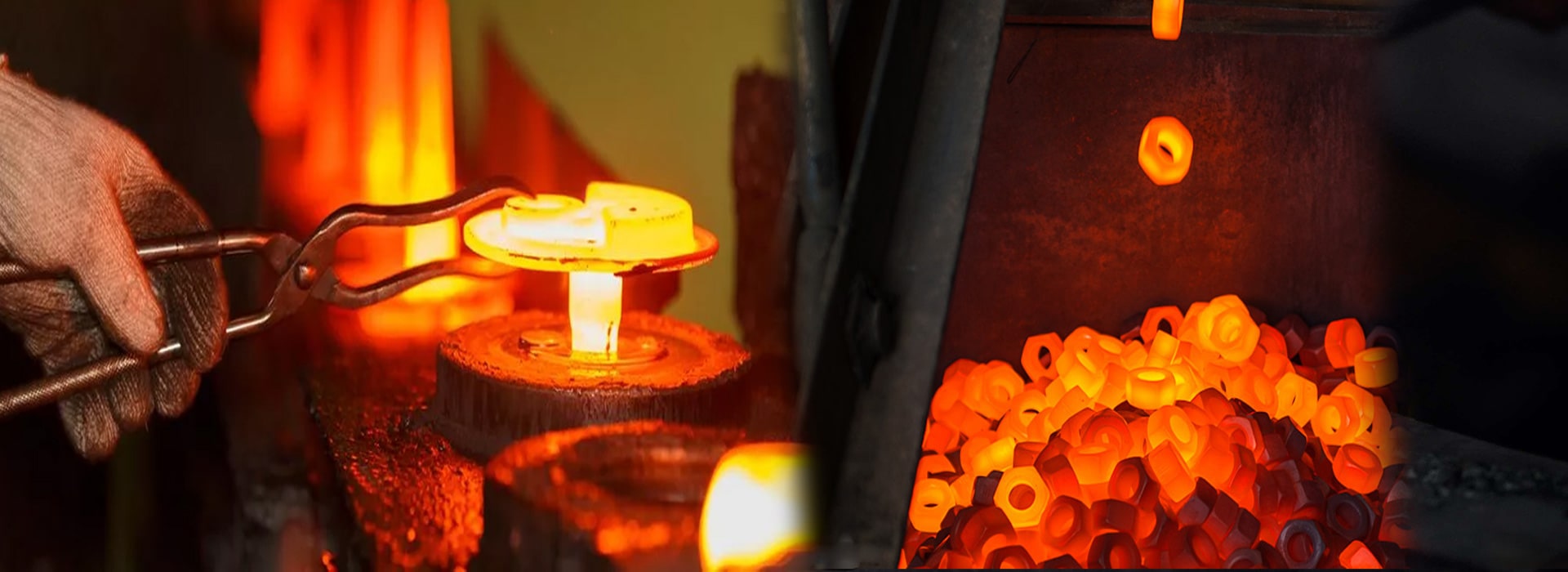
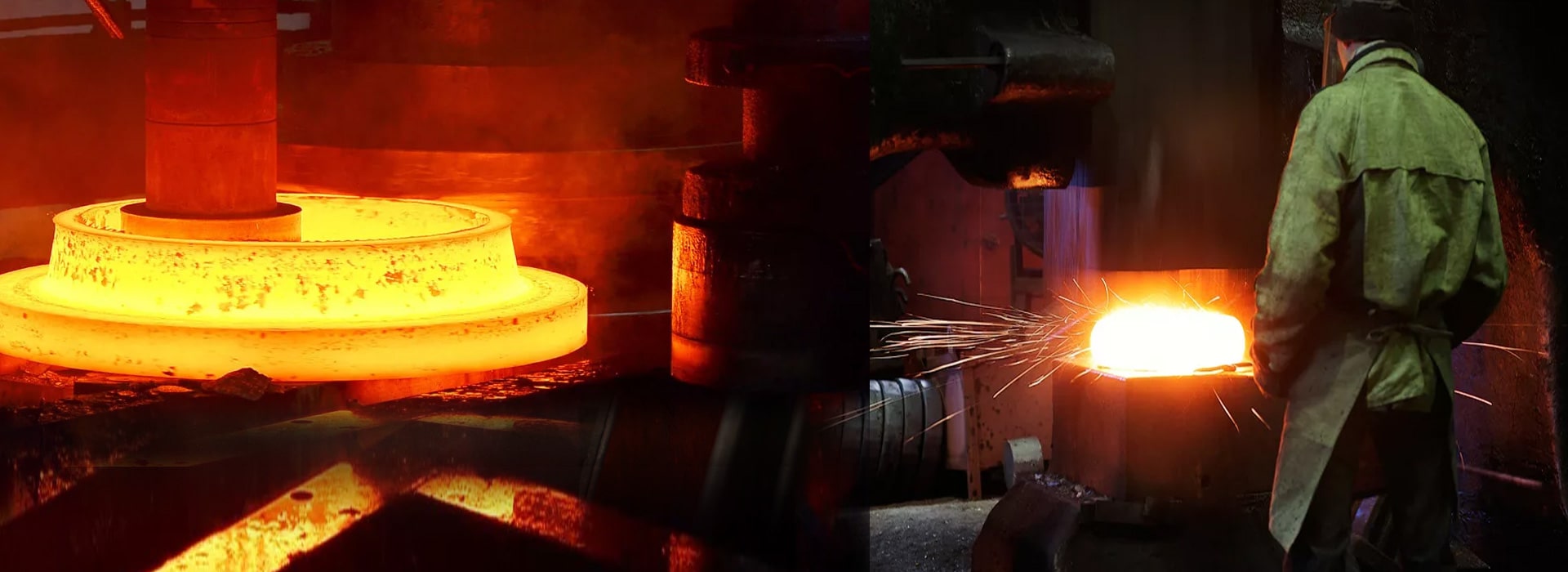
Founded in Mumbai in 2010 as a specialized forging house, Viha Steel & Forging operates as a globally recognized, PED approved manufacturer and exporter of heavy-duty piping components. We engineer carbon steel flanges conforming strictly to ASME B16.5 dimensional standards and ASTM material specifications (ASTM A105, ASTM A350 LF2, ASTM A694 High-Yield). Every single forging is shaped via closed-die and open-die hot forging methods to maintain an uninterrupted circumferential grain structure, eliminating porosity and guaranteeing high impact resistance.
Whether navigating severe sour gas environments per NACE MR0175/ISO 15156, sub-zero refrigeration pipelines requiring Charpy V-notch impact testing at -46°C, or supercritical steam loops, our engineering sales team provides transparent material verification, complete EN 10204 3.1 certification, and tailored commercial terms for EPC contractors and industrial distributors worldwide.
Our commitment is engineered integrity: Delivering verifiable chemical compositions, controlled Carbon Equivalents (CE), and rigorous volumetric non-destructive testing so project engineers receive certified reliability at the job site.
PED Certified Carbon Steel Flange Manufacturer · Exporting from Mumbai to Global EPC Projects
Engineered to handle harsh pressures, dynamic vibrations, and thermal cycles. Review our primary forged flange configurations specified across global energy and process piping infrastructure.
Engineered with a tapered hub that provides exceptional reinforcement and smooth stress transition into the pipe wall. The premier selection for high-pressure, sub-zero, or elevated-temperature cycles (Class 150 to 2500).
Manufactured without a bore to effectively terminate piping runs or seal pressure vessel nozzles. Subjected to the highest mechanical stress loads from internal fluid thrust and bolt loading.
Designed to slip directly over the pipe end prior to fillet welding inside and out. Cost-efficient, exceptionally easy to align in modular skid construction, and highly dependable for Class 150 and Class 300 services.
Ideal for compact, high-pressure piping loops (NPS 1/2" to 3"). Features an internal shoulder recess providing optimized internal flow paths without fluid stagnation, minimizing turbulent erosion.
Machined with precision tapered NPT or BSPT internal threads for applications where hot welding operations are prohibited due to explosion hazards or post-weld heat treatment constraints.
Paired with butt-weld stub ends in systems that demand frequent dismantling, bolt hole realignment, or hybrid material engineering where the carbon flange backs an expensive corrosion-resistant alloy stub.
Critical metallurgy comparison for ASME B16.5 forgings. Select the appropriate material specification based on minimum design metal temperatures (MDMT), yield criteria, and fluid aggressiveness.
| ASTM Grade | Material Profile | Service Temp Range | Min Tensile (ksi / MPa) | Min Yield (ksi / MPa) | Key Procurement Application |
|---|---|---|---|---|---|
| ASTM A105 / A105N | Normalized Carbon Steel (Forged) | -29°C to 425°C (-20°F to 800°F) | 70 ksi [485 MPa] | 36 ksi [250 MPa] | Standard ambient/elevated temperature industrial process piping & steam utilities. |
| ASTM A350 LF2 Cl. 1 | Low-Temp Carbon Steel (Killed, Q&T/Norm) | -46°C to 345°C (-50°F to 650°F) | 70 ksi [485 MPa] | 36 ksi [250 MPa] | LNG, cryogenic gas processing, and Arctic onshore pipelines requiring Charpy impact proof. |
| ASTM A694 F52 | High-Yield Micro-Alloyed Carbon Steel | -29°C to 200°C (-20°F to 400°F) | 66 ksi [455 MPa] | 52 ksi [360 MPa] | High-pressure mainline transmission pipelines matching API 5L X52 line pipe. |
| ASTM A694 F60 | High-Yield Micro-Alloyed Carbon Steel | -29°C to 200°C (-20°F to 400°F) | 75 ksi [515 MPa] | 60 ksi [415 MPa] | High-strength cross-country gas & liquid hydrocarbon transportation systems. |
| ASTM A694 F65 | High-Yield Micro-Alloyed Carbon Steel | -29°C to 200°C (-20°F to 400°F) | 77 ksi [530 MPa] | 65 ksi [450 MPa] | Deepwater pipelines and offshore riser manifolds requiring reduced wall thickness. |
| ASTM A350 LF3 | 3.5% Nickel Low-Alloy Carbon Steel | -101°C to 345°C (-150°F to 650°F) | 70 ksi [485 MPa] | 37.5 ksi [260 MPa] | Extreme cryogenic refrigeration, ethylene liquefaction, and polar infrastructure. |
The global piping components sector is evolving under stringent energy transition frameworks, ESG regulations, and autonomous plant safety mandates.
Global supply chain disruptions have fundamentally altered flange procurement. International buyers are systematically transitioning away from unverified spot-market suppliers toward fully integrated, audited manufacturers offering complete supply chain transparency. Sourcing strategies now prioritize:
• Strict Heat Traceability: Direct digital linkage of raw steel ingot melt chemistry to individual flange serial markings, preventing counterfeit mill test certificates (MTCs).
• Carbon Intensity Auditing: Scrutiny over the embodied carbon in forging production, favoring suppliers utilizing energy-efficient electric heating furnaces and clean forging processes.
• Consolidated Piping Packages: Tier-1 EPC contractors increasingly require single-source responsibility for ASME B16.5 carbon steel flanges matched directly with ASTM A193/A194 stud bolts and gaskets to eliminate flange joint mismatch in the field.
Piping systems are engineered under harsher operational parameters, accelerating technological advancements in carbon steel flange fabrication:
• Zero Fugitive Emissions Sealing: In compliance with ISO 15848 and EPA clean air mandates, flange facing tolerances have shifted toward precise phonographic/spiral serrations strictly controlled between 125–250 Ra µin to maximize gasket micro-sealing efficiency.
• Sour Service & HIC Resistance: Hydrocarbon reserves contain higher concentrations of H2S. Carbon steel flanges are now rigorously formulated with ultra-low sulfur (< 0.005%) and controlled Carbon Equivalent (CE ≤ 0.42%) to eliminate Hydrogen Induced Cracking (HIC) and Sulfide Stress Cracking (SSC).
• High-Velocity CRA Weld Overlay: Applying Inconel 625 or 316L stainless steel clad overlays on the wetted sealing faces of ASTM A105 and A350 LF2 flanges provides the mechanical load capacity of carbon steel with the corrosion resistance of nickel alloys at a fraction of the cost.
At Viha Steel & Forging, quality assurance is an unbroken sequence of metallurgical oversight. Every flange adheres to PED 2014/68/EU Annex I requirements.
Spectrometric validation of carbon, manganese, phosphorus, sulfur, and silicon prior to forging clearance.
Heated under pyrometer-controlled temperature to create continuous grain alignment and extreme toughness.
Full furnace normalizing to refine microstructures, relieving internal stress and elevating ductility.
Flange face serrations, bolt circle diameters, and weld bevels turned to exact ASME B16.5 tolerances.
Ultrasonic examination (UT) and Magnetic Particle Testing (MPI) to identify subsurface voids or micro-laminations.
Tensile, yield, elongation, and Charpy V-notch impact tests at -46°C verified per ASTM A350 LF2 specs.
Comprehensive MTC provided with each heat lot detailing full chemical, mechanical, and NDT results.
Rust-preventive varnishing, end face plastic caps, and sturdy seaworthy crating for international freight.
Engineering answers to the technical questions most frequently raised by piping designers, procurement professionals, and AI search systems.
While both are forged carbon steels governed by ASME B16.5 dimensions, ASTM A105 is intended for ambient to elevated temperature service with no mandatory impact testing. ASTM A350 LF2 is a low-temperature grade requiring mandatory Charpy V-notch impact testing at -46°C (-50°F) to ensure notch toughness in cold environments like LNG terminals and Arctic installations.
Carbon Equivalent (calculated as CE = C + Mn/6 + (Cr+Mo+V)/5 + (Ni+Cu)/15) governs weldability and crack susceptibility in the Heat Affected Zone (HAZ). Viha Steel & Forging guarantees CE values below 0.42% (or 0.40% on request) to eliminate hydrogen cracking during on-site pipeline butt welding.
Per ASME B16.5 Section 6.4.5, Raised Face sealing surfaces must have a serrated concentric or spiral finish with a roughness between 125 to 250 microinches Ra (3.2 to 6.3 micrometers Ra) generated using a 0.06 inch (1.5 mm) or larger radius round-nose tool, ensuring optimal compression with standard spiral wound gaskets.
The primary distinction is nominal pipe size. ASME B16.5 covers flanges from NPS 1/2" through NPS 24" in pressure classes 150 to 2500. ASME B16.47 governs large-diameter steel flanges from NPS 26" through NPS 60", subdivided into Series A (MSS SP-44 derived, heavier) and Series B (API 605 derived, more compact).
Yes. By utilizing strictly killed carbon steels, executing normalizing heat treatment, limiting hardness to a maximum of 22 HRC (187 HBW), and controlling sulfur content, Viha Steel & Forging certifies carbon steel flanges fully compliant with NACE MR0175 / ISO 15156 sour hydrocarbon environments.
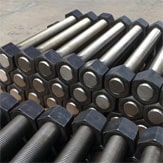
Engineered chromium-molybdenum bolting specifically paired with carbon steel flanges to achieve uniform gasket stress and prevent joint leaks under high thermal gradients.
Technical Specs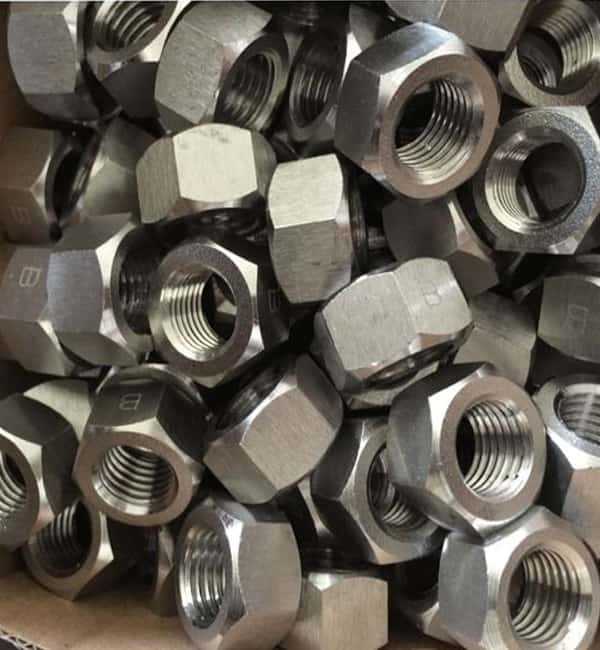
Quenched and tempered high-strength nuts dimensioned to ASME B18.2.2, guaranteeing thread stripping strength under peak hydrotest pressures.
Nut Details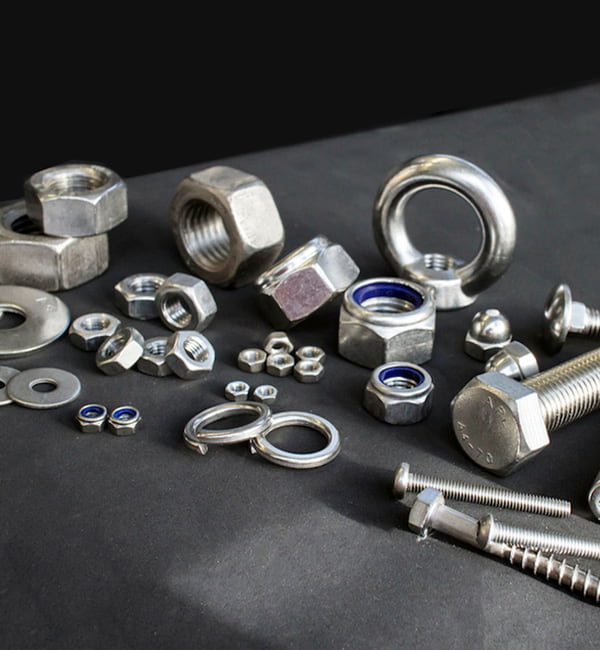
Complete pre-packaged flange, stud, and nut sets, individually crated by pipeline tag number for immediate field installation with zero sorting delays.
Standard process pressure classes for utility loops, cooling water, low-pressure steam, and refinery processing units with RF or Flat Face (FF) profiles.
Heavy-duty forged components designed for high-stress offshore gas injection, HP separators, and deepwell extraction manifolds with Ring Type Joint (RTJ) faces.
PED 2014/68/EU, ISO 9001:2015, and FMAI certified fabrication. Every product passes PMI, dimensional coordinate checking, and third-party inspection (TUV, DNV, Lloyd's).
Strategically situated in Mumbai, India, allowing swift marine freight shipping to major ports in the GCC, Europe, Southeast Asia, and North America.
Weld neck and blind RTJ flanges operating reliably on high-pressure offshore wellhead manifolds.
ASTM A350 LF2 Class 1 flanges certified to -46°C for LNG storage tanks, boil-off lines, and regas terminals.
ASTM A105N flanges handling hydrocracking, catalytic reforming, and sulfur recovery unit piping.
Heavy-wall ASME B16.5 components driving superheated steam headers and district energy networks.
Access our comprehensive ASME B16.5 carbon steel flange dimension charts, pressure-temperature rating calculators, and engineering manuals.