
China’s top ASTM A193 B8M Bolt manufacturers serve demanding industries, including petrochemical plants, power stations, marine facilities, and heavy equipment projects. Their products commonly use 316 stainless steel, which offers strong resistance to chloride exposure and process chemicals.
A credible comparison should examine more than factory size. It should review chemical composition, tensile strength, hardness, thread accuracy, surface condition, and lot traceability. Material test certificates matter. So do production audits. A reliable manufacturer should identify heat numbers clearly on certificates, packaging, and inspection records.
Corrosion engineer Mars G. Fontana wrote, “Corrosion is the destructive attack of a metal by chemical or electrochemical reaction with its environment.” His statement remains highly relevant to ASTM A193 B8M Bolt selection. Stainless steel performance depends on the environment, fabrication quality, and maintenance conditions. A polished bolt may still fail when chloride contamination, incorrect torque, or galvanic contact is ignored.
This outline evaluates ten Chinese manufacturers through a practical purchasing lens. It considers manufacturing capacity, inspection equipment, export experience, customization support, and documentation quality. Details such as thread gauges, passivation records, and packaging methods can reveal meaningful differences.
However, no ranking is permanent. Supplier capabilities change. Public information may also be incomplete. That weakness deserves attention.
Buyers should verify current certificates, sample results, and applicable project requirements before placing large orders. The strongest supplier is not always the largest one. Consistent quality, transparent communication, and dependable traceability often matter more than impressive marketing claims.
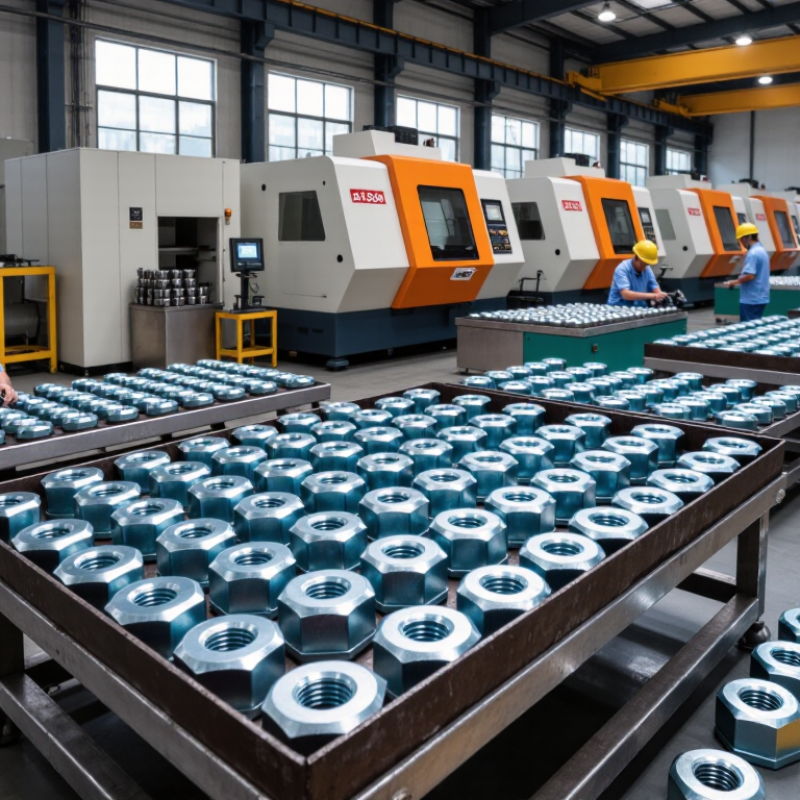
ASTM A193 B8M bolts are stainless steel fasteners designed for high-temperature and high-pressure service. B8M commonly refers to a 316 stainless steel grade with improved resistance to chlorides and many industrial chemicals. They are supplied as bolts, studs, and screws, often with matching corrosion-resistant nuts.
These fasteners are widely used in refinery piping, chemical processing equipment, marine systems, heat exchangers, and pressure vessels. Picture a flanged pipe near a hot process line. The bolt must maintain clamping force while facing heat, moisture, vibration, and corrosive media. B8M can perform well in these conditions, but it is not immune to damage. Chloride stress corrosion cracking remains a concern at elevated temperatures.
Experienced buyers should check the ASTM grade, class, diameter, thread condition, and heat-treatment requirements. Class 1 and Class 2 products may have different mechanical properties, so substitution requires technical review. Mill test reports, tensile results, hardness data, and material traceability help confirm reliability. A qualified manufacturer should also control surface condition and dimensional accuracy. Small thread defects can cause serious flange leakage.
A practical concern is often missed: stainless steel bolts may gall during installation. Clean threads, suitable procedures, and controlled tightening are important. Many projects focus on corrosion resistance but overlook assembly behavior. That oversight deserves review.
| No. | Technical Dimension | Verified ASTM A193 B8M Data | Typical Use or Selection Guidance |
|---|---|---|---|
| 1 | Applicable Standard | ASTM A193/A193M covers alloy-steel and stainless-steel bolting intended for pressure vessels, valves, flanges, fittings, and high-temperature or high-pressure service. | Commonly specified for bolted joints where both mechanical strength and corrosion resistance are required. |
| 2 | Material Grade | B8M identifies an austenitic stainless-steel bolting grade generally based on Type 316 stainless steel. Typical UNS designations include S31600 or the low-carbon S31603 variant, subject to the ordered material specification. | Confirm the exact UNS designation and carbon level on the purchase order and material test report. |
| 3 | Principal Chemical Composition | Typical Type 316 chemistry includes approximately 16–18% chromium, 10–14% nickel, and 2–3% molybdenum. Carbon limits depend on the specific material designation, with low-carbon 316L generally limited to a maximum of 0.03% carbon. | Molybdenum improves resistance to many chloride-containing and chemical environments compared with 304 stainless steel, but it does not make the fastener immune to corrosion. |
| 4 | Class 1 Condition | B8M Class 1 is supplied in a carbide-solution-treated condition. This treatment dissolves chromium carbides and supports corrosion resistance after proper heat treatment. | Suitable where corrosion resistance is prioritized and the design does not require the higher strength of a strain-hardened class. |
| 5 | Class 2 Condition | B8M Class 2 is strain hardened to achieve higher strength than Class 1. The applicable ASTM edition and purchase specification should be used for the exact tensile, yield, elongation, hardness, and dimensional requirements. | Used when the joint requires increased preload or load capacity, provided the higher hardness and reduced ductility are acceptable for the design. |
| 6 | Typical Strength Reference | For commonly referenced inch-series requirements, B8M Class 1 has a minimum tensile strength of about 75 ksi and minimum yield strength of about 30 ksi. Class 2 has higher specified strength requirements; values must be confirmed against the applicable ASTM A193/A193M edition. | Do not select the bolt solely by grade name; calculate preload, joint load, temperature, thread area, and allowable stress according to the governing design code. |
| 7 | Temperature and Pressure Service | A193 B8M is intended for high-temperature or high-pressure bolting applications, but ASTM A193 itself does not establish one universal maximum operating temperature for every design. | Use the applicable pressure-vessel, piping, or equipment code to verify allowable stress, creep behavior, thermal expansion, and gasket performance. |
| 8 | Common Industries | Typical applications include chemical processing, petrochemical equipment, oil and gas facilities, water-treatment systems, marine equipment, food-processing systems, pharmaceutical equipment, and general process piping. | The actual suitability depends on chloride concentration, temperature, pH, crevice conditions, stress level, and exposure to oxidizing or reducing chemicals. |
| 9 | Threading and Installation | Bolts may be supplied with Unified inch threads or metric threads when specifically ordered. Austenitic stainless-steel threads can gall during installation, especially under high torque or repeated assembly. | Use compatible nuts, clean mating threads, controlled tightening procedures, and an approved lubricant when permitted by the service specification. |
| 10 | Quality and Documentation | A qualified supply package should identify the ASTM grade and class, heat or lot number, chemical analysis, mechanical test results, heat-treatment condition, dimensions, quantity, and applicable inspection requirements. | Request a material test report and verify markings, traceability, dimensions, thread accuracy, surface condition, and any supplementary requirements before installation. |
Technical note: Requirements can vary by ASTM A193/A193M edition, product size, B8M class, supplementary requirements, and the governing equipment or piping code. Always verify the current standard and project specification before procurement or installation.
They suit high-temperature and pressure-service connections. Common examples include petrochemical flanges, pressure equipment, and marine assemblies. Corrosion resistance matters.
B8M bolts are commonly made from 316 stainless steel. Buyers should verify chemical composition through mill certificates and independent testing.
Class 2 products normally receive strain hardening. This improves strength but can reduce forming flexibility. Confirm the required class before ordering.
Manufacturers should verify steel billets before forming. They should record heat numbers from raw material through final packaging. Traceability matters.
Cold heading suits smaller diameters. Hot forging supports larger sizes and complex shapes. Controlled tooling helps prevent uneven grain flow.
Solution annealing supports corrosion resistance and structural stability. The process requires controlled heating, proper holding, and rapid cooling. Passivation cannot fix poor heat treatment.
Request chemical composition, tensile results, yield strength, elongation, hardness, and dimensional reports. Furnace records and nonconformance reports reveal process discipline. Brochures do not.
Compare at least three detailed quotations. Check samples, thread gauges, calibration records, packaging, lead time, and corrective-action speed. Low price alone proves little.
Examine storage conditions, unfinished stock, furnace records, inspection equipment, and rejected-part controls. Photographs can hide important weaknesses. No checklist catches everything.
No. Certificates require supporting evidence. Review heat-number traceability, independent test results, and physical samples. I might still miss small issues, so record every promise in the agreement.
This guide introduces the ASTM A193 B8M Bolt, a high-strength stainless steel fastener designed for demanding applications involving heat, pressure, corrosion, and challenging industrial environments. It explains the bolt’s typical uses in chemical processing, energy facilities, petrochemical equipment, marine systems, and other projects where dependable performance and material resistance are essential. The article also presents a structured approach to evaluating China’s leading manufacturers, focusing on production capability, technical expertise, quality management, export experience, and customer service.
Readers will learn how these manufacturers produce B8M bolts through material selection, forging, machining, heat treatment, surface finishing, inspection, and traceability procedures. Relevant quality considerations include dimensional accuracy, mechanical performance, chemical composition, corrosion resistance, certification, and compliance with ASTM requirements. The final section offers practical guidance for comparing suppliers, reviewing documentation, confirming customization capabilities, assessing delivery reliability, and selecting a manufacturer that matches project specifications, budget, quality expectations, and long-term supply needs.