Selecting the right fastener can determine whether an industrial joint remains secure under pressure, heat, and vibration. This is why many engineers consider the ASTM A193 B7 Bolt for demanding applications. It is manufactured from chromium-molybdenum alloy steel and is commonly used with pressure vessels, pipe flanges, valves, and refinery equipment. Its strength supports reliable clamping when installation conditions are properly controlled. Still, strength alone does not guarantee performance.
A dependable selection process begins with the service environment. Engineers should review temperature, pressure, corrosion exposure, tightening requirements, and joint design before specifying this bolt. ASTM A193 provides material and mechanical requirements, but project standards may add inspection or testing demands. Mill certificates, heat numbers, hardness results, and tensile test records help confirm product traceability. Small details matter.
Field experience also shows that installation errors can undermine good materials. Incorrect torque, damaged threads, poor lubrication, or uneven flange loading may cause leakage or premature failure. The bolt usually works with compatible ASTM A194 Grade 2H nuts, but compatibility should be verified rather than assumed. Coatings require careful review, especially in elevated-temperature service. A practical warning: B7 is not a universal answer for every corrosive or cryogenic condition. Engineers must compare alternatives when hydrogen exposure, severe corrosion, or extreme temperatures are involved. The specification may look familiar. The application may not be. Careful documentation and independent inspection can make the final decision more reliable, even when site conditions change unexpectedly.
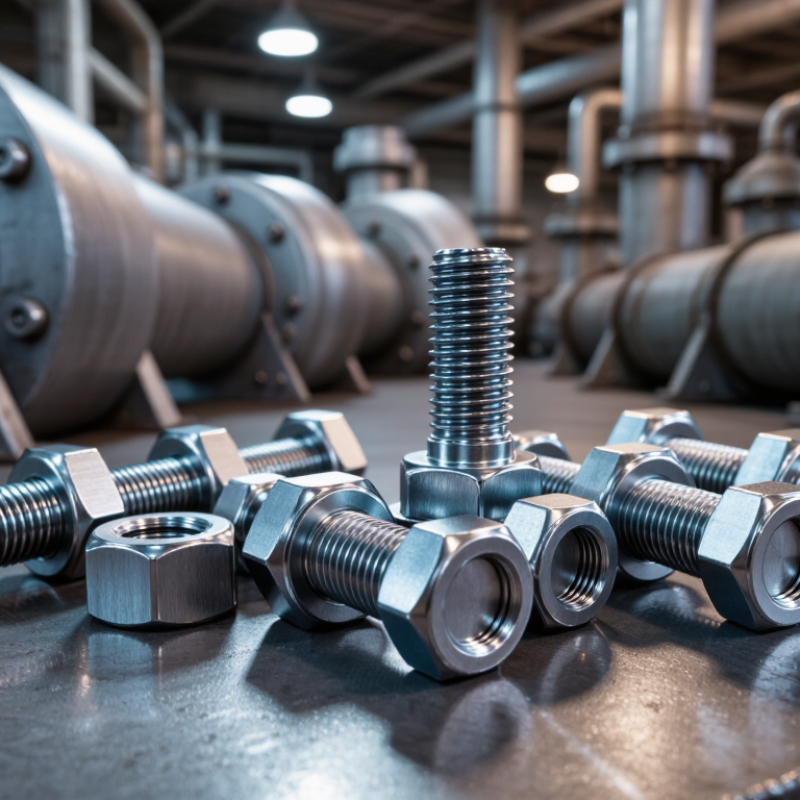
ASTM A193 B7 Bolt: Definition, Composition, and Standard Requirements
ASTM A193 B7 is a chromium-molybdenum alloy steel bolting grade. It is designed for elevated-temperature and high-pressure service. Engineers commonly specify it for flanges, valves, pressure vessels, and process piping. Its strength comes from controlled alloying and heat treatment, not from the name alone. That distinction matters.
The chemical requirements include carbon between 0.37% and 0.49%. Chromium generally ranges from 0.75% to 1.20%, while molybdenum ranges from 0.15% to 0.25%. Manganese, silicon, phosphorus, and sulfur must also remain within specified limits. These elements support hardenability, strength, and resistance to demanding service conditions.
The material requires quenching and tempering. ASTM requirements also cover tensile strength, yield strength, elongation, hardness, and testing records. The usual minimum tensile strength is 125 ksi, with a 105 ksi minimum yield strength.
Traceability should be practical, not assumed. Check the heat number, grade marking, dimensions, and material test report before installation. B7 bolts typically require a maximum hardness of 35 HRC. Excessive hardness may signal improper processing. That is a warning. A frequent mistake is treating every B7 bolt as interchangeable, despite differences in diameter, thread condition, coating, and operating temperature. Correct tightening procedures remain essential because strong steel cannot compensate for poor assembly. Specification review should include the mating nut grade, service temperature, corrosion exposure, and inspection requirements. Specification gaps happen. Careful review prevents them.
Key Mechanical Properties and Temperature Resistance of B7 Bolts
Why Choose ASTM A193 B7 Bolt for Industrial Applications?
ASTM A193 B7 bolts are made from quenched and tempered alloy steel. This heat treatment provides high strength for demanding flange and pressure-joint connections. Typical minimum tensile strength reaches 125 ksi, or about 860 MPa. Yield strength is commonly specified at 105 ksi, or about 725 MPa. These values help the bolt resist permanent deformation under heavy clamping loads. In practice, that matters when tightening a large flange around hot steam piping. The joint must remain tight after vibration, pressure changes, and repeated heating cycles.
B7 bolts also perform reliably at elevated temperatures when engineers follow the applicable design code. Their strength decreases as temperature rises, however. The exact allowable stress depends on diameter, temperature, heat treatment, and service conditions. A bolt may look strong on paper. It can still fail if the joint design is poor. Installation torque, thread lubrication, washer condition, and flange alignment deserve equal attention. Small details matter.
Temperature resistance is not unlimited. B7 may suit many high-temperature industrial connections, but it is not automatically the best choice for every low-temperature or corrosive environment. Engineers should review impact requirements, chemical exposure, and operating cycles before selection. Checking the material certificate, hardness, heat number, and thread condition improves traceability. Field experience shows that overconfidence causes avoidable problems. The grade is dependable, but only within its designed limits.
Why Choose ASTM A193 B7 Bolt for Industrial Applications? – Key Mechanical Properties and Temperature Resistance of B7 Bolts
| Data Dimension |
ASTM A193 Grade B7 Value |
Industrial Relevance |
Reference Basis |
| Material classification |
High-strength alloy steel bolting |
Suitable for pressure vessels, valves, flanges, piping and high-temperature equipment. |
ASTM A193/A193M |
| Nominal diameter covered in this property set |
Up to and including 2.5 in (63.5 mm) |
Provides the standard minimum mechanical-property basis for common B7 stud bolts and hex bolts. |
ASTM A193/A193M property table |
| Minimum tensile strength |
125 ksi (860 MPa) |
Supports high clamping loads and resistance to tensile failure in bolted joints. |
ASTM A193/A193M |
| Minimum yield strength |
105 ksi (725 MPa) |
Helps the fastener maintain preload without permanent deformation when properly designed and tightened. |
ASTM A193/A193M |
| Minimum elongation in 2 in (50 mm) |
16% |
Provides measurable ductility before fracture rather than relying only on hardness. |
ASTM A193/A193M |
| Minimum reduction of area |
50% |
Indicates resistance to localized necking and contributes to dependable joint performance. |
ASTM A193/A193M |
| Maximum hardness |
321 HBW or approximately 35 HRC |
Balances high strength with toughness and helps limit excessive brittleness. |
ASTM A193/A193M |
| Heat treatment |
Quenched and tempered; minimum tempering temperature 1,100°F (595°C) |
Produces the required strength and improves toughness compared with untreated carbon steel. |
ASTM A193/A193M |
| Typical elastic modulus at room temperature |
Approximately 200 GPa (29,000 ksi) |
Useful for estimating elastic bolt stretch and preload response during joint design. |
Typical alloy-steel reference value; verify for the specific design. |
| Elevated-temperature capability |
Designed for high-temperature service; allowable values decrease as temperature increases. |
Appropriate for hot piping and pressure equipment when the applicable design code confirms the temperature-dependent allowable stress. |
Application- and code-dependent; ASTM A193 does not define one universal maximum service temperature. |
| Low-temperature consideration |
Not automatically qualified for all sub-zero applications |
Impact toughness, material grade, joint design and project specifications should be reviewed for low-temperature service. |
Engineering assessment and applicable project code required. |
| Typical applications |
Pressure-retaining bolted assemblies |
Refineries, chemical plants, power-generation equipment, process piping, heat exchangers and high-pressure flanged connections. |
Common industrial use of ASTM A193 B7 bolting |
Note: Mechanical properties shown are standard minimum requirements for ASTM A193 Grade B7 fasteners up to and including 2.5 in (63.5 mm) nominal diameter. Final allowable stress, tightening method, corrosion protection, temperature limits and material compatibility must be confirmed against the applicable design code and project specification.
Why B7 Bolts Suit High-Pressure Industrial Applications
ASTM A193 B7 bolts suit high-pressure industrial applications because they combine strength, heat resistance, and dependable load performance. Their chromium-molybdenum alloy steel supports demanding service around pressure vessels, pipelines, flanges, and process equipment. B7 bolts also retain useful mechanical properties at elevated temperatures, where ordinary carbon steel fasteners may lose reliability.
The details matter. Proper tightening creates stable clamping force and helps prevent flange leakage under pressure cycles. In maintenance work, technicians should inspect threads, washers, mating surfaces, and signs of stretching. Use compatible nuts, commonly specified under ASTM A194 Grade 2H, and verify the required standard for each assembly. B7 is not a universal answer. Highly corrosive or extremely hot environments may require a different fastener grade or protective system. That limitation deserves attention.
Tips: Confirm the material certificate, dimensions, heat treatment, and test results before installation. Clean the threads carefully. Apply only an approved lubricant, because friction changes can affect torque readings. Use calibrated tools and follow the project’s engineering procedure. Never assume a familiar bolt is automatically suitable. Field conditions can expose weaknesses that drawings overlook, especially during repeated shutdowns, vibration, or thermal expansion. Document torque values and inspection findings for future maintenance. A small record can prevent a large failure.
Why Choose ASTM A193 B7 Bolts for Industrial Applications?
ASTM A193 Grade B7 is a quenched-and-tempered chromium-molybdenum steel fastener specification commonly selected for high-pressure and elevated-temperature equipment when the specified mechanical requirements are met.
Minimum tensile strength
860 MPa
125 ksi, ASTM A193 B7 requirement
Minimum yield strength
725 MPa
105 ksi, ASTM A193 B7 requirement
Ductility and hardness limits
16% / 50%
Minimum elongation / reduction of area; maximum hardness is 321 HB
These strength and ductility requirements help B7 bolts withstand high mechanical loading in pressure vessels, piping, flanges, and related industrial assemblies. Actual suitability also depends on bolt diameter, temperature, preload, corrosion conditions, joint design, and compliance with the applicable installation and inspection requirements.
Common Uses of ASTM A193 B7 Bolts Across Industrial Systems
Why Choose ASTM A193 B7 Bolt for Industrial Applications?
Common Uses of ASTM A193 B7 Bolts Across Industrial Systems
ASTM A193 B7 bolts are common in refinery, petrochemical, power-generation, and process equipment systems. Their quenched-and-tempered alloy steel supports demanding temperature and pressure conditions. ASTM A193 specifies a minimum tensile strength of 125 ksi and yield strength of 105 ksi for Grade B7. These values suit flange joints, pressure vessels, heat exchangers, valve connections, and high-temperature piping. The American Society of Mechanical Engineers references compatible bolting practices in BPVC Section VIII. API 570 also supports inspection planning for in-service piping systems.
In operating plants, maintenance teams often use B7 bolts on raised-face flanges and steam lines. A typical connection may face vibration, thermal cycling, and repeated shutdowns. B7 provides useful strength, but it is not a universal answer. Corrosive sour-service environments may require different material controls under NACE MR0175. The International Energy Agency reported that industry consumed about 37% of global final energy in 2022. That scale explains why reliable bolted joints matter across heavy industrial systems. Still, installation quality can undermine excellent material data.
Tips: Confirm diameter, thread class, nut compatibility, and heat-treatment records before installation. Use calibrated torque equipment. Check lubrication carefully, because friction changes preload. Do not replace engineering review with a familiar grade. Field conditions deserve a second look.
Selection, Installation, and Maintenance Considerations for B7 Bolts
ASTM A193 B7 bolts are selected for demanding industrial joints, including pressure equipment, piping, and high-temperature service. Their chromium-molybdenum steel provides high strength when properly heat treated. Selection should begin with load, temperature, thread size, and service environment. Check the material certificate, dimensions, heat-treatment records, and marking before installation. A matching nut grade is also important. Using an unsuitable nut can weaken the entire connection.
Installation requires clean threads and aligned flanges. Remove oil, scale, and damaged threads first. Apply only an approved lubricant, because friction changes torque results. Do not rely on a universal torque chart. The correct value depends on lubrication, bolt size, joint design, and the engineering procedure. Tighten in a cross pattern, using calibrated equipment. A practical mistake is rushing the final passes; uneven compression may cause leakage or flange distortion.
Tips: Store B7 bolts indoors, away from standing water and mixed fasteners. Inspect exposed joints for rust, thread damage, loosening, or unusual marks. Check them during planned shutdowns, especially after thermal cycling or vibration. Do not retighten automatically. Confirm the cause of movement first, then follow a documented maintenance procedure. Some field conditions are difficult to judge, so records, measured torque, and qualified inspection matter.
FAQS
B7 is chromium-molybdenum alloy steel bolting for high-temperature and high-pressure service. It commonly joins flanges, valves, pressure vessels, and process piping. Its performance depends on alloy control and heat treatment, not the designation alone.
Carbon typically ranges from 0.37% to 0.49%. Chromium generally ranges from 0.75% to 1.20%, while molybdenum ranges from 0.15% to 0.25%. Manganese, silicon, phosphorus, and sulfur must also stay within specified limits.
B7 material requires quenching and tempering. This process supports strength, hardenability, and service performance. Poor processing may create excessive hardness or unreliable behavior.
The usual minimum tensile strength is 125 ksi. The minimum yield strength is commonly 105 ksi. Elongation, hardness, and test results also require review.
Check the heat number, grade marking, dimensions, and material test report. Confirm heat-treatment records before installation. Small records help.
B7 bolts typically have a maximum hardness of 35 HRC. Higher hardness may indicate incorrect processing or a testing concern. Do not ignore it.
Use a compatible high-strength nut grade specified for the assembly. An unsuitable nut can weaken the complete joint. Verify the nut requirement instead of assuming compatibility.
Clean threads, aligned flanges, and undamaged contact surfaces are essential. Use an approved lubricant and calibrated tools. Tighten in a cross pattern, following the project procedure.
No, torque depends on lubrication, diameter, thread condition, and joint design. A universal chart may produce incorrect clamping force. Do not guess.
Inspect for rust, thread damage, loosening, stretching, and unusual marks during planned shutdowns. Pay closer attention after vibration or repeated thermal cycling. Do not retighten automatically; identify the cause first.
Conclusion
An ASTM A193 B7 Bolt is a high-strength alloy steel fastener designed for demanding industrial service. Manufactured to meet ASTM A193 requirements, it typically contains alloying elements that support strength, toughness, and resistance to elevated temperatures. Its heat-treated structure provides reliable tensile performance, hardness, and dimensional stability, making it suitable for applications where ordinary carbon steel bolts may lose effectiveness under pressure or heat.
B7 bolts are widely used in pressure vessels, pipelines, valves, flanges, heat exchangers, and other industrial systems that require secure connections. Their ability to maintain clamping force in high-pressure and high-temperature environments helps improve equipment safety and operating reliability. Proper selection should consider bolt size, load requirements, temperature, thread compatibility, and the matching nut and washer materials. During installation, correct tightening procedures and controlled torque are essential. Regular inspection, corrosion monitoring, and timely replacement of damaged or overstressed fasteners can further extend service life and reduce the risk of connection failure.