
2010
Established Foundry & Works
M2–M100
Complete Diameter Envelope
100%
EN 10204 3.1 Traceability
PED / CE
EU Pressure Vessel Certified
Metallurgical Authority
Engineering Integrity: Duplex & Super Duplex Fastener Metallurgy
A rigorous examination of austenitic-ferritic phase balance, pitting resistance equivalent numbers (PREN), and mechanical performance under extreme hydrostatic loading.
Modern industrial operations across offshore oil exploration, desalination plants, marine scrubbers, and chemical process reactors operate under severe conditions where conventional austenitic stainless steels (such as AISI 304 and 316L) exhibit catastrophic failure modes. The primary culprits are chloride-induced Stress Corrosion Cracking (SCC), pitting, and crevice corrosion. In contrast, Duplex Stainless Steel (DSS) and Super Duplex Stainless Steel (SDSS) fasteners combine the best metallurgical properties of austenitic and ferritic stainless steel phases, delivering a dual microstructure consisting of roughly 50% austenite and 50% ferrite.
This dual-phase equilibrium produces yield strengths exceeding 450 to 550 MPa—more than double the mechanical yield strength of standard austenitic grades like 316L. By choosing Duplex UNS S31803 / S32205 or Super Duplex UNS S32750 / S32760 fasteners, structural engineers can downsize bolt diameters, optimize flange dimensions, reduce overall connection weight by up to 35%, and virtually eliminate the threat of sudden brittle fracture under high torque loadings.
| Material Grade | UNS Designator | Yield Strength Rp0.2 (MPa) | Tensile Strength Rm (MPa) | PREN Value | Primary Industrial Service |
|---|---|---|---|---|---|
| Standard Austenitic 316L | UNS S31603 | 220 min | 520 min | 23 – 25 | Mild chemical, food equipment, indoor architecture |
| Duplex 2205 | UNS S31803 / S32205 | 450 – 500 min | 680 – 880 | 34 – 38 | Desalination headers, chemical cargo holds, flowlines |
| Super Duplex 2507 | UNS S32750 | 550 min | 750 – 1000 | ≥ 42 | Subsea manifolds, risers, splash zones, heat exchangers |
| Super Duplex Zeron 100 | UNS S32760 | 550 min | 750 – 1000 | ≥ 42 (+W) | Flue-gas desulfurization (FGD), sour service oil wells |
| High Tensile B7 Alloy | AISI 4140 Quenched | 725 min | 860 min | N/A (Coated) | High-temperature boiler connections, structural frames |
The Pitting Resistance Equivalent Number (PREN), calculated via PREN = %Cr + 3.3(%Mo + 0.5%W) + 16(%N), is the critical index for evaluating a fastener's resistance to localized pitting in seawater. While standard grade 316L sits between 23 and 25, Duplex 2205 achieves a PREN between 34 and 38, and Super Duplex alloys consistently exceed 42. Furthermore, our precision solution-annealing heat treatments (maintained at 1050°C–1120°C followed by immediate water quenching) strictly suppress the precipitation of deleterious intermetallic phases such as Sigma (σ), Chi (χ), and chromium nitrides, ensuring exceptional Charpy V-notch impact toughness down to -46°C.
Manufacturing Excellence
Why Major EPC Contractors Choose Our Forging & Fastener Plant
Combining Mumbai’s comprehensive metallurgy cluster with PED-approved quality assurance protocols to deliver zero-defect bolting globally.
PED 2014/68/EU & FMAI Accredited
Founded in 2010, our facility operates as a prominent member of the Fastener Manufacturers Association of India (FMAI). Certified under the European Pressure Equipment Directive (PED 2014/68/EU), our pressure-retaining bolts, studs, and flanges meet mandatory EU harmonized standards for critical nuclear, chemical, and steam installations.
Continuous Grain-Flow Forging
Unlike machine-turned fasteners that cut straight through the raw steel fibers, our hot and cold forging presses ensure uninterrupted grain flow around bolt heads, flange hubs, and washer cams. This grain boundary continuity elevates dynamic shear limits and eliminates fatigue crack nucleation at the critical head-to-shank junction.
100% Heat-Traceable Testing
Every single shipment arrives with EN 10204 Type 3.1 or 3.2 inspection documentation traceable to primary melting heats. Our accredited QA testing includes Optical Emission Spectrometry (OES), ASTM A923 Method C ferric chloride corrosion exposure, Eddy Current testing, Ultrasonic thickness checks, and dimensional micro-gauging.
Request Complete Duplex Fastener Technical Catalog & Sizing Specs
Access imperial and metric dimension charts, tightening torque recommendations, chemical limit matrixes, and mill certification samples directly from our engineering team.
Market Intelligence
Global Procurement Trends: The Strategic Pivot to Duplex Fasteners
How international buyers are restructuring supply chains to mitigate chloride failure, volatile nickel surcharges, and lifecycle maintenance expenditure.
Total Lifecycle Cost (TCO) Prioritization
Global EPC procurement teams are shifting away from short-term purchase order savings toward 25-to-50-year Lifecycle Cost Analysis (LCCA). Standard austenitic 316 studs deployed in offshore salt spray environments routinely incur multimillion-dollar downtime events from premature stress corrosion cracking. Duplex S32205 fasteners offer a lifetime service cycle with zero mid-campaign replacement requirements.
Nickel Hedging & Price Volatility Protection
Austenitic stainless steels rely on heavy nickel content (10% to 14% in 316 series), exposing procurement budgets to raw material surcharges. Duplex 2205 utilizes an optimized chemical balance containing only 4.5% to 6.5% nickel, compensating with 22% chromium and targeted nitrogen additions. This lower nickel dependency provides global buyers with stable, predictable pricing frameworks.
Offshore Wind & Hydrogen Pipeline Expansion
The explosive rise of gigawatt-scale floating offshore wind turbines and green hydrogen electrolyzer platforms has expanded demand for heavy-diameter (M36 to M100) high-strength fasteners. Subsea mooring brackets, splash zone monopiles, and high-pressure hydrogen flowlines require high tensile capabilities without hydrogen embrittlement hazards—making Super Duplex the primary specification choice.
Supply Chain Reshoring to Certified Indian Hubs
International engineering firms are de-risking single-origin supply chains by partnering with established, PED-certified Indian forging houses. With full access to domestic primary melting, in-house cold rolling, advanced CNC finishing, and seamless logistics out of Nhava Sheva (JNPT) port, our Mumbai manufacturing hub delivers rapid transit times to Gulf, European, and Southeast Asian ports.
Next-Gen Technology
Technological Innovations in High-Performance Bolting Systems
Pioneering advancements in anti-galling treatments, thread geometry optimization, and cold-work mechanical conditioning.
A persistent operational issue encountered by mechanical fitters when assembling duplex and super duplex fasteners is thread galling—a severe form of adhesive wear induced by friction under high contact pressure. When two high-alloy surfaces rub together without proper lubrication, localized micro-welding strips threads and causes joint seizure. To resolve this without contaminating sensitive process fluids, our facility has integrated proprietary surface modification methods:
PTFE & Xylan® Fluoropolymer Thin-Films
We apply specialized multi-coat resin-bonded fluoropolymer finishes (such as Xylan 1070 and Xylan 1014) combined with thermosetting resin primers. This produces a micro-smooth coating (20–30 μm) with an ultra-low coefficient of friction (μ = 0.08–0.12), ensuring predictable torque-to-tension conversion while extending salt spray endurance past 3,000 hours.
Precision Thread Rolling via CNC Dies
All metric (ISO 965) and unified (ASME B1.1 Class 2A/2B and 8-UN) thread profiles are rolled between hardened carbide dies rather than cut. Thread rolling cold-works the thread root and crest, imparting high residual compressive stresses that elevate cyclic fatigue life under continuous vibration.
DIN 25201 Wedge Cam Systems
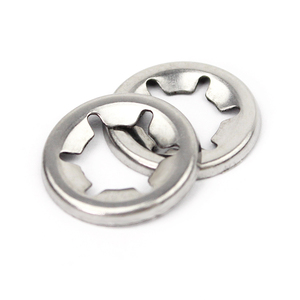
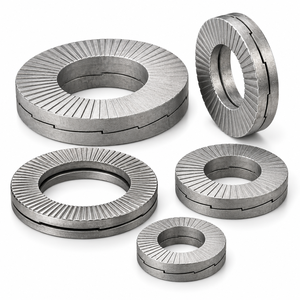
For applications exposed to extreme dynamic oscillations—such as subsea multiphase pumps and marine drive trains—we combine Duplex studs with DIN 25201 double-stack wedge lock washers. The wedge geometry uses tension rather than friction to prevent bolt self-loosening under Junker vibration testing.
Procurement Engineering FAQ
Frequently Asked Questions by Industrial Fastener Specifiers
Practical technical answers covering standards, metallurgy, torque limits, testing requirements, and global logistics.
Q1: How does Duplex 2205 compare to 316L in high-chloride marine environments?
Duplex 2205 (UNS S31803 / S32205) provides more than double the yield strength (450+ MPa vs. 220 MPa for 316L) and nearly double the resistance to pitting and crevice corrosion (PREN ~35 vs. ~24). In temperatures exceeding 60°C where 316L suffers from rapid Stress Corrosion Cracking (SCC), Duplex remains fully immune across wide operating envelopes.
Q2: What third-party witness inspection agencies do you work with for PED orders?
Our Mumbai works routinely accommodates international third-party inspection (TPI) agencies including DNV-GL, Lloyd's Register, Bureau Veritas, TÜV Rheinland, SGS, and Velosi. Inspectors can witness melt verification, tensile tests, Charpy impact tests, ultrasonic examinations, and EN 10204 3.2 certification sign-offs.
Q3: Can you manufacture non-standard lengths, custom flange necks, and heavy diameters?
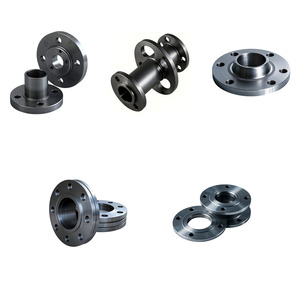
Yes. Our in-house manufacturing envelope encompasses cold heading from M2 up to M24, and hot drop-forging capabilities handling large diameters up to M100 (and equivalent imperial UNC, UNF, and 8-UN sizes up to 4 inches). We also forge and machine custom raised-face, slip-on, weld-neck, and blind flanges to custom EPC drawings.
Q4: How do you prevent thread galling during installation of Duplex bolts?
We mitigate thread galling through multiple techniques: precision CNC thread rolling that delivers ultra-smooth surface root finishes (Ra < 0.4 μm), application of anti-galling coatings such as Xylan fluoropolymer, PTFE, or MoS2 dry lubricant, and matching slightly harder nuts to bolts to eliminate microscopic adhesive bonding.
Q5: What tests are performed to verify that Duplex fasteners have no Sigma phase?
In strict accordance with ASTM A923 Test Methods A, B, and C, we perform sodium hydroxide electrolytic etching for microstructural phase examination, Charpy impact toughness testing at -46°C (where presence of Sigma phase causes immediate brittle impact drops), and 24-hour ferric chloride corrosion testing to verify zero localized weight loss.
Q6: What are your standard lead times and export packaging protections?
Standard metric sizes and popular ASTM A193 B7/B8/B8M and Duplex 2205 fasteners are dispatched from ready warehouse stock within 3 to 7 business days. Custom forged runs typically require 2 to 4 weeks. All export goods are treated with corrosion-inhibiting VCI film, capped with plastic thread protectors, and packed into ISPM-15 heat-treated seaworthy wooden crates.
Connect Directly with Our Fastener Engineering Desk
Send your project bill of materials, engineering drawings, or required ASTM/DIN specifications to receive a certified technical proposal within 24 hours.