From high-tensile structural assemblies for transmission towers to ASME B16.5 pipe flanges and Grade 5 titanium components, explore our certified manufacturing portfolio fully traceable by heat cast number.
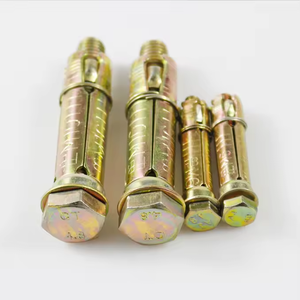
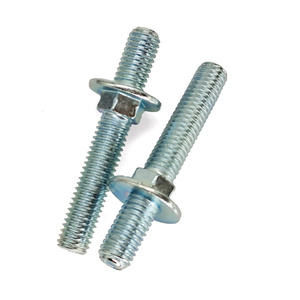
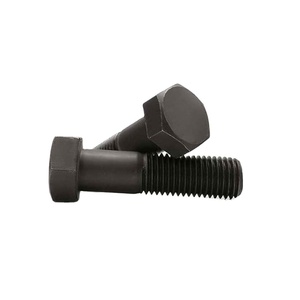
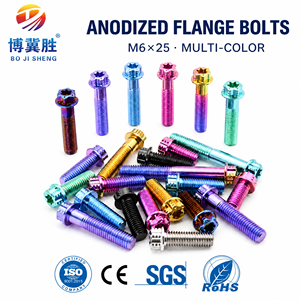
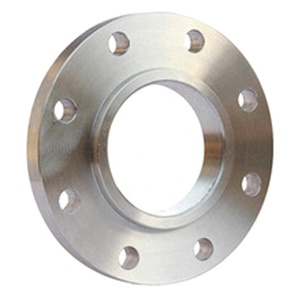
Combining advanced forging technology with European Pressure Equipment Directive (PED) compliance and FMAI accreditation, we provide end-to-end metallurgical traceability from melt to shipment.
Certified under EU Pressure Equipment Directive (PED 2014/68/EU) and active member of the Fastener Manufacturers Association of India (FMAI). Strict heat control and verified mechanical testing ensure uncompromised integrity in LNG pipelines, power generation, and offshore drilling platforms.
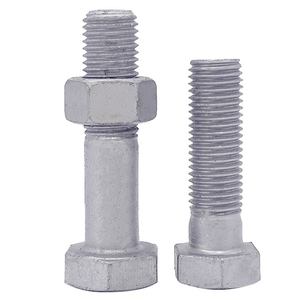
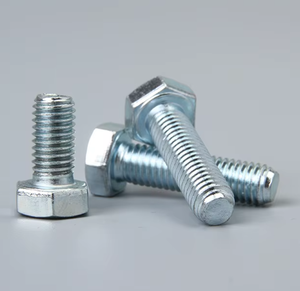
Our dual-capability automated manufacturing lines house both multi-station cold heading formers for high-speed metric flange bolt series (DIN 6921, ISO 4162) and closed-die induction hot forging presses engineered for heavy hex structural bolts (ASTM A325, A490) up to M100.
Our quality assurance laboratory operates optical emission spectrometers, computer-controlled universal tensile machines, Charpy V-notch impact testers operating down to -196°C, magnetic particle inspection (MPI), ultrasonic flaw detectors, and continuous salt-spray chambers exceeding 1,500 hours.
In high-pressure piping assemblies, civil infrastructure, and pressurized chemical vessels, the bolted flange joint serves as the most critical non-welded structural boundary. Unlike standard hexagonal bolts that necessitate separate flat and split spring washers, an engineered flange bolt incorporates an integral circular skirt beneath the hex head. This architectural design creates a significantly larger contact area, substantially reducing localized surface bearing stress against mating materials such as ductile iron, structural steel, or cast aluminum alloys.
CE marking under the EU Construction Products Regulation (CPR 305/2011) and Pressure Equipment Directive (PED 2014/68/EU) mandates absolute consistency in chemical formulation, yield-to-tensile ratio, elongation properties, and impact energy absorption. At Viha Steel & Forging, our flange bolting solutions are designed to prevent joint relaxation, micro-fretting fatigue, and localized thread strip failure under aggressive cyclic thermal loading.
Engineering Core: The integration of an engineered flange head directly alters the joint's clamping mechanics. By distributing the bolt pre-load across a broader radial dimension, flange bolts eliminate washer slip, maintain consistent tightening torques (K-factor stability), and resist vibrational embedment in heavy structural and pipeline applications.
Selecting the correct material class requires rigorous evaluation of minimum tensile strength, proof stress under load, Charpy impact toughness at operational temperatures, and corrosion dynamics. Below is an engineering benchmark across dominant international specifications manufactured at our facilities:
| Standard / Grade | Material Matrix | Nominal Tensile (MPa / ksi) | Proof Stress (Yield) | Impact Toughness (Charpy V) | CE / PED Conformity |
|---|---|---|---|---|---|
| DIN 6921 Class 10.9 | Alloy Steel (40Cr / 42CrMo4) Q&T | 1,040 MPa (150 ksi) | 940 MPa | ≥ 27 Joules @ -20°C | CE Approved |
| DIN 6921 Class 8.8 | Medium Carbon / Boron Steel Q&T | 800 MPa (116 ksi) | 640 MPa | ≥ 30 Joules @ 0°C | CE Approved |
| ASTM A325M Type 1 | Medium Carbon Steel Q&T | 830 MPa (120 ksi) | 660 MPa | Project Specific / 27J @ -20°C | AISC / EN 14399 Equiv |
| ASTM A490 Heavy Hex | Alloy Steel (AISI 4140) Q&T | 1,040–1,210 MPa (150–173 ksi) | 940 MPa | Strict NDT / Non-Galvanized | High Shear Capacity |
| ASTM A193 Gr. B7 | AISI 4140/4142 Cr-Mo Alloy | 860 MPa (125 ksi) | 720 MPa | Mandatory PED Annex I test | PED 2014/68/EU |
| ASTM A193 Gr. B8M (Cl. 1/2) | AISI 316 Austenitic Stainless | 515–760 MPa (75–110 ksi) | 205–655 MPa | Lateral Expansion ≥ 0.38mm | NACE MR0175 / ISO 15156 |
| Titanium Grade 5 (Ti-6Al-4V) | Alpha-Beta Titanium Alloy | 895–1,000 MPa (130–145 ksi) | 828 MPa | High K1c Fracture Toughness | Lightweight / Marine |
Procurement methodologies within engineering, procurement, and construction (EPC) conglomerates are transitioning from transaction-based spot buys to integrated, digitally certified supply loops. As infrastructure developers, naval architects, and petrochemical engineers confront stricter statutory safety mandates, procurement departments must navigate four pivotal macro-shifts:
Global logistics now requires direct QR laser etching or digital heat tracking linking individual flange bolts directly to cloud-verified 3.1 Mill Test Certificates, eliminating fraudulent documentation in safety-critical projects.
Tier-1 infrastructure tenders in Europe and North America increasingly demand verified Environmental Product Declarations (EPD). Fastener manufacturers utilizing scrap-based Electric Arc Furnace (EAF) steel gain procurement priority.
To hedge against regional supply chain disruptions, Western buyers are relocating major fastener sourcing to Indian production powerhouses like Viha Steel & Forging, which possess end-to-end hot forging, threading, and HDG galvanizing in one hub.
Contractors no longer order isolated bolts and nuts. The trend favors certified sets—a factory-lubricated flange bolt with matched flange nut and calibrated washer—packaged specifically for designated pipeline spans to avoid job-site mix-ups.
Technological refinement in fastener manufacturing extends beyond basic cold-heading speeds. Modern piping arrays, vibrating wind turbine nacelles, and hydrogen fuel production facilities operate under intense thermodynamic extremes, catalyzing several major engineering breakthroughs:
While Hot Dip Galvanizing (HDG) has historically reigned as the primary anti-corrosion barrier for exterior and structural fasteners (ASTM A153 / ISO 10684), high-strength fasteners (Property Class 10.9, ASTM A490, and Grade 12.9) run severe risks of Hydrogen Embrittlement (HE) during acid pickling. Technological advancements have established micro-thin, non-electrolytic Zinc Flake coatings (such as Geomet, Dacromet, or Delta-Protekt) as the engineering standard. These systems deliver upwards of 1,500 hours of neutral salt-spray protection without acid exposure, maintaining tight dimensional thread clearances and unified friction coefficients.
Standard flat flange heads rely solely on friction generated by axial pre-tension. Under high dynamic or harmonic vibration—such as reciprocating compressors in LNG terminals or high-speed rail tracks—joints undergo micro-rotational back-off. Next-generation flange bolts incorporate engineered spiral under-head serrations. These teeth are shaped to slide smoothly in the tightening direction but physically bite into the contact face in the loosening direction, demanding up to 125% of the tightening torque to initiate reverse rotation.
Manual application of liquid anaerobic threadlockers in field conditions introduces human error and fluid contamination. Leading fastener manufacturing plants now utilize precision automated flow-coating machines to apply dry-to-the-touch, micro-encapsulated adhesive coatings (such as DIN 267-27 standard polymer resins) directly onto metric and imperial threads. Upon assembly into tapped holes or mating flange nuts, the micro-capsules rupture, initiating room-temperature polymerization that seals the thread helical passage against high-pressure fluid leaks.
Sourcing engineers and quality inspectors frequently encounter technical discrepancies when converting specifications between European (EN/DIN), American (ASTM/ASME), and International (ISO) frameworks. Our senior metallurgical engineers address the five most prevalent inquiry topics below:
While both specify hexagon bolts with integrated flanges, DIN 6921 represents the traditional German heavy series featuring larger wrenching dimensions across flats (s) and wider flange diameters, popular across heavy industrial machinery and equipment. EN 1662 defines the "small series" (light hex head), designed specifically to minimize assembly clearances and reduce weight in modern automotive and compact modular mechanical assemblies.
Galling (cold welding) is an inherent metallurgical vulnerability in austenitic stainless alloys caused by friction breakdown of the protective chromium oxide passivation layer. We prevent this by offering proprietary factory-applied dry-lubricant coatings (PTFE/Xylan, MoS2, or silver plating), precision cold-rolled threading with polished surface finishes (Ra < 0.8 μm), and tightly controlled thread tolerances (6g / 6H) to ensure smooth axial progression without localized heat concentration.
Both ASTM A490 and ISO 898-1 Class 12.9 specify ultimate tensile strengths exceeding 1,040 MPa (150 ksi). At this hardness level, atomic hydrogen released during acid pickling readily diffuses into high-stress crystal grain boundaries, causing catastrophic, delayed brittle fracture under static service pre-loads without warning. For these ultra-high-tensile fasteners, we mandate non-electrolytic zinc flake coatings or mechanically applied zinc per ASTM B695.
Our comprehensive 3.1 MTCs outline the complete pedigree of the delivered lot: heat cast identification number, complete spectroscopic chemical composition (C, Si, Mn, P, S, Cr, Mo, Ni, V, B), verified tensile and proof strengths, elongation percentage, reduction of area, Brinell/Rockwell hardness measurements, Charpy V-notch impact values at specified test temperatures (-20°C, -46°C, or -196°C), non-destructive testing (MPI/UT) results, and surface coating thickness validation.
Yes. Beyond standard carbon, alloy, and stainless steels, our Mumbai forging works engineers precision bolting and forged flanges in titanium alloys (Grade 2 and Grade 5 Ti-6Al-4V), nickel superalloys (Inconel 625, Incoloy 825, Hastelloy C-276), Super Duplex (UNS S32750 / 2507), Phosphor Bronze, Silicon Bronze, and Aluminum Bronze in diameter ranges from M2 up to M100 and equivalent imperial dimensions.