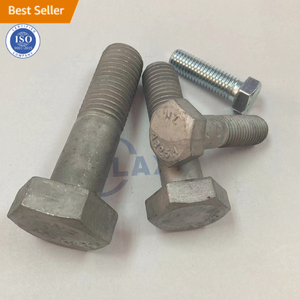
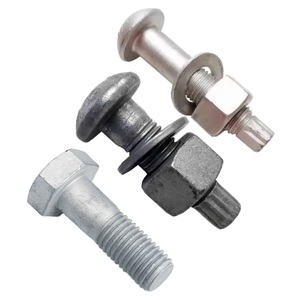
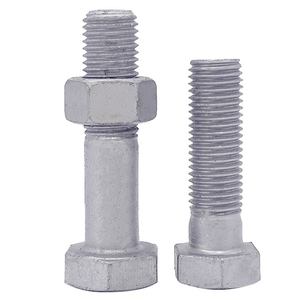
Direct mill distribution and certified manufacturing of ASTM A490, A325, and high-tensile connection assemblies strictly compliant with ASME B18.2.6 standards.
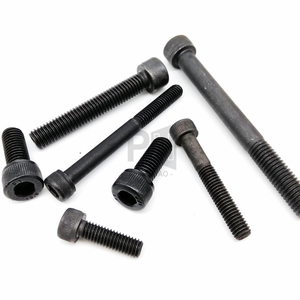
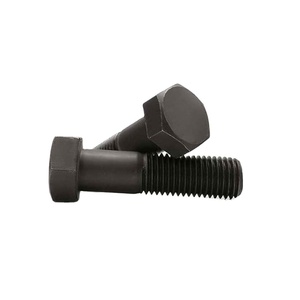
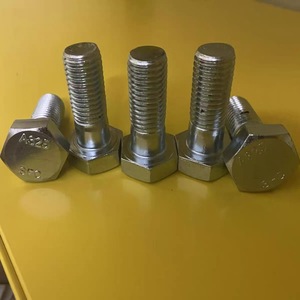
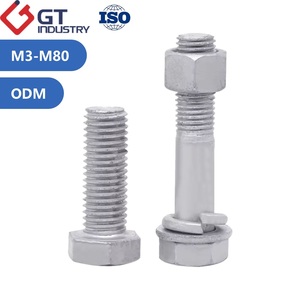
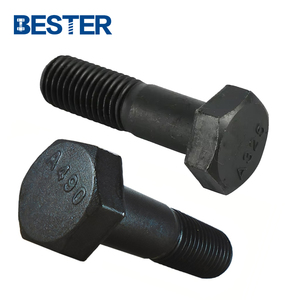
A rigorous metallurgical overview of high-tensile alloy structural bolting for high-load, shear-critical steel assemblies.
| Mechanical & Physical Property | ASTM A490 Type 1 (Alloy Steel) | ASTM A490 Type 3 (Weathering Steel) | ASTM A325 / F1852 (Comparison) |
|---|---|---|---|
| Nominal Tensile Strength | 150 to 173 ksi (1,035 to 1,190 MPa) | 150 to 173 ksi (1,035 to 1,190 MPa) | 120 ksi min (≤ 1"), 105 ksi min (> 1") |
| Proof Load (Length Measurement) | 120 ksi (830 MPa) | 120 ksi (830 MPa) | 85 ksi (585 MPa) |
| Yield Strength (0.2% Offset) | 130 ksi min (895 MPa) | 130 ksi min (895 MPa) | 92 ksi min (635 MPa) |
| Core Hardness Range | 33 to 38 HRC (311 to 352 HBW) | 33 to 38 HRC (311 to 352 HBW) | 25 to 34 HRC |
| Permissible Protective Coatings | Black Oxide, Protective Oils, Dacromet / Geomet (Zinc Flake per ASTM F1136) | Bare / Naturally Self-Passivating Atmospheric Patina | Hot Dip Galvanized (ASTM F2329), Mechanical Zinc, Plain |
| Primary Hazard Vulnerability | Hydrogen-Assisted Stress Corrosion Cracking (HASCC) if acid pickled | Corrosive stagnant moisture retention | Lower yield limitation under severe dynamic cycle loads |
Precision hot forging, controlled quenching and tempering, and verifiable Mill Test Certificates ensuring non-destructive joint integrity.
A490 bolts undergo austenitizing and precision quenching in environmentally managed atmosphere furnaces. This ensures continuous martensitic transformation without micro-decarburization, maintaining a uniform core hardness between 33 and 38 HRC.
Because ASTM forbids traditional hot-dip galvanizing for A490 due to molten zinc micro-cracking and hydrogen absorption risks, our modern facilities utilize non-electrolytic zinc flake systems (ASTM F1136/F2833) with zero acid-pickling cycles.
Every forging heat batch is cross-referenced using spectral chemical verification, MPI magnetic particle testing for head-to-shank seam defects, rotational capacity testing (ROCAP), and complete 3.1 Mill Test Certificates (MTC).
Emerging standards, digital manufacturing integrations, and green metallurgy reshaping global supply networks.
Procurement frameworks continue shifting toward the consolidated ASTM F3125 standard, where Grade A490 and Twist-Off F2280 are codified alongside A325. Buyers now leverage consolidated mechanical test certifications across complex project bills of quantities.
Infrastructure specifiers in bridge building and offshore plants increasingly reject cad-plating and plain finishes in favor of multi-layered inorganic zinc flake coatings, achieving over 1,500 hours of neutral salt spray testing without risk of catastrophic brittle failure.
With stringent global green building ratings (such as LEED v4.1 and European carbon-border mechanisms), EPC contractors are specifying structural bolting sourced from electric arc furnaces (EAF) with fully verified, low-embodied-carbon emissions data.
Clear, definitive answers to complex structural engineering and purchasing inquiries.
ASTM A490 fasteners have an ultimate tensile strength exceeding 150 ksi (1,035 MPa). Hot-dip galvanizing requires acid pickling which introduces atomic hydrogen into the steel lattice. Additionally, the thermal shock of molten zinc at 450°C can induce liquid metal embrittlement and catastrophic stress rupture under tension. Acceptable coatings include protective zinc flake systems like Dacromet and Geomet.
A490 bolts develop significantly higher clamping force per nominal diameter than A325 bolts. They require stringent pre-installation verification using a Skidmore-Wilhelm calibrator. Bolt crews must follow calibrated wrench, turn-of-nut, or direct tension indicator (DTI) methods with precision, because over-torquing can induce immediate head-to-shank shear.
Per structural bolting standards (AISC/RCSC), ASTM A490 bolts must be assembled with ASTM A563 Grade DH or ASTM A194 Grade 2H heavy hex nuts. In addition, hardened ASTM F436 structural washers are mandatory under the turned element to distribute extreme bearing stresses across connection plates.
No. Standard structural specifications strictly forbid the reuse of ASTM A490 bolts once fully tightened to structural tension. Due to the high proof load stress (120 ksi) and plastic strain deformation experienced during initial preloading, reuse risks unpredictable thread stripping and premature fatigue fracture.
Partner with an accredited manufacturer providing complete mill test documentation, automated cold & hot forging capabilities, and reliable supply cycles for mission-critical infrastructure projects.