Precision-engineered fasteners, blind flanges, and specialty hardware fabricated to endure high chloride exposure, cryogenic shifts, and high-pressure chemical media.
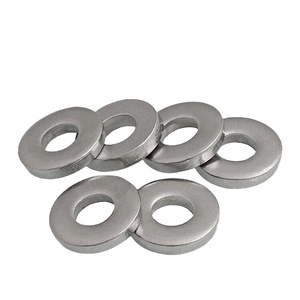
Designed for heavy bolting structures. Thickened design provides uniform load distribution across high-stress industrial joints.
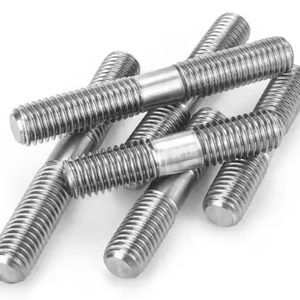
Reliable thread-rolling production offering high fatigue resistance for marine chemical equipment and pressurized flange connections.
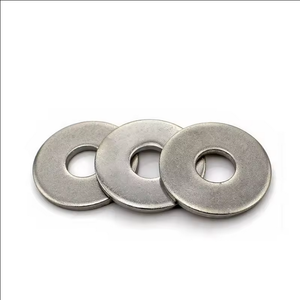
Zinc-finished and plain-treated precision washers built to eliminate galvanic corrosion risks in complex M3 to M8 assemblies.
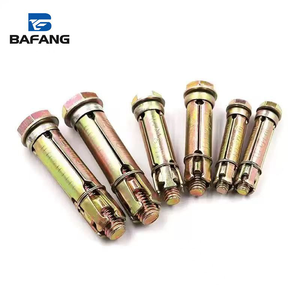
Yellow zinc plated for enhanced shear friction and chemical resistance, suited for masonry anchoring and base structural frames.
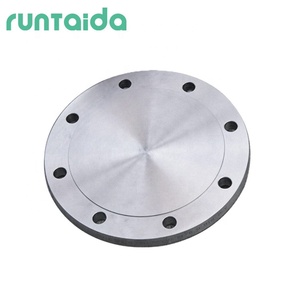
Forged blanking solutions precision-machined for petrochemical pipelines, terminal blanking, and high-pressure vessel testing manifolds.
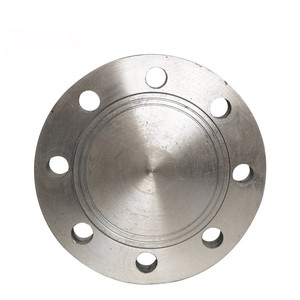
Heavy-diameter ring-type joint blind flanges, engineered to meet rigorous non-destructive examination benchmarks in oil & gas lines.
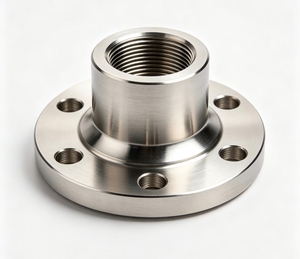
High-integrity screwed flange connections matching CF8/CF8M specifications for rapid, welding-free mechanical utility integration.
Cross-drilled head design for dynamic anti-vibration wiring in aerospace propulsion units and extreme downhole drilling environments.
A comprehensive metallurgical reference detailing corrosion resistance mechanisms, alloy formulations, and structural integrity under aggressive reducing and oxidizing acids.
Recognized globally as the premier versatile corrosion-resistant alloy, Hastelloy C-276 utilizes a balanced nickel-molybdenum-chromium matrix with added tungsten.
Engineered with increased chromium content (approx. 21%), Hastelloy C-22 delivers unmatched resistance to aggressive oxidizing aqueous media.
Tailored specifically for purely reducing environments, the B-series provides significant resistance against hydrochloric acid across all concentrations and temperatures.
Material verification metrics contrasting high-performance nickel superalloys against industrial stainless steel benchmarks for mission-critical joints.
| Alloy Specification | UNS / DIN Standard | Tensile Strength (MPa) | 0.2% Yield Strength (MPa) | Elongation (%) | Primary Application Matrix |
|---|---|---|---|---|---|
| Hastelloy C-276 | UNS N10276 / W.Nr. 2.4819 | ≥ 790 | ≥ 355 | ≥ 40 | Flue gas desulfurization, sour gas wells, bleach systems |
| Hastelloy C-22 | UNS N06022 / W.Nr. 2.4602 | ≥ 800 | ≥ 360 | ≥ 45 | Pharmaceutical synthesis, multi-acid etching, waste incinerators |
| Hastelloy B-3 | UNS N10675 / W.Nr. 2.4600 | ≥ 860 | ≥ 410 | ≥ 40 | Alkylation reactors, anhydrous HCl handling, acetic acid units |
| Inconel 625 | UNS N06625 / W.Nr. 2.4856 | ≥ 827 | ≥ 414 | ≥ 30 | Aerospace exhaust lines, marine riser bolting, nuclear systems |
| 316L Stainless | UNS S31603 / 1.4404 | ≥ 485 | ≥ 170 | ≥ 40 | Standard marine deck hardware, food processing, light utilities |
| Titanium Gr. 5 | UNS R56400 / Ti-6Al-4V | ≥ 895 | ≥ 828 | ≥ 10 | High-vibration weight-critical components, aerospace assemblies |
Analysis of emerging industrial fastener sourcing trajectories, precision machining advancements, and lifecycle-driven material decisions.
Modern EPC procurement teams have shifted away from spot-market brokers. Global buyers prioritize suppliers operating self-contained manufacturing cells capable of delivering complete raw-heat-to-finished-bolt traceability.
With stringent pipeline compliance requirements (including PED 2014/68/EU and NACE MR0175/ISO 15156), sourcing decisions rest on non-destructive testing (NDT), PMI validation, and mechanical stress certificates shipped directly with every container.
Plant operators increasingly factor lifecycle replacement expenses into total expenditure models. While AISI 304 or 316L fasteners offer low upfront acquisition costs, localized pitting, stress-corrosion cracking (SCC), and crevice corrosion trigger premature maintenance shutdowns.
Adopting nickel-molybdenum-chromium alloys (Hastelloy C-276 / C-22) provides a resilient operational envelope, extending scheduled maintenance intervals in offshore subsea tiebacks, chemical scrubbers, and nuclear processing loops.
While standard bolting leverages cold and hot heading techniques, critical Hastelloy components demand precision Swiss CNC machining and thread rolling post-solution annealing.
Thread rolling preserves continuous grain flow lines, preventing shear notch sensitivity and providing superior fatigue endurance compared to cut threads when subjected to cyclic pressure loads.
International engineering firms are consolidating purchasing strategies by pairing high-volume commercial fasteners with dedicated specialty alloy manufacturers in China that handle custom drawing modifications.
Standardized export packaging, protective thread capping, and clear heat-code stamping minimize logistical delays and eliminate job-site installation errors across global transshipment hubs.
A look at the production quality controls, testing infrastructure, and material certifications that support our heavy-duty bolting systems.
Our facilities house dedicated forging lines, induction heating setups, and high-speed CNC turning stations. We manufacture fasteners spanning from fine-thread M2 micro-components up to heavy structural M100 studs, alongside companion forged ASME B16.5 flanges.
Every single batch undergo rigorous quality controls: handheld Positive Material Identification (PMI), optical emission spectrometry, micro-hardness evaluations, Charpy impact testing across cryogenic temperatures, and intergranular corrosion testing (ASTM G28).
We supply full EN 10204 3.1 Material Test Certificates (MTC) alongside every consignment. Fasteners are marked with dedicated heat codes, accompanied by dimensional inspection logs, salt-spray records, and robust export-compliant seaworthy packaging.
Straightforward technical and commercial answers to help procurement officers and design engineers spec the right fasteners.
While both are high-performance Ni-Cr-Mo alloys, C-22 contains roughly 21% Chromium compared to C-276's 16%. This provides C-22 with superior resistance in severely oxidizing environments, including nitric acid and chloride mixtures. Conversely, C-276 provides higher tungsten content, offering balanced resistance across mixed reducing/oxidizing process streams.
Yes. Thread-rolling is often preferred because it avoids cutting through the metallurgical grain structure of the drawn bar. This cold-work hardening reinforces root and crest shear resistance, improving dynamic fatigue life in high-vibration systems such as offshore subsea pumps and compressors.
Thread galling can be mitigated by keeping tightening speeds controlled, applying specialized anti-seize lubricants (such as nickel-based or molybdenum disulfide pastes), ensuring tight thread tolerances (6g/6H), or pairing Hastelloy studs with compatible dissimilar-hardness nuts where permissible.
Every shipment is backed by an EN 10204 3.1 inspection certificate stating exact chemical melt composition, mechanical tensile/yield figures, elongation, hardness, and heat identification. We can also provide third-party verification (SGS, TÜV, Lloyd's Register) upon request.
Yes. Beyond standard DIN 933, DIN 934, and ASME B18.2.1 geometries, our engineering department produces non-standard fasteners, specialized safety lock-wire drilled socket bolts, heavy tie rods, and custom-turned components up to 100mm in diameter.
Standard diameter rods (M6 to M30) in grades C-276 and C-22 are kept in semi-finished stock, allowing standard runs to dispatch in 7 to 15 days. Custom forgings or non-standard diameters generally require 20 to 35 days, including complete heat treatment and destructive mechanical testing.