Manufactured under strict ISO 9001:2015 traceability matrices, our fastener and anchoring assemblies deliver calibrated tensile performance across severe industrial, marine, and tunneling environments.
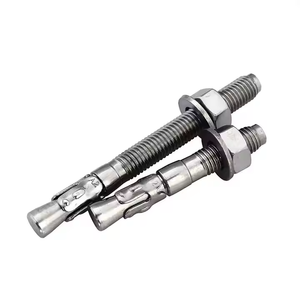
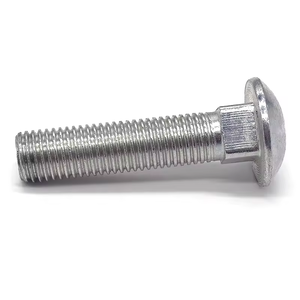
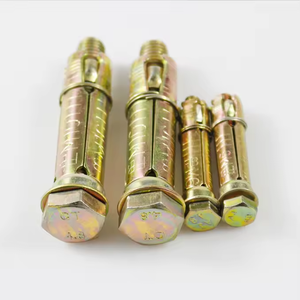
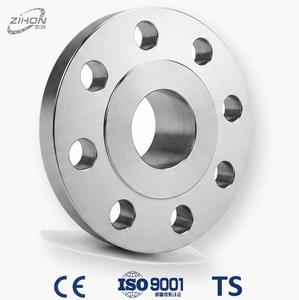
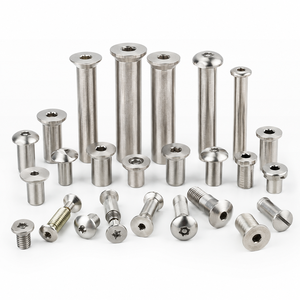
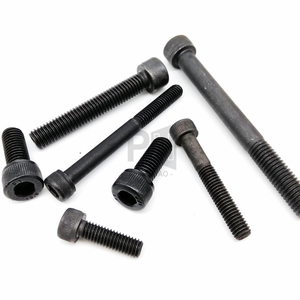
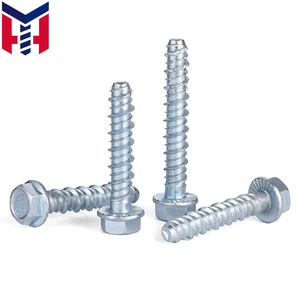
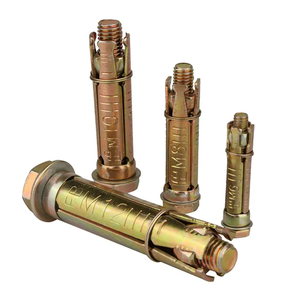
As premier manufacturers and global exporters anchored in China's advanced metallurgical corridor, we engineer T-Head Bolts (hammerhead bolts) designed specifically to transmit exceptional clamping loads across aluminum extrusions, cast-in steel anchor channels (Halfen-style channels), heavy machinery tie-downs, and infrastructure guide rails. Unlike standard hex-head or carriage bolts, a precision cold-forged or hot-forged T-bolt relies on a specialized rectangular or hammer-shaped head profile. This geometry permits post-insertion sliding within longitudinal structural channels while locking firmly into position at right angles once initial preload torque is induced.
The structural efficacy of a T-head bolt depends entirely on contact stress distribution across the channel lips. Substandard metallurgy or improper head radiusing induces point-loading stress concentrations, causing channel lip yield, localized fatigue failure, or bolt head shear under dynamic vibrational loads. Our engineering facilities eliminate these vulnerabilities by combining progressive multi-station heading dies, finite element analysis (FEA) optimized head fillets, and precision induction heat treatment regimens.
T-Head bolts operate in demanding mechanical environments ranging from sub-zero rail track anchors to petrochemical offshore rigs. Matching exact chemical compositions with thermodynamic quenching schedules determines operational safety life. Below is the structural comparison protocol utilized by our QA testing labs:
| Property Class / Spec | Base Metallurgy & Heat Treatment | Yield Strength (Min MPa / ksi) | Tensile Strength (Min MPa / ksi) | Elongation % (A5 Min) | Primary Industrial Sector |
|---|---|---|---|---|---|
| DIN 261 / ISO 8.8 | Medium Carbon Boron Steel, Quenched & Tempered | 640 MPa / 93 ksi | 800–830 MPa / 116 ksi | 12% | Solar Racking, Framing Channels, Conveyors |
| DIN 787 Class 10.9 | 40Cr / 42CrMo Alloy Steel, Induction Quenched | 900 MPa / 130 ksi | 1000–1040 MPa / 150 ksi | 9% | CNC Machine Tooling, Power Generation, Turbines |
| DIN 7992 Class 12.9 | 35CrMo / SCM435 Cr-Mo High Alloy, Quenched | 1080 MPa / 156 ksi | 1220 MPa / 176 ksi | 8% | Heavy Excavation, Tunnel Lining, High-Stress Ties |
| Stainless A2-70 (304) | Austenitic Cr-Ni 18/8, Cold Worked Solution Annealed | 450 MPa / 65 ksi | 700 MPa / 101 ksi | 17% | Façade Engineering, Food Processing, Clean Rooms |
| Stainless A4-80 (316) | Austenitic Cr-Ni-Mo with 2.5% Molybdenum, Strain Hardened | 600 MPa / 87 ksi | 800 MPa / 116 ksi | 12% | Marine Environments, Seawater Splash Zones, Desalination |
| Incoloy 800 / Superalloys | Nickel-Iron-Chromium Superalloy, Solution Heat-Treated | 205 MPa / 30 ksi | 520 MPa / 75 ksi | 30% | Extreme Heat Petrochemical Cracking, LNG Terminals |
The manufacturing process determines the lifespan of heavy industrial bolting. Our production protocols completely bypass thread cutting or machining from hex bar, which interrupts the steel’s natural grain boundaries. Instead, we implement uninterrupted longitudinal grain flow through hot forging and precision cold-heading of the T-head, combined with continuous cylindrical die thread rolling. Rolled threads dramatically improve thread fatigue resistance by up to 35% compared to cut threads, burnishing the thread root to eliminate microscopic surface fissures where fatigue cracks routinely nucleate under sustained cyclic loads.
Strategic macroeconomic trends influencing structural fastener engineering, procurement risk mitigation, and industrial assembly lines over the coming decade.
Transitioning toward advanced low-temperature vacuum degassing and specialized zinc-flake (non-electrolytic) passivation systems. Eliminating acid-pickling minimizes trapped atomic hydrogen, completely preventing sudden catastrophic hydrogen-induced delayed brittle fractures in Class 10.9 and 12.9 high-tensile T-bolts.
Global mega-contractors are requiring 2D DataMatrix laser-etched barcoding on bolt heads. Direct component serialization bridges automated assembly torque tools with digital building information modeling (BIM), establishing lifetime auditability for critical municipal bridges, subway tracks, and stadium curtain walls.
Worldwide environmental directives (RoHS, REACH) drive procurement towards eco-compliant Geomet, Dacromet, and Hot-Dip Galvanized (HDG) finishes that withstand over 1,500 hours of continuous neutral salt spray (ASTM B117) without red rust, outperforming conventional electro-zinc coatings tenfold.
Combining verified metallurgical expertise, rigorous NDT non-destructive inspection, and deep production capacities to secure your international supply chain.
Every single production batch is verified from initial billet smelt to cold-heading, delivering complete EN 10204 3.1 Mill Test Certificates (MTC) alongside complete spectroscopic chemical and mechanical stress strain charts.
From micro-retention precision binding fasteners to ultra-heavy forging dies for deep-tunnel anchoring, our in-house tool manufacturing facility shortens custom tooling turnarounds for non-standard head shapes to within 14 days.
Our quality verification suite includes computerized optical sorting machines for zero-defect ppm deliveries, Charpy impact toughness testing at -40°C, and magnetic particle crack detection.
Palletized goods utilize heavy-gauge anti-corrosion VCI barrier bags, inner reinforcement boxes, moisture desiccants, and solid banded plywood crates engineered to withstand multi-port transshipment handling.
In addition to structural carbon and high-tensile steels, we forge fasteners and companion components in Hastelloy, Inconel, Incoloy, Duplex 2205, Super Duplex 2507, and phosphor bronze alloys.
Our application engineers work directly with your procurement and design departments to evaluate thread engagement depths, clamp-length-to-diameter ratios, and galvanic corrosion isolation washers.
Clear, direct technical clarification addressing core engineering issues encountered by industrial purchasing managers and EPC specification teams.
DIN 261 features a standard rectangular head designed for light-to-medium structural channels and electrical raceways. DIN 787 is precision-machined with a stepped square-neck profile specifically sized to fit standardized T-slots on machine tool beds and stamping presses. DIN 7992 designates heavy-duty hammerhead bolts intended for foundation concrete anchoring and large civil infrastructure anchoring rails.
For high-strength bolts of Class 10.9 and 12.9, electroplating introduces significant hydrogen embrittlement risk. We mitigate this through controlled thermal de-embrittlement baking at 200°C–220°C for at least 4 to 8 hours immediately post-electroplating, or alternatively, by recommending non-electrolytic zinc flake coatings (such as Geomet or Dacromet) that avoid acid pickling entirely.
Yes. Our in-house mold and die department creates custom tooling for non-standard head widths, thicknesses, neck clearances, and thread pitches. We support metric coarse/fine pitches, unified UNC/UNF series, and Whitworth standards across batch volumes ranging from prototype runs to multi-container project shipments.
Standard documentation sets consist of the Commercial Invoice, Packing List, Bill of Lading, Certificate of Origin, and full EN 10204 Type 3.1 Mill Test Certificates. The MTC includes heat number, chemical composition analysis, tensile strength, yield point, elongation, hardness testing, and salt spray test hours.
As a baseline engineering guideline, for carbon steel bolt-nut pairings, thread engagement should equal at least 1.0 to 1.2 times the nominal bolt diameter (d). When anchoring into cast iron or aluminum structural extrusions, engagement depth must increase to 1.5d to 2.0d to avoid internal thread shearing before the bolt reaches its yield tension.
When connecting stainless steel T-head bolts to aluminum alloy structural profiles, galvanic coupling accelerates aluminum sacrifice. We furnish specialized non-conductive EPDM or polyamide insulating washers and matching nylon-sleeved channel nuts to completely break electrical continuity between dissimilar metals.
Speak directly with our technical sales engineers to review fastener specifications, confirm custom T-slot geometries, or obtain mill direct pricing for your upcoming construction, energy, or manufacturing delivery schedule.
Inquire Now