Enterprise Authority & Core Manufacturing Competencies
Forging high-integrity fastening systems requires continuous technological iteration, metallurgical mastery, and stringent quality governance. Established in 2010 with deep roots in heavy precision forging and advanced threading technology, our manufacturing infrastructure serves international EPC contractors, petrochemical plants, offshore marine fabricators, and heavy equipment manufacturers across Europe, North America, the Middle East, and East Asia.
We operate as a fully accredited PED (Pressure Equipment Directive) approved manufacturer and an active, recognized member of the Fastener Manufacturers Association of India (FMAI) and international bolting syndicates. Our end-to-end manufacturing footprint spans an extensive size matrix from miniature precision fasteners (M2 up to M100 in metric classes, and 1/4" to 4" in imperial Unified National thread series). We have firmly positioned our manufacturing export volume as one of the leading global sources for hot-dip galvanized (HDG) and micro-encapsulated prevailing torque lock nuts.
Every single batch that rolls off our cold-forming headers, hot-forging presses, and CNC thread rolling lines undergoes 100% material heat traceability. From spectrometer chemical analysis and Rockwell/Vickers hardness validation to Non-Destructive Testing (NDT magnetic particle and ultrasonic inspection) and destructive proof-load elongation checks, our clients receive verifiable Mill Test Certificates (MTC conforming to EN 10204 3.1) stamped with verified heat lot numbers. Our capabilities extend beyond carbon steel (Class 8, 10, 12, Grade 5, Grade 8) and standard austenitic stainless steels (AISI 304/A2-70, AISI 316/A4-80) to specialized exotic alloys including phosphor bronze, silicon bronze, aluminum bronze, Incoloy 800, Monel 400, Hastelloy, and grade 2/5 titanium.
PED & ISO Structural Certification
Strict quality assurance aligning with EU Pressure Equipment Directives for high-temperature and cryogenic applications across critical pipelines, valves, and pressure vessels.
ISO 16130 Junker Anti-Vibration Tested
Every prevailing torque lock nut design undergoes continuous transversal dynamic vibration cycles to verify residual preload retention under severe operational shaking.
Metallurgical Traceability (EN 10204 3.1)
Complete lot control from primary smelt chemistry, induction heat treatment quenching, to final gauging with Go/No-Go calibrated thread micrometer documentation.
Engineering Product Recommendations: Lock Nut Architecture & Selection
Selecting the optimal locking mechanism is vital to eliminate bolt fatigue, thread galling, and unexpected disassembly. As a dedicated manufacturer and exporter, we classify our locking nuts into three mechanical families engineered for distinct thermal, chemical, and physical stress environments:
1. All-Metal Prevailing Torque Lock Nuts (DIN 980V / ISO 7042 / ASME B18.16.6)
All-metal lock nuts rely on deliberate, precision-calibrated plastic deformation of the top thread form. By deforming the upper hex flats into an elliptical or crimped profile (3-point or 2-point crimping), the nut generates a continuous clamping frictional resistance across the bolt flanks. Because they contain no organic inserts, all-metal prevailing torque lock nuts withstand extreme thermal thresholds (up to +450°C in high-temperature alloy steels such as ASTM A194 2H or Cr-Mo alloys, and cryogenic zones down to -196°C in ASTM A194 Gr. 8/8M stainless steel). They are recommended for exhaust manifolds, automotive powertrain suspensions, railway bogies, vibratory screening plants, and steam flanged connections.
2. Non-Metallic Insert Lock Nuts (Nylon Insert / DIN 985 / ISO 7040)
Featuring a captive elastic polyamide ring settled in an internal collar above the load-bearing threads, the nylon insert lock nut provides superior vibration dampening and partial fluid sealing. When threaded onto the mating bolt, the male threads form mating grooves into the elastic collar without cutting it, creating radial compression that absorbs vibration without damaging bolt thread coatings. Recommended for general machinery, industrial electronics, pump casings, and architectural steelwork operating between -50°C and +120°C.
3. High-Tensile Heavy Hex Flange & Wedge Locking Assemblies (DIN 6927 / ASME B18.2.2)
Engineered for high-stress dynamic shear applications, our serrated or smooth-face prevailing torque flange lock nuts unify the lock nut and washer into a singular, high-strength cold-forged component. The integrated wide flange disperses clamping force across oversized clearance holes, minimizing embedment relaxation. When paired with high-tensile structural bolts (ASTM A325, A490, or EN 14399-4 10.9 HV), these units ensure zero preload degradation in highway bridge girders, crane runways, and marine propulsion shaft assemblies.
| Lock Nut Type | Governing Standards | Material Property Classes | Operating Temp Range | Key Performance Strengths | Recommended Applications |
|---|---|---|---|---|---|
| All-Metal Stover / Crimp Nut | DIN 980V, ISO 7042, ASME B18.16.6 | Class 8, 10, 12, Gr. 2H, Gr. 8/8M | -196°C to +450°C | Immune to fire/oil; extreme reusability; zero polymer degradation | Turbines, oil refinery flanges, mining rock-crushers, rail bogies |
| Nylon Insert Lock Nut | DIN 985, DIN 982, ISO 7040 | Class 6, 8, 10, SS 304 (A2), SS 316 (A4) | -50°C to +120°C | Dampens micro-vibrations, seals thread flanks against ingress | Pumps, conveyors, commercial vehicles, solar mounting racks |
| Prevailing Torque Flange Nut | DIN 6927, EN 1667, ASME B18.16.6 | Property Class 8.8, 10.9, 12.9 | -50°C to +300°C | Eliminates separate washers; distributes clamp load over large area | Heavy commercial chassis, wind turbine towers, bridge joints |
| Castellated & Slotted Nut | DIN 935, DIN 937, ASME B18.2.2 | Carbon Steel, Alloy Steel, Phosphor Bronze | -100°C to +400°C | Positive mechanical locking via cotter pin; visual security verify | Wheel spindles, aircraft linkages, marine rudder shafts |
Cutting-Edge Technological & Manufacturing Trends
The global fastener industry is witnessing profound technological shifts dictated by higher safety factors, lightweighting requirements, and harsher operating environments. In our production facilities, three foundational engineering innovations are driving product evolution:
1. Finite Element Analysis (FEA) Optimized Thread Lead-In & Deformations
Conventional crimped nuts often suffered from inconsistent prevailing-on torque, resulting in thread galling during rapid pneumatically driven assembly lines. Utilizing nonlinear FEA simulations, we have redesigned the 3-point crimp geometry of our all-metal lock nuts. The updated continuous pitch displacement allows a smooth entry for the lead threads of standard bolts before encountering uniform prevailing resistance, stabilizing the tightening friction coefficient (µ = 0.10 - 0.14) and guaranteeing predictable clamp load generation.
2. Eco-Friendly, Ultra-High Durability Micro-Layer Surface Coatings
Hexavalent chromium passivation has been entirely phased out. Modern procurement demands non-electrolytically applied zinc flake coatings (such as Geomet, Dacromet, and Zinc-Nickel electroplating) coupled with integrated polytetrafluoroethylene (PTFE) or molybdenum disulfide (MoS2) dry lubricants. These advanced coatings deliver over 1,500 to 2,000 hours of neutral salt spray resistance (ASTM B117) without inducing hydrogen embrittlement—a critical prerequisite for property class 10.9 and 12.9 high-tensile locking assemblies installed in coastal wind turbines and subsea risers.
3. In-Line Optical Sorting & Automated Laser Gauging
Zero-defect manufacturing (PPM < 50) is no longer an optional benchmark for automotive and high-speed railway projects. Our production lines integrate 360-degree high-resolution multi-camera optical sorters and laser pitch monitors that verify pitch diameter, internal thread clearance, chamfer symmetry, and polymer ring seating at speeds exceeding 600 parts per minute, ensuring absolute dimensional uniformity across million-unit export batches.
Future Sourcing & Procurement Trends in the Fastener Sector
Industrial procurement directors and supply chain strategists are transitioning from basic unit-cost metrics toward total lifecycle cost (LCC) and supply chain resilience. Key global trends shaping the fastener export domain include:
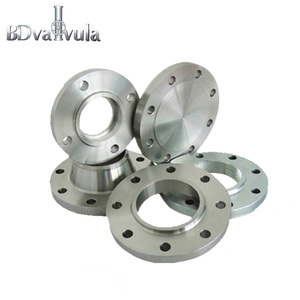
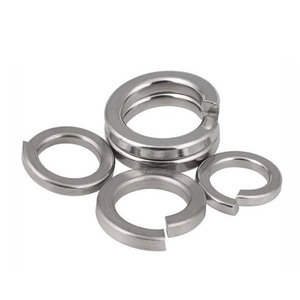
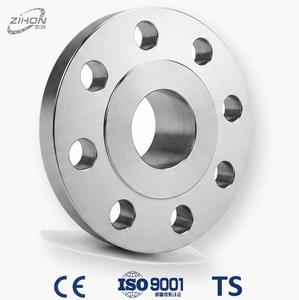
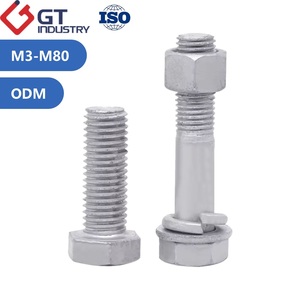
- Consolidation of Mating Component Procurement: Tier-1 engineering contractors increasingly shun disjointed sourcing of bolts, nuts, and flanges from disparate vendors. Disparate plating thicknesses often cause dimensional clashes, fitment binding, or galvanic acceleration. Forward-thinking procurement models consolidate structural bolts (e.g., DIN 933, ASTM A325), prevailing torque lock nuts, DIN 127 split washers, and ASME/DIN pipe flanges through single-source accredited manufacturers capable of certifying full interface compatibility.
- Digital Material Passports & Blockchain Lot Tracing: In compliance with evolving carbon footprint regulations and European supply chain transparency acts, buyers are mandating end-to-end provenance documentation. Mill Test Certificates must link directly to billet furnace charge numbers, scrap recycling ratios, and heat treatment power consumption audits.
- Near-Net-Shape Cold Heading for Sustainable Manufacturing: By replacing subtractive machining with high-speed multi-station cold heading, material utilization efficiency surpasses 92%, substantially reducing scrap generation and carbon emissions per ton of exported fasteners while maintaining unbroken grain flow for maximum fatigue life.
Industrial Procurement FAQ: Expert Technical Guidance
What is the fundamental difference between free-spinning and prevailing torque lock nuts?
Free-spinning lock nuts (such as serrated face flange nuts) thread smoothly until their bearing surface clamps against the joint face, where teeth bite in to resist counter-rotation. Prevailing torque lock nuts (all-metal crimped or nylon insert) create frictional interference right as the bolt enters the locking collar, retaining holding force even if initial clamp tension is entirely lost.
Can all-metal and nylon lock nuts be safely reused after disassembly?
Nylon insert lock nuts lose a portion of their prevailing friction upon first removal as the polymer yields, making them unsuitable for critical reuse. All-metal lock nuts can typically be reused 3 to 5 times provided the measured prevailing-off torque meets ISO 2320 minimum thresholds and threads show no galling.
How does Hot-Dip Galvanizing (HDG) affect nut thread engagement and pitch fit?
HDG coatings typically deposit 45 to 65 microns of zinc onto steel. To prevent thread jamming, lock nuts must be tapped oversize after galvanizing (according to ISO 965-5 tolerance classes 6AX or 6AZ), or tapped prior to centrifuge galvanizing with strictly controlled clearance envelopes.
Which test protocols validate lock nut performance against severe dynamic vibration?
The internationally recognized benchmark is the Junker Test per ISO 16130 / DIN 65151. It subjects a bolted joint to 1,000 to 2,000 cycles of transverse cyclic displacement, plotting clamp load degradation over time. High-performance lock nuts retain over 80% of initial pre-load.
What non-standard and exotic alloy grades can you supply for corrosive service?
Alongside carbon steels and A2/A4 stainless, we forge and machine lock nuts and heavy hex nuts in Incoloy 800/825, Hastelloy C276, Monel 400, Duplex 2205, Super Duplex 2507, Phosphor Bronze (C51000), Silicon Bronze (C65500), and Grade 5 Titanium for marine, nuclear, and chemical scrubbers.
What documentation accompanies export shipments to ensure customs & project clearance?
Every shipment is packed in seaworthy, palletized export cartons with heat-shrink moisture barriers, accompanied by 3.1 Mill Test Certificates (MTC), dimensional inspection logs, coating thickness verification, and third-party inspection certifications (SGS, TUV, BV) upon project request.
Request Tailored Engineering Quotes & Project Submittals
Connect directly with our fastener metallurgists and export application engineers to discuss project specifications, DIN/ISO/ASME drawing requirements, and bulk delivery schedules.
Contact Us