Direct factory production covering ASTM, DIN, ISO, and EN specifications. Fully equipped with continuous in-line electro-galvanizing, de-embrittlement baking ovens, and automated optical sorters.
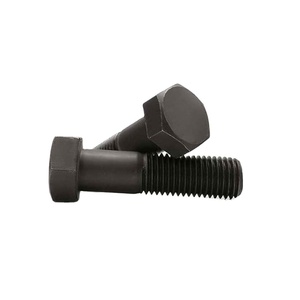
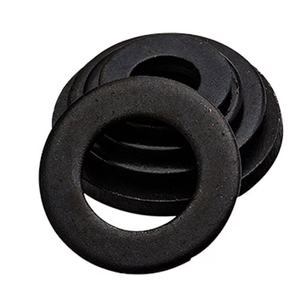
In critical infrastructure, heavy machinery, and structural engineering, selecting the proper electroplated zinc fastener requires balancing electrochemical galvanic protection, dimensional thread tolerances, and embrittlement mitigation.
Electro-galvanized and zinc-plated bolts represent the global standard for cost-effective, sacrificial anodic corrosion protection. Unlike barrier-only coatings (such as standard paints or lacquers), metallic zinc corrodes preferentially to the underlying carbon or alloy steel substrate. When exposed to an atmospheric electrolyte, zinc oxidizes to form zinc hydroxide and subsequently stable zinc carbonate, effectively sealing the fastener surface and delaying ferric oxide (red rust) formation across arduous operating cycles.
In accordance with global environmental regulations including EU RoHS (Restriction of Hazardous Substances), REACH, and automotive ELV directives, our manufacturing facilities operate exclusively with advanced trivalent chromium (Cr3+) conversion coatings. Traditional hexavalent chromating (Cr6+), while historically offering self-healing properties, is completely obsolete in modern precision procurement due to severe occupational toxicity and bio-persistence.
Our automated barrel and rack electroplating lines incorporate modern nanocomposite silane sealers and fluoropolymer topcoats over blue/clear, iridescent yellow, and deep black trivalent passivations. This multi-tier architecture delivers superior corrosion barriers:
One of the most catastrophic failure modes in high-tensile threaded fasteners is Internal Hydrogen Embrittlement (IHE). When medium-carbon and alloy steels heat-treated to Grade 8.8, Class 10.9, Class 12.9, or ASTM A490 / A325 specifications are subjected to acid pickling and subsequent cathode electrodeposition, atomic hydrogen ($H^+$) is absorbed into the metallic interstitial crystal lattice. Under tensile operating preload, these atomic hydrogen atoms diffuse toward regions of triaxial stress concentration (such as thread roots, head-to-shank fillets, and cross-sectional transitions), precipitating sub-critical crack initiation and delayed brittle catastrophic fracture.
To eliminate IHE, our manufacturing plant executes an uncompromising thermal desorption framework:
| Plating / Coating Specification | Reference Standards | Deposit Thickness (µm) | Salt Spray Resistance (ASTM B117) | Coefficient of Friction (µ) | Primary Industrial Sector |
|---|---|---|---|---|---|
| Electro-Zinc (Clear/Blue Cr3+) | ASTM B633 Type III, ISO 4042 | 5 – 8 µm | 96 – 168 Hrs to Red Rust | 0.14 – 0.20 | Machinery, Electronics, Light Enclosures |
| Electro-Zinc (Yellow Iridescent Cr3+) | ASTM B633 Type II, DIN 50961 | 8 – 15 µm | 360 – 600 Hrs to Red Rust | 0.13 – 0.18 | Automotive, Agriculture, Material Handling |
| Electroplated Zinc-Nickel (Zn-Ni 12-15%) | ASTM B841, ISO 19598 | 8 – 12 µm | 1,200 – 1,800+ Hrs to Red Rust | 0.12 – 0.16 | Automotive Underbody, Aerospace, Coastal |
| Hot-Dip Galvanizing (Centrifuged HDG) | ASTM A153 Class C, ISO 10684 | 45 – 65 µm | 1,000 – 2,500+ Hrs (Outdoor) | 0.18 – 0.26 | Bridges, Power Transmission, Civil Works |
| Non-Electrolytic Zinc Flake (Geomet/Dacromet) | ISO 10683, ASTM F1136 | 5 – 15 µm | 1,000 – 1,500 Hrs (Zero IHE Risk) | 0.10 – 0.16 | Wind Turbines, Heavy Rail, Grade 12.9 Structurals |
Combining over a decade of heavy forging, fastener manufacture, and chemical surface treatment expertise with PED-approved quality assurance systems for world-class EPC and MRO distribution.
Our manufacturing plants operate under rigorous European Pressure Equipment Directive (PED) compliance and ISO 9001:2015 QA management. We guarantee full metallurgical qualification for high-pressure, cryogenic, and hazardous fluid containment bolting.
From multi-station high-speed cold headers (M2 to M24) capable of 180 parts/min to high-tonnage precision induction hot-forging presses for giant diameters up to M100 and 4-inch UNC bolts. Continuous grain flow alignment ensures zero head-to-shank shear vulnerability.
Every batch of carbon steel, alloy steel, and stainless steel is laser-tracked to raw steel melt heats. Each delivery is accompanied by Mill Test Certificates containing Optical Emission Spectrometry (OES) chemical analysis and calibrated tensile/yield proof tests.
Threads are cold-rolled after heat treatment (or before, per spec) utilizing high-rigidity cylindrical rolling dies. This process increases thread shear strength by up to 25% via burnished compressive residual stresses. All threads checked with Class 6g/6h or 2A/3A Go/No-Go calibrated gauges.
Modern PLC-controlled automated electro-galvanizing lines with multi-stage ultrasonic degreasing, non-cyanide alkaline zinc electrolyte baths, automated dosing systems, and computerized de-embrittlement tracking ensure consistent micron deposition and zero environmental harm.
Deep experience exporting to North America, Europe, the Middle East, Southeast Asia, and South America. Specialized packaging solutions include VCI anti-corrosion poly bags, fumigated heavy wooden euro-pallets, heavy-duty cardboard boxes, and custom branded labeling.
Navigating evolving carbon tariffs, smart factory assembly demands, and next-generation surface engineering. Key factors strategic supply chain directors must consider through 2030.
The European Union's Carbon Border Adjustment Mechanism (CBAM) is reshaping raw material procurement. Global Tier-1 buyers increasingly mandate certified electric arc furnace (EAF) low-carbon steel wire rods combined with closed-loop solar-powered electroplating facilities to reduce Scope 3 carbon footprint liabilities.
With automotive OEMs and renewable energy builders demanding 1,500+ hour salt spray life without thread dimensional bloat, Zn-Ni (12-15% Ni) is aggressively replacing thick hot-dip galvanizing for diameters M6 to M24. Zn-Ni delivers higher micro-hardness (400-500 HV) and superior galvanic compatibility with aluminum chassis.
Automated robotic assembly lines are mandating tight torque-tension coefficients (k-factor 0.12–0.15 ± 0.02). Procuring zinc plated bolts now requires pre-applied reactive and non-reactive thread coatings—such as micro-encapsulated threadlockers, nylon patches, and integrated synthetic wax friction stabilizers.
Global EPC contractors are moving away from fragmented sourcing. Strategic partners in China offering complete turnkey integration—combining high-tensile bolt forging, matching nuts, heavy hardened washers (DIN 7349 / ASTM F436), and precision plating under one roof—mitigate thread interference fit risks and logistics overhead.
How modern metallurgy is extending fastener operating lifespans across coastal marine, chemical processing, and renewable energy sectors.
In traditional fastening applications, electro-zinc coatings were viewed merely as an inexpensive cosmetic barrier offering short-term transit rust protection. Today, advanced industrial applications demand extreme lifecycle engineering. As solar photovoltaic plants, offshore wind foundations, and electric vehicle battery enclosures require design lifespans ranging from 25 to 50 years, the technology surrounding zinc coatings has undergone profound technological disruption.
The contemporary forefront of fastener finishing pairs an electrolytic or mechanically deposited zinc-nickel alloy base with an ultra-thin inorganic ceramic topcoat containing functionalized nanoparticles (e.g., $SiO_2$, $TiO_2$). This architecture creates a tortuous pathway that physically obstructs moisture and chloride ion ingress. The sacrificial anode behavior is throttled so that the zinc does not exhaust itself rapidly, extending salt spray resistance past 2,000 hours while maintaining a total plating thickness under 15 microns. This is pivotal for standard threaded joints where excessive coating thickness causes thread binding.
Historically, inconsistent friction coefficients between the bolt shank, external threads, and internal nut threads resulted in massive bolt clamping force scatter—causing either loose joints during vibration or catastrophic thread stripping during pneumatic rundown. Contemporary high-tech zinc lines apply formulated waterborne lubricants and wax topcoats engineered to deliver a tightly controlled coefficient of friction ($µ_{total} = 0.12 - 0.18$). This ensures that 90% of applied torque translates into clamping preload rather than being dissipated as parasitic rotational friction.
Our manufacturing workflow integrates high-speed 360-degree glass turntable optical sorting machines. Using multi-angle telecentric lenses and AI-driven computer vision algorithms, each fastener is inspected for:
In-depth technical and commercial answers addressing dimensional fit, test standards, plating tolerances, and overseas logistics.
Elevate your supply chain integrity with zero-defect bolting systems, comprehensive PED / ISO quality documentation, and direct mill-level pricing. Connect with our technical engineering sales team today.