Source high-tensile Grade 10.9 hex bolts, structural assemblies, specialized tension control fasteners, and compatible heavy industrial components directly from an accredited Chinese manufacturing base.
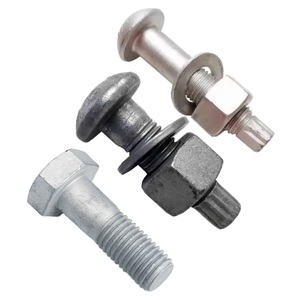
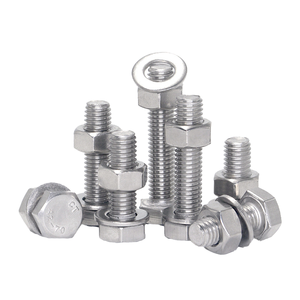
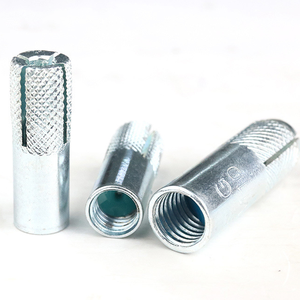
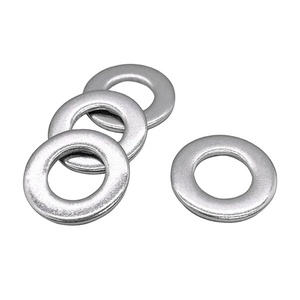
In modern structural engineering, high-vibration power transmissions, and heavy equipment assemblies, Property Class 10.9 bolts are recognized globally as the baseline for high-tensile bolted joint integrity. Governed primarily by ISO 898-1, DIN EN 14399-4 (HV systems), and ASTM A490/F3125, a designation of "10.9" specifies precise mechanical criteria: a nominal ultimate tensile strength (UTS) of 1,000 MPa (with a minimum of 1,040 MPa) and a minimum 0.2% yield strength ratio of 90% (achieving at least 940 MPa yield capacity).
Achieving these mechanical parameters requires strict metallurgical composition and disciplined continuous thermal processing. China's top-tier manufacturers utilize quenched and tempered (Q&T) medium-carbon alloy steels such as 40Cr, 42CrMo (AISI 4140 equivalent), 35CrMo, or boron-treated medium carbon steels. The presence of chromium and molybdenum increases hardenability across thicker cross-sections (up to M100 diameters), prevents core ferrite retention, and ensures microstructural transformation into tempered martensite. This martensitic matrix provides high resistance to thread fatigue, dynamic shear failure, and structural shear deformation.
| Property Class / Spec | Material Chemistry | Yield Strength (Rp 0.2) | Tensile Strength (Rm) | Elongation (A5 min) | Core Hardness |
|---|---|---|---|---|---|
| Class 10.9 (ISO 898-1) | 40Cr / 42CrMo / Medium Carbon Alloy | ≥ 940 MPa | 1,040 – 1,220 MPa | ≥ 9% | 32 – 39 HRC (320–380 HV) |
| ASTM A490 / F3125 Gr. 10.9 | Alloy Steel (AISI 4140/4340) | ≥ 940 MPa (130 ksi) | 1,035 – 1,205 MPa (150 ksi) | ≥ 14% | 33 – 38 HRC |
| EN 14399-4 HV Preload | 32CrB4 / 34CrNiMo6 Alloy | ≥ 900 MPa | 1,000 – 1,200 MPa | ≥ 10% | 32 – 39 HRC |
| ASTM A193 B7 (High Temp) | AISI 4140/4142 Quenched & Tempered | ≥ 725 MPa (105 ksi) | ≥ 860 MPa (125 ksi) | ≥ 16% | ≤ 35 HRC (typical) |
The global high-tensile fastener market is undergoing systemic evolution driven by engineering accountability, life-cycle cost reduction, and decarbonization mandates. B2B procurement professionals must navigate several key shifts:
Buyers are moving away from manual paper testing certificates toward digital heat-code traceability. Mill Test Certificates (MTC EN 10204 3.1) tied directly to laser-etched matrix codes on bolt heads provide instant verification of chemistry and Charpy V-notch impact values.
Traditional hot-dip galvanizing (HDG) poses a risk of hydrogen embrittlement in high-tensile fasteners (Class 10.9 & Class 12.9) during acid pickling. Non-electrolytic zinc flake coatings provide 1,500+ hours of salt spray performance without acid etching risks.
Major EPC firms and OEMs are bypassing trading intermediaries in favor of direct manufacturer access. Factory-direct partnerships guarantee raw material heat allocation, fixed batch chemistry, and direct oversight of cold forming and thread inspection lines.
Advanced fastener manufacturing in China is shifting from low-end commoditization toward high-precision structural integrity. Facilities now deploy fully automated multi-station cold formers capable of handling M36 diameters at room temperature, followed by high-speed computerized thread rolling.
Thermal processing has advanced through atmosphere-controlled mesh belt furnace lines, utilizing protective nitrogen-methanol environments. This eliminates surface decarburization—a primary failure mode causing thread stripping in high-tension applications. Complete carbon control ensures consistent hardness from root to core. Additionally, 100% automated optical sorting machinery inspects dimensions, pitch error, and drive recess geometry at rates exceeding 600 pieces per minute, driving defect rates down toward single-digit Parts Per Million (PPM).
With operational roots dating back to 2010, our integrated industrial ecosystem merges high-volume production with metallurgical quality assurance. Supplying clients worldwide across civil construction, energy pipelines, marine installations, and mining machinery, our operations stand out through clear, verifiable engineering strengths:
Our production facilities operate under certified PED (Pressure Equipment Directive) and ISO quality management architectures, ensuring compliance for pressure-retaining structural and piping duties.
From micro-fasteners to heavy industrial bolts up to M100 and equivalent imperial dimensions, our tooling allows single-source supply across complete mechanical bills of materials.
We are a leading exporter of heavy anti-corrosion finishes, specializing in zero-embrittlement zinc flake, PTFE/Xylan fluoropolymer coatings, mechanical plating, and heavy hot-dip galvanizing.
Every lot undergoes Non-Destructive Testing (NDT), optical metallography, Charpy impact testing at sub-zero temperatures, and tensile proof loading. We provide certified MTC 3.1 with every batch.
Export packaging features heavy-gauge cartons, moisture barrier bags, fumigated Euro/US pallets, and steel band bundling to prevent shipping damage during multi-modal transit.
Beyond DIN, ISO, and ASTM standard inventory, our engineering team manufactures custom head configurations, specialized collar steps, and unique pitch profiles directly to client CAD/print files.
Property Class 10.9 fasteners feature a minimum tensile strength of 1,040 MPa and a minimum yield strength of 940 MPa, compared to Class 8.8's 800 MPa tensile and 640 MPa yield strength. This 30%+ increase in load capacity allows structural engineers to specify smaller fastener diameters or fewer bolting points while supporting identical tensile and shear loads.
Fasteners with a core hardness above 31 HRC (300 HV) are vulnerable to Hydrogen Embrittlement (HE), where atomic hydrogen migrates into steel grain boundaries under high tensile stress, leading to sudden delayed brittle fractures. We mitigate this through non-acidic mechanical descaling, vacuum de-embrittlement baking at 200°C–230°C within 4 hours of plating, or using non-electrolytic zinc flake coatings (such as Geomet or Dacromet).
No. Fastener standards (ISO 898-2) mandate that nuts must match or exceed the proof load stress of the mating bolt. Pairing a Class 10.9 bolt with a Class 8 nut results in thread stripping before the bolt reaches its designated pre-tension clamping force. Class 10.9 bolts must be assembled with Property Class 10 nuts (such as DIN 934 Class 10 or ISO 4032 Class 10) and through-hardened washers (typically 300 HV).
Every production lot is delivered with a complete EN 10204 Type 3.1 Mill Test Certificate (MTC). This document details raw material heat number traceability, full chemical spectrum analysis (C, Si, Mn, P, S, Cr, Mo, B), heat-treatment lot parameters, actual destructive tensile and proof load test results, core and surface hardness values, Charpy impact toughness (where specified), and coating thickness validation.
DIN 931 designates a standard hexagon head bolt with a partial shank, while DIN 933 designates a fully threaded hex screw. EN 14399-4 describes high-strength structural bolt assemblies (HV system) engineered specifically for preloaded structural steel joints. EN 14399-4 bolts feature larger width-across-flats (larger head dimensions) to distribute high clamping loads across structural steel without crushing the joint face.
Connect with our technical engineering and export sales desk to review project specifications, request mill test certifications, or receive competitive volume pricing for your global installations.
Contact Us