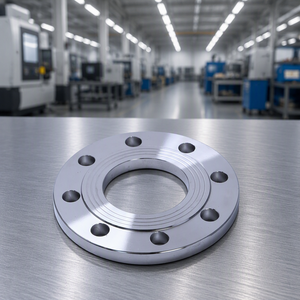
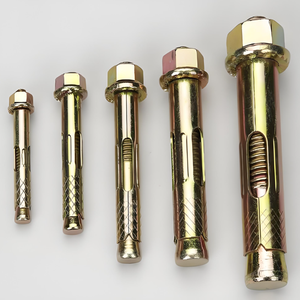
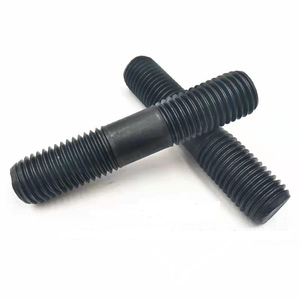
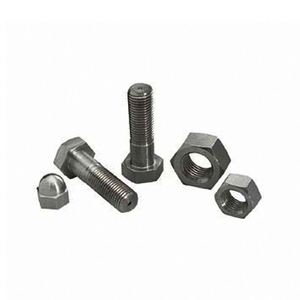
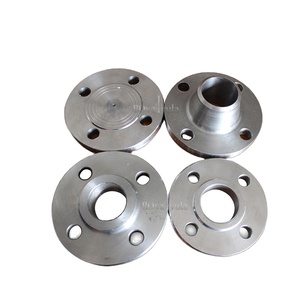
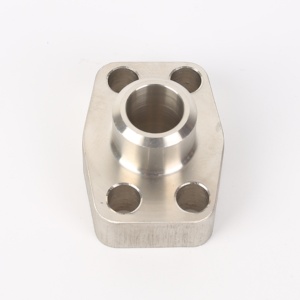
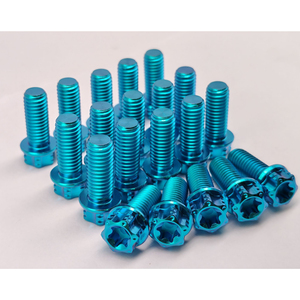
Factory-direct industrial fasteners, anchor mechanisms, stud bolts, and forged pressure flanges manufactured to DIN, ISO, ASME, and ASTM international standards with comprehensive 3.1 Mill Test Certificates.
In mechanical engineering and heavy industrial infrastructure, Property Class 12.9 represents the practical zenith of tensile strength for commercial and industrial steel fasteners. Designated under ISO 898-1 standards, the "12.9" numerical code defines two uncompromising metallurgical benchmarks: a nominal ultimate tensile strength (UTS) of 1,200 MPa (with an actual minimum requirement of 1,220 MPa, or approximately 177,000 PSI) and a yield strength ratio of 90%, mandating a proof load yield limit of no less than 1,100 MPa.
Achieving this extreme mechanical performance requires meticulous raw material selection. While standard structural bolts rely on low-carbon or unalloyed medium-carbon steels, authentic Grade 12.9 bolts must be forged from high-purity alloy steels—predominantly 42CrMo (equivalent to AISI 4140/4142) or SCM435, and occasionally boron-modified chromium-molybdenum chemistries. The interplay between chromium (which provides deep hardenability and wear resistance) and molybdenum (which suppresses temper embrittlement and increases high-temperature creep strength) allows our heat treatment lines to produce an entirely homogeneous tempered martensitic microstructure across the entire bolt cross-section, even in heavy shank diameters reaching up to M100.
Critical Engineering Principle: For fasteners operating at hardness thresholds between 39 and 44 HRC (385 to 435 HV), the primary hazard is not mechanical yield under pure axial tension, but catastrophic Delayed Hydrogen-Induced Embrittlement (HIE). Sourcing 12.9 fasteners requires an audit not only of dimensional tolerances but of vacuum degassing protocols, heat-treatment atmospheric monitoring, and low-embrittlement surface treatment processes.
When high-pressure joints in offshore oil and gas manifolds, internal combustion power units, mining ball mills, and preloaded structural wind turbine flanges are torqued to design preload, Grade 12.9 bolts store vast amounts of elastic strain energy. Any metallurgical imperfection—such as non-metallic sulfide inclusions, decarburization depths exceeding ISO 898-1 thresholds, or micro-cracks along the thread root—concentrates tensile stress vectors, risking brittle fracture without ductile necking. Hence, leading Chinese manufacturers operating at tier-1 export levels utilize cold header lines with computerized acoustic monitoring and induction pre-heating for high-tonnage hot forging facilities.
Engineers and international procurement officers frequently assess trade-offs between tensile strength, elongation, and environmental stress resistance. The table below delineates the strict mechanical criteria separating Grade 12.9 fasteners from standard high-strength, structural, and refinery bolting specifications.
| Property Class / Spec | Material Chemistry | Min. Tensile (MPa) | Min. Yield (MPa) | Hardness Range | Elongation (A %) | Critical Target Application |
|---|---|---|---|---|---|---|
| ISO 898-1 Class 12.9 | 42CrMo / SCM435 Alloy | 1,220 MPa | 1,100 MPa | 39 – 44 HRC | ≥ 8% | Heavy Machinery, Engine Blocks, High Preload Flanges |
| ISO 898-1 Class 10.9 | 40Cr / Boron Steel | 1,040 MPa | 940 MPa | 32 – 39 HRC | ≥ 9% | Automotive Suspension, Chassis, Structural Preloaded Joints |
| ISO 898-1 Class 8.8 | Medium Carbon / 35# Steel | 800 MPa | 640 MPa | 22 – 32 HRC | ≥ 12% | General Engineering, Infrastructure, Standard Pipe Flanges |
| ASTM A193 Grade B7 | AISI 4140 Cr-Mo Q&T | 860 MPa (≤ 2½") | 725 MPa | ≤ 35 HRC (321 HBW) | ≥ 16% | High-Pressure Vessels, Petrochemical Flanges, Refinery Towers |
| ASTM A325 (F3125) | Medium Carbon Alloy | 830 MPa (≤ 1") | 635 MPa | 25 – 34 HRC | ≥ 14% | Structural Steel Buildings, Highway Bridges, Trusses |
| EN 14399-4 Class 10.9 HV | Structural Alloy Steel | 1,000 MPa | 900 MPa | 32 – 39 HRC | ≥ 10% | Preloaded High-Strength Structural Bolting Assemblies |
Precision manufacturing of Grade 12.9 socket head cap screws (DIN 912 / ISO 4762), hex head bolts (DIN 933 / ISO 4017), and heavy hex structural fasteners diverges fundamentally from lower-strength hardware in two phases: thread formation and surface chemistry.
Thread Rolling After Heat Treatment (TRAT): In standard fasteners, threads are rolled on soft wire stock prior to continuous mesh belt furnace quenching. However, for severe-duty 12.9 fasteners subjected to dynamic fatigue cycles, rolling threads after through-hardening generates high compressive residual stresses at the thread root radius. This cold-working plastic deformation prevents micro-crack propagation under cyclical fatigue, improving cyclic fatigue endurance limits by upwards of 300% compared to cut or pre-quench rolled threads.
Dacromet and Geomet coatings eliminate acid pickling and electrodeposition entirely, providing 1,000+ hours of neutral salt spray (ASTM B117) resistance with zero risk of atomic hydrogen absorption.
Microcrystalline manganese or zinc phosphate conversion coatings paired with heavy corrosion-inhibiting rust preventative oils deliver precise torque-tension coefficients (k-factors: 0.12–0.15) for dry industrial assembly.
Where electroplating (such as zinc-nickel) is specified, components are transferred within 4 hours to automated convection ovens for hydrogen baking at 200°C–220°C for 8 to 24 hours to effuse trapped interstitial hydrogen.
The international procurement landscape for high-tensile hardware has entered a new era characterized by heightened engineering governance, supply-chain digitisation, and strict regulatory compliance. Supply chain directors, project managers, and global procurement specialists are transitioning away from spot-market commodity buying toward integrated, programmatic sourcing frameworks.
Procurement departments require automated batch-to-melt digital validation. QR-coded heat traceability stamped directly on secondary and export packaging enables engineering teams to review chemical heat analyses, Charpy V-notch impact values, and hardness gradients instantaneously on site.
With cross-border environmental taxes taking hold in Europe and North America, buyers prioritize mills that utilize electric arc furnace (EAF) scrap-based steelmaking and continuous natural gas furnaces with lower embodied carbon, supported by certified Environmental Product Declarations (EPD).
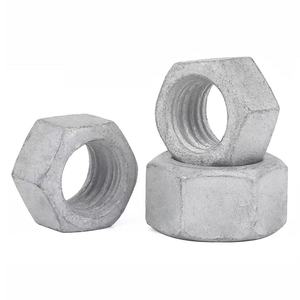
EPC contractors are avoiding mismatched hardware by procuring complete, pre-tested bolting assemblies—Grade 12.9 bolts coupled with corresponding Class 12 heavy hex nuts and 300+ HV hardened flat washers—direct from single-source manufacturing facilities that verify nut proof load and thread fit compatibility.
As operating stresses in renewable energy, heavy transport, and aerospace expand, fastener engineering is rapidly adopting micro-alloying advances and Industry 4.0 data technologies:
Micro-Alloyed High-Purity Steels: Advanced Chinese fastener metallurgy is utilizing ultra-low sulfur and phosphorus refining (S < 0.005%, P < 0.010%) with trace additions of vanadium, niobium, and titanium. These micro-alloying agents form fine carbide and carbonitride precipitates that pin austenite grain boundaries during high-temperature tempering, increasing fracture toughness and raising the critical threshold stress intensity factor for stress corrosion cracking ($K_{ISCC}$).
Ultrasonic Preload Verification & Smart Bolting: The shift away from rough torque wrench estimation to direct tension measurement has accelerated the adoption of bolts manufactured with machined transducer recesses at the head center. This permits ultrasonic pulse-echo stress analysis to measure actual shank elongation and clamp force in real time during tightening. In critical wind power and offshore applications, embedded RFID and piezoelectric strain-sensing washers are bridging the gap between passive mechanical clamping and predictive maintenance IoT networks.
Leveraging over a decade of heavy metallurgical forging and high-tensile precision manufacturing, our production complex combines European pressure equipment compliance with massive scalable capacity across fasteners, pipe flanges, and custom cold/hot forged components.
Operating under certified Pressure Equipment Directive (PED) systems and ISO standards, ensuring all critical pressure-retaining hardware complies with CE marking safety regimes and global oil, gas, and energy codes.
Unrivaled dimensional versatility ranging from miniature M2 electronic and machine fasteners to hot-forged M100 structural bolts, foundation studs, and ASME B16.5 flanges up to 64 inches in outer diameter.
Full suite of in-house testing equipment: optical emission spectrometers (OES), 2,000 kN computerized tensile load frames, Charpy impact testing at -46°C, magnetic particle inspection, and salt-spray environmental chambers.
Direct technical answers from metallurgical and quality assurance engineers to help streamline your purchasing specification.
Grade 10.9 has a nominal tensile strength of 1,000 MPa (1,040 MPa min) and yield of 940 MPa, with hardness between 32–39 HRC. Grade 12.9 provides 1,220 MPa minimum tensile strength, 1,100 MPa yield, and 39–44 HRC. Grade 12.9 allows for significantly higher clamping force in compact designs but requires stricter safeguards against hydrogen embrittlement and notch sensitivity.
Hot-dip galvanizing introduces two major failure risks for 12.9 hardware: hydrochloric acid pickling generates high atomic hydrogen concentrations that easily trigger hydrogen-induced delayed fracture, while the 450°C molten zinc kettle can temper back high-hardness martensite, reducing bolt strength. Zinc flake coatings (ISO 10683) or mechanical plating are the industry-approved alternatives.
No. While Grade 12.9 bolts offer superior room-temperature tensile strength over ASTM A193 B7 (which specifies ~860 MPa), B7 bolts are specifically formulated and heat-treated to retain yield strength and resist creep at elevated temperatures up to 538°C (1,000°F). Grade 12.9 bolts will experience severe temper softening and loss of preload if exposed to sustained high refinery temperatures.
Each production batch is supplied with an EN 10204 Type 3.1 Inspection Certificate traceable directly to the original melt heat number. The MTC certifies complete spectrographic chemical analysis (C, Si, Mn, P, S, Cr, Mo), room-temperature tensile testing (UTS, yield, elongation, reduction of area), Rockwell hardness testing, and non-destructive surface crack examination reports.
Under ISO 898-2 standards, bolts of Property Class 12.9 must be matched with mating nuts of Property Class 12. Using lower grade nuts (such as Class 8 or Class 10) causes catastrophic thread stripping before the bolt reaches its designed proof load. Class 12 nuts feature augmented proof load ratings designed to ensure that failure, if overloaded, occurs through shank elongation rather than hidden thread stripping.
Export orders are packaged in heavy-duty 25 kg multi-ply corrugated inner cartons with VCI (Vapor Corrosion Inhibitor) poly liners to prevent sea moisture condensation during transit. Cartons are uniformly stacked on heat-treated, fumigated ISPM-15 compliant wooden pallets (nominal 1,000 kg per pallet), reinforced with heavy corner boards, plastic banding, and multi-layer stretch wrap.
Direct from our manufacturing facility in China: submit your bills of materials, customized drawings, coating requirements, and target delivery schedule to our international export engineering desk for instant factory quotations.
Get a Quote