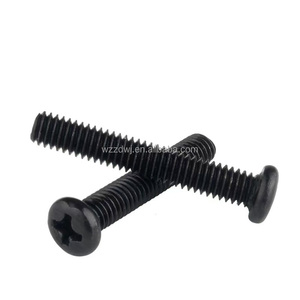
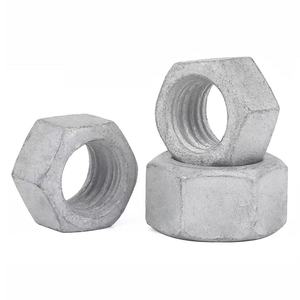
Manufactured under stringent process control parameters from audited billet steel, our heavy hex bolts, drilled stud bolts, sleeve anchors, and thickened washers deliver proven clamped joint reliability under dynamic shear and tensile loading.
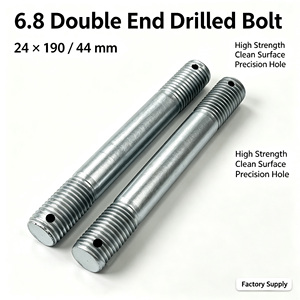
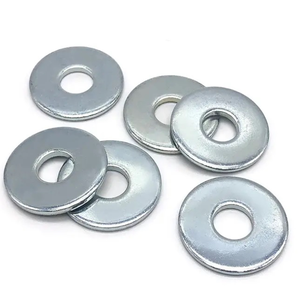
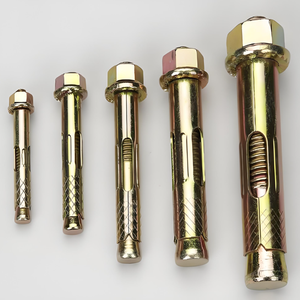
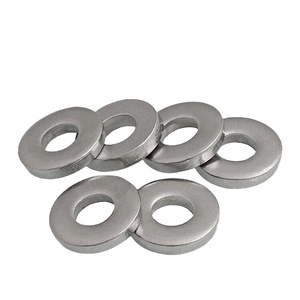
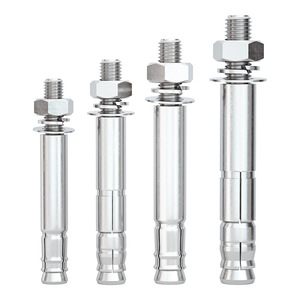
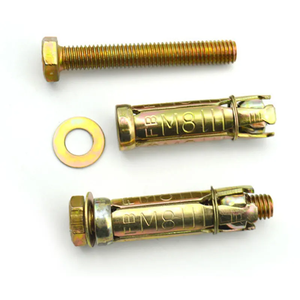
In high-stress mechanical engineering, structural steel framing, and pressurized process vessels, the mechanical distinction between standard finished hex bolts and heavy hex bolts is critical to preventing joint relaxation, fastener fatigue, and thread stripping. Heavy hex bolts (governed principally by ASME B18.2.1, ASTM F3125, ASTM A193, and EN 14399 standards) are dimensioned with an enlarged width across flats (WAF). For instance, a 1-inch standard hex bolt typically has a 1-1/2" WAF, whereas a 1-inch heavy hex bolt features a 1-5/8" WAF.
This increased head dimension directly provides a substantially broader bearing surface beneath the head. When torquing high-tensile fasteners to achieve their calculated preload ($F_p$), contact bearing stress beneath the head is distributed across an expanded surface area. This configuration mitigates local compressive yielding of structural steel flanges or base plates, eliminating the risk of embedment relaxation over prolonged duty cycles. Furthermore, paired with heavy hex nuts (ASTM A194 Gr. 2H / Gr. 8 or ASTM A563 Gr. DH), the increased thread engagement length distributes hoop tension evenly across the internal helical roots, practically eliminating thread shear under severe proof loads.
| Standard / Grade | Base Metallurgy | Heat Treatment | Tensile Strength (Min.) | Yield Strength (Min.) | Primary Industrial Service |
|---|---|---|---|---|---|
| ASTM A193 B7 | AISI 4140 / 4142 Cr-Mo Alloy | Quenched & Tempered (1100°F min) | 125 ksi (≤ 2-1/2") | 105 ksi | High-pressure petrochemical piping, valves, ASME flanges |
| ASTM F3125 A325 | Medium Carbon Boron / Alloy | Quenched & Tempered | 120 ksi (All dias) | 92 ksi | Structural building connections, bridge truss joints |
| ASTM F3125 A490 | Alloy Steel (AISI 4140/4340) | Quenched & Tempered | 150–173 ksi | 130 ksi | Heavy civil structural frames, extreme seismic connections |
| ASTM A193 B8 Cl. 2 | AISI 304 Austenitic Stainless | Strain Hardened Carbide Solution | 100–125 ksi | 80–100 ksi | Cryogenic vessels, marine civil engineering, chemical plants |
| ASTM A193 B8M Cl. 2 | AISI 316 Molybdenum Stainless | Strain Hardened Carbide Solution | 95–110 ksi | 75–95 ksi | Subsea exploration, offshore LNG platforms, coastal docks |
| EN 14399-4 Class 10.9 HV | Quenched & Tempered Structural Alloy | Controlled Furnace Q&T | 1000–1200 MPa | 900 MPa | High-strength preloaded European structural bolting |
Our manufacturing protocols utilize precise numerical simulation for hot heading. By heating induction-cut billets to an exact temperature window (1100°C–1200°C for alloy grades, 1050°C–1150°C for austenitic grades), we maintain continuous grain flow along the transition zone between bolt shank and forged heavy head. This uninterrupted metallurgical fiber structure delivers up to 35% higher resistance to cyclical fatigue and dynamic shear stress compared to machined fasteners turned down from hexagonal bar stock.
Operating with certified Pressure Equipment Directive (PED 2014/68/EU) compliance, ISO 9001:2015 quality frameworks, and full membership in industrial forging bodies, our manufacturing facilities provide direct enterprise advantages to overseas EPC contractors and wholesale importers.
From micro-fasteners to massive M100 (4-inch) heavy structural studs and hot-forged bolts, our multi-station cold formers and 2,500-ton hydraulic forging presses eliminate diameter constraints for complex EPC balance-of-plant packages.
Accredited for pressure-bearing equipment fasteners. Every shipment is accompanied by an EN 10204 Type 3.1 Mill Test Certificate correlating heats, yield/tensile points, Charpy V-notch toughness, and chemical spectrometer logs.
Ranked among the premier exporters of hot-dip galvanized fasteners, our automated spin-galvanizing facility conforms strictly to ASTM A153 Class C and ISO 10684, delivering uncompromised thread clearance with 55μm–85μm zinc thickness.
Equipped with mesh belt and roller hearth furnaces operating under protective atmosphere to prevent surface decarburization. Controlled oil/polymer quenching guarantees uniform Rockwell hardness across core and case.
Beyond standard carbon and alloy steels, we manufacture heavy hex fasteners in Hastelloy C276, Inconel 625/718, Monel 400, Duplex 2205, Super Duplex 2507, Phosphor Bronze, and Silicon Bronze for extreme corrosive environments.
Our heavy bolting products are installed across landmark LNG storage terminals, deepwater refining units, cross-country pipelines, and high-speed rail infrastructures throughout the Middle East, Southeast Asia, Europe, and the Americas.
Fastener failure in high-pressure steam headers or heavy civil trusses carries catastrophic safety risks. We enforce an 8-stage zero-defect protocol across every production lot, translating rigorous laboratory science into field-proven joint integrity:
Direct optical emission spectrometry testing of raw billets against chemical thresholds for Carbon, Chromium, Molybdenum, and Sulfur.
Closed-die hot or cold heading ensuring continuous uninterrupted metallurgical fibers traversing the head-to-shank transition radius.
Precise austenitizing and high-temperature tempering cycles, verified via multi-point Vickers (HV) and Rockwell (HRC) indentation.
Cold cylindrical die thread rolling post-heat-treat for high fatigue resistance, avoiding fiber disruption caused by cutting methods.
Magnetic Particle Inspection (MPI) and Eddy Current testing to identify micro-fissures, laps, and seams on head-shank junctures.
Full-size axial tensile pulls, wedge tensile tests per ASTM F606, and sub-zero Charpy V-notch impact tests down to -196°C for cryogenic grades.
Automated HDG, PTFE, or Dacromet. Critical high-strength lots (≥10.9) undergo immediate hydrogen de-embrittlement baking at 200°C for 8–24 hours.
Laser etching of heat lots and grade IDs, heavy-duty VCI anti-corrosion barrier wrapping, and banded Euro-standard fumigated wooden pallets.
The global heavy industrial fastener market is undergoing rapid transformation driven by renewable infrastructure, decarbonization mandates, and digital quality governance. Procurement directors and supply chain managers must navigate several decisive shifts:
A. Decarbonized Steelmaking & CBAM Compliance: International EPC projects funded under ESG mandates increasingly demand verified greenhouse gas accounting for embedded steel components. Our manufacturing infrastructure is integrating scrap-based Electric Arc Furnace (EAF) feedstocks with verified Scope 1, 2, and 3 carbon intensity certificates, ensuring tariff compliance under the European Carbon Border Adjustment Mechanism (CBAM).
B. Adoption of Advanced Micro-Layer Zinc Flake & Fluoropolymer Coatings: While traditional Hot-Dip Galvanizing remains the industry baseline for outdoor civil structures, offshore wind turbines and chemical processing plants are pivoting toward multi-layer Geomet, Dacromet, and PTFE (Teflon) coatings. These coatings provide upwards of 2,000 to 3,000 hours of ASTM B117 salt spray neutral fog endurance without risk of hydrogen embrittlement or thread interference.
C. Smart Preload Sensing & Ultrasonic Clamping Verification: In critical wind turbine slewing rings and high-speed rail bridgework, loose or yielding bolts cause severe operational shutdowns. The industry is seeing expanded deployment of ultrasonic bolt-tension transducers and smart load-indicating washers (ASTM F959 DTI). We manufacture heavy hex bolt assemblies with calibrated end-face geometries to facilitate direct transducer coupling during commissioning.
D. Digital Traceability & Digital Product Passports (DPP): The procurement paradigm is shifting from paper mill certs to cloud-linked QR and 2D Data Matrix codes stamped on packaging and mill documentation. Every container of heavy hex fasteners shipped from our factory links directly to raw melt ladle chemistry, heat treatment heat-curves, and third-party lab verification records.
Procuring heavy fasteners from China requires rigorous technical qualification beyond price per ton. To ensure delivery compliance and eliminate site failure, evaluate potential suppliers across this five-pillar RFP engineering matrix:
| Evaluation Parameter | High-Risk Red Flags (Common Sub-Tier Traps) | Certified Benchmark Standard |
|---|---|---|
| Raw Material Billets | Commercial scrap melt with unspecified trace elements (excess Cu, Sn, Sb causing hot shortness). | 100% prime ladle-refined vacuum degassed steel with complete heat chemistry traceability. |
| Heading Methodology | Machining down from hex bars for large sizes (destroying continuous grain flow fibers). | Near-net hot forging maintaining undisturbed metallurgical flow contours through the head. |
| Thread Formation | Lathe-cut threading showing torn metal fibers and micro-notches at thread roots. | Cold cylindrical rolled threading resulting in burnished, work-hardened, fatigue-resistant roots. |
| Galvanizing Clearances | Over-tapping bolt threads to fit clogged nuts, drastically reducing shear area. | Bolts threaded to standard pitch; mating heavy hex nuts tapped oversize per ASTM A563/ISO 10684. |
| Quality Documentation | Generic, untraceable certificates with photocopied test stamps. | EN 10204 Type 3.1 MTC containing heat number, chemical check, yield, tensile, elongation, and Charpy data. |
When issuing RFPs to our export team, buyers are encouraged to supply complete application constraints—including design temperature ranges, seismic category, dynamic cyclical loading levels, and atmospheric corrosive classifications (ISO 12944 C1 through CX). Our application engineers evaluate joint geometry to recommend optimized property classes and coatings.
Heavy hex bolts feature an expanded width across flats (WAF) compared to standard finished hex bolts of the same nominal diameter. This geometry increases bearing surface area beneath the head, significantly reducing bearing pressure on joined structural members and preventing joint relaxation under high preloads.
For high-tensile grades (Class 10.9, ASTM A490, Grade DH) subjected to electroplating or acid pickling, atomic hydrogen can cause brittle catastrophic fractures. We use mechanical descaling or controlled alkaline cleaning, followed by mandatory de-embrittlement baking within 4 hours of plating at 190°C–220°C for 8 to 24 hours.
Hot-dip galvanizing adds 55μm to 85μm of zinc thickness. Under ASTM A153 and ISO 10684 standards, bolt threads are rolled to standard tolerance (class 6g / 2A) before galvanizing. Thread clearance is provided by tapping the mating heavy hex nuts oversize (class 6AZ/6AX) after galvanizing, ensuring free-spinning assembly without degrading tensile strength.
Every shipment includes an EN 10204 Type 3.1 Mill Test Certificate detailing direct heat correlation, chemical spectroscopy, mechanical tension tests (yield, ultimate, elongation, reduction of area), hardness, Charpy V-notch impact values, coating thickness measurement, and NDT surface crack examination logs.
Yes. Our in-house tooling and die department designs custom closed-die tooling for non-standard shanks, reduced body bolts for thermal expansion, 8-UN thread series for pressure piping, and custom anchor geometries up to M100 and lengths exceeding 3,000mm.
Fasteners are packaged in sealed 25kg double-wall corrugated cartons with interior moisture-proof polybags, or heavy-duty steel kegs. Cartons are stacked on heat-treated, ISPM-15 compliant Euro pallets, securely wrapped in multi-layer stretch film with desiccants, and edge-protected with heavy plastic corner guards.
Our monthly production exceeds 4,500 metric tons. Standard production runs take 20 to 35 business days depending on hot-dip galvanizing and heat treatment requirements. We support and coordinate inspections with third-party agencies including SGS, Bureau Veritas, DNV, and TÜV Rheinland.
Connect with our technical sales engineers for project bid estimates, volume wholesale pricing schedules, CAD joint design consultation, and verified Mill Test Certificate records.
Get a Quote