Precision-manufactured to ASTM, ASME, DIN, and ISO standards. Fully traceable to heat numbers with comprehensive 3.1 Mill Test Certification.
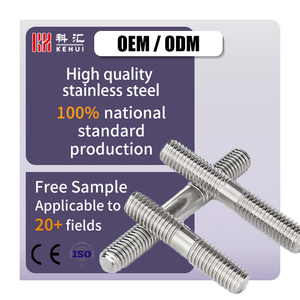
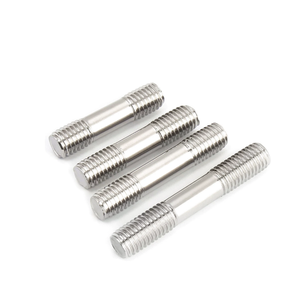
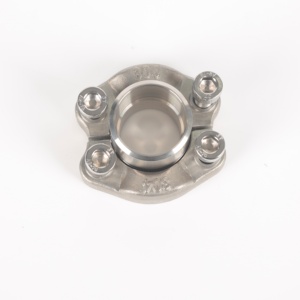
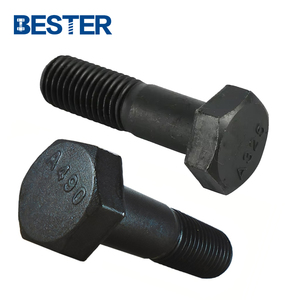
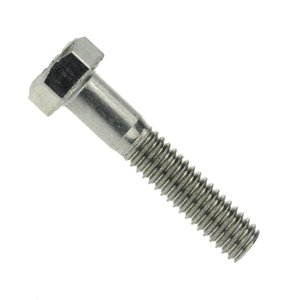
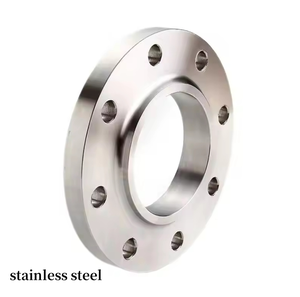
In critical pressurized equipment, petroleum transport pipelines, and heavy civil infrastructure, stud bolts do not merely serve as assembly hardware; they act as calibrated primary tension springs that ensure continuous seating stress across gasket faces. Under cyclic thermal shocks, intense fluid turbulence, and corrosive atmospheric conditions, the mechanical reliability of bolted connections dictates plant operability and human safety. As a preeminent China wholesale stud bolts factory & supplier, our engineering protocols align rigorously with international mechanical criteria governed by ASTM A193, ASTM A320, ASTM A194, DIN 976, and ASME Boiler and Pressure Vessel Codes (BPVC Section VIII).
The primary advantage of continuous-thread and double-end stud bolts over conventional hex-headed bolts lies in their stress distribution profile. Regular hex bolts possess an abrupt transition at the forged junction between the head and shank, creating high localized stress concentrations susceptible to fatigue cleavage under axial tension. Conversely, full-thread stud bolts dissipate elastic elongation evenly throughout their entire length, optimizing clamping load retention and significantly diminishing catastrophic fatigue crack propagation.
Specifying the proper grade requires balancing yield strength, low-temperature impact toughness, and environmental stress cracking resistance. The matrix below contrasts the high-velocity alloys handled in our automated cold-heading and hot-forging production lines:
| Material Specification | Alloy Classification | Tensile Strength Min. (MPa / ksi) | Yield Strength Min. (MPa / ksi) | Operational Temperature Envelope | Corresponding Mating Nut |
|---|---|---|---|---|---|
| ASTM A193 Grade B7 | AISI 4140/4142 Cr-Mo Q&T | 860 MPa / 125 ksi (≤2.5") | 720 MPa / 105 ksi | -29°C to +427°C (-20°F to +800°F) | ASTM A194 Grade 2H |
| ASTM A193 Grade B7M | Modified Cr-Mo (NACE MR0175) | 690 MPa / 100 ksi | 550 MPa / 80 ksi | Sour Gas / H2S Acid Environments | ASTM A194 Grade 2HM |
| ASTM A320 Grade L7 | Low-Temp Cr-Mo Alloy | 860 MPa / 125 ksi | 720 MPa / 105 ksi | -101°C to +400°C (Charpy V-Notch verified) | ASTM A194 Grade 7 or 4 |
| ASTM A193 Grade B8 Cl. 2 | AISI 304 Strain Hardened | 860 MPa / 125 ksi (≤0.75") | 690 MPa / 100 ksi | -196°C to +538°C (Cryogenic & Chem) | ASTM A194 Grade 8 |
| ASTM A193 Grade B8M Cl. 2 | AISI 316 Strain Hardened | 760 MPa / 110 ksi (≤0.75") | 655 MPa / 95 ksi | Marine, Brine, High Chloride Services | ASTM A194 Grade 8M |
| ASTM A193 Grade B16 | Cr-Mo-V Vanadium Enhanced | 860 MPa / 125 ksi | 720 MPa / 105 ksi | Elevated Supercritical Steam up to +593°C | ASTM A194 Grade 16 |
A vital metric separating wholesale commodity-tier studs from high-integrity engineered studs is the threading methodology. In our manufacturing plants, threading is executed via CNC cold circular die roll-forming rather than subtractive chip-cutting. Thread cutting shears the natural longitudinal grain flow lines of the steel bar stock, leaving micro-notches at the thread root where shear failure initiates. Roll forming, on the other hand, cold-works the grain boundaries, compressing the crystalline structure into continuous contours along the root radius. This imparts:
How evolving energy infrastructure, strict emissions policies, and smart manufacturing are reshaping international procurement strategies for heavy industrial fasteners.
Traditional hot-dip galvanizing and electro-zinc plating face severe limits in offshore CX marine and chemical environments. Global EPC contracts are systematically transitioning to multi-layer barrier systems such as PTFE / Xylan 1070 coatings, ceramic fluoropolymer matrices, and Zinc-Nickel (Zn-Ni) passivations. These advanced coatings offer over 3,000 hours of ASTM B117 salt spray endurance while maintaining a constant coefficient of friction (μ = 0.12 - 0.15) to prevent galling on austenitic stainless alloys.
With massive worldwide investments in hydrogen energy infrastructure and high-strength Grade 10.9 / 12.9 fastenings, hydrogen-induced cracking (HIC) has emerged as a crucial failure risk. Future-proof procurement demands verified de-embrittlement baking at 190°C–220°C within 4 hours of chemical pickling or electroplating, coupled with strict control of raw material sulfur (≤0.010%) and phosphorus (≤0.015%) levels to avoid grain boundary segregation.
Paper-based mill test certificates are increasingly replaced by encrypted digital QR passports hard-stamped on heavy bolt shanks and flange rims. Procurement teams require mill test reports conforming strictly to EN 10204 Type 3.1 / 3.2, showing full melt heat number traceability, optical emission spectrometry (OES) chemical breakdowns, Charpy V-notch impact graphs at sub-zero temperatures, and hydrostatic leak testing proof.
From raw billet ingot processing to hot forging, computer-controlled heat treatment, and ultrasonic defect inspection, our integrated facility guarantees flawless consistency.
Equipped with 1,600-ton and 2,500-ton friction forging presses capable of handling metric diameters from M2 up to M100, and imperial sizes from 1/4" through 4-1/2" in lengths up to 6,000mm.
Automated mesh-belt and roller-hearth continuous quenching and tempering furnaces guarantee uniform core hardness, eliminating internal residual stresses and soft-skin decarburization.
In-house ASNT Level II certified technicians perform 100% Magnetic Particle Inspection (MPI), Ultrasonic Testing (UT), Liquid Penetrant Testing (PT), and Positive Material Identification (PMI).
Fully compliant with European Pressure Equipment Directive (PED) Annex I Paragraph 4.3, ISO 9001:2015, and API 20E (BSL-1, BSL-2) requirements for critical energy bolting.
Answers to common engineering and sourcing questions regarding dimensional tolerances, material selections, and export logistics.
For imperial pressure boundary fasteners (ASME B1.1), the standard is Class 2A fit for external studs and Class 2B for nuts. Diameters 1 inch and larger frequently specify 8-UN series threading (8 threads per inch), which offers superior preload tightening efficiency. For metric fasteners (ISO 965-2), thread tolerance class 6g is the universal standard for bare and plated fasteners, adjusted to 6AZ or 6h where hot-dip galvanizing is requested.
Galling occurs when micro-asperities on austenitic stainless steel threads fuse under high contact pressures. We counteract this through several technical options: 1) applying an electro-deposited dry-film molybdenum disulfide (MoS2) or PTFE coating; 2) pairing work-hardened Grade B8 Class 2 studs with hardened dissimilar bronze or nitrided nuts; 3) strictly controlling thread surface roughness (Ra < 0.8 μm) and managing makeup speed with calibrated torque wrenches.
Every production lot is dispatched with an EN 10204 Type 3.1 Inspection Certificate traceable directly to the raw material heat number. The documentation packet includes: Chemical Analysis (spectrometer breakdown), Tensile/Yield/Elongation/Reduction of Area records, Brinell/Rockwell Hardness test results, Charpy V-Notch impact values at specified test temperatures (e.g., -46°C for L7 or -196°C for B8), NDT clearance reports, Surface Coating Thickness measurements, and Certificate of Origin.
Yes. We specialize in producing custom double-end studs conforming to DIN 938 (stud end ≈ 1d for steel housings), DIN 939 (stud end ≈ 1.25d for iron housings), and DIN 940 (stud end ≈ 2.5d for aluminum/light alloy components). We also produce custom-engineered transition studs featuring differing thread pitches or diameters on opposing ends based on client drawings.
All carbon and alloy fasteners receive a heavy rust-preventative oil immersion or dry vapor corrosion inhibitor (VCI) film. Fasteners are packed in heavy-duty 25 kg reinforced cardboard cartons, which are shrink-wrapped in moisture-proof plastic film and banded onto ISPM-15 heat-treated fumigated wooden pallets. Heavy large-bore studs (above M48) and large flange assemblies are secured inside heavy plywood crates lined with waterproof tarpaulin.
For standard stocked raw materials (ASTM A193 B7, B8, B8M, 8.8, 10.9), our standard MOQ is 500 pieces per size, with dispatch for stocked inventory within 7 business days. For custom forgings, specialty high-nickel alloys (Inconel, Monel, Duplex 2205), or large volume EPC contract schedules (50 to 500 tons), typical production lead time spans 20 to 35 calendar days including comprehensive heat treatment, coating, and third-party inspection (TUV, SGS, BV, Lloyd's).
Connect directly with our engineering sales desk for factory-direct wholesale pricing, custom dimensional drawings, and material test certificates for your project tenders.
Send an Inquiry