Seamlessly pair certified forged weld neck flanges with high-tensile studs, heavy hex nuts, and mechanical anchoring systems designed for high-stress industrial applications.
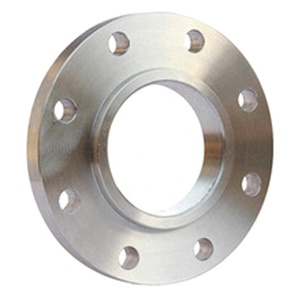
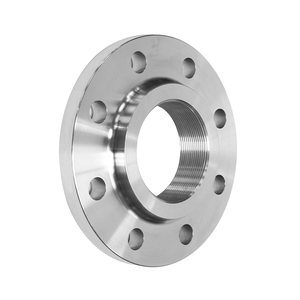
Weld Neck Flanges (also known as high-hub flanges or tapered hub flanges) represent the structural benchmark for hazardous, cyclic, high-pressure, and extreme-temperature process systems. Unlike slip-on or socket weld connections, the weld neck flange transfers stress directly from the flange ring through a long tapered hub down into the attached pipe wall. This gradual transition geometry dramatically reduces stress concentration at the base of the flange hub, making it uniquely capable of handling severe thermal fluctuations, pipe deflection, water hammer, and external bending moments.
As a primary China wholesale weld neck flanges exporter, our manufacturing protocols are anchored around ASTM, ASME, EN, and DIN requirements. Welding neck flanges require butt-welding directly to the pipe. Consequently, the internal bore of the flange is precision-machined to exactly match the inside diameter of the mating pipe schedule—ranging from Schedule 10, Schedule 40 (STD), Schedule 80 (XS), up to Schedule 160 and XXS. This internal alignment ensures zero hydrodynamic obstruction, preventing localized turbulence, erosion-corrosion, and cavitation damage in hydrocarbon transport, subsea manifolding, and supercritical steam loops.
| Material Specification | Standard Equivalents | Yield Strength (Min) | Tensile Strength | Design Temperature Window | Primary Sector Applications |
|---|---|---|---|---|---|
| ASTM A105 / A105N | EN 10222-2 P280GH / C22.8 | 250 MPa (36 ksi) | 485 MPa (70 ksi) | -29°C to 425°C (-20°F to 800°F) | General Hydrocarbons, Refining, High-Pressure Steam |
| ASTM A350 LF2 Class 1 | EN 10222-3 13MnNi6-3 | 250 MPa (36 ksi) | 485-655 MPa | -46°C to 345°C (-50°F to 650°F) | Cryogenic Gas Processing, Arctic Pipelines, LNG Terminals |
| ASTM A182 F304 / F304L | 1.4301 / 1.4307 (X2CrNi18-9) | 205 MPa (30 ksi) | 515 MPa (75 ksi) | -196°C to 538°C (-320°F to 1000°F) | Petrochemicals, Cryogenics, Nitric Acid Storage |
| ASTM A182 F316 / F316L | 1.4401 / 1.4404 (X2CrNiMo17-12-2) | 205 MPa (30 ksi) | 515 MPa (75 ksi) | -196°C to 815°C (-320°F to 1500°F) | Offshore Oil & Gas, Marine Brine, Chloride Environments |
| ASTM A182 F51 (Duplex 2205) | UNS S31803 / 1.4462 | 450 MPa (65 ksi) | 620 MPa (90 ksi) | -50°C to 300°C (-58°F to 572°F) | Subsea Flowlines, Sour Gas (H2S), Desalination RO Units |
| ASTM A182 F53 (Super Duplex 2507) | UNS S32750 / 1.4410 | 550 MPa (80 ksi) | 750 MPa (116 ksi) | -50°C to 300°C (PREN ≥ 42) | Deepwater Umbilicals, Flue Gas Scrubbers, Chemical Tankers |
Grain orientation dictates fatigue life under cyclic hydrodynamic loads. All carbon and low-alloy weld neck forgings produced by our factories undergo strict furnace normalization (ASTM A105N) with continuous heat profiling. In closed-die hydraulic forging, metal grain flow runs uninterrupted from the welding neck up into the sealing face, providing an impact resistance margin up to 35% higher than machined bar stock or flame-cut plate rings.
Every critical parameter of ASME B16.5 and B16.47 Series A & B is governed by automated CNC finishing and strict non-destructive testing.
Compound and standard 37.5° (±2.5°) weld prep bevels are automated with high-speed tool paths. We ensure root faces of 1.6mm (±0.8mm) to guarantee effortless full-penetration welding on automated orbital rigs.
Precision serrated concentric or spiral phonographic grooving with Ra 3.2 to 6.3 μm (125 to 250 AARH). Ensures complete micro-conformity for spiral wound, graphite, and Kammprofile gaskets under thermal cycles.
For Class 600, 900, 1500, and 2500 services, our RTJ female groove profiles (Octagonal and Oval R/BX/RX series) are machined with 20-degree side angles inspected via optical coordinate measuring machines.
Ultrasonic examination (UT per ASME Section V) verifies the absence of shrinkage cavities, inclusions, or laminations throughout the tapered neck. Liquid Penetrant (PT) and Magnetic Particle (MPI) testing ensure sound surfaces.
International EPC contractors, oil majors, and global stockists are shifting procurement frameworks from pure purchase price toward total cost of reliability (TCR). Sourcing from a premier Chinese wholesale exporter requires navigating three transformative procurement shifts:
1. Digital Material Passports & Cloud Heat Traceability: The era of easily forged paper MTRs is ending. Modern mega-refinery and green hydrogen projects mandate cloud-hosted, cryptographically signed Mill Test Certificates traceable via laser-engraved 2D Data Matrix codes directly on the flange rim. This allows field inspectors to scan a flange on-site and instantly verify yield strength, Charpy V-Notch impact values (-46°C), and chemical heat analysis.
2. Scope 3 Carbon Footprint Audits: European and American EPC conglomerates are screening suppliers based on carbon intensity per metric ton of steel forged. Chinese exporters utilizing clean electric arc furnaces (EAF) paired with renewable scrap feedstocks are outcompeting traditional blast-furnace operations, allowing distributors to satisfy stringent European CBAM (Carbon Border Adjustment Mechanism) thresholds.
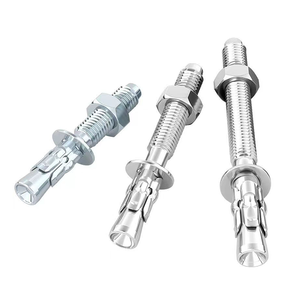
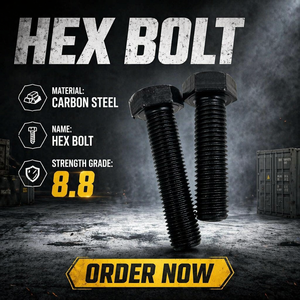
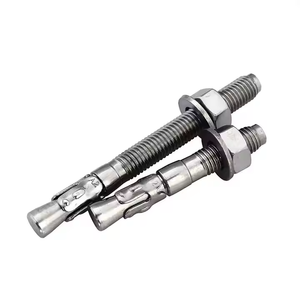
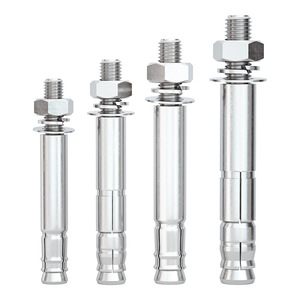
3. Bundled Flange & Bolting Packages: EPC buyers no longer desire segmented logistics where flanges arrive from one vendor while ASTM A193 B7 stud bolts, B8M fasteners, and wedge expansion bolts arrive from another. Unified procurement, bundling flanges, matching gaskets, and verified heavy hex bolting packages eliminates schedule misalignment and torque compatibility friction during hydrostatic testing.
With the rapid rollout of Carbon Capture, Utilization, and Storage (CCUS) and gaseous Hydrogen transmission lines, standard ASTM A105 carbon steel is being re-engineered. Supercritical CO2 lines undergo rapid decompression, generating temperatures down to -78°C, necessitating low-temperature carbon steels (ASTM A350 LF2 Class 2) with rigorous nickel micro-alloying. In pure hydrogen service, welding neck flanges undergo electro-chemical baking and strict hardness controls (≤22 HRC) to nullify hydrogen-induced cracking (HIC) and stress corrosion cracking (SCC) under NACE MR0175 / ISO 15156.
For ultra-deepwater and high-salinity sour gas manifolds, long weld neck (LWN) flanges forged from ASTM A694 (F60/F65) are receiving automated hot-wire TIG weld cladding with 3.0mm Inconel 625 (UNS N06625) over all wet surfaces. This combines high-strength base structural forging with zero-corrosion nickel alloy metallurgy, reducing total alloy weight by up to 60% compared to solid nickel alloy flanges.
How China's leading flange manufacturers are leveraging automation to achieve tolerances under ±0.2mm on large-diameter production.
Traditional open-die ring rolling leads to significant machining waste and irregular radial grain structures. Modern closed-die forging presses (up to 10,000 tons) press billet blanks into near-net weld neck profiles in single or double-blow cycles, preserving continuous radial grain flow throughout the neck radius.
Continuous walking-beam heat treatment lines paired with multi-stage water-polymer quenching tanks guarantee uniform hardness across both the thick flange face and thin weld neck tip. This eliminates the common defect where the neck over-hardens while the flange core remains under-tempered.
Bolt-circle pitch circle diameter (PCD), bolt hole straddle alignment, and neck bore transitions are executed in a single machine clamping cycle. This ensures exact concentricity between the gasket sealing face, the bolt holes, and the butt-weld bevel, speeding up pipeline field assembly.
Direct technical answers to essential engineering, dimensional, logistical, and inspection questions raised by international procurement teams.
Weld neck flanges must have their internal bore machined to equal the exact internal diameter (ID) of the connecting pipe. For instance, when ordering an 8" ASME B16.5 Class 300 WNF for Schedule 40 pipe, the nominal bore is 202.7 mm (7.981"). If welded to Schedule 80 pipe without specifying the correct bore, a pronounced interior step would form, causing severe fluid turbulence, pressure drop, and accelerated weld erosion. Always specify both nominal pipe size (NPS) and pipe wall thickness or schedule in your inquiry.
For wall thicknesses (t) between 5mm and 22mm, the standard weld preparation consists of a 37.5° ± 2.5° angle with a land (root face) of 1.6mm ± 0.8mm. For walls exceeding 22mm, a compound bevel (37.5° transition to 10°) is utilized to reduce the volume of filler metal required while ensuring sound root pass penetration. Flange bevels must be protected from transit impact with heavy-duty plastic bevel caps.
Raised Face (RF) flanges (with a 2mm raised height for Class 150/300 and 7mm for Class 600+) concentrate gasket seating stress, making them ideal for the majority of refinery and chemical services. Flat Face (FF) flanges are utilized primarily when bolting to fragile cast-iron or bronze valves and pumps to eliminate bending moments that could crack cast flanges. Ring Type Joint (RTJ) faces incorporate a precision-machined metallic ring groove and are preferred for severe service involving pressures ≥ Class 600 or volatile hydrocarbons > 400°C.
Standard weld neck flanges feature a tapered conical hub terminating in a weld bevel. A Long Weld Neck (LWN) flange, often designated as a barrel or nozzle flange, has a heavy, uniform straight cylindrical neck that acts as a complete self-reinforcing nozzle without requiring an intermediary cut pipe spool. LWNs are extensively utilized on pressure vessels, columns, and heat exchanger shells per ASME Section VIII Division 1 rules.
Every shipment must include an EN 10204 Type 3.1 Inspection Certificate directly tying heat codes stamped on the flange body to chemical spectrometry, mechanical tensile, yield, elongation, reduction of area, Charpy impact test logs, and hardness values. Additionally, PED 2014/68/EU certification, Non-Destructive Testing (UT/MT) reports, surface roughness conformity logs, and dimensional inspection sheets are provided.
All carbon steel flanges undergo surface degreasing followed by application of protective coatings based on buyer specification: clear rust-preventative oil for short storage, yellow/black rust-resistant lacquer for inland warehousing, or zinc phosphating. Stainless steel and duplex flanges undergo immersion acid pickling and passivation per ASTM A380 to restore the chromium oxide passive layer. Flanges are strapped in heavy, heat-treated wooden crates (ISPM 15 compliant) with inner polyethylene vapor barrier lining.
Connect directly with our engineering sales group for wholesale container pricing, MTC validation, custom drawing reviews, or integrated piping and structural fastener packages.