Engineered for high pull-out resistance, dynamic shear performance, and dependable mechanical interlock across cracked and uncracked concrete substrates.
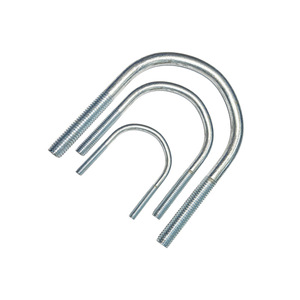
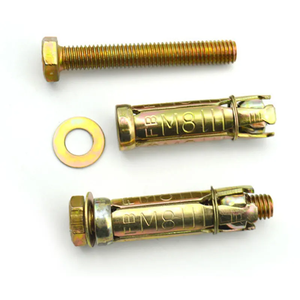
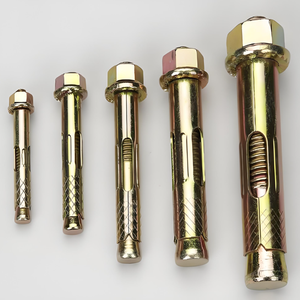
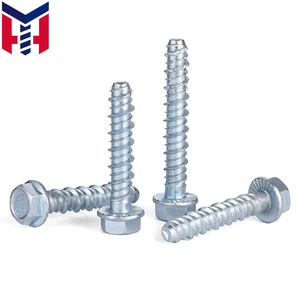
Combining industrial steel forging pedigree since 2010 with certified testing regimes to eliminate structural risk in mission-critical masonry and civil joints.
Full European Pressure Equipment Directive (PED) accreditation and active member of the Fastener Manufacturers Association of India (FMAI), enforcing rigorous QA/QC protocols across every extrusion, forging, and thread-rolling sequence.
From micro-fastening anchors to massive structural anchoring assemblies up to M100 diameter. We maintain dedicated tooling for metric, UNC, UNF, and special pitch 8-UN threading with custom lengths exceeding 1,200mm produced to custom prints.
Zero tolerance for questionable metallurgy. Every master production batch ships with an EN 10204 3.1 Inspection Certificate documenting heat chemistry, Charpy V-notch impact, Rockwell hardness, and ultimate proof load performance.
Recognized as one of India's prominent exporters of hot-dip galvanized and stainless fasteners, serving EPC megaprojects, LNG tank bases, rail infrastructure, and offshore pipelines across Far East Asia, West Africa, and the Gulf Corporation Council (GCC).
Understanding the physics of mechanical interlock versus controlled expansion friction under static, cyclic, and seismic stress regimes.
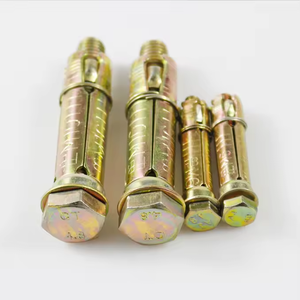
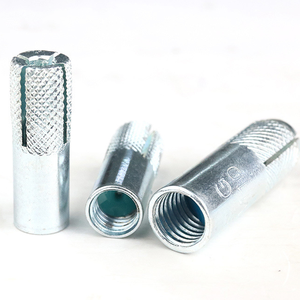
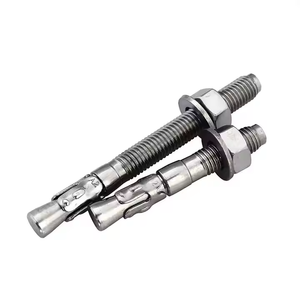
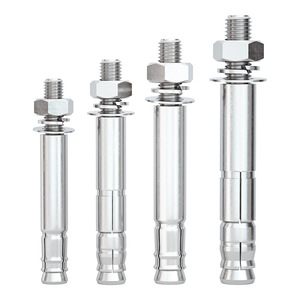
Mechanical expansion anchor bolts function by converting applied installation torque into lateral radial expansion forces. In torque-controlled wedge anchors (such as our heavy-duty zinc-plated and stainless steel variants), tightening the nut draws the precision-machined conical mandrel upward into the expansion clip. This forces the hardened sleeve segments outwards against the cylindrical walls of the drilled concrete bore hole.
The resulting radial clamping pressure creates an intense frictional interlock. In uncracked concrete, this stress profile creates an inverted conical tensile bulb extending from the anchor embedment depth to the masonry surface. Calculating adequate spacing ($s_{cr,N}$) and minimum edge distances ($c_{cr,N}$) according to ACI 318 Chapter 17 and Eurocode 2 (EN 1992-4) is mandatory to prevent overlapping stress cones and catastrophic concrete breakout failure.
For heavy industrial anchors, effective embedment depth ($h_{ef}$) must equal at least 8 to 12 times the nominal anchor diameter to avoid sudden concrete pull-out before the steel achieves its characteristic yield capacity ($f_{yk}$).
1. Steel Tensile / Shear Rupture: Occurs when the external applied force exceeds the cross-sectional ultimate tensile strength ($A_s \cdot f_{uk}$) of the bolt shank. Avoided through calibrated alloy selection (e.g., Q&T Class 8.8 / 10.9 or ASTM A193 B7).
2. Concrete Cone Breakout: The concrete tensile capacity is breached, dislodging a full 35-degree structural cone. Governed strictly by concrete compressive strength ($f'_{c}$) and embedment depth.
3. Anchor Pull-Out & Slip: The expansion clip slides inside the borehole without crushing the concrete matrix, typically caused by undersized bore diameters, poor borehole dust clearance, or inadequate installation torque ($T_{inst}$).
4. Concrete Splitting Failure: Premature fracturing along the anchor line caused by excessive lateral radial expansion pressure in slender base columns or narrow curbs with insufficient edge margin.
5. Concrete Edge Breakout: Shear force applied toward an unsupported concrete slab edge ruptures the lateral concrete edge before steel shear yield occurs.
| Steel Grade / Standard | Nominal Chemistry | Yield Strength ($f_{yk}$) | Tensile Strength ($f_{uk}$) | Corrosion Resistance Class (CRC) | Target Industrial Deployment |
|---|---|---|---|---|---|
| Carbon Steel Cl. 5.8 / 8.8 | Medium Carbon Steel, Q&T | 400 – 640 MPa | 500 – 800 MPa | CRC I / II (Electro-Zinc / HDG) | Interior structural framing, plant floor machinery racking, HVAC brackets |
| ASTM A193 B7 High-Alloy | 4140 / 4142 Cr-Mo Heat Treated | 720 MPa (105 ksi) | 860 MPa (125 ksi) | CRC II (Coated / Zinc-Nickel) | High-vibration pump pads, petrochemical anchor stools, turbine mounts |
| Austenitic AISI 304 (A2-70) | 18Cr - 8Ni Austenitic Stainless | 450 MPa | 700 MPa | CRC III (Moderate Marine / Industrial) | Food and beverage processing, cleanroom framing, exterior facades |
| Molybdenum AISI 316 (A4-80) | 16Cr - 10Ni - 2Mo High Purity | 600 MPa | 800 MPa | CRC IV (Severe Marine Splash & De-icing) | Coastal infrastructure, wastewater treatment aerators, offshore skid units |
| Duplex 1.4462 (2205) | 22Cr - 5Ni - 3Mo - 0.16N | 650 MPa | 850 – 1000 MPa | CRC V (Extreme Stress-Corrosion Resistance) | Desalination brine chambers, road tunnel ceilings subject to chlorides |
How seismic qualification, micro-alloying, advanced protective coatings, and smart fastening sensors are transforming post-installed concrete anchoring.
Standard friction anchors frequently suffer complete loss of clamping preload under dynamic seismic events as concrete fractures oscillate open and closed. Modern OEM expansion anchors incorporate deep undercut geometry and progressive expansion collars capable of dynamic follow-up expansion. Under European Technical Assessment (ETA) EAD 330232 and ACI 355.2 protocols, Category C2 certification requires anchors to maintain clamping integrity across crack widths expanding up to 0.8 mm during severe ground motions.
High-strength carbon steel expansion anchors (property class 10.9 and above) historically faced catastrophic delayed brittle fracture due to internal hydrogen absorption during acid pickling and electro-galvanizing. Next-generation production replaces aqueous acid pickling with mechanical blast cleaning, combined with immediate 4-to-8 hour de-hydrogenation baking at 200°C–220°C and non-electrolytic zinc flake coatings (such as Geomet® and Delta-Protekt®) that generate zero atomic hydrogen during application.
For safety-critical installations in nuclear power stations, high-speed rail viaducts, and LNG cryogenic pipe supports, the industry is transitioning toward smart expansion bolts with embedded ultrasonic piezoelectric transceivers or RFID-interrogated strain gauges. Maintenance engineers can non-destructively audit remaining bolt tension and clamping force in seconds without torquing or disrupting critical running equipment.
Key procurement shifts observed by engineering procurement directors, EPC contractors, and distributor purchasing managers worldwide.
Procurement executives are actively mitigating geopolitical bottlenecks and maritime freight disruptions by establishing dual-source manufacturing partnerships. Sourcing directly from proven Indian foundries certified to PED, ASTM, and DIN standards provides critical tariff advantages, price stability, and dependable direct deep-water logistics into Rotterdam, Houston, Jebel Ali, and Singapore.
Major European and North American infrastructure owners now mandate Environmental Product Declarations (EPDs) for construction fasteners. Foundries utilizing clean electric induction furnace melting, recycled scrap steel charges, and closed-loop plating rinse plants are winning long-term enterprise supplier tenders over legacy high-emissions coal-fired operations.
Industrial automation has eradicated acceptable defect tolerances (PPM). Major distributors and automotive contractors now contractually mandate 100% 360-degree laser vision sorting for thread pitch conformity, drive socket depth, and expansion sleeve concentricity to guarantee unhindered deployment in robotic and high-speed automatic installation tools.
Technical guidance covering hole geometry, torque requirements, surface coatings, and mill certificate verification.
Wedge anchors (through-bolts) utilize a compact 360° expansion collar that bites into the concrete at the bottom of the borehole when the solid mandrel is torqued. They require smaller hole diameters, deliver exceptionally high shear/tensile ratings, and are strictly for solid concrete. Sleeve anchors feature a continuous tubular sleeve running the full length of the bolt, distributing expansion forces over a wider area, making them ideal for softer masonry, hollow brick, or low-strength concrete block.
Drilling generates micro-pulverized concrete powder that cakes against the borehole wall. If not evacuated using compressed air and wire brushes (the "blow-brush-blow" cycle), the residual dust acts as a dry lubricant between the borehole wall and the expansion sleeve. Testing confirms that uncleaned holes can reduce ultimate tensile and pull-out load capacity by 35% to 60%, leading to uncontrolled slip under sustained structural load.
Standard non-qualified expansion anchors should never be specified for cracked concrete or tensile zone slabs, as a crack passing through the anchor axis will release lateral radial clamping pressure. For cracked concrete (flexural tension zones), engineers must specify torque-controlled wedge anchors or undercut mechanical anchors carrying formal ETA Option 1 or ACI 355.2 approvals, engineered with active follow-up expansion geometry.
Standard yellow zinc electroplating provides a thin 5–12 µm sacrificial barrier suitable for climate-controlled indoor dry environments (ISO 12944 C1/C2). Hot-Dip Galvanizing (ASTM A153 / ISO 10684) deposits a heavy, metallurgically bonded zinc-iron alloy layer of 45–65+ µm thickness, providing decades of maintenance-free service in outdoor unshielded atmospheres, coastal areas, and chemical plants (C3–C4 corrosive environments).
Every export shipment is accompanied by a full Mill Test Certificate (MTC) conforming to EN 10204 Type 3.1. This includes spectrographic raw melt chemical composition, tensile yield and elongation curves, Rockwell/Brinell hardness testing, salt spray corrosion test reports (ASTM B117), non-destructive ultrasonic/eddy current crack detection, and dimensional gauge verification reports.
Yes. Beyond standard DIN and ASTM catalog geometries, we operate advanced multi-station cold headers, CNC turning centers, and hot-forging presses capable of producing non-standard stepped shanks, extended collar lengths, proprietary anti-rotation knurls, captive washer heads, and special alloy variants (AISI 316Ti, Monel 400, Inconel 625, and Duplex steel) directly to client CAD/CAM drawings.