Manufactured under PED 2014/68/EU certification and audited quality systems. Full material traceability with EN 10204 3.1 Mill Test Certificates for petrochemical, marine, and LNG applications.
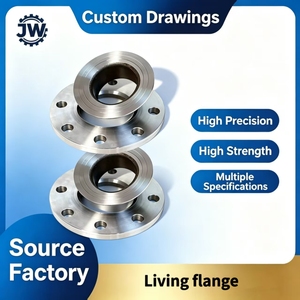
Comprehensive design protocols according to ASME B16.5, ASME Section VIII Division 1, and EN 1092-1 standards for high-value industrial piping.
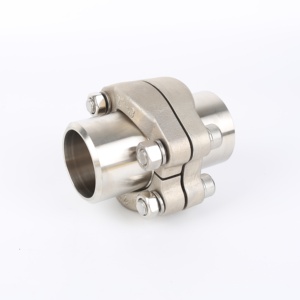
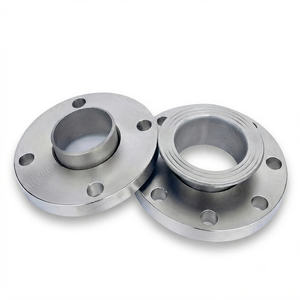
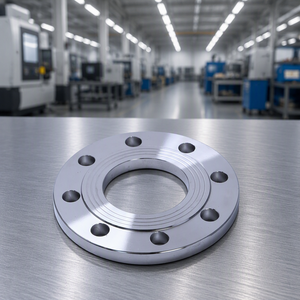
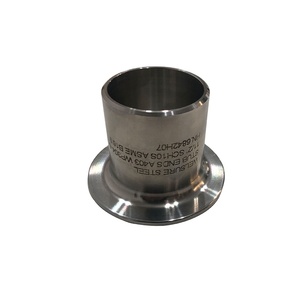
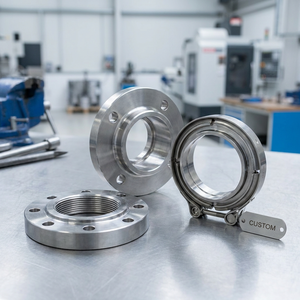
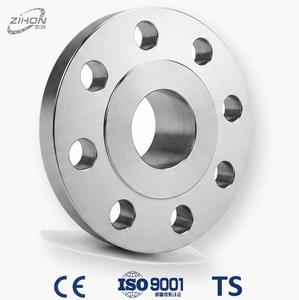
The primary mechanical distinction of a Lap Joint (Loose) Flange assembly lies in the decoupled construction between the backing flange ring and the pipe-wetted stub end. Because the backing flange freely rotates around the circumferential radius of the stub end, field mechanics eliminate bolt-hole misalignment stress entirely. This proves critical during rapid turnaround maintenance on offshore production platforms, refinery distillation columns, and chemical transfer manifolds where pipe indexing tolerance is constrained.
For aggressive environments transporting sour gas, concentrated nitric acid, or high-chloride seawater, utilizing solid super-alloy flanges is cost-prohibitive. Lap joint assemblies enable a hybrid material strategy: an expensive contact stub end (Titanium, Incoloy 800, Inconel 625, Hastelloy C276, or WP316L) combined with an economical, structurally robust forged carbon steel backing ring (ASTM A105 or SA350 LF2). This delivers identical corrosion resistance while reducing total raw material procurement expenses by up to 48% on large-diameter lines.
Fillet Radius Integrity Warning (ASME B16.5 Clause 6.7): To guarantee uniform mechanical load distribution and eliminate catastrophic fatigue stress concentrations, the internal corner radius of the lap joint backing flange bore must precisely match or exceed the external transition radius of the mating stub end. Viha Steel & Forging utilizes multi-axis CNC contour machining with CMM verification to guarantee contact integrity across all pressure classes.
Cross-standard reference data engineered for piping drafting offices, quality assurance inspectors, and EPC procurement leads.
| Standard & Specification | Nominal Size Range | Pressure Class Rating | Standard Stub End Match | Backing Flange Materials | Typical Service Profile |
|---|---|---|---|---|---|
| ASME B16.5 Lap Joint | 1/2" to 24" (NPS) | Class 150 to Class 2500 | ASME B16.9 Type A (Long / Short) | SA105, A350 LF2, A182 F304/F316L | Refinery, LNG manifolds, petrochem |
| ASME B16.47 Series A/B | 26" to 60" (Large Bore) | Class 150, Class 300 | B16.9 Custom Forged Stubs | A105N, A516 Gr.70, Stainless 316L | Main line transfer, municipal water |
| EN 1092-1 Type 02 / 04 | DN 15 to DN 1200 | PN 6, PN 10, PN 16, PN 25, PN 40 | EN 1092-1 Type 32, Type 34 Collar | P245GH, P280GH, 1.4404 (316L) | European chemical & utility grids |
| JIS B2220 Loose Flange | 10A to 600A | 5K, 10K, 16K, 20K, 30K | JIS B2312 / B2313 Stub End | SS400, SF440A, SUS304, Incoloy 800 | Shipbuilding, marine engineering |
| ISO 6161 / ISO 6162 (SAE) | 1/2" to 3" Code 61 / 62 | 3000 PSI to 6000 PSI | Integrated Counterbore Socket | 4140, AISI 1045, 316Ti | High-pressure hydraulic connections |
Key technological, regulatory, and sustainability shifts transforming global piping procurement strategies over the next decade.
Global Tier-1 energy corporations are shifting rapidly away from manual paper inspection reports. Future procurement contracts require digital QR-coded laser etchings directly on the flange rim. These link instantaneously to cryptographically verified raw melt heat chemistry, ultrasonic non-destructive testing logs, and mechanical test batches, mitigating counterfeit supply chain risks in ultra-critical infrastructure.
Scope 3 greenhouse gas reporting demands are reshaping industrial purchasing frameworks. Procurement executives are evaluating foundries not solely on metric-ton FOB pricing, but on embodied carbon content. Factories deploying electric arc furnace (EAF) scrap charging, clean-fuel forging preheating, and optimized near-net-shape forging tooling are awarded long-term global frame agreements.
Rather than issuing disconnected purchase orders for bare flanges, stub ends, bolting, and spiral wound gaskets, engineering procurement leads increasingly favor integrated connection packages. Viha Steel & Forging provides complete flange-bolting kits—combining ASME lap joint rings, stub ends, matching ASTM A193 B7/B8 studs, and A194 heavy hex nuts—pre-inspected for thread and radius compatibility.
Addressing the technical challenges of hydrogen transition, deep-water exploration, and ultra-high-vacuum handling.
As blended hydrogen and pure clean-hydrogen transmission grids expand worldwide, conventional micro-alloyed carbon steels face catastrophic hydrogen induced cracking (HIC). Next-generation lap joint production integrates vacuum-degassed ultra-low sulfur forgings and specialized austenitic/duplex stub ends designed to prevent interstitial atomic migration under extreme system pressures.
Traditional multi-step manual lathe turning is being supplanted by continuous multi-axis robotic machining centers. Automated machining ensures sub-micron surface finishes on stub end raised faces (smooth finish Ra 3.2–6.3 µm or serrated spiral finish per ASME B16.5), preventing micro-channel leak paths for low-density volatile organic compounds and cryogenic LNG liquids.
To guard backing rings installed in aggressive salt-spray marine top-sides, factories are advancing beyond standard hot-dip galvanizing. Dual-layer ceramic coatings, thermal spray aluminum (TSA), and multi-layer fluoropolymer dry-film barriers prevent galvanic interaction between the noble stainless stub end and the carbon steel backing ring, extending offshore lifecycle beyond 30 years.
Combining Mumbai's advanced industrial forging infrastructure with stringent European PED certifications and global export logistics.
Over a decade of specialized industrial manufacturing experience serving Tier-1 international EPC contractors across 35 countries.
Accredited for pressure equipment manufacturing under European Union safety directives. Recognized active member of FMAI.
Comprehensive metallurgical testing: Optical Emission Spectrometry (PMI), Charpy V-Notch impacts at -196°C, ultrasonic testing, and hydrostatic verification.
Ranked among India's largest exporters of hot-dip galvanized fasteners and coated structural flanges, engineered for extreme marine environments.
In-depth technical answers addressing dimensional tolerances, material pairing, and quality assurance protocols.
While both flanges slide over the pipe, a Slip-On flange is welded directly to the pipe via two fillet welds (one internal and one external). In contrast, a Lap Joint flange is never welded to the pipe; it slips over the pipe freely and seats against the rear surface of a butt-welded Stub End. The Lap Joint transfers bolt load into the gasket through the face of the stub end, allowing full rotational freedom for easy bolt hole alignment.
Yes, this is one of the primary commercial advantages of the lap joint configuration. The corrosive process fluid only contacts the wetted surface of the stainless steel or nickel alloy stub end. However, in outdoor marine or high-humidity operating environments, galvanic corrosion can occur at the physical junction between the carbon steel ring and the alloy stub. To prevent this, our engineers recommend hot-dip galvanizing, zinc-nickel plating, or applying an insulating non-conductive dielectric barrier.
ASME B16.9 stub ends are designed for high-pressure industrial piping systems across Class 150 to Class 2500, matching the full wall thickness and dimensions of standard schedules (SCH 40, SCH 80, SCH 160). MSS SP-43 stub ends are specifically engineered for low-pressure, lightweight thin-wall stainless piping systems (typically Schedule 5S and Schedule 10S), offering significant cost savings for water treatment and general chemical fluid lines.
Every shipment from our Mumbai forging facility includes comprehensive EN 10204 Type 3.1 Mill Test Certificates traceable to the unique melt heat number. Certified testing includes full chemical composition analysis via spectrometer, ambient and low-temperature tensile and yield testing, Charpy V-notch impact validation, Brinell hardness testing, and Non-Destructive Examination (NDE) including Ultrasonic (UT) and Magnetic Particle Inspection (MPI).
The inside bore radius of the backing flange must be machined with a precision chamfer or radius that conforms precisely to the fillet radius of the stub end. If the flange radius is too sharp, it creates high point-loading and premature stress fracturing on the stub end under bolt torque load. If the radius is excessively large, it reduces the effective bearing contact area, causing flange deflection and joint leakage.
Yes. Our Mumbai machining workshops feature CNC horizontal and vertical boring centers capable of manufacturing custom lap joint flanges and companion stub ends up to 2500 mm (100 inches) outside diameter. We regularly produce custom bolt pitch circle diameters (PCD), special facing transitions, counterbored hub designs, and non-standard wall schedules according to project specifications.
Send your project schedule, bill of materials, piping isometric drawings, or standard specifications directly to our senior metallurgical export department.