
Engineered for severe mechanical stress, structural stability, and rigorous industrial environments. Every component undergoes strict optical sorting, dimensional verification, and metallurgical testing.
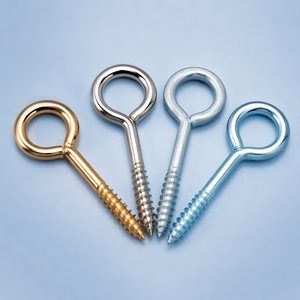
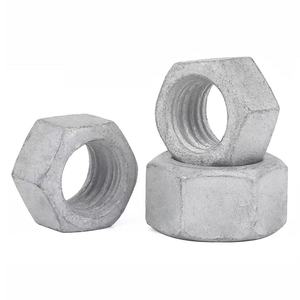
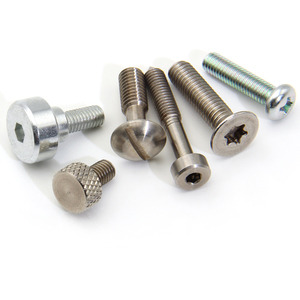
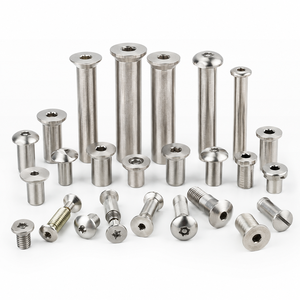
Operating as a PED-certified exporter and Fastener Manufacturers Association of India (FMAI) member since 2010, our Mumbai production hub integrates end-to-end hot and cold forging with fully calibrated testing laboratories.
Certified for safety-critical pressure vessel equipment and industrial flanged connections. Every batch complies with strict European standards, verified through rigorous ultrasonic examination, liquid penetrant testing (PT), and hydrostatic load testing.
Equipped with multi-zone mesh belt quench-and-temper furnaces. Atmospheric carbon potential is actively regulated via computer sensors to ensure complete elimination of surface decarburization and uniform martensitic microstructure throughout the core.
Complete transparency from initial melt heat to final torque test. Every shipment arrives complete with certified chemical composition analysis (OES spectrometry), tensile and elongation test curves, Charpy V-notch impact data, and surface coating thickness verification.
Selecting the appropriate fastener class requires evaluating the delicate equilibrium between yield strength, core ductile toughness, shear fatigue limits, and environmental galvanic risk.
| Property Class / Grade | Base Chemistry | Heat Treatment State | Nominal Tensile (Rm) | Yield Strength (Re) | Hardness Range | Standard Application Domain |
|---|---|---|---|---|---|---|
| Class 4.8 | Low Carbon (AISI 1018 / 1022) | Cold Worked, As-Formed | 400 N/mm² (58 ksi) | 320 N/mm² (46 ksi) | HRB 71 – 95 | Light assemblies, furniture, standard consumer enclosures |
| ASTM A307 Gr. A | Low Carbon (A36 / 1020) | Stress Relieved / Annealed | 414 N/mm² (60 ksi) | Yield not specified | HRB 69 – 100 | General civil structures, secondary timber-to-steel tie joints |
| Class 8.8 | Medium Carbon (AISI 1035 / 1045) | Quenched & Tempered | 800 N/mm² (116 ksi) | 640 N/mm² (93 ksi) | HRC 22 – 32 | Automotive chassis, general machinery, heavy structural framing |
| ASTM A325 / F3125 | Medium Carbon Boron / Alloy | Quenched & Tempered | 830 N/mm² (120 ksi) | 635 N/mm² (92 ksi) | HRC 25 – 34 | High-shear structural steel erection, bridge construction |
| Class 10.9 / HV | Alloy Steel (40Cr / 4140) | Quenched & Tempered | 1000 N/mm² (145 ksi) | 900 N/mm² (130 ksi) | HRC 32 – 39 | Preloaded structural bolting, engine head studs, wind turbines |
| ASTM A193 B7 | Chromium-Molybdenum (4140/4142) | Liquid Quenched & Tempered | 860 N/mm² (125 ksi) | 720 N/mm² (105 ksi) | HRC 25 – 35 | High-temperature and high-pressure ASME flanged piping systems |
| Class 12.9 | Alloy Steel (42CrMo4 / 4340) | Quenched & Tempered | 1220 N/mm² (177 ksi) | 1100 N/mm² (160 ksi) | HRC 39 – 44 | Extreme clamping loads, injection molding tie rods, hydraulics |
Global fastener procurement has evolved from simple unit-price negotiation into an integrated engineering discipline prioritizing supply resilience, carbon-footprint reduction, and hydrogen embrittlement control.
Regulatory pressure under RoHS and REACH is accelerating the transition away from electroplated zinc toward non-electrolytic zinc flake coatings (such as Geomet, Dacromet, and Magni). These coatings eliminate acid pickling, removing the primary cause of hydrogen embrittlement while providing over 1,500 hours of salt spray protection per ASTM B117 with zero risk of thread galling.
Procurement teams are moving away from single-source dependencies in East Asia. By establishing qualified contract relationships with certified Indian exporters who combine domestic hot-forging mills with rapid-response sea logistics through Mumbai ports, industrial buyers hedge against geopolitical tariffs, reduce inventory lead times, and optimize working capital turnover.
High-vibration applications in high-speed rail, offshore wind towers, and mining infrastructure increasingly require verifiable clamp-load assurance. The market is shifting from manual torque wrenches toward Direct Tension Indicator (DTI) washers and smart piezoelectric bolt systems that actively confirm preload tension during bolted joint assembly.
Direct technical answers for sourcing managers, quality auditors, and chief structural engineers evaluating OEM/ODM carbon steel fastener tenders.
Internal Hydrogen Embrittlement (IHE) occurs when atomic hydrogen enters hardened alloy steels during acid pickling or electroplating. For property classes exceeding 1000 MPa tensile strength (≥ 32 HRC), our manufacturing protocol mandates mechanical descaling (shot blasting) instead of acid immersion. When zinc plating is specified, fasteners enter temperature-controlled de-embrittlement baking ovens within 4 hours of plating, soaking at 200°C to 220°C for 8 to 24 hours per ISO 4042 specifications.
Hot-dip galvanizing deposits a heavy zinc layer of 45 to 85 microns, which interferes with standard thread engagements. Per ISO 965-5 and ASTM A563, standard practice requires the male external bolt threads to be cut to standard tolerance classes (such as 6g) before galvanizing. The mating internal nut threads are then tapped oversize after galvanizing (tolerance class 6AZ or 6AX) to allow clean thread engagement without compromising stripping strength or damaging the protective zinc barrier.
Cold heading reshapes wire stock at ambient temperature, producing work hardening that increases surface tensile strength while delivering exceptional dimensional consistency and surface smoothness for diameters up to M24. For large-diameter fasteners (M27 through M100+), hot forging is required. Steel billets are induction heated to 1100°C–1200°C before forming, ensuring uniform plastic flow around the bolt head that prevents internal stress concentrations and eliminates directional shear cleavage planes.
Every incoming coil or billet is assigned an internal heat lot control code cross-referenced to the steel mill's original EN 10204 3.1 ladle analysis. This code follows the product through cold-heading, threading, heat treatment, surface finishing, and packaging. The final Mill Test Certificate (MTC) provides clear traceability linking the finished shipping pallet back to the original furnace melt, verifying mechanical yield, elongation, hardness, and Charpy impact values.
To prevent rust and cosmetic degradation during prolonged maritime transit across humid climates, our export-ready packaging utilizes heavy-duty 25 kg multi-wall corrugated cartons with internal VCI (Vapor Corrosion Inhibitor) plastic lining bags. Cartons are strapped to heat-treated, fumigated ISPM-15 compliant wooden or composite plastic pallets, stretch-wrapped in waterproof UV film, and secured with poly-woven outer pallet covers and corner edge-protectors.
Standard OEM/ODM cold-heading dies and carbide trim tools require 12 to 18 calendar days for engineering design, wire EDM cutting, and trial run verification. First-article sample inspection reports (FAIR) alongside PPAP Level 3 documentation packages (Control Plans, PFMEA, Dimensional Results, Material Certs) are submitted within 21 days of drawing sign-off. Full production run shipping generally occurs 30 to 40 days following sample approval.
Whether you need high-tensile structural bolts, custom cold-forged shoulder pins, or full project estimation under PED 2014/68/EU guidelines, our technical sales engineers in Mumbai are ready to review your CAD files, material standards, and delivery schedules.