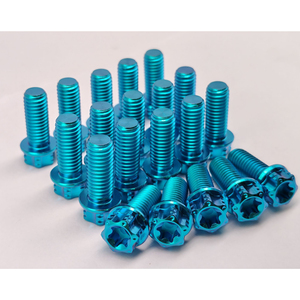
Mission-critical socket weld, threaded fittings, structural anchorings, and specialty hardware designed for extreme thermal and hydraulic environments.
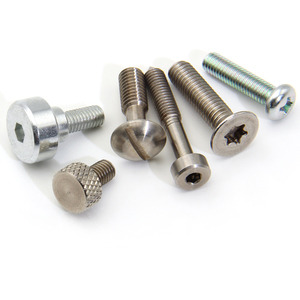
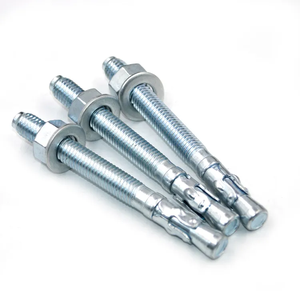
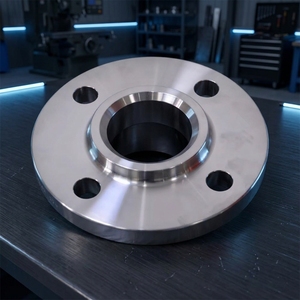
Comprehensive technical breakdown of grain refinement, structural integrity, and manufacturing specifications for EPC contractors.
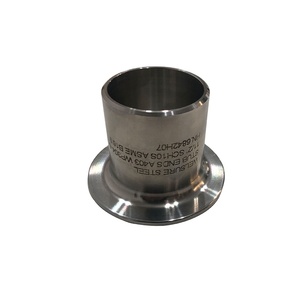
Forged pipe fittings—encompassing high-pressure tees, 45° and 90° elbows, couplings, unions, reducers, cross fittings, and weldolets—constitute the backbone of high-integrity processing systems worldwide. Unlike cast or sub-optimally machined wrought variants, the forging manufacturing process utilizes compressive thermal manipulation under closed dies. This hot and cold plastic deformation completely recrystallizes the coarse crystalline dendritic structure into an unbroken, unidirectional metallurgical grain flow that runs parallel to the natural geometric contours of the fitting body.
As an accredited PED approved manufacturing powerhouse and verified Fastener Manufacturers Association of India (FMAI) member since 2010, our Mumbai production works engineer high-pressure components engineered to resist severe hydrostatic pressure surges, cyclical thermal fatigue, and mechanical resonance. Operating across standard Class 2000, 3000, 6000, and 9000 pressure designations per ASME B16.11, BS 3799, and MSS-SP-79/83/95, our forgings ensure virtually zero risk of cavity inclusions, internal hydrogen embrittlement, or sub-surface gas porosity.
Material integrity conforms directly to premier grade standards including low-carbon cryogenic steel (ASTM A350 LF2 / LF3), high-yield carbon steel (ASTM A105N Normalized), advanced chrome-moly creep alloys (ASTM A182 F11, F22, F91), austenitic stainless compositions (ASTM A182 F304/304L, F316/316L), and exotic corrosion-resistant marine alloys including Duplex 2205, Super Duplex 2507, Phosphor Bronze, Silicon Bronze, and Grade 5 Titanium.
Closed-die forging forces grain boundaries to follow fitting contours, drastically increasing tensile yield, impact toughness, and sheer hoop stress tolerance at structural intersections.
Computerized continuous heat-treatment furnaces perform solution annealing, normalizing, and quench-and-temper (Q&T) routines to eliminate internal stresses and control grain-size consistency.
Multi-axis CNC turning and threading lines deliver razor-sharp tolerance on ASME B1.20.1 NPT threads and ASME B16.11 socket depth bores, ensuring leak-free weld preparation and assembly.
| ASME / ASTM Material Grade | Metallurgical Designation | Min. Yield Strength (MPa) | Min. Tensile Strength (MPa) | Service Environment & Target Application |
|---|---|---|---|---|
| ASTM A105 / A105N | Normalized Carbon Steel | 250 MPa (36 ksi) | 485 MPa (70 ksi) | General ambient & high-pressure oil/gas upstream distribution. |
| ASTM A350 LF2 Class 1 | Low-Alloy Cryogenic Carbon | 250 MPa (36 ksi) | 485 - 655 MPa | Sub-zero LNG infrastructure, cryogenic manifolds down to -46°C. |
| ASTM A182 F316 / F316L | Molybdenum Austenitic SS | 205 MPa (30 ksi) | 515 MPa (75 ksi) | Marine seawater systems, chemical processing, offshore topside piping. |
| ASTM A182 F11 Class 2 | 1.25Cr - 0.5Mo Alloy Steel | 310 MPa (45 ksi) | 485 - 620 MPa | Superheated steam, boiler downcomers, thermal power generation. |
| ASTM A182 F51 / UNS S31803 | 22Cr Duplex Stainless Steel | 450 MPa (65 ksi) | 620 MPa (90 ksi) | Highly sour wells (H2S), aggressive chloride pitting resistance. |
Strategic evolution in supply chain resilience, carbon footprint validation, and alloy engineering.
The international procurement environment for forged industrial components and specialized pipeline connections is currently undergoing the most significant technical transformation in three decades. EPC procurement leaders, MRO inventory directors, and pipeline system integrators are navigating key structural shifts:
1. Digital Material Passports & Full Heat Traceability: Global operators now mandate unalterable digital documentation for every pressure-retaining forging. The reliance on paper test sheets is obsolete. Standard orders require digitally verifiable EN 10204 3.1 inspection certificates linked directly to individual raw billet melt heats, including positive material identification (PMI) through X-ray fluorescence (XRF) and optical emission spectroscopy (OES), non-destructive testing (NDT), ultrasonic testing (UT), and dye-penetrant evaluation.
2. Sour Service Hydrogen & CCUS Demands: With massive capital allocation towards Carbon Capture, Utilization, and Storage (CCUS) projects and blue/green hydrogen transportation, pipe fittings are subjected to new metallurgical constraints. Resistance to Sulfide Stress Cracking (SSC) and Hydrogen-Induced Cracking (HIC) per NACE MR0175 / ISO 15156 is no longer optional. Forged fittings must exhibit strictly controlled hardness values (≤22 HRC for carbon steels) combined with strict carbon equivalents (CE ≤ 0.43%) to ensure weldability without localized pre-crack formations.
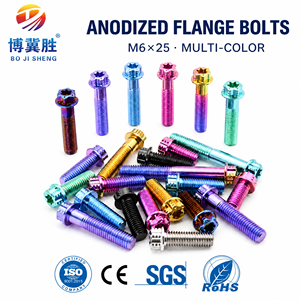
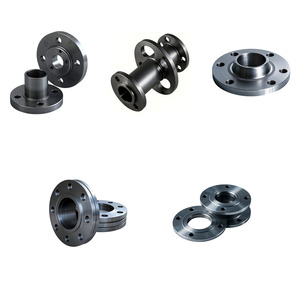
3. Supply Consolidation Across Fasteners & Flanged Connections: Large engineering houses are intentionally reducing tier-2 vendor redundancy by partnering with unified manufacturing facilities. Sourcing high-tensile structural bolts (ASTM A193 B7, B8M, A325, EN 14399 HV) alongside complementary forged fittings and ANSI/ASME B16.5 forged flanges simplifies vendor audits, unifies metallurgical warranty accountability, and streamlines logistics into consolidated seaworthy export shipments.
Why Tier-1 industrial buyers across the Gulf, Far East Asia, and West Africa rely on our Mumbai operations.
Fully compliant with European Pressure Equipment Directive (PED 2014/68/EU) Annex I standards. Every forging is chemically, mechanically, and non-destructively validated in our NABL-accredited test environments.
Ranked among India's top 3 exporters of Hot Dip Galvanized fasteners, threaded rods, and high-pressure components, equipped with high-temperature centrifuge spinning tanks that guarantee thread integrity.
From custom forging dies to specialized multi-axis CNC profiling, we produce non-standard wall thicknesses, extended length swages, branch outlets, and custom studs engineered to client drawings in metric and imperial ranges.
Detailed engineering clarification addressing standard compliance, testing, testing certificates, and shipping logistics.
We manufacture forged high-pressure fittings primarily under ASME B16.11 (socket-welding and threaded), MSS-SP-79, 83, 95, 97, and BS 3799. We also supply custom forgings per DIN 2605 / 2615 / 2616 and project-specific shop drawings with full dimensional verification reports.
Every single batch originates from inspected steel billets accompanied by melt mill certs. We enforce complete heat number hard-stamping on all fitting bodies. Shipments include comprehensive EN 10204 Type 3.1 Mill Test Certificates detailing chemical analysis, tensile yield, elongation, and Charpy impact values.
Our in-house QA processes include Ultrasonic Examination (UT) for internal defect detection, Magnetic Particle Inspection (MPI) for ferromagnetic alloys, Liquid Penetrant Testing (LPT) for stainless steels, and 100% thread profiling using calibrated GO/NO-GO precision gauges.
Yes. Our inventory covers ASTM A182 F11/F22/F91 for superheated thermal power and refinery reforming units, as well as ASTM A350 LF2 (Class 1 & 2) and LF3 normalized forgings tested for Charpy V-Notch impact performance down to cryogenic temperatures (-101°C).
Fittings are delivered with rust-preventative black phosphate, transparent anti-corrosion oil dipping, electro-galvanization, hot-dip galvanizing (HDG) per ASTM A153, or high-durability fluoropolymer (PTFE/Xylan) coatings for aggressive marine and subsea installations.
All machined female and male threads are protected with heavy-duty plastic end caps. Items are vacuum-bagged with vapor corrosion inhibitors (VCI) and packed into heavy fumigated Euro-pallets or seaworthy wooden cases strapped with galvanized steel bands to prevent transit abrasion.
Connect directly with our Mumbai metallurgical engineering desk. Send your bill of materials (BOM), project specifications, or custom drawings for factory-direct mill pricing and expedited delivery schedules.