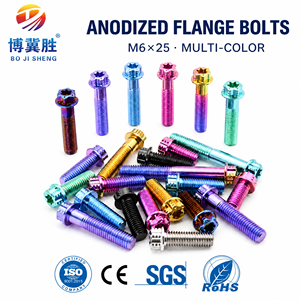
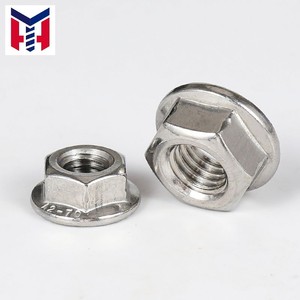
Direct-from-factory OEM/ODM production according to DIN, ISO, ASME, and custom design specs with full Mill Test Certificate (MTC) traceability.
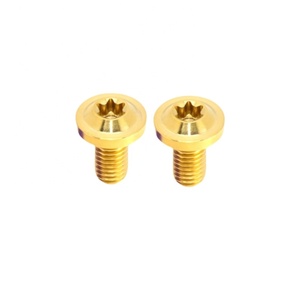
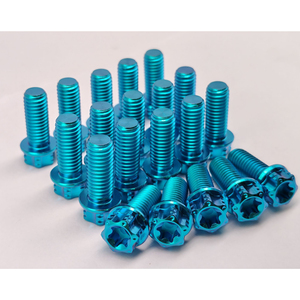
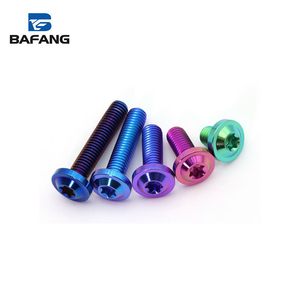
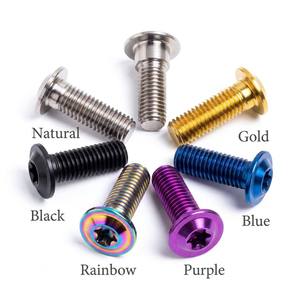
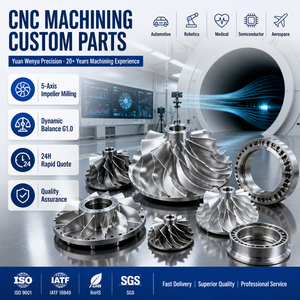
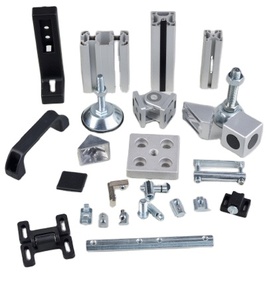
In high-stakes mechanical assemblies, fastener failure is rarely a function of nominal tensile loading alone. It is consistently triggered by cyclical stress fatigue, galvanic incompatibility, thermal creeping, or dynamic vibration. While conventional Class 8.8, 10.9, and 12.9 alloy steels offer robust initial yield thresholds, their heavy mass, susceptibility to environmental embrittlement, and rapid oxidation in chloride rich atmospheres demand continuous maintenance intervention. As an established OEM/ODM titanium fasteners manufacturer with over a decade of metallurgical forging and precision CNC capabilities, we engineer mission-critical hardware designed to replace conventional carbon and stainless steel fixings with uncompromising mechanical fidelity.
The foundation of structural titanium fastening lies in the precise control of the alpha-beta phase equilibrium. Ti-6Al-4V (Grade 5, UNS R56400) provides an exceptional strength-to-weight ratio, maintaining a minimum tensile strength of 895 to 1000 MPa while delivering a density of 4.43 g/cm³ compared to approximately 7.85 g/cm³ for structural steel. The addition of 6% aluminum acts as an alpha stabilizer, providing elevated temperature strength up to 400°C (752°F), while 4% vanadium operates as a beta stabilizer, granting the required ductility for thread rolling and dynamic fatigue damping.
For chemical containment and offshore desulfurization units where absolute immunity to reducing acids and pitting is primary over shear loads, our facilities provide ASTM B348 Grade 2 Commercially Pure (CP) titanium, or Grade 7 (with palladium addition) for harsh crevice corrosion environments. Each batch undergoes rigorous spectrometer chemical verification, ensuring interstitial element controls (oxygen, nitrogen, and hydrogen) remain well beneath standard thresholds to eliminate catastrophic hydrogen-induced delayed cracking.
| Fastener Material Grade | Density (g/cm³) | Tensile Strength (MPa) | Yield Strength (MPa) | Fatigue Limit (Cycles) | Operational Environment |
|---|---|---|---|---|---|
| Titanium Gr5 (Ti-6Al-4V) | 4.43 | 950 - 1050 | 880 | > 10⁷ @ 510 MPa | Aerospace, Supercars, Racing Hubs, Subsea |
| Titanium Gr2 (CP Unalloyed) | 4.51 | 345 - 485 | 275 | > 10⁷ @ 220 MPa | Exhausts, Chemical Process, Marine Desalination |
| Stainless Steel 316 / A4-80 | 8.00 | 800 | 600 | > 10⁷ @ 380 MPa | Food Processing, Architecture, Standard Marine |
| High Tensile Alloy Steel 10.9 | 7.85 | 1040 | 940 | > 10⁷ @ 490 MPa | Structural Infrastructure, Commercial Automotive |
| Inconel 718 (Nickel Superalloy) | 8.19 | 1240 - 1375 | 1030 | > 10⁷ @ 620 MPa | Extreme Gas Turbine Exhaust (>650°C) |
A persistent risk in generic titanium fasteners sourced from under-equipped machine shops is the micro-fracturing of cut threads. Subtractive cutting tears through the metal's grain structure, creating microscopic stress concentrators along the root radius where peak cyclic shear occurs. At our manufacturing plants, we utilize multi-station high-speed cold and warm heading machinery to forge fastener heads, followed by precision CNC shank finishing and cold thread rolling under high radial pressure.
Thread rolling reorients the grain flow contours continuously along the external flanks, creating compressive surface residual stresses. This mechanical burnishing action increases the thread fatigue endurance threshold by over 30% compared to cut threads, effectively suppressing thread galling during rapid pneumatically-driven assembly. In hyper-critical racing and aerospace connections, safety lock-wire cross holes are micro-drilled using multi-axis CNC operations without creating edge burrs or thermal discoloration.
Titanium naturally forms an instantaneous, tenacious surface oxide (TiO₂) layer that yields world-class corrosion resistance. However, under high torque tightening conditions against identical titanium, aluminum, or stainless components, high coefficient of friction can trigger micro-welding—commonly termed galling or seizing. As an end-to-end OEM/ODM factory, our surface treatment technologies systematically address this phenomenon:
Global supply chains are shifting toward localized resilience, stringent environmental tracking, and ultra-high-performance lightweight hardware.
Electric mobility platforms have reached an inflection point where structural mass optimization directly correlates with battery pack volume efficiency and range metrics. Engineering procurement directors in motorsport, EV hypercars, and premium electric motorcycles are actively transitioning unsprung suspension linkages, brake caliper studs, and battery subframe connectors from coated Class 10.9 steel to Grade 5 titanium, capturing up to 45% component mass savings without sacrificing yield safety margins.
While the initial acquisition price of titanium fasteners remains higher than standard carbon steel, modern procurement models evaluate Total Cost of Ownership (TCO). In offshore wind turbines, marine risers, and petrochemical plants, replacing corroded, seized steel fasteners involves massive operational labor and downtime costs. Titanium’s immunity to seawater pitting and galvanic stability in composite assemblies delivers an operating lifespan that outlasts the parent structures, yielding a lower net cost per operating hour.
Global aerospace, defense, and maritime engineering sectors are tightening compliance audits. Buyers increasingly refuse spot-market brokers and gravitate directly toward integrated manufacturing factories that provide complete EN 10204 3.1 Mill Test Certificates (MTC), non-destructive testing (NDT), ultrasonic crack inspection, and raw sponge titanium heat traceability linked permanently to each production lot.
From raw titanium sponge processing to multi-axis CNC precision machining, our automated production ecosystem guarantees exact geometric tolerances and mechanical integrity.
Our machine park integrates advanced 5-axis DMG MORI CNC turning centers and custom multi-station high-tonnage cold headers. We maintain tight mechanical tolerances within ±0.005mm on critical diameters and run automated high-speed thread rolling cells for ISO Metric (M2–M100), UNC, UNF, and custom aero-thread forms.
Quality assurance is embedded at each manufacturing stage. Every single batch undergoes optical spectrum chemical analysis, micro-Vickers hardness verification, axial tensile pulling tests, and eddy current / ultrasonic non-destructive testing to guarantee 100% void-free internal structure prior to shipment.
We do not simply produce catalogue standards; we collaborate as design partners. Our CAD/CAM engineers review custom 2D/3D step files, optimizing head geometry, drive sockets (Torx, Hex, Plum Blossom, 12-point), and weight-reduction cavity bores to reduce material mass without compromising shear and tensile performance.
Clear, direct technical answers to assist procurement specialists, design engineers, and quality assurance inspectors.
Grade 5 titanium provides equivalent tensile strength (~950 to 1050 MPa) to Class 10.9 structural steel while delivering an immediate 45% weight reduction. Furthermore, titanium exhibits superior fatigue resistance, high damping capacity under severe mechanical vibration, and absolute immunity to atmospheric, salt-spray, and chemical galvanic degradation, which eliminates thread seizure in corrosive working environments.
Thread galling occurs when friction breaks down passive oxide layers, causing micro-friction adhesion. We prevent this using rolled threads that produce a polished mirror finish, followed by specialized surface treatments including thin-film PVD coatings (DLC, TiN), Type II hard anodizing, or the pre-application of factory-bonded dry lubricant coatings. When properly torqued, our fasteners ensure seamless assembly and disassembly cycles.
Every commercial production batch is accompanied by comprehensive EN 10204 Type 3.1 Mill Test Certificates (MTC). This package includes optical emission spectroscopic analysis (confirming chemical composition of Ti, Al, V, Fe, C, O, N, and H), mechanical tensile/yield test data, hardness logs, and full dimensional inspection reports conducted on coordinate measuring machines (CMM).
For standard catalog sizes and DIN/ISO configurations (such as M4–M12 Gr5 bolts), we maintain baseline stock ready for immediate dispatch. For custom OEM/ODM CNC turning or heading according to client drawings, our standard prototype turnaround is 7 to 10 working days, with mass production runs typically completing within 3 to 4 weeks depending on surface treatment requirements.
Yes. We offer precision micro-drilled heads and shank holes configured to FIA, FIM, and aerospace safety lock-wire standards. Drilled holes are deburred and radiused under micro-optical inspection to guarantee that safety wire can be fed smoothly without risk of shear cuts or localized micro-stress concentrations during severe vibration events.
Send your 2D/3D CAD drawings, material grade specs, and annual procurement targets. Our technical engineers respond with comprehensive DFM analysis and quotes within 24 hours.