
Engineered Fastening & Structural Hardware Systems
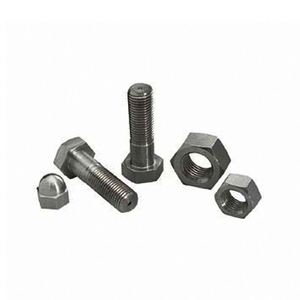
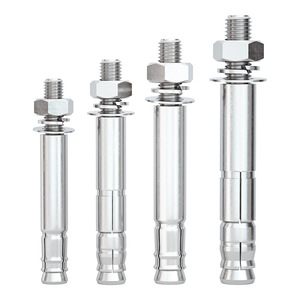
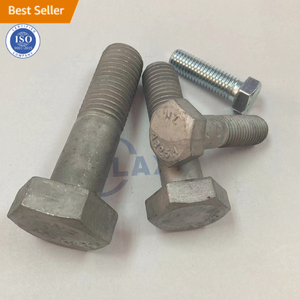
Precision-extruded, hot-dip galvanized, and CNC-threaded industrial bolts, flanges, and anchor assemblies calibrated for extreme-stress structural performance.
2010
Year Established
M2–M100
Manufacturing Span
100%
Heat Traceable MTC
Top 3
Export Capacity (HDG)
Global Analysis: The Top 10 Socket Head Screws Factories & Industrial Suppliers
Socket head cap screws (SHCS)—governed predominantly by standards such as ISO 4762, DIN 912, ASME/ANSI B18.3, and high-tensile material specifications—represent the pinnacle of mechanical fastening reliability. In heavy equipment manufacturing, injection molding tooling, oil and gas skids, and precision robotics, these fasteners must withstand severe static tension and cyclic shear forces while maintaining concentricity within tight recessed counterbores.
When selecting tier-one manufacturing partners, engineering procurement teams must look past nominal unit pricing and scrutinize internal metallurgical processing capabilities: cold-heading grain continuity, thread rolling integrity post-heat treatment, micro-structural decarburization thresholds, and electroplating hydrogen embrittlement relief bake procedures. Below is an evaluative breakdown of the industry's benchmark socket head screws manufacturers and strategic industrial fastener exporters worldwide:
1. Viha Steel & Forging
A premier, PED-approved forging and high-tensile fastener entity delivering M2–M100 engineered fasteners, ASTM A193 B7/B8/B8M, and heavy industrial hex socket products supported by 100% heat-traceable EN 10204 3.1 certifications.
2. Unbrako (Deepak Fasteners)
Internationally recognized for setting the standard in Class 12.9 socket head cap screws with proprietary WRAP packaging, controlled thread radiused roots, and exceptional fatigue ratings for vibration-intensive machinery.
3. Holo-Krome
A legendary American brand known for pioneering the thermo-forming socket process, delivering optimized grain flow across head-to-shank transitions with superior shear load limits.
4. Fontana Gruppo
A multinational fastener leader commanding automated multi-station cold formers, supplying mission-critical automotive powertrain and aerospace socket cap components globally.
5. Tong Hwei Enterprise (THE)
A premier Asian stainless-steel manufacturing mill celebrated for cold-forged A2-70, A2-80, and A4-80 corrosion-resistant socket caps with clean internal hex tolerances conforming strictly to DIN 912.
The remaining leaders rounding out the top ten—including Würth Industrie, Bossard Group, Bulten AB, MALAX Fasteners, and SPS Technologies—dominate broad engineering tiers ranging from localized vendor-managed inventory (VMI) logistics to military-spec titanium and nickel-superalloy aerospace socket screws.
Metallurgical Verification
Socket Head Cap Screw Material Grade Selection Matrix
Cross-functional analysis of tensile, yield, and shear dynamics across prevailing industrial fastener specifications.
| Standard & Class | Material Metallurgy | Nominal Tensile Strength | Yield Strength (0.2% Offset) | Hardness Range | Primary Industrial Sector |
|---|---|---|---|---|---|
| ISO 898-1 Class 12.9 | Chromium-Molybdenum Alloy Steel (Quenched & Tempered) | 1,220 MPa (177 ksi) | 1,100 MPa (160 ksi) | 39 - 44 HRC | High-stress tooling, hydraulics, injection molds |
| ISO 898-1 Class 10.9 | Medium Carbon Boron / Alloy Steel | 1,040 MPa (151 ksi) | 940 MPa (136 ksi) | 32 - 39 HRC | Automotive suspension, structural framework |
| ASTM A574 | AISI 4140 / 4340 Alloy Steel Heat-Treated | 170–180 ksi (1,170–1,240 MPa) | 153 ksi (1,055 MPa) | 38 - 45 HRC | Heavy plant assemblies, ANSI machinery joints |
| A2-70 / AISI 304 | Austenitic 18/8 Stainless Steel, Strain Hardened | 700 MPa (102 ksi) | 450 MPa (65 ksi) | B70 - B95 HRB | Food & pharmaceutical processing, cleanrooms |
| A4-80 / AISI 316 | Austenitic Cr-Ni-Mo Stainless Steel (2.5% Molybdenum) | 800 MPa (116 ksi) | 600 MPa (87 ksi) | B80 - B98 HRB | Marine piping, offshore topsides, petrochemicals |
Industry Horizon
Strategic Sourcing & Procurement Trends
How digital traceability, green steel initiatives, and predictive logistics are reshaping industrial fastener acquisitions.
Decarbonized Mill Billets (Green Fasteners)
EPC enterprises are systematically mandating Scope 1 and Scope 2 carbon intensity declarations on raw steel rod feedstock, prioritizing electric arc furnace (EAF) manufacturers who integrate recycled scrap content.
Multi-Layer Micro-Coating Innovations
Replacing legacy electro-galvanization with thin-film zinc flake (Geomet/Dorken) and PTFE finishes achieves 1,500+ hours salt spray test (ASTM B117) resistance without the peril of hydrogen embrittlement during post-heat-treat plating.
Digital Mill Test Certificates (MTC 4.0)
Procurement networks are phasing out easily forged PDF inspection records in favor of cryptographically secured QR codes etched directly onto carton lots, unlocking real-time spectroscopic chemical and Charpy impact data.
Manufacturing Evolution
Technological Frontiers in High-Tensile Socket Screw Engineering
State-of-the-art cold forging machines and smart sensory technologies altering mechanical tolerances.
Multi-Station Formers with In-Die Sensing
Modern 6-station cold headers continuously monitor punch load variations in real time, detecting micro-cracking during internal hex broaching before defective parts ever enter the heat-treatment furnaces.
Post-Heat-Treat Thread Rolling
Conventional screws roll threads before hardening. High-integrity Class 12.9 and aerospace socket screws are increasingly thread-rolled after quench-and-temper stages, imparting deep residual compressive stresses at the root that amplify fatigue life exponentially.
Integrated RFID & Smart Fastener Sensor Heads
Pioneered for high-liability installations such as wind turbine rotors and nuclear pressure casings, next-generation socket caps integrate piezoelectric transponders that transmit preload and bolt stretch data wirelessly to maintenance controllers.
Controlled Atmosphere Continuous Austempering
Advanced nitrogen-methanol protective atmosphere mesh belt furnaces completely eliminate surface decarburization and ensure uniform tempered martensite microstructure throughout the core cross-section of large-diameter socket fasteners.
Factory Pedigree
Why Tier-1 EPCs and Global Importers Rely on Our Production
Consolidating over a decade of heavy metallurgy experience, pressure equipment directive compliance, and expansive export operations.
PED Certified & FMAI Accredited
Certified under European Pressure Equipment Directive (PED 2014/68/EU) and proud standing member of the Fastener Manufacturers Association of India, ensuring seamless integration into petrochemical skids worldwide.
End-to-End Metric & Imperial Sizing
Capable of cold forming and hot forging fasteners starting from ultra-fine precision M2 machine screws through colossal M100 forged studs and flange hardware produced strictly to blueprint drawings.
Top-Tier Hot Dip Galvanizing Volume
Ranking among the 3rd largest exporters of hot-dip galvanized fasteners across India, operating proprietary automated centrifuge spin tanks to ensure smooth, un-clogged internal hex recesses.
Procurement Advisory
Frequently Asked Questions on Socket Head Screw Procurement
Essential guidance addressing dimensional tolerances, material chemistry, and international dispatch requirements.
What are the primary differences between ISO 4762, DIN 912, and ASME B18.3?
While both ISO 4762 and DIN 912 specify metric socket head cap screws, ISO 4762 represents the modernized international harmonized standard with minor head diameter and transit radius refinements over older DIN iterations. ASME B18.3 governs imperial (inch-based) fasteners, using distinct fractional socket key sizes, thread pitch angles (60° Unified UN/UNRF), and different head height proportional ratios.
Why are Class 12.9 socket head cap screws at risk of hydrogen embrittlement during plating?
Fasteners with core hardness exceeding 39 HRC (approx. 370 HBW) are acutely susceptible to atomic hydrogen absorption generated during electro-cleaning and acid pickling baths. If hydrogen is not promptly baked out (typically 190°C–220°C for 4 to 24 hours depending on fastener diameter), residual stress causes catastrophic delayed brittle failure under load. Zinc-flake non-electrolytic coatings are frequently chosen to eliminate this hazard altogether.
What documentation accompanies an export consignment of high-tensile fasteners?
Every shipment is delivered with comprehensive Mill Test Certificates conforming to EN 10204 Type 3.1, detailing actual heat-number-level optical emission spectroscopy (OES) chemical compositions, tensile failure loads, proof stress, elongation at break, surface and core Rockwell hardness tests, and non-destructive testing (NDT) magnetic particle or ultrasonic verification.
Can high-strength stainless steel socket screws replace Grade 12.9 alloy steel in all applications?
No. Austenitic stainless-steel socket screws (even higher strength A4-80 variants) achieve tensile limits around 800 MPa, which falls substantially short of Class 12.9 alloy steel (1,220 MPa). Additionally, stainless steel has a lower yield ratio and exhibits high susceptibility to galling (thread seizing) during high-speed pneumatic assembly unless specialized anti-seize lubricants or nitriding surface treatments are applied.
Accelerate Your Custom Fastener & Flange Inquiries
Consult with our senior metallurgical engineering and project estimation desk. We review complex blueprints, execute custom alloy runs, and dispatch global seaworthy containers with guaranteed heat traceability.
Contact Us