Manufactured under strict ISO 9001 and PED 2014/68/EU standards. Complete with 100% heat-traceable EN 10204 3.1 Mill Test Certificates (MTC) for critical installations worldwide.
NDT & Ultrasonic Inspected
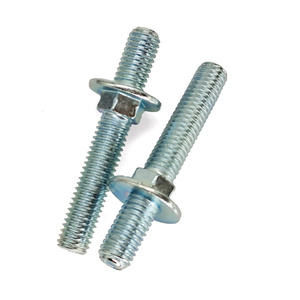
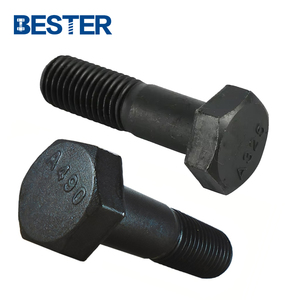
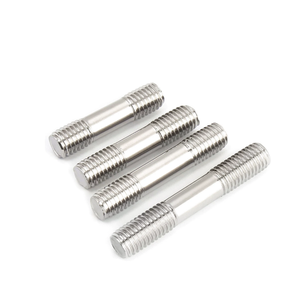
Bolts & Stud Production Range
Butt Weld Seamless & Welded
Export Destination Countries
A rigorous metallurgical overview of industrial pipe fittings designed for extreme pressure containment, cryogenic liquid gas, and severe petrochemical refining environments.
In modern industrial process engineering, butt weld pipe fittings represent the permanent backbone of pressurized piping loops across oil and gas platforms, LNG liquefaction complexes, chemical synthesizers, and offshore energy plants. As a premier China butt weld fittings factory and global exporter, our operational philosophy is rooted in unmatched metallurgical fidelity, compliance with ASME/ASTM dimensional tolerances, and verifiable quality assurance under Pressure Equipment Directive (PED 2014/68/EU) mandates.
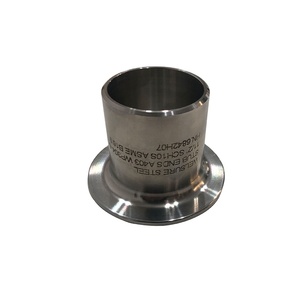
The structural integrity of a welded piping loop depends intrinsically on the grain transition of the fitting. Seamless butt weld fittings—including 45° and 90° long radius elbows, 180° returns, concentric and eccentric reducers, equal and reducing tees, and stub ends—are engineered via advanced hot mandrel extrusion (Hamburg Process) or cold hydraulic pressing. Hot extrusion ensures uniform wall-thickness distribution across both the intrados and extrados, preventing dangerous thinning during the plastic flow deformation of the parent seamless pipe billet.
High-precision forming preserves longitudinal metallurgical grain continuity, increasing dynamic tensile strength and cyclical fatigue tolerance up to 45% compared to fabricated mitred fittings.
Every forging and cold-formed component undergoes full normalizing, quench and temper, or solution annealing cycles in computer-controlled atmosphere furnaces to dissolve intergranular carbides.
Ends are profiled with computerized compound bevels (37.5° ± 2.5° with 1.6mm root face) strictly per ASME B16.9 and ASME B16.25, ensuring swift orbital welding on job sites with zero fit-up gap deviations.
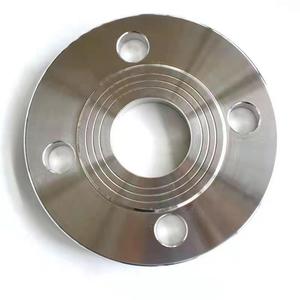
In real-world refinery piping installation, butt weld fittings do not exist in isolation. They interface directly with forged flanges (such as ASME B16.5 Weld Neck, Slip-On, and Blind Flanges) bolted together using high-strength ASTM A193 B7/B8/B8M studs and heavy hex nuts. A major operational bottleneck for international EPC procurement heads is dealing with disparate suppliers where dimensional tolerances differ between mating faces. By engineering butt weld fittings alongside forged flanges and matching fastening kits, our China manufacturing facility guarantees unified metallurgical compatibility, identical chemical corrosion allowances, and zero bolt-circle misalignment during site construction.
| Material Class | Standard & Grades | Wall Schedules | Core Mechanical Strength | Primary Industrial Service |
|---|---|---|---|---|
| Carbon Steel | ASTM A234 WPB, WPC, DIN 1629 / EN 10253 | SCH 10 through SCH 160 / XXS | Yield ≥ 240 MPa | Tensile 415–585 MPa | Mainline steam, general oil transfer, municipal pipelines |
| Low-Temp Carbon | ASTM A420 WPL6, WPL3 | SCH 40, 80, 160, STD, XS | Charpy V-Notch Impact at -46°C / -100°C | Refrigeration, cryogenic terminals, Arctic gas logistics |
| Alloy Steel | ASTM A234 WP11, WP22, WP5, WP9, WP91 | SCH 40 to SCH XXS (Up to 80mm) | Creep strength up to 650°C high heat | Thermal power plants, cracking heaters, superheaters |
| Stainless Steel | ASTM A403 WP304/304L, WP316/316L, WP321 | SCH 5S, 10S, 40S, 80S | PREN ≥ 25, Austenitic Solution Annealed | Offshore platforms, chemical tanks, desulfurization lines |
| Duplex Stainless | ASTM A815 S31803, S32205, S32750 (Super Duplex) | SCH 10S to SCH 80S / XS | Yield ≥ 550 MPa | PREN > 42 | Seawater injection, deep-sea subsea manifolds, urea units |
Combining complete in-house forging capacity, state-of-the-art non-destructive testing labs, and comprehensive PED & ISO compliance for mission-critical infrastructure projects.
Certified strictly under European Pressure Equipment Directive (PED 2014/68/EU) Annex I and ISO 9001:2015, ensuring complete European and American legal conformity for pressure vessel integration.
Every single butt weld elbow, reducer, and flange is laser-stamped or die-embossed with unique heat numbers cross-referenced to original chemical melt analyses and mechanical test certificates (EN 10204 3.1).
Equipped with optical emission spectrometers, hydro-testing pumps up to 10,000 PSI, ultrasonic wall-thickness mapping, X-ray radiography inspection, and liquid penetrant examination.
Heavy-duty, fumigated seaworthy wooden boxes with internal moisture-barrier polyethylene wrap, end-protector caps, and rust-preventive black bitumen, varnish, or phosphate anti-corrosion treatments.
How digital manufacturing, clean-energy transitions, and supply chain resilience are redefining industrial purchasing across Tier-1 global energy developers.
Transition toward high-purity hydrogen transfer requires fittings designed to resist hydrogen embrittlement. Modern procurement contracts now insist on low-hardness limits (NACE MR0175/ISO 15156 < 22 HRC) and ultra-low sulfur metallurgy (< 0.005%).
Global EPCs are shifting away from on-site piecemeal welding to off-site pre-fabricated pipe spools. Factories that deliver bundled, customized butt weld fittings matched precisely to custom forged flanges and heavy bolting kits yield up to 30% project time savings.
Procurement directors increasingly demand digital Material Test Certificates (EN 10204 3.1 / 3.2 verified via independent inspection agencies like DNV, Lloyd's, or TÜV) with QR-code verifiable chemistry directly linked to spectrometer log sheets.
A low initial quotation often conceals massive downstream operational liabilities. Weld fitting failures caused by uneven beveling, incorrect wall schedules, or out-of-round ovality result in catastrophic weld-root cracking, extensive radiographic weld repairs, and field shutdown delays. Working directly with an established China manufacturing exporter ensures complete dimensional conformance to ASME B16.9 within ±1.5mm tolerance limits, saving tens of thousands of engineering hours during field fit-up.
In-depth technical answers addressing dimensional standards, non-destructive testing requirements, wall-thickness matching, and export shipping protocols.
While ASME B16.9 covers factory-made wrought buttwelding fittings for general industrial piping in nominal sizes NPS 1/2 through NPS 48, MSS-SP-75 specifically governs high-test, high-yield wye, elbow, and tee fittings intended for high-pressure oil and gas transmission pipelines (Grades WPHY 42 through WPHY 70), requiring stringent proof testing, higher fracture toughness, and specialized chemical carbon equivalents.
During the hot mandrel extrusion process (the Hamburg method), raw pipe billets are pushed over an expanding horn mandrel under precise thermal induction. We utilize thick-walled mother pipes and computer-modeled expansion ratios to guarantee that after tensile elongation on the outer arc (extrados), the remaining wall thickness stays well above the ASME B16.9 minimum limit of 87.5% of nominal wall thickness.
Every export consignment includes a full documentation dossier: EN 10204 Type 3.1 Mill Test Certificates detailing heat-number-traceable heat treatment charts, spectrometer chemical analysis (C, Si, Mn, P, S, Cr, Ni, Mo, Cu), mechanical tensile/yield/elongation data, Charpy V-notch impact test values (for cryogenic WPL6/316L grades), and NDT clearance reports.
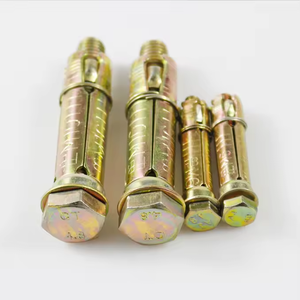
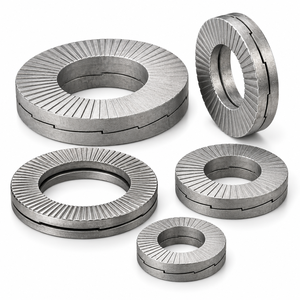
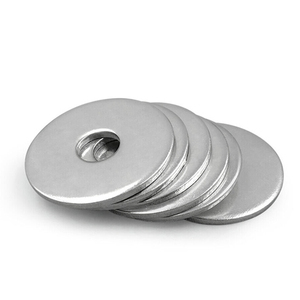
Yes. In addition to butt weld tees, reducers, and caps, we produce and bundle ASME B16.5 / DIN forged flanges (Slip-On, Weld Neck, Blind) and structural fastening hardware (ASTM A193 B7/B8/B8M stud bolts, heavy hex nuts, DIN 25201 anti-vibration wedge washers, and expansion anchors). This unified package approach eliminates procurement friction and guarantees dimensional synchronization.
Standard bevel preparation conforms to ASME B16.25. For wall thicknesses (t) up to 22mm (0.88"), ends are supplied with a plain bevel angle of 37.5° ± 2.5° and a root face of 1.6mm ± 0.8mm. For wall thicknesses greater than 22mm, compound bevels are machined to allow optimal deep-groove weld puddle penetration without excessive thermal distortion of the surrounding heat-affected zone (HAZ).
Carbon and low-alloy steel fittings are degreased and finished with electrostatic black paint, anti-rust clear varnish, or hot-dip galvanization per ASTM A153. Stainless steel and duplex items undergo full acid pickling and passivation to restore their protective chromium-oxide layer, followed by polyethylene end-capping to prevent physical impact damage to the precision bevels.