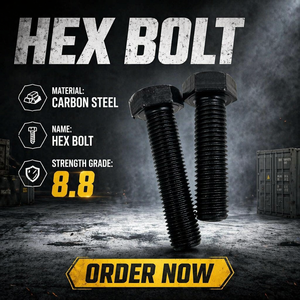
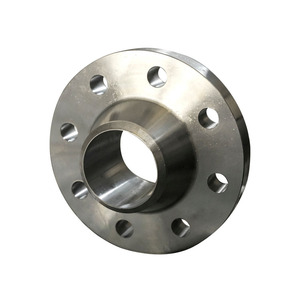
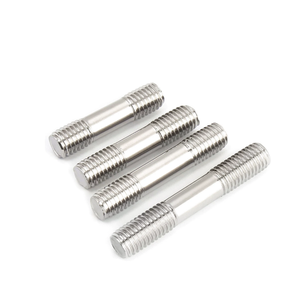
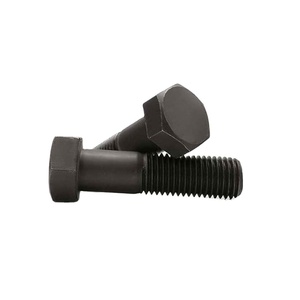
In high-stress mechanical fastening, ISO 898-1 Property Class 8.8 designates a medium carbon steel quenched and tempered to deliver an absolute minimum tensile strength of 800 MPa (or 830 MPa depending on diameter) with an 80% yield ratio.
| Property Class / International Standard | Base Raw Material Composition | Heat Treatment Cycle | Min. Tensile (Rm) | Proof Stress Load (Sp) | Impact Energy (Charpy-V -20°C) | Equivalent North American Standard |
|---|---|---|---|---|---|---|
| ISO 898-1 Class 8.8 (≤ M16) | Medium carbon steel (C: 0.25–0.40%, Mn ≥ 0.60%) | Oil Quenched & Tempered ≥ 425°C | 800 MPa | 580 MPa | ≥ 30 Joules | ASTM A325 Type 1 / SAE J429 Grade 5 |
| ISO 898-1 Class 8.8 (> M16 to M36) | Boron-treated or Alloy Steel (20MnTiB, 35CrMo, 10B21) | Controlled Atmosphere Q&T ≥ 425°C | 830 MPa | 600 MPa | ≥ 27 Joules | ASTM A449 / ASTM A193 Grade B7 (Approx) |
| ISO 898-1 Class 10.9 (Heavy Duty) | Alloy Steel with Cr, Mo, B additives (42CrMo, 40Cr) | Quenched & Tempered ≥ 425°C | 1040 MPa | 830 MPa | ≥ 27 Joules | ASTM A490 / SAE J429 Grade 8 |
| EN 14399-4 HV Preload Set | Alloy Steel Quenched & Tempered | Furnace Austenitized & Stress Relieved | 1000–1200 MPa | 900 MPa | ≥ 27 Joules (at -20°C) | AISC Structural Preload Assemblies |
*Note for Quality Engineers: Fasteners with nominal diameters M16 and smaller feature a standard 800 MPa proof rating. Sizes above M16 manufactured in premier Chinese production mills utilize cold heading coils with controlled boron or manganese addition (e.g., 20MnTiB or 35VB) to eliminate grain coarsening and guarantee core transformation during continuous induction hardening.
Combining world-class high-speed multi-station cold heading machinery with complete Pressure Equipment Directive (PED) compliance and mill-level material batch traceability.
Unlike regional bolt producers limited to M24 thread rolling, our infrastructure spans multi-die high-speed cold headers for high-volume standard components (M6–M24) and hydraulic forging presses for heavy industrial fasteners, forged flanges, and foundation studs up to M100.
Decarburization is the single most common cause of high-tensile bolt failures. Our continuous protective atmosphere mesh-belt furnace controls carbon potential within ±0.02% C, assuring consistent surface hardness without pitch-line decarb or brittle core segregation.
Every single pallet is laser-etched or tagged with our proprietary heat identification code. Mill Test Certificates detailing optical emission spectrometry (OES) chemical breakdowns, tensile elongation, Charpy-V notch impact curves, and proof-load results are dispatched with all orders.
We operate dedicated Hot-Dip Galvanizing (HDG per ISO 10684 / ASTM A153) spin lines, automated zinc-nickel plating lines, and non-electrolytic zinc flake (Geomet / Dacromet) baking plants. Enjoy salt spray corrosion endurance from 240 up to 2,000+ hours without red rust.
For high-volume automotive and wind power assembly clients, we pass finished Grade 8.8 and 10.9 bolts through 360-degree multi-camera optical sorters. Thread defects, head cracks, pitch deviations, and eccentricities are detected at 600 pieces/min to achieve PPM < 20.
As a PED-certified industrial manufacturer and long-standing industry member, our quality assurance protocols follow strict international guidelines. Our products operate reliably across major LNG terminals, offshore platforms, pipeline corridors, and railway infrastructures globally.
A multi-stage quality control workflow operating across raw wire drawing, cold-heading, heat-treating, coating, and pre-shipment container loading.
Spectrochemical analysis, spheroidizing annealing checks, and eddy current eddy flaw detection on steel wire coils before heading.
Continuous dimensional verification of hex head dimensions, fillet radius, and shank length using digital micrometer stages.
Batch sampling for Rockwell (HRC) and Vickers microhardness profiling from surface to center to identify core homogeneity.
Cold rolled threads gauged with calibrated GO / NO-GO 6g thread ring gauges; root radius checked under 50x optical comparators.
Full-size axial and wedge tensile testing on 1000 kN computerized servo-hydraulic universal testing machines to complete failure.
As international infrastructure standards advance, procurement managers must adapt to changes in raw material decarbonization, intelligent surface engineering, and supply-chain risk mitigation.
Traditional electroplating introduces cathodic atomic hydrogen into high-tensile steel matrixes. Global buyers are rapidly transitioning to non-electrolytic zinc flake coatings (ISO 10683) and Geomet/Delta-Protekt systems for Grade 8.8 and 10.9 assemblies. This eliminates acid pickling risks while achieving superior corrosion resistance up to 1,500 salt-spray hours with zero baking delay vulnerabilities.
With the European Union CBAM (Carbon Border Adjustment Mechanism) and global ESG audits entering strict compliance periods, Chinese tier-1 fastener suppliers are shifting rod sourcing to electric arc furnace (EAF) plants using scrap recycling. Buyers increasingly evaluate suppliers based on verified Environmental Product Declarations (EPD) showing carbon footprints below 1.2 tons CO2 per ton of steel.
For high-consequence joints in wind turbines, railway bridges, and pressure pipelines, conventional torque-tightening is shifting to angle-controlled preloading and ultrasonic bolt elongation measurement. Chinese manufacturers are pioneering smart washers with direct tension indicators (DTI) and embedded RFID tags for instant lifetime structural health monitoring.
EPC contractors are moving away from piecemeal purchasing. Leading procurement strategies demand bundled turnkey deliveries: matching Grade 8.8 / ASTM A193 B7 bolts, DIN 934 / ASTM A194 2H nuts, heavy structural washers, and forged ANSI B16.5 flanges under a single consolidated MTC to minimize fitment conflicts on construction sites.
To reduce dependence on prolonged quench-and-temper furnace cycles, innovative Chinese mills are introducing micro-alloyed medium carbon steels with precise micro-additions of vanadium (V), niobium (Nb), and titanium (Ti). These elements pin austenite grain boundaries during high-speed cold heading, yielding finished bolts with superior impact toughness at -40°C.
Manual sampling inspections can no longer guarantee the zero-defect standards required by automated robotic assembly lines. High-tier Chinese factories now deploy AI optical inspection machines equipped with multi-spectrum lighting to screen every single bolt thread, shank straightness, and head recess for micro-fissures.
Real-world technical, commercial, and metallurgical inquiries answered by our senior fastener engineering team.
DIN 933 specifies a fully threaded hex head bolt (thread extending directly up to the head undercut), typically used in tapped blind holes or where joint plate thickness is shallow. DIN 931 specifies a partially threaded bolt featuring an unthreaded grip shank. The unthreaded shank provides higher shear load carrying capacity and fatigue resistance across the shear plane in heavy structural connections.
Both represent nominal medium carbon structural bolts. However, ISO 898-1 Class 8.8 is a general metric mechanical property class requiring 800–830 MPa minimum tensile strength across all industries. ASTM A325 (now consolidated under ASTM F3125 Grade A325) is specifically an imperial heavy hex structural bolt standard with defined head dimensions, specialized thread lengths for structural steelwork, and rigorous Charpy impact toughness requirements.
Yes. Grade 8.8 bolts have a hardness range of approximately 22 to 32 HRC (250–320 HV), which is generally below the critical 34–35 HRC threshold where hydrogen embrittlement becomes severe. However, proper factory acid pickling with corrosion inhibitors (or mechanical shot blasting cleaning) followed by rapid baking and spin-centrifuging at 440°C–460°C per ISO 10684 is essential to maintain thread dimensional pitch tolerances (6h/6g clearance).
Standard low-cost carbon steels like Q235 or 1045 cannot reliably achieve Grade 8.8 properties throughout larger cross-sections. Reputable tier-1 Chinese manufacturers use ML35, ML40Cr, 35CrMo, or boron-alloyed 10B21 / 20MnTiB cold-heading quality (CHQ) wire rods sourced from certified primary mills like Baosteel, Shagang, or Xingcheng Special Steel.
For HDG fasteners, we tap mating nuts oversize (e.g., 6AZ or 6AX fit per ISO 965-5) to accommodate the 40–60 μm zinc layer. For stainless steel combinations (A2/A4 or stud connections), we apply factory anti-seize wax or PTFE / molybdenum disulfide (MoS2) dry lubricants that prevent friction welding (galling) under high-speed pneumatic assembly.
Every shipment is accompanied by a genuine EN 10204 Type 3.1 Mill Test Certificate (MTC) issued by our accredited laboratory. This includes heat chemical composition (C, Si, Mn, P, S, Cr, Mo, B), wedge tensile breaking load, proof stress test results, core hardness, decarburization depth verification, and coating thickness test certificates.
Tightening torque depends critically on the friction coefficient (μ). For a standard lightly oiled or plain black oxide M20 Class 8.8 bolt (μ ≈ 0.14), nominal tightening torque is approximately 410–430 Nm, generating roughly 105–115 kN of pre-clamping force (70% of proof load). Zinc-plated or dry assemblies require precise torque calibration according to the specific friction lubricant used.
Yes. Our tooling workshop manufactures in-house cold heading dies, hot forging tools, and thread rolling rollers. We produce custom fasteners according to client 2D/3D drawings (STEP, DWG), including extended body carriage bolts, collar studs, double-end transition studs, and custom flange hardware in metric, UNC, UNF, and 8-UN pitches.