Full traceability back to ingot chemistry. Fully paired with standard and heavy hex structural fasteners, pressure flanges, and critical downhole pipeline connections.
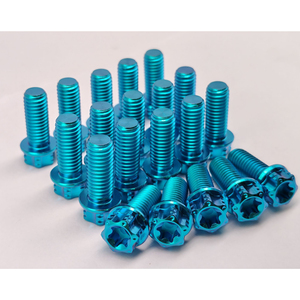
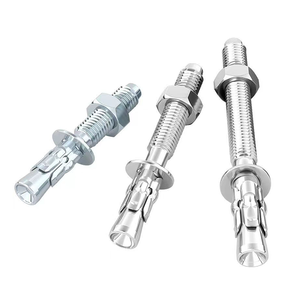
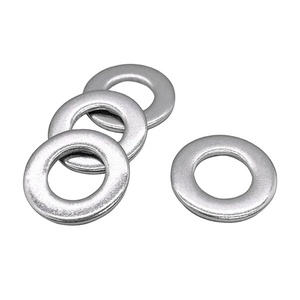
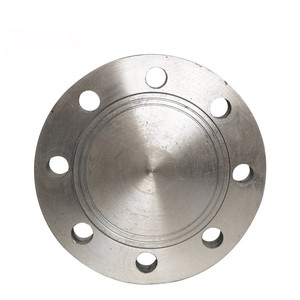
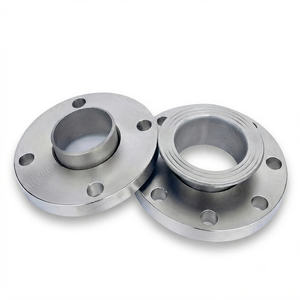
In petrochemical facilities, subsea hydrocarbon infrastructure, nuclear containment vessels, and high-load structural engineering, the bolting assembly is the primary line of defense against catastrophic containment loss and fatigue failure. Heavy hex nuts, standardized globally primarily under ASME B18.2.2, ASTM A194, and ASTM A563, are deliberately designed with wider dimensions across flats (width across flats, WAF) and increased nominal thickness compared to conventional standard finished hex nuts. This additional mass provides a significantly higher bearing area, preventing localized flange face embedding and ensuring uniform pre-load distribution across high-tensile stud shafts under cyclic thermal and vibrational stress.
When selecting a high-integrity manufacturing partner in China, international EPC contractors and mechanical engineers must scrutinize metallurgical composition, hot-forging grain alignment, thread-tapping concentricity, and specialized heat treatment regimes. Standard commercial fasteners cannot withstand the shear loads, high yield stresses, and brittle fracture risks prevalent in harsh sour gas (NACE MR0175/ISO 15156), cryogenic LNG transport (-196°C), or high-temperature power turbine casings (operating above 538°C).
| Material Specification | Alloy Chemistry | Proof Load Stress (ksi) | Hardness Range (Brinell / Rockwell) | Mating Stud Specification | Primary Operating Conditions |
|---|---|---|---|---|---|
| ASTM A194 Gr. 2H | Medium Carbon Steel, Quenched & Tempered | 175 ksi (≤ 1.5 in) / 150 ksi | 248–327 HBW (24–35 HRC) | ASTM A193 B7, B16 | High-pressure steam, oil refineries, process piping |
| ASTM A194 Gr. 7 / 7M | AISI 4140/4142 Cr-Mo Alloy, Oil Quenched | 175 ksi (Gr. 7) / 135 ksi (7M) | 248–327 HBW / 159–237 HBW (7M) | ASTM A193 B7M, L7, L7M | Sour gas environments (NACE MR0175), low-temp impact |
| ASTM A194 Gr. 8 / 8M | AISI 304 / AISI 316 Austenitic Stainless Steel | 80 ksi (Class 1) / 110 ksi (Class 2) | 126–223 HBW (Max 90 HRB) | ASTM A193 B8, B8M | Marine, offshore topsides, cryogenic (-196°C), chemical |
| ASTM A563 Gr. DH | Medium Carbon Boron / Alloy, Heat-Treated | 175 ksi | 248–352 HBW (24–38 HRC) | ASTM F3125 Gr. A325, A490 | Heavy civil structural steel connections, bridges |
| EN 14399-4 Class 10 | High Tensile European Structural Grade | 1160 MPa (~168 ksi) | 272–353 HBW (28–38 HRC) | EN 14399-4 HV 10.9 Bolts | Preloaded high-strength structural friction grip bolting |
Precision thread cutting versus thread cold-rolling represents another pivotal engineering choice. While smaller metric and imperial nuts utilize advanced cold-forming progressive headers capable of 120 pieces per minute, larger diameters (exceeding M36 or 1-1/2") require closed-die hot forging with induction heated billet control. The hot forging temperature must be rigorously governed between 1,150°C and 1,250°C. Exceeding this threshold promotes excessive grain coarsening, while underheating leads to forging laps and micro-cracks along the hex chamfer edges that can cause explosive brittle cleavage during hydro-testing.
Combining advanced metallurgical science, strict European Pressure Equipment Directive (PED) validation, and automated multi-station forging lines.
Our continuous multi-station hot and cold forging preserves uninterrupted radial metal grain flow along the inner threaded bore and hexagonal facets. This increases fatigue threshold life by over 38% compared to machined bar-stock nuts.
Equipped with computerized roller-hearth continuous heat treatment furnaces. High-uniformity oil quenching prevents retained austenite and decarburization, ensuring precise Rockwell hardness margins across 100% of production runs.
CNC thread tapping backed by synchronized lead-screw systems and automatic GO/NO-GO air-gauging guarantees consistent pitch diameter and friction coefficients (k-factor), eliminating field galling on stainless and alloy studs.
Specialized hot-dip galvanizing (ASTM A153 Class C), fluoropolymer Xylan/PTFE coatings for subsea saltwater endurance (3,000+ hour salt spray testing), zinc-nickel plating, and mechanical sherardizing free of hydrogen embrittlement.
In-house mechanical and metallurgical laboratories conducting Charpy V-notch impact testing down to -196°C, optical emission spectrometer (OES) chemical validation, wedge tensile proof loading, and eddy-current crack screening.
Strategic ocean shipping proximity to Ningbo and Shanghai deep-water container ports. Complete seaworthy export crating, dry-barrier vapor corrosion inhibitor (VCI) bagging, and barcoded palletized logistics delivered globally.
The international procurement landscape for heavy hex nuts is undergoing a profound paradigm shift driven by stringent decarbonization targets, escalating structural safety mandates, and localized industrial risk mitigation. Engineering procurement professionals must evaluate three critical evolutions in the supply chain:
EPCs now mandate QR-coded and blockchain-backed EN 10204 3.1 and 3.2 documentation. Every shipment of heavy hex nuts must connect back to raw vacuum-degassed round bars with full optical chemical spectrography and automated proof load testing records to prevent the intrusion of counterfeit fasteners into critical nuclear and LNG hubs.
Traditional hot-dip galvanizing faces environmental constraints and clearance issues on precision UNC 8-pitch threads. The procurement industry is migrating toward multilayer ceramic, PTFE/fluoropolymer (Xylan 1070/1424), and micro-layered zinc-flake coatings (Geomet, Dacromet) that achieve 1,500+ hour neutral salt spray endurance without risking acid-pickling hydrogen embrittlement.
With ultra-deepwater drilling and next-generation hydrogen fuel infrastructure exceeding legacy ASTM limitations, procurement for ASTM A453 Gr. 660 (A286), Inconel 718, and Monel K-500 heavy hex nuts has surged. Chinese precision forging plants are rapidly scaling vacuum induction melting (VIM) and electroslag remelting (ESR) supply integrations to meet this global demand.
Modern Chinese heavy fastener manufacturing plants have transitioned far beyond simple mechanical punch presses. Cutting-edge cold-forming presses utilize finite element analysis (FEA) to model internal strain distribution before metal stock enters the first forming die station. This advanced engineering ensures that the transition between the hexagonal bearing face and the internal thread wall is completely devoid of residual micro-voids and tensile stress concentrations.
Furthermore, automated 3D laser profiling and high-speed optoelectronic sorting machines inspect 100% of threaded products at production speeds exceeding 250 units per minute. Diametric concentricity, thread pitch linearity, and chamfer angle regularity are measured down to micron tolerances. Any nut exhibiting an eccentric tap or microscopic surface burr is automatically ejected using pneumatic rejection nozzles, guaranteeing virtually zero-defect shipments for automated field bolting tensioners.
In-depth technical answers addressing dimensional standards, metallurgy, hydrogen de-embrittlement baking, and shipping certifications.
Connect directly with our fastener metallurgical engineers. Submit your project bill of materials, required steel grades, thread pitches, surface protection criteria, and destination port to receive a comprehensive commercial and technical proposal within 24 hours.
Contact Us