
Manufactured to ASTM, ASME, DIN, and ISO specifications. Engineered for extreme operating pressures, corrosive offshore conditions, and sour-gas refinery architectures.
When downhole exploration, subsea manifolds, flare stacks, or nuclear cooling systems encounter pressures exceeding 15,000 PSI and operational temperatures past 650°C, commercial austenitic stainless steels fail due to chloride stress corrosion cracking (CSCC). Sourcing specialized nickel superalloys requires deep scrutiny of metallurgical microstructure, hot-forging thermodynamics, and post-annealing grain boundaries.
| Alloy Designation | UNS / Standard | Tensile (MPa min) | Yield 0.2% (MPa) | Max Temp (°C) | Primary Failure Mitigation |
|---|---|---|---|---|---|
| Inconel 625 | UNS N06625 / ASTM B446 | 827 MPa | 414 MPa | 980°C | Pitting & Crevice Corrosion in Marine Brine; High Mo+Nb Matrix |
| Inconel 718 | UNS N07718 / ASTM B637 | 1275 MPa | 1034 MPa | 700°C | Hydrogen Embrittlement Resistance; Precipitation Hardened γ'' Phase |
| Inconel 600 | UNS N06600 / ASTM B166 | 550 MPa | 240 MPa | 1150°C | Oxidation & Carburization Resistance; High Nickel Matrix |
| Inconel X-750 | UNS N07750 / AMS 5667 | 1100 MPa | 730 MPa | 815°C | High-Stress Relaxation Resistance; Gas Turbine Rotor Studs |
| Incoloy 825 | UNS N08825 / ASTM B425 | 585 MPa | 240 MPa | 540°C | Sulfuric and Phosphoric Acid Attack; Low-Cycle Sour Wells |
True Tier-1 manufacturing facilities distinguish themselves through rigorous raw material chemistry verification, continuous cold/hot forging control, and exhaustive non-destructive testing (NDT).
Unlike machined bar-stock fasteners that slice through metallurgical grains, our hot-heading processes align directional grain flow along bolt head-to-shank radii, boosting dynamic fatigue resistance by over 38% under pulsating operational loads.
Every batch of pressure-boundary bolting is audited under European Pressure Equipment Directive (PED) compliance. Complete with EN 10204 3.1 Mill Test Certificates detailing heat chemistry, 0.2% offset yield, tensile elongation, and Charpy impact data down to -196°C.
Precision threads are cold-rolled after heat treatment for critical ASTM A193 / A194 and API 20E / API 20F applications. This induces compressive surface stresses that drastically inhibit stress corrosion cracking in extreme marine and petrochemical environments.
Global engineering, procurement, and construction (EPC) contractors are revamping their procurement strategies to balance fluctuating raw material costs with stringent plant safety regulations.
Because nickel and molybdenum spot markets experience high pricing volatility, progressive procurement contracts increasingly utilize indexed raw material surcharges paired with forward-stocking of qualified vacuum induction melted (VIM-VAR) master ingots, guaranteeing delivery timelines for critical turnaround projects.
With deepwater exploration moving into deeper, sour-gas zones containing wet H2S, procurement engineers mandate maximum hardness ceilings (typically 35 HRC for Inconel 718 under specific heat treat recipes) alongside continuous slow strain rate testing (SSRT) to guarantee zero-risk subsea installations.
Paper-only test records are rapidly being superseded by direct QR-etched fasteners and digital material ledgers. 100% handheld XRF Positive Material Identification ensures that zero counterfeit or off-chemistry bolts compromise mission-critical refinery flange gaskets.
Inconel threads are naturally susceptible to galling and seizing under high preloads. Modern project specifications now mandate electroplated micro-layer silver, molybdenum disulfide (MoS2), or specialized PTFE/Fluoropolymer coatings that maintain precise torque-tension relationships without flaking in subsea tie-backs.
Direct technical answers addressing lead times, thread tolerances, material test standards, and manufacturing verifications.
Inconel 718 is a precipitation-hardenable superalloy offering substantially higher tensile (1275 MPa vs 827 MPa) and yield strengths, making it ideal for high-pressure, space-constrained flange assemblies. Inconel 625 relies on solid-solution strengthening via molybdenum and niobium, providing superior resistance to general corrosion, pitting, and crevice attack in high-temperature oxidizing media.
We manufacture unified inch threads to ASME B1.1 Class 2A and 3A, as well as metric threads to ISO 965-2 Class 6g and 4g6g for critical fitment. All threads undergo optical comparator inspections and calibrated GO / NO-GO ring gauge checks after surface treatment or coating.
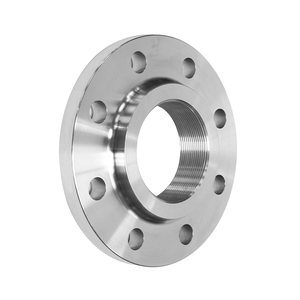
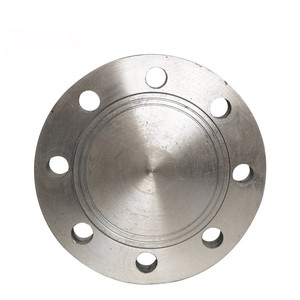
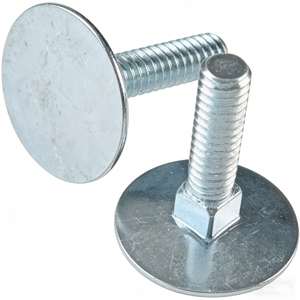
Yes. In addition to standard hex bolts, heavy hex nuts, studs, and threaded rods ranging from M2 to M100 (1/4" to 4"), our facility operates 5-axis CNC machining centers and hot-forging presses capable of producing engineered shoulder screws, socket heads, carriage bolts, and blind flanges.
Every shipment includes an EN 10204 Type 3.1 inspection certificate containing full optical emission spectrometry (OES) chemical breakdowns, ambient and elevated-temperature tensile test results, Brinell/Rockwell hardness logs, and NDT reports (liquid penetrant and magnetic particle testing where applicable).
To eliminate galling in extreme temperature applications, we supply pre-applied solid film lubricants (MoS2), silver electroplating per AMS 2410, or thermoset ceramic coatings that stabilize the nut factor (K-factor) between 0.11 and 0.14 for consistent bolting preloads.
Our workshops regularly accommodate third-party inspection (TPI) protocols by internationally accredited bodies including DNV GL, Lloyd's Register, Bureau Veritas (BV), ABS, and TÜV Rheinland prior to final seaworthy container packaging.
From initial design review to final dimensional verification, our manufacturing operations deliver fully documented, PED-compliant fasteners and flanges engineered for mission-critical industrial facilities worldwide. Connect with our engineering sales group today for quotation support, technical drawings, or material certificates.
Send an Inquiry