
100%
EN 10204 3.1 Traceability
M2–M100
Fastener & Hardware Size Range
ASME/DIN
Dual Certified Tooling
PED 2014/68/EU
Pressure Equipment Compliant
Engineering Excellence in Pipe Reduction & Piping Components
Butt-weld pipe reducers (both concentric and eccentric) form the critical hydraulic transitions in continuous fluid transport networks. As worldwide engineering projects demand zero fugitive emissions, extreme cold-temperature ductility, and prolonged erosion-corrosion tolerance, Chinese pipe fitting and forged industrial component manufacturers have transitioned from baseline fabricators into high-precision engineering hubs. By unifying strict raw material verification, precision multi-axis CNC profiling, and automated heat treatment regimes, leading Chinese factories ensure uncompromised flow continuity across high-pressure hydrocarbon processing, petrochemical conversion, power generation, and offshore topside platforms.
Material Grade Matrix & Pressure Class Compatibility
Precision piping engineering relies on harmonic metallurgical transitions. When matching pipe reducers to adjacent forged flanges, weld-neck components, and structural bolted connections, selecting the appropriate wrought ASTM material avoids stress cracks, embrittlement, and galvanic corrosion under severe cycle pressures.
| Fitting Specification | Primary Material Base | Tensile / Yield Min (ksi) | Corresponding Flange Standard | Key Application Environment |
|---|---|---|---|---|
| ASTM A234 WPB / WPC | Killed High-Grade Carbon Steel | 60–70 / 35–40 | ASTM A105 / ASME B16.5 | Standard ambient to intermediate high-temp hydrocarbons |
| ASTM A420 WPL6 | Low-Alloy Impact Tested Steel | 65 / 35 (@ -45°C Charpy) | ASTM A350 LF2 Class 1 | Cryogenic gas gathering, LNG terminals & Arctic service |
| ASTM A234 WP11 / WP22 | Cr-Mo Creep Resistant Alloy | 60–75 / 30–45 | ASTM A182 F11 / F22 | Superheated steam, cracking coils & thermal power |
| ASTM A403 WP304/304L | Austenitic 18Cr-8Ni Stainless | 70–75 / 25–30 | ASTM A182 F304/F304L | General chemical processing, food-grade, mild acids |
| ASTM A403 WP316/316L | Austenitic 16Cr-12Ni-2Mo | 70–75 / 25–30 | ASTM A182 F316/F316L | High chloride exposure, offshore marine & desulfurization |
| ASTM A815 S31803 / S32205 | Ferritic-Austenitic Duplex | 90 / 65 | ASTM A182 F51 / F60 | Sour crude lines, high-saline offshore riser systems |
Factory Audit & Technical Capabilities
Enterprise Strengths: Full-Spectrum Manufacturing Ecosystem
Combining legacy forging mastery since 2010 with certified modern automated lines, our production facilities enforce end-to-end quality systems audited under European PED 2014/68/EU guidelines and international pressure retaining directives.
PED Certified Pressure Metallurgy
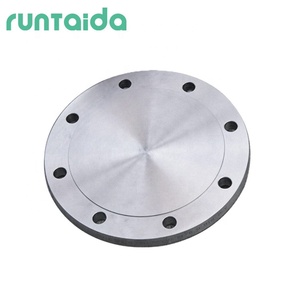
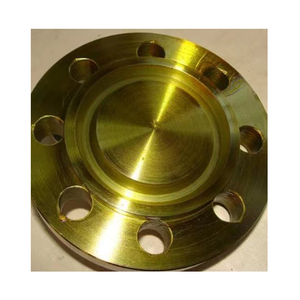
Certified under PED Directive 2014/68/EU Annex I Paragraph 4.3, our manufacturing process complies with strict European pressure equipment mandates. Every reducer, forged flange, and pressure-retaining fitting passes documented hydrostatic verification, grain boundary examination, and intergranular corrosion assessment.
In-House NDT & Destructive Labs
We deploy continuous ultrasonic testing (UT) for laminar integrity, magnetic particle inspection (MPI) on beveled transition collars, and Charpy V-Notch impact testing down to -46°C. Complete spectrographic chemical validation guarantees exact CE (Carbon Equivalent) metrics to ensure field weldability.
Seamless Hot Forming & Hydro-Forming
Equipped with hydraulic push forming machines, high-tonnage cold extrusion lines, and induction heating equipment. Our concentric and eccentric reducers boast uniform wall thickness along the transition zone, avoiding common hydraulic vortex dead zones and stress hotspots.
Direct Traceability (EN 10204 3.1 MTC)
No anonymous batches or re-stamped stock. Every order ships alongside authentic Mill Test Certificates specifying the original steel heats, mechanical elongation, yield/tensile strength, heat treatment lot details, and dimensional runout data.
Comprehensive Fastener Integration
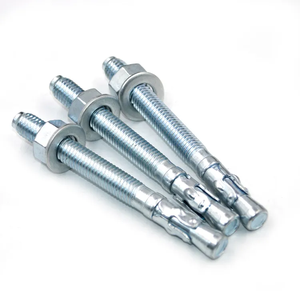
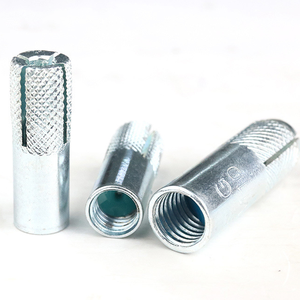
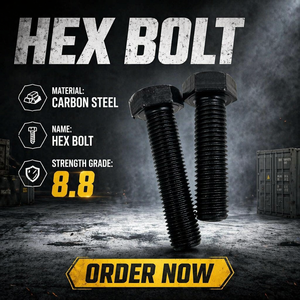
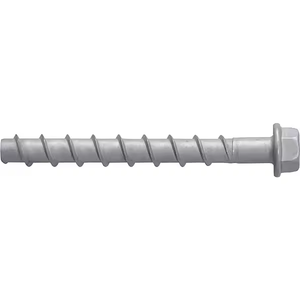
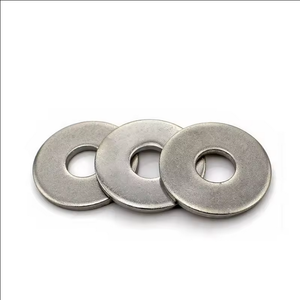
Beyond welded fittings, our manufacturing covers matched bolting sets from M2 through M100. From ASTM A193 B7/B8/B8M high-strength studs to A325 structural bolts, galvanized hardware, and high-load expansion anchors, we provide unified packages for turn-key plant assembly.
Seaworthy Multi-Layer Export Packaging
Exporting to over 40 countries across the Middle East, Southeast Asia, Europe, and the Americas. All machined bevels are treated with rust preventive oils, fitted with heavy-duty end protectors, and bundled inside heat-treated, fumigated solid wood cases.
Future Sourcing & Technological Trends in Pipeline Reduction
As the international processing sector adopts digital procurement and decarbonized infrastructure, engineering buyers face emerging demands across material specification, automated manufacturing, and carbon accounting.
1. Transition to High-Grade CRA Cladding
With deepwater exploration and sour-gas wells increasing, seamless pipe reducers internally clad with Inconel 625 or 825 through weld overlay cladding are replacing costly solid nickel alloy components, maintaining critical corrosion margins at reasonable CapEx.
2. Laser Scanning Bevel Verification
Automated orbital welding setups in cross-country pipelay barges require zero tolerance variance. Smart Chinese factories now adopt high-speed laser profilometry to log root face, bevel angle (37.5° ± 2.5°), and out-of-roundness on every single reducer end before dispatch.
3. Decarbonized EAF Sourcing
Global EPC contractors under Scope 3 reporting guidelines prioritize fittings formed from electric arc furnace (EAF) recycled billet over traditional blast furnace stock, significantly reducing the embedded carbon metrics of finished pipeline infrastructure.
4. Digital Twin Material Traceability
QR code and RFID micro-tagging etched into the OD of reducers allow onsite field mechanics to scan fittings with mobile tablets to view digital heat treat charts, Charpy impact test logs, and third-party inspection sign-offs instantly.
Fluid Dynamics Whitepaper
Hydraulic Design Rules: Concentric vs. Eccentric Pipe Reducers
The misapplication of concentric and eccentric reducers remains one of the most persistent issues in pipeline engineering, leading to pump cavitation, gas entrapment, or sludge accumulation.
Concentric Reducers (Equal Centerline)
Concentric reducers change diameter along a shared centerline. They are primarily utilized in vertical fluid lines to maintain balance without inducing lateral moments, and in horizontal lines handling non-compressible, clean fluids where vapor cavitation is not a threat. In slurry handling, concentric geometries preserve symmetric shear forces against inner walls.
Eccentric: Flat Side Up (FSU)
Applied almost universally on the suction nozzles of horizontal centrifugal pumps. By maintaining a flat upper surface, fluid lines prevent vapor pockets from accumulating at the high point of the reduction cone. If a concentric reducer were used, air pockets would detach, enter the pump impeller, and induce destructive cavitation and seal failure.
Eccentric: Flat Side Down (FSD)
Specified on piperack header runs where bottom elevation matching is required for standardized support steelwork. Flat Side Down designs are also mandatory in liquid drain systems and wet gas networks, preventing fluid pockets from stagnating in the bottom of the line and generating localized microbiological corrosion.
Frequently Asked Questions by Industrial Buyers
Clear, unvarnished technical answers regarding sizing limits, mill testing, tolerances, and custom alloy supply from Chinese manufacturing centers.
What dimensional standards govern butt-weld pipe reducers exported from China?
Standard export reducers are fully compliant with ASME/ANSI B16.9 (factory-made wrought buttwelding fittings) and DIN 2616 / EN 10253-2. Wall thicknesses align with ASME B36.10M schedules from Sch 10 to Sch 160, STD, XS, and XXS. For high-purity or pharmaceutical pipelines, ASME BPE dimensional specs are utilized.
How do Chinese exporters verify weld bevel tolerances for automatic orbital welding?
Leading exporters machine pipe reducer bevels on CNC compound lathes with standardized land faces of 1.6mm (±0.8mm) and bevel angles of 37.5° (±2.5°). Automated CMM arms and laser contour gauges are utilized to verify root face parallelism and out-of-roundness limits under 1.0mm for sizes up to DN300.
Can factories manufacture heavy-wall eccentric reducers with mismatched schedules?
Yes. Custom engineering orders often feature varying wall thicknesses at either end (e.g., 8-inch Sch 80 reduced to 4-inch Sch 40). Chinese hot-induction shaping facilities machine internal taper transitions adhering strictly to ASME B31.3 internal taper transition regulations (slope not exceeding 1:3).
What non-destructive testing (NDT) documentation is standard prior to port dispatch?
Standard quality releases incorporate 100% Visual and Dimensional Inspection, 100% Positive Material Identification (PMI via handheld XRF spectrograph), Radiographic Testing (RT) or Ultrasonic Testing (UT) of raw forged stock, Liquid Penetrant (PT) on beveled edges, and complete EN 10204 3.1 certification.
Ready to Streamline Your Pipeline Supply Chain?
Connect with our technical engineering sales desk for complete dimensional catalogs, factory audit reports, and direct competitive export pricing for ASME/DIN butt-weld reducers, forged flanges, and high-tensile hardware packages.
Get Catalog