[email protected] +91-22-66343169 PED Approved · FMAI Member · Since 2010

Top China PTFE Coated Bolts Factories & Factory

Precision-Engineered Fluoropolymer (Xylan® / PTFE) Fasteners, Stud Bolts, and Pressure Flange Assemblies for Offshore, Petrochemical, and Severe Corrosive Environments

Inquire Now
Engineered Fastening Solutions

Featured Heavy-Duty Fasteners & Piping Hardware

Direct supply from certified manufacturing lines with 100% heat-traceable Mill Test Certificates (EN 10204 3.1) and advanced barrier coatings.
3,000+ Salt Spray Hours (ASTM B117)
0.05-0.08 Controlled Friction Coeff (µ)
M2 – M100 Forging & Threading Span
100% Batch Heat Traceability (PED/MTC)

Integrated Industrial Fastening & Forged Flange Ecosystem

Combining heavy-industry precision manufacturing with strict metallurgy verification, our production partners operate state-of-the-art multi-stage surface treatment shops. With PED (Pressure Equipment Directive) compliance, ISO 9001 certified QA gates, and strategic global exporting routes across LNG, marine, and power facilities, we ensure zero catastrophic failure at high operating stresses.

✓ PED Certified ✓ EN 10204 3.1 Traceable ✓ ASTM B117 Tested ✓ NDT Surface/Subsurface Verified ✓ API 20E Quality Compliant

Engineering Whitepaper: PTFE Coated Bolting Systems in Mission-Critical Infrastructure

PTFE (Polytetrafluoroethylene) and fluoropolymer composite coatings (frequently specified under trade designations such as Xylan® 1070, Xylar®, or FluoroKote#1®) have transitioned from specialized enhancements to baseline engineering requirements across petrochemical processing plants, offshore exploration rigs, subsea pipeline manifolds, and high-salinity marine docks. The core dilemma faced by maintenance, repair, and operational (MRO) teams alongside engineering procurement contractors (EPCs) is simple: hot-dip galvanizing provides sacrificial cathodic defense but generates rough, galling-prone threads with volatile torque-tension conversion, whereas bare austenitic stainless steels are chronically prone to galling and chloride stress corrosion cracking (CSCC).

A precision-applied multi-layer PTFE barrier resolves both challenges. By isolating high-tensile substrate alloys—such as ASTM A193 Grade B7 Cr-Mo steel, ASTM A320 L7 cryogenic steel, or duplex 2205/2507 alloys—from atmospheric moisture, hydrogen embrittlement vectors, and chemical baths, PTFE coatings prevent galvanic degradation while providing an extraordinarily low, repeatable coefficient of friction (µ = 0.05 to 0.08).

Critical Design Value: Consistent torque-to-preload ratio. Up to 90% of torque applied to untreated heavy industrial bolting is expended overcoming surface friction at the threads and nut face, leaving only 10% converted into actual bolt clamp load. Fluoropolymer-coated fasteners achieve uniform gasket seating and minimize fugitive hydrocarbon leaks across cyclic thermal operations.

Substrate Compatibility and Multi-Layer Pretreatment Architecture

A common vulnerability in low-tier PTFE bolt manufacturing is premature peeling, blistering, and shear stripping during impact wrench installation. Leading Chinese PTFE-coated fastener facilities eliminate these failures through rigorous substrate pretreatment protocols prior to coating deposition:

1. Substrate Blasting & Phosphating

Initial automated white-metal grit blasting followed by micro-crystalline zinc or manganese phosphate treatment. This establishes a microscopic mechanical anchor pattern (Ra 2.5–3.5 µm), halting substrate oxidation.

2. Corrosion-Resistant Primer / Electro-Plating

An undercoat of sacrificial metallic base—such as zinc-nickel alloy plating or an engineered ceramic barrier primer—delivering elevated sacrificial protection even if mechanical shearing scratches the resin layer.

3. Thermal-Cured Resin Topcoat

Electrostatic spray application of thermosetting PTFE resin topcoats (Xylan 1070/1424 series) controlled within 20–35 µm dry film thickness (DFT), baked in precision computer-controlled batch ovens at 200°C–240°C.

Comparative Engineering Specification: Coating Performance Matrix

Procurement teams must balance initial capital expenditure against lifecycle field replacements. The table below illustrates comparative laboratory and field benchmarks between standard fastening coatings and high-grade fluoropolymer assemblies.

Coating System Nominal Thickness Salt Spray Life (ASTM B117) Friction Coeff (µ) Operating Temp Range Galling Resistance
PTFE / Fluoropolymer (Multi-layer) 20 – 35 µm 3,000 to 5,000+ Hours 0.05 – 0.08 -196°C to +260°C Exceptional (Zero Galling)
Hot Dip Galvanized (HDG) 45 – 85 µm 1,000 to 1,500 Hours 0.14 – 0.20 Up to +200°C Poor (High Thread Friction)
Electro-Galvanized (Zinc Plated) 8 – 15 µm 96 to 240 Hours 0.12 – 0.16 Up to +120°C Moderate (Prone to Seizing)
Cadmium Plating (Chromate) 10 – 20 µm 500 to 1,000 Hours 0.09 – 0.12 Up to +230°C Good (Restricted under RoHS/REACH)
Bare Stainless Steel (A2 / A4) N/A (Passivated) Variable (Crevice Corrosion Risk) 0.20 – 0.35 -200°C to +600°C Extremely Poor (Severe Galling)

Key Trends Reshaping the Global PTFE Fastener Supply Chain

1. Elimination of Hazardous PFAS and Heavy Metal Undercoats

With environmental regulations such as EU REACH, RoHS, and EPA guidelines accelerating restrictions on short-chain per- and polyfluoroalkyl substances (PFAS) and hexavalent chromium (Cr6+), advanced manufacturers in China are pioneering non-PFAS fluoro-hybrid matrices and eco-compliant waterborne polymers that match or surpass legacy chemical resistance without regulatory liabilities.

2. Transition to Zinc-Nickel (Zn-Ni) Base Undercoats

Historically, cadmium was preferred as an undercoat beneath PTFE for subsea bolting. However, modern offshore oil & gas standards—including major operator specs from Shell, BP, and Equinor—require Zn-Ni (12-15% Ni content) beneath the fluoropolymer topcoat. This duplex system elevates ASTM B117 salt spray ratings past the 4,500-hour threshold with zero red rust.

3. Integration with ASME B16.5 & API Flange Assemblies

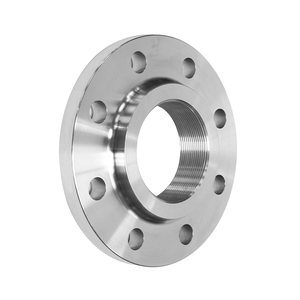
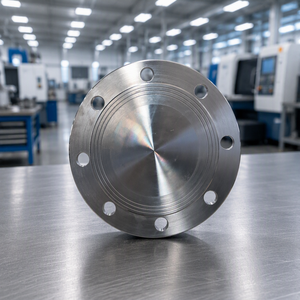
Fastener performance is meaningless if pipe flanges warp or yield. The industry increasingly purchases matched assemblies—combining ASTM A193 B7/B8 studs, ASTM A194 2H/8 nuts, and precision-forged ASME B16.5 blind or weld-neck flanges. Single-source manufacturing guarantees pitch diameter tolerances accommodate the 25 µm coating clearance without undersizing thread flanks.

Recommended Procurement Guidelines for International Buyers

To avoid non-conforming fasteners that suffer thread stripping during torquing or premature rust in marine field trials, buyers should incorporate the following checkpoints into their purchase orders:

  • Thread Allowance Verification: Always specify class 2A fit prior to coating or class 2A with coating allowance (oversized 2B/6H nuts). Thread tapping must strictly avoid shaving the protective coating off engaged crests.
  • Cross-Hatch Adhesion Testing: Demand ASTM D3359 Method B cross-hatch tape adhesion reports to confirm mechanical bond strength between the primer, substrate, and PTFE skin.
  • Bake Cycle Documentation: Incomplete curing leaves soft, gummy coatings susceptible to friction stripping, while over-baking degrades corrosion protection. Insist on computerized oven-curing graphs with heat-lot correlation.
Inquire Now
Knowledge Base

Frequently Asked Questions on PTFE Coated Bolting

Expert technical insights to guide your project engineering, specification authoring, and vendor assessment.

How does PTFE coating eliminate thread galling during high-torque makeup?
PTFE exhibits one of the lowest coefficients of friction of any solid material (µ = 0.05 to 0.08). When applying high torque to large-diameter fasteners (such as M36 to M100 or 1-1/2" to 4" studs), metallic micro-welding and high-contact friction between thread flanks are virtually eliminated. This enables effortless breakout and disassembly even after years of high-heat petrochemical and subsea immersion, avoiding torch cutting and downtime.
Do nuts require special over-tapping to accommodate PTFE coating thickness?
Yes. Because high-performance PTFE systems add between 20 to 35 microns (0.0008" to 0.0014") of dry film thickness to each thread face, standard 6H or 2B nuts will bind or seize if not modified. Experienced factories tap mating nuts 0.3mm to 0.4mm oversize after heat treatment (or utilize class 6AZ/oversized pitch diameters) prior to coating application to ensure smooth hand-tight engagement while preserving design pull-out strength.
What is the standard color-coding convention for PTFE coated industrial bolts?
While PTFE coatings can be pigmented in virtually any hue, blue (frequently matching Xylan 1070 Blue) is the global industry standard for offshore oil and gas and petrochemical bolting. Bright yellow is frequently selected for subsea ROV visibility, green for high-acid chemical plants, red for fire protection systems, and black/silver for heavy civil and automotive framework.
What mill certifications and quality documentation should accompany each shipment?
All reputable tier-1 Chinese manufacturers supply comprehensive EN 10204 Type 3.1 Inspection Certificates. These documents attest to raw material chemical heat analysis, room-temperature/elevated-temperature mechanical tensile and yield metrics, Charpy V-notch impact toughness (especially for low-temperature L7/L7M grades), non-destructive testing (NDT), coating thickness measurements (ASTM D7091), and ASTM B117 salt spray chamber validation.
Can PTFE coated bolts be reused after high-stress flange installation?
Fasteners subject to standard torque limits without substrate yield can often be reused multiple times. However, during heavy industrial pneumatic torqueing, the resin topcoat at localized high-pressure thread contact zones experiences mechanical compression. While the dry lubricity persists, if the zinc/nickel sacrificial barrier underneath is intact, corrosion resistance remains high. For critical high-pressure hydrocarbon flanges (ASME Class 900+), new fasteners and gaskets are standard operating procedure.

Source Directly from China's Premier PTFE Bolting Facility

Get in touch with our technical sales engineers for mill-direct pricing, custom dimension blueprints, material heat batch certificates, and turnkey offshore fastening packages.

Inquire Now