Integrated pipeline hardware precision-manufactured under strict PED (Pressure Equipment Directive) and ISO quality assurance systems for high-pressure fluid conduits and marine engineering.
Traceable Mill Test Certs
Metric & Imperial Sizing
Pressure Directive Approved
Global Export Footprint
A comprehensive technical examination of geometry, pressure thresholds, and metallurgical integrity in modern process piping systems.
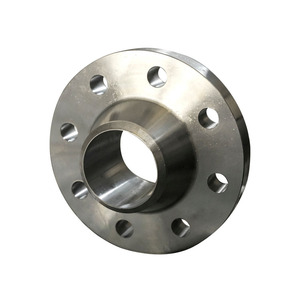
Socket Weld Flanges (SW) represent an essential class of pipe joining components engineered specifically for compact, high-pressure, and small-bore piping runs (typically from NPS 1/2 through NPS 3, or DN 15 to DN 80). Defined internationally by dimensional and pressure standards including ASME B16.5, BS 4504, and EN 1092-1 Type 12, the socket weld configuration incorporates an internal counterbore socket that accommodates the outer diameter of the mating pipe. The joint is permanently sealed via a circumferential fillet weld at the flange hub exterior. Unlike butt-weld connections that require rigorous beveling and internal root-pass alignment, socket weld flanges deliver rapid axial alignment while preserving structural resistance to cyclic mechanical deflection and fluid pulsation.
In demanding engineering sectors such as offshore oil and gas production, cryogenic liquefaction (LNG), chemical processing plants, and nuclear cooling networks, the metallurgical consistency of the flange forging is paramount. Premium China socket weld flanges manufacturers utilize fully closed-die or open-die forging processes followed by precise normalization or solution-annealing heat treatments. This ensures an uninterrupted metallurgical grain flow aligning with the principal stress vectors, thereby precluding catastrophic brittle fractures under high operating pressures ranging from Class 150 up to Class 2500 (PN 20 to PN 420).
Precision-machined internal shoulder dimensions limit internal bore eddy currents. Smooth fluid transitions reduce localized erosion and turbulence in slurry and steam delivery systems.
Mandated by ASME Section VIII, maintaining a 1.6mm (1/16") expansion gap between pipe end and socket bottom prevents weld fillet cracking caused by differential thermal expansion during thermal cycling.
Compared to threaded pipe joints, socket weld flanges provide double the cyclic fatigue endurance, eliminating thread-notch vulnerabilities where vibration or thermal shock is prevalent.
Cross-standard engineering criteria for global EPC procurement and material selection.
| Material Class | Standard Specification | Tensile Strength (Min) | Yield Strength (Min) | Recommended Bolting | Primary Industrial Service |
|---|---|---|---|---|---|
| Carbon Steel | ASTM A105 / A105N | 485 MPa (70 ksi) | 250 MPa (36 ksi) | ASTM A193 B7 / A194 2H | Steam lines, non-corrosive hydrocarbons (-29°C to 425°C) |
| Low-Temp Carbon | ASTM A350 LF2 Cl. 1 | 485 MPa (70 ksi) | 250 MPa (36 ksi) | ASTM A320 L7 / A194 Gr. 7 | Cryogenic piping, subsea manifolds down to -46°C Charpy tested |
| Austenitic Stainless | ASTM A182 F304 / F304L | 485 MPa (70 ksi) | 170 MPa (25 ksi) | ASTM A193 B8 Cl. 1 / A194 8 | Food grade, sanitary piping, organic acids, ambient marine |
| Moly-Stabilized SS | ASTM A182 F316 / F316L | 515 MPa (75 ksi) | 205 MPa (30 ksi) | ASTM A193 B8M / A194 8M | Chloride handling, offshore platforms, pharmaceutical synthesis |
| Chrome-Moly Alloy | ASTM A182 F11 / F22 | 415–515 MPa | 205–310 MPa | ASTM A193 B16 / A194 Gr. 4 | Superheated thermal power, boiler feeds, hydrocracker units |
| Duplex Stainless | ASTM A182 F51 / 2205 | 620 MPa (90 ksi) | 450 MPa (65 ksi) | UNS S31803 Studs / Hex Nuts | Severe pitting, sour gas, desalination high-pressure headers |
Market intelligence addressing regulatory shifts, geopolitical supply resilience, and digital traceability in industrial supply chains.
The global procurement environment for industrial forgings has shifted from purely price-centric evaluations to a holistic Total Cost of Ownership (TCO) model. International energy companies and EPC engineering firms demand zero-defect tolerance backed by stringent quality dossiers. China's top tier socket weld flanges manufacturers have adjusted by executing heavy capital upgrades in computerized die-forging, robotic induction heating, and digital laboratory verification.
Rising adoption of EN 10204 3.2 independent third-party witness inspection (TUV, DNV, Lloyd's Register) tracking the chemical melt heat to raw forging stock.
Western energy contracts mandate transparent carbon accounting (Scope 1, 2, and 3 emissions) across scrap melting, induction heating, and logistics routes.
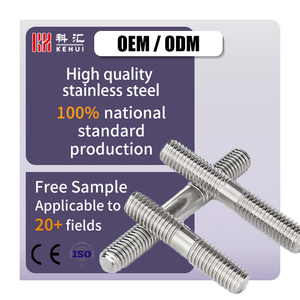
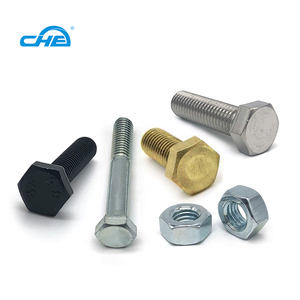
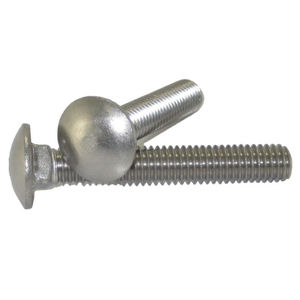
EPCs are consolidating vendor rosters by procuring flange hubs, stud bolts (ASTM A193 B7/B8M), nuts, and spiral wound gaskets as pre-inspected assembly kits.
Automated coordinate measuring machines (CMM) and machine-vision ultrasonic testing eliminate dimensional tolerances discrepancies on socket depth and ring grooves.
Advanced metallurgical advancements delivering high tensile yield, corrosion resistance, and precision machinability.
Closed-die electro-hydraulic forging hammers deliver near-net profiles, conserving raw bar steel while establishing continuous uninterrupted grain boundaries.
Cryogenic treatment stabilizes retained austenite phases in stainless grades (F316L, 904L), enhancing yield strength and fracture toughness below -196°C.
5-axis multi-spindle turning centers machine gasket seating surfaces with Ra 3.2–6.3 µm concentric serrated finishes, ensuring leak-free sealing integrity.
Automated internal plasma arc cladding deposits Inconel 625 onto carbon steel socket walls, offering premium chemical resistance at optimized capital cost.
Combining heavy forging tonnage, complete metallurgical testing, and global export infrastructure to support high-risk process projects.
Our manufacturing facilities operate under comprehensive European Pressure Equipment Directive (PED) compliance and ISO certification. Every batch of socket weld flanges, weld necks, and high-tensile fasteners undergoes strict non-destructive testing (NDT), chemical PMI testing, and mechanical verification with heat-traceable EN 10204 3.1 Mill Test Certificates.
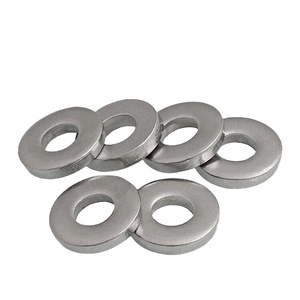
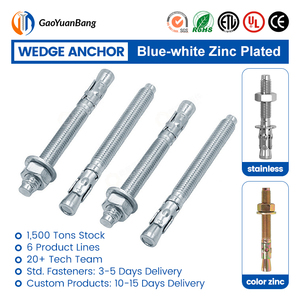
We eliminate assembly mismatch risks by delivering fully paired pipeline solutions. Our workshops produce not only ASME B16.5 socket weld and slip-on flanges but also mating high-strength stud bolts (ASTM A193 B7/B8/B8M), heavy hex nuts (A194 2H/8/8M), and DIN 7349 thick flat washers for extreme torque clamping.
Serving infrastructure, LNG terminals, and offshore installations across the Gulf, Far East Asia, Europe, and the Americas. Every flange face is treated with rust-preventative oil, protected with heavy plastic caps, and packed inside seaworthy, steel-banded fumigated plywood crates designed for rugged intermodal transport.
Expert answers addressing dimensional compliance, weld failure prevention, and commercial procurement specifications.
While both flange designs accept the pipe into an internal bore, a socket weld flange contains an internal recessed counterbore shoulder that sets the pipe insertion depth. Welding is performed primarily on the outer perimeter with a single fillet weld. In contrast, a slip-on flange has a smooth through-bore requiring both internal and external fillet welds. Socket weld flanges are preferred for small-bore piping where higher pressure and fatigue strength are required, avoiding internal welds in narrow diameters.
When a pipe is bottomed out completely against the internal counterbore of a socket weld flange without a gap, the intense localized heat generated during the fillet weld pass forces thermal expansion against the rigid shoulder. This thermal restriction creates severe residual tensile stresses, causing micro-fissuring or root cracking in the weld toe. Backing the pipe out by 1.6mm before tack welding accommodates differential thermal expansion safely.
Unlike butt welds which allow 100% volumetric radiographic inspection (RT), fillet welds on socket flanges cannot be inspected easily with standard X-ray radiography due to joint geometry. Industry standards dictate Magnetic Particle Inspection (MPI) for carbon and alloy steel, and Liquid Penetrant Inspection (DPI/PT) for stainless steel and non-ferrous alloys. Advanced setups utilize Phased Array Ultrasonic Testing (PAUT) to detect root anomalies.
Industry design specifications (including API 610 and ASME B31.3) typically restrict or prohibit socket weld flanges in severe crevice corrosion environments, toxic lethal services, or where severe cyclic erosion occurs. The narrow space between the pipe OD and the socket ID forms an inherent crevice prone to crevice corrosion, chloride concentration, or fluid stagnation. For such services, butt-weld weld neck flanges (WNF) are recommended.
To receive a precise, technically validated quotation, buyers must provide: Nominal Pipe Size (NPS), Pressure Class (e.g., Class 150 to 2500), Flange Facing (Raised Face RF, Flat Face FF, or Ring Type Joint RTJ), Base Material Grade (e.g., ASTM A105N, A182 F316L), Pipe Schedule or Wall Thickness (e.g., SCH 40, SCH 80, SCH 160 to match socket tolerances), Required Heat Treatment, and Certification Criteria (EN 10204 3.1 or 3.2).
Access our complete engineering dimension charts, tolerance tables, and certified pressure-temperature rating matrices. Submit your bill of materials to our technical engineering team today.