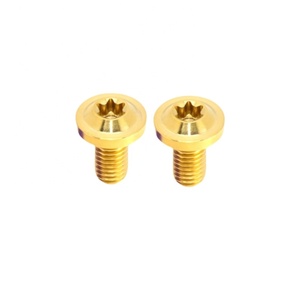

Our heavy-duty precision catalog features high-tensile retaining components, heavy alloy spring washers, and specialized mechanical joint fasteners designed to maintain constant clamping load under thermal and vibrational stress.
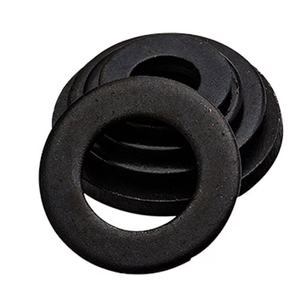
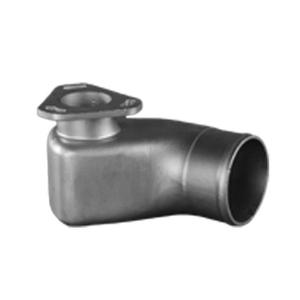
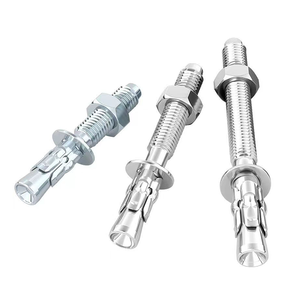
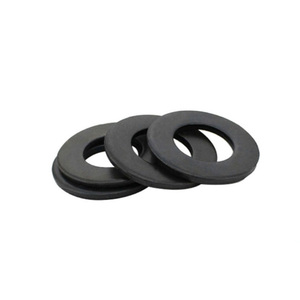
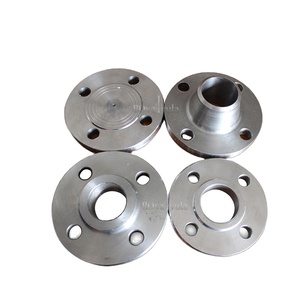
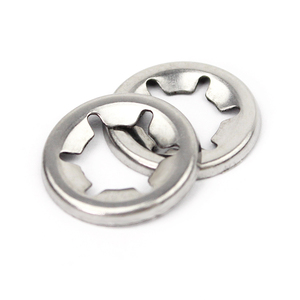
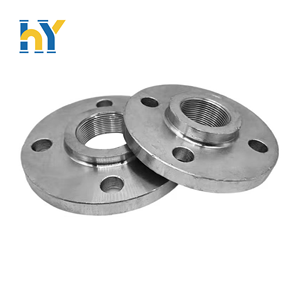
Combining heavy-forging expertise, advanced metallurgy, and strict dimensional tolerances to engineer retaining elements that prevent catastrophic loosening under extreme service conditions.
Certified under the European Pressure Equipment Directive (PED) and active member of prestigious industrial fasteners bodies, assuring total material integrity from melting charge to finished components.
From micro-retention star washers in electronics to heavy forged disc springs for massive ASME B16.5 pipeline flanges and mining vibration screens, our tooling supports full-spectrum dimensions.
Every shipment is accompanied by an authenticated Mill Test Certificate complying with EN 10204 3.1. We supply non-destructive testing (NDT), hardness profiles, and full chemical/mechanical verification.
As one of the world's leading exporters of hot dip galvanized (HDG) fasteners, our anti-embrittlement baking, mechanical plating, Dacromet, and Geomet coatings easily surpass 1,000+ salt-spray test hours.
Alongside high-grade 65Mn, 60Si2Mn, and 51CrV4 spring steels, we process corrosion-immune SS 304, SS 316, Grade 5 Titanium, Inconel 718, and Phosphor Bronze for cryogenic or offshore environments.
Utilizing high-frequency Junker test benches and calibrated optical sorting machines, we verify clamping tension retention, residual deflection, and fatigue life under severe vibrational cycles.
In modern industrial mechanical design, threaded joints are repeatedly subjected to dynamic working stresses, high-amplitude thermal oscillations, and structural cyclic vibrations. Under these conditions, standard flat washers often fail to prevent self-loosening resulting from elastic relaxation or plastic deformation across thread engagement interfaces. Spring washers (spanning helical split lock washers, Belleville disc springs, curved disc washers, and wave washers) are engineered elastic components whose primary engineering function is to store substantial strain energy and apply a continuous, counteracting axial pre-load force against dynamic joint settling.
As heavy machinery, aerospace vehicles, offshore energy infrastructures, and electric vehicle (EV) battery battery packs evolve toward higher power densities and reduced operational mass, securing fastener reliability has transitioned from an afterthought into a critical safety calculation. Choosing the exact configuration and metallurgic specification for a spring washer determines whether a bolting system remains safe throughout its lifecycle or suffers fatigue cracking, micro-fretting, and sudden tensile failure.
Different spring washer geometries generate uniquely tailored deflection curves and clamping tension profiles. Comprehending their physical deflection characteristics is mandatory for design engineers and supply chain procurement managers:
| Washer Type | Standard Specs | Spring Rate (Deflection) | Primary Joint Threat Addressed | Typical Industrial Sector |
|---|---|---|---|---|
| Helical Split Spring Washers | DIN 127B / ASME B18.21.1 | Moderate elastic rebound with biting edges | Low-amplitude cyclic vibration; backward thread rotation | General machinery, agricultural tools, industrial motors |
| Belleville / Conical Disc Springs | DIN 2093 / DIN 6796 | High force, minimal linear deflection (De-gression) | Thermal expansion mismatch, gasket creep, yield relaxation | High-pressure ASME B16.5 piping flanges, LNG manifolds, power turbines |
| Multi-Wave Spring Washers | DIN 137B / Custom Stamped | Low-to-medium force over broad stroke | Axial bearing play elimination, dimensional tolerance stack-up | Electric vehicle transmissions, electric motor armatures |
| Star / Serrated Tooth Washers | DIN 6798 (Form A/J/V) | Low mechanical deflection; intense surface biting | Electrical grounding conductivity; fastener spin-out in thin sheets | Control cabinets, automotive chassis wiring, avionics enclosures |
The global mechanical supply chain is experiencing a paradigm shift driven by stringent industrial regulations and automated smart logistics:
A. Demand for High-Purity Metallurgy: Low-cost carbon wire drawing has proven vulnerable to premature brittle fracture under high tensile preloads. Global buyers are steadily transitioning toward specialized spring alloys such as 51CrV4 (AISI 6150), which exhibits outstanding fatigue limits and creep resistance up to 250°C, as well as precipitation-hardened nickel superalloys (such as Inconel 718) for corrosive chemical reactors and sour gas wells.
B. Zero-Hydrogen Embrittlement Coatings: Electroplating acidic baths historically introduced atomic hydrogen into hardened steel matrixes, causing spontaneous cracking after torque application. Contemporary procurement mandates non-electrolytic zinc flake finishes (e.g., Dacromet, Geomet) and thermal diffusion coatings that completely avoid acid-pickling risks while offering over 1,500 hours of neutral salt spray corrosion resistance without degradation of temper.
C. Data-Backed Mill Traceability and Direct Digital Validation: In adherence to Google's Information Gain framework and real-world EPC accountability, engineering procurement managers no longer accept generic compliance statements. Direct digital integration of raw material melt analyses, batch-level heat treatment charts, Rockwell C (HRC) micro-hardness profiles, and digital optical sorting test reports are now prerequisite conditions for Tier-1 vendor onboarding.
Modern spring washer manufacturing within China has shifted away from purely manual stamping toward ultra-high-speed progressive stamping presses equipped with multi-stage sensors and closed-loop continuous induction quenching-and-tempering atmospheres:
Advanced Finite Element Method (FEM) Simulation: Complex disc spring geometries are digitally modeled prior to die manufacturing. By simulating non-linear stress patterns and internal hoop stresses during flat-load compression, our engineers eliminate micro-notch stress concentration areas, extending dynamic operational life by up to 350% compared to conventional split washer designs.
Integration of Locking Cam Geometries: Conventional friction-reliant spring split rings are increasingly combined with or replaced by wedge-locking washer pairs. By leveraging tension rather than friction, these engineered profiles exploit wedge-shaped cams that exhibit an angle greater than the bolt thread pitch lead, ensuring that any rotational loosening attempt actually increases the overall clamping tension.
Critical metallurgical, testing, and logistical questions addressed by our engineering desk.
Hydrogen embrittlement is avoided through strictly monitored production protocols: using high-purity spring wire, employing mechanical zinc plating or non-acid zinc flake coatings (such as Geomet/Dacromet), and enforcing mandatory post-plating de-embrittlement baking at 200°C–220°C for 4 to 8 hours immediately following any chemical exposure.
DIN 127B split washers rely on localized mechanical edge-biting and minimal spring deflection, making them prone to settling under high preloads. DIN 2093 / DIN 6796 Belleville disc springs offer high axial spring constants, storing immense strain energy to absorb thermal cycling expansion, gasket relaxation, and structural yield in heavy flanged joints.
Each production run includes a complete EN 10204 3.1 Inspection Certificate featuring melt heat analysis, spectroscopic chemical breakdown, Rockwell HRC/HV hardness test data, permanent set/deflection test results, coating thickness measurements, and neutral salt spray test logs.
Yes. Our in-house tooling facility handles custom interior/exterior dimensions, special thicknesses, customized cone heights, wave frequencies, and exotic alloy stampings (Inconel, Titanium, Phosphor Bronze, 316Ti) with prototype turnaround times of under 10 business days.
Key industrial sectors include Petrochemical & LNG Refineries (compensating for thermal flange expansion), Wind Turbine Pitch & Yaw Bearings (absorbing dynamic gusts), Railway Bogies (countering continuous cyclic impact), and Power Generation transformers.
We supply heavy-duty polyethylene inner bags packed in reinforced 25kg export cartons, stacked on fumigated ISPM-15 compliant Euro/US wooden pallets, shrink-wrapped with waterproof multi-layer stretch film, and strapped with high-tensile steel bands for moisture-free ocean transit.