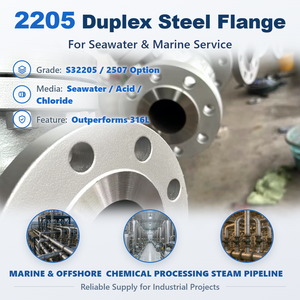
Precision-manufactured in compliance with ASTM, ASME, DIN, and ISO standards with 100% heat traceability and certified test documentation.
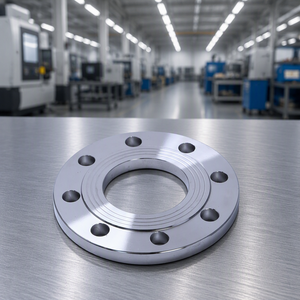
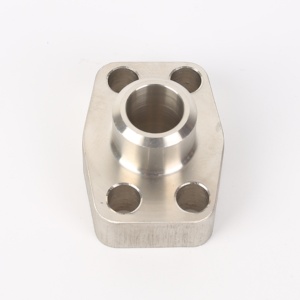
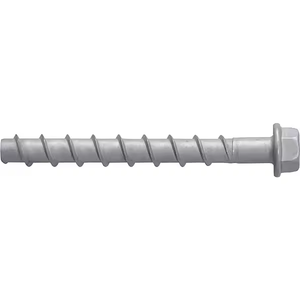
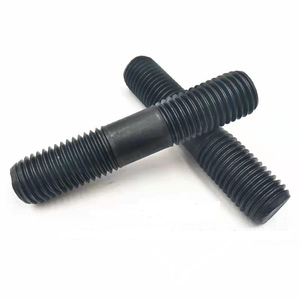
Viha Steel & Forging (established in 2010 in Mumbai, Maharashtra) stands at the international vanguard of high-integrity industrial fastener engineering and forged steel components. As an authorized member of the Fastener Manufacturers Association of India (FMAI) and holding Pressure Equipment Directive (PED 2014/68/EU) accreditation, our production ecosystem is specifically configured to eliminate systemic mechanical failure in mission-critical applications.
From deep-sea subsea manifolds to high-temperature refining hydrocrackers, industrial procurement specialists consistently partner with Viha Steel & Forging due to our rigorous metallurgical integrity, complete vertical manufacturing integration, and zero-compromise quality assurance protocols. Our Mumbai forging and machining works process complete dimensional ranges from miniature M2 fasteners to heavy industrial M100 bolts, producing standard metric and imperial threads alongside bespoke geometries tailored to client engineering drawings.
Full compliance with European pressure equipment mandates, guaranteeing that every pressure-containing bolt, stud, and socket head cap screw meets non-negotiable safety criteria.
Every single manufactured lot is assigned a distinct mill heat number, verified via spectrometer analysis and certified under EN 10204 3.1 / 3.2 inspection documentation.
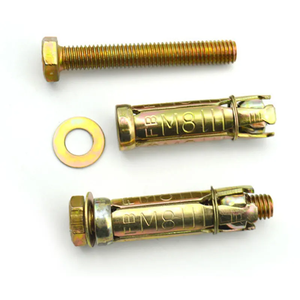
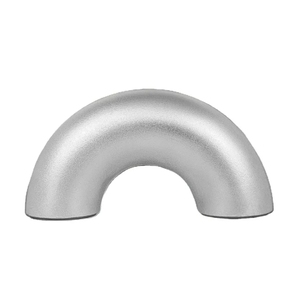
Strategically positioned near Nhava Sheva (JNPT) port, shipping structural fasteners, rawl anchors, seamless fittings, and heavy hex hardware across GCC, Far East Asia, West Africa, and North America.
Allen bolts—technically classified as hexagon socket head cap screws under DIN 912, ISO 4762, and ASME/ANSI B18.3—represent the quintessential mechanical fastener for applications where space restrictions prohibit external wrenching and where high-tensile preloads are paramount. The cylindrical head geometry with an internal hexagonal recess allows seamless flush mounting inside counterbored holes, preserving aerodynamic profiles, compact machine housing footprints, and clean aesthetic lines.
The fatigue performance of an Allen bolt depends entirely on grain flow continuity and controlled heat treatment. At Viha Steel & Forging, socket recesses are manufactured predominantly through precision cold heading or controlled warm forging rather than material removal (broaching). Cold heading forces the grain flow of the raw alloy wire to follow the external contours of the head and the inward perimeter of the hexagon socket, preventing notch stress concentrations at the head-to-shank junction.
| Property Class / Grade | Material Specification | Nominal Tensile Strength (MPa / ksi) | Minimum Yield Strength (MPa / ksi) | Hardness Range (Rockwell / Brinell) | Primary Industrial Service |
|---|---|---|---|---|---|
| Class 8.8 | Medium Carbon Steel, Quenched & Tempered | 800 MPa (~116 ksi) | 640 MPa | HRC 22 – 32 | General machinery, industrial pump brackets, hydraulic valve blocks |
| Class 10.9 | Alloy Steel (40Cr / 4140 / Boron-Treated) | 1040 MPa (~150 ksi) | 940 MPa | HRC 32 – 39 | Automotive powertrains, mining equipment, pressure casing flanges |
| Class 12.9 | High-Strength Cr-Mo Alloy (AISI 4140 / 4340) | 1220 MPa (~177 ksi) | 1100 MPa | HRC 39 – 44 | Extreme cyclic loading, high-speed press tools, injection molding tooling |
| A2-70 / A2-80 | AISI 304 Austenitic Stainless Steel | 700 / 800 MPa | 450 / 600 MPa | HRB 85 – 95 | Food & beverage processing, cryogenic vessels, architecture |
| A4-70 / A4-80 | AISI 316 / 316L (2.5% Molybdenum) | 700 / 800 MPa | 450 / 600 MPa | HRB 85 – 95 | Offshore oil & gas rigs, chemical reactors, marine subsea housings |
| ASTM A193 B7 | Chromium-Molybdenum AISI 4140/4142 Q&T | 125 ksi (860 MPa) | 105 ksi (725 MPa) | HRC ≤ 35 (248–321 HBW) | Refinery piping manifolds, high-temperature boilers, heat exchangers |
| Duplex 2205 | Ferritic-Austenitic Duplex (UNS S32205) | ≥ 760 MPa | ≥ 550 MPa | HRC ≤ 32 | Desalination facilities, flue-gas desulfurization (FGD), sour service |
Precision Allen bolts engineered by Viha Steel & Forging utilize cold thread rolling exclusively across all metric (M2 to M36) and imperial diameters. Unlike cut threads that sever the crystalline grain lines of the metal rod, thread rolling dynamically displaces the alloy grain around dies, generating burnished root fillets characterized by permanent residual compressive stresses. This compressive layer significantly enhances fatigue life under harmonic oscillations and prevents fatigue failure initiated at thread roots.
The global procurement market for socket screws and high-tensile industrial fasteners is undergoing structural changes driven by decarbonization mandates, the rise of hydrogen processing, automated precision manufacturing, and strict multi-regional compliance regulations. Procurement executives and supply chain directors must account for several emerging dynamics to build resilient supply partnerships:
Increasing deployment of ultra-high strength bolts (Class 12.9 and above) requires zinc-nickel electroplating or non-electrolytic zinc flake coatings (such as Geomet/Dacromet) to completely eliminate atomic hydrogen pick-up during acid pickling and electrodeposition.
Procurement teams are transitioning away from physical paper inspection reports. The industry is moving toward QR-coded laser-etched bolt heads linking instantly to cloud-verified EN 10204 3.1 chemical, Charpy V-notch impact, and dimensional records.
With the implementation of the European Carbon Border Adjustment Mechanism (CBAM), top-tier manufacturers in India are securing billets produced through Electric Arc Furnaces (EAF) powered by renewable energy, reducing Scope 3 embedded emissions.
For critical joints in wind turbines, nuclear cooling loops, and subsea risers, engineers are incorporating integrated ultrasonic or optical piezoelectric sensors directly within the socket core to measure clamping force during operation.
The manufacturing architecture for industrial socket screws is evolving from traditional batch machining to continuous, sensor-monitored smart cold heading. Key technical developments reshaping production efficiency and joint safety include:
Modern engineering designs demand bolts with higher yield ratios without sacrificing fracture toughness at sub-zero temperatures. The introduction of air-cooled bainitic steel alloys eliminates conventional secondary oil quenching and high-temperature tempering cycles. This metallurgical innovation achieves Class 10.9 and 12.9 tensile strength directly after hot heading, avoiding residual quench stresses and minimizing micro-cracking risks.
By utilizing computer-aided DEFORM-3D forging simulation software, our tooling engineers map effective strain, die contact pressure, and thermal expansion during five-stage cold heading processes. This prevents material folding in the hexagonal socket corner recesses and reduces tooling wear, maintaining ISO 4762 socket key tolerances across long manufacturing batches.
Traditional black oxide and clear zinc electroplating are increasingly replaced by engineered surface coatings. For heavy infrastructure and coastal petrochemical refineries, Viha Steel & Forging applies:
Essential guidance addressing technical specifications, documentation standards, and commercial parameters encountered during international bolt and flange procurement.
While both represent high-strength alloy steel fasteners, DIN 912 Class 12.9 features a higher room-temperature tensile strength (minimum 1220 MPa vs. B7's 125 ksi / 860 MPa). However, ASTM A193 Grade B7 is specifically engineered and heat-treated for high-pressure, elevated-temperature environments (up to 450°C) with guaranteed creep-rupture performance and standardized Charpy impact toughness. Class 12.9 bolts should never be substituted into high-temperature petrochemical flanged joints due to elevated susceptibility to stress relaxation and hydrogen-assisted stress corrosion cracking under thermal cycling.
For fasteners with hardness exceeding HRC 32 (Class 10.9 and 12.9), acid pickling prior to hot-dip galvanizing is strictly prohibited under our manufacturing SOPs. We employ mechanical shot blasting to remove scale and rust without releasing atomic hydrogen. If electrolytic processes are specifically demanded by customer engineering documentation, fasteners undergo immediate hydrogen de-embrittlement baking at 200°C–220°C for a minimum of 4 to 24 hours within 1 hour of plating, validated by sustained load testing under ASTM F606.
Every consignment dispatched from our Mumbai facility includes a comprehensive Mill Test Certificate (MTC) conforming strictly to EN 10204 Type 3.1 (or Type 3.2 third-party inspection by agencies such as DNV, Lloyd's Register, TUV, or Bureau Veritas upon request). The dossier includes chemical heat analysis, optical emission spectrometry, tensile testing, 0.2% yield verification, percentage reduction of area, Rockwell hardness, Charpy V-notch impact test at ambient or cryogenic temperatures, and PMI (Positive Material Identification) verification.
Yes. Beyond standard carbon, alloy, and austenitic stainless steels (304/316), our specialized hot forging and CNC machining shop manufactures socket screws from Duplex 2205, Super Duplex 2507, Inconel 625/718, Hastelloy C276, Monel 400, Silicon Bronze, Phosphor Bronze, and Grade 2/Grade 5 Titanium. Diameters range from M2 up to M100, with shank lengths extending to 1000 mm produced strictly according to bespoke customer drawings and CAD files.
Tightening torque is calculated using the formula T = K × D × F, where T is torque, K is the nut factor (torque coefficient), D is the nominal diameter, and F is the target bolt tension preload (typically 70–75% of proof strength). Plain, lightly oiled steel bolts exhibit a K factor of roughly 0.18 to 0.20, whereas PTFE/Xylan or cadmium-plated bolts reduce the K factor to 0.10–0.12. Utilizing dry torque values on a lubricated or PTFE-coated Allen bolt can cause severe over-stretching and catastrophic thread shear.