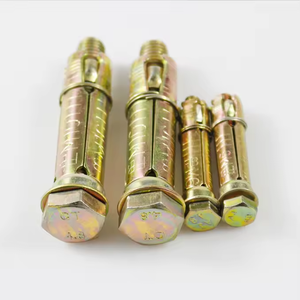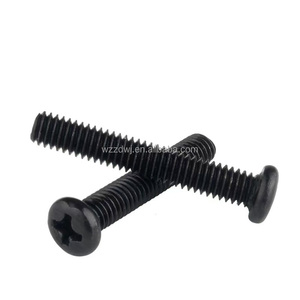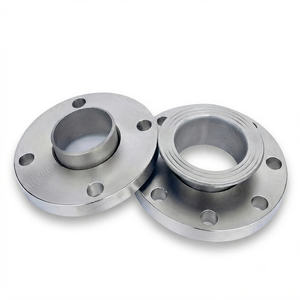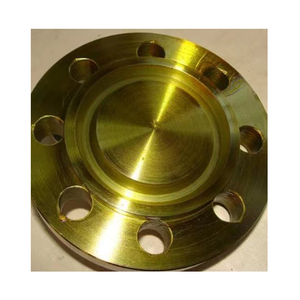
Manufactured to rigid international standards including DIN, ISO, ASTM, and ASME with batch-level material traceability and dimensional testing.
Operating as a premier PED-certified manufacturer and FMAI member headquartered in Mumbai, India, delivering globally compliant fastening systems to EPC contractors and OEMs across 40+ countries.
Compliant with the Pressure Equipment Directive (PED) for safety-critical pressurized pipelines, petrochemical heat exchangers, and high-vibration nuclear installations globally.
Equipped with optical emission spectrometers, computer-controlled tensile test benches, Charpy V-notch impact rigs (-196°C), and magnetic particle inspection (MPI) stations.
Forging expertise spanning ASTM A193 B7/B8/B8M, A325, EN 14399-4 HV sets, Super Duplex 2507, Inconel 625, Silicon Bronze, Phosphor Bronze, and Titanium Grade 5.
A rigorous examination of design rules, thread geometry tolerances, tensile mechanics, and plating metallurgy for structural engineers and senior procurement officers.
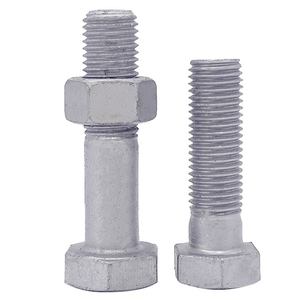
DIN 933 defines the global standard for hexagon head screws with full-length metric coarse machine threading up to the bearing underside of the head (also categorized as "Tap Bolts"). In engineering applications, procurement teams often compare DIN 933 with DIN 931 (ISO 4014). The pivotal technical distinction lies in shear plane mechanics: while DIN 931 features an unthreaded shank (grip length) designed to transmit shear loads across a solid cross-sectional area, DIN 933 is threaded across its entire body.
This full threading provides substantial clamping flexibility in blind tapped holes, modular structural frames, and manifold connections where thread runout must remain strictly limited per DIN 76-1 Form A. However, engineers must account for the stress area ($A_s$) of the thread roots when computing shear load capacity, as stress concentration factors ($\approx 2.0-3.0$) are inherent at the root notch geometry.
Critical Standard Alignment Note (DIN vs. ISO): In modern procurement, DIN 933 is functionally harmonized with ISO 4017. However, engineers must verify Width Across Flats (WAF / dimension $s$) discrepancies in sizes M10, M12, M14, and M22. For example, M10 DIN 933 specifies 17mm WAF, whereas ISO 4017 establishes 16mm WAF. Viha Steel & Forging manufactures both geometries to prevent assembly tool mismatches on international production lines.
Our Mumbai factory manufactures DIN 933 fasteners in compliance with ISO 898-1 for carbon/alloy steels and ISO 3506-1 for austenitic stainless steels. Achieving consistent tensile yield without micro-fissuring requires exact chemical control and verified quench-and-temper (Q&T) heating curves.
| Property Class | Material Base & Treatment | Tensile Strength ($R_m$, MPa) | Yield Strength ($R_{eL}$ or $R_{p0.2}$, MPa) | Elongation ($A$, Min %) | Typical Industrial Duty |
|---|---|---|---|---|---|
| Class 8.8 | Medium carbon steel, Quenched & Tempered (Boron modified) | 800 – 830 | 640 | 12% | Automotive chassis, general machinery, transmission towers |
| Class 10.9 | Alloy steel (40Cr / 4140), Quenched & Tempered | 1040 – 1090 | 940 | 9% | Wind turbine hubs, high-speed rail bogies, heavy structural flanges |
| Class 12.9 | High-alloy steel (42CrMo), Precision Austenitized & Tempered | 1220 | 1100 | 8% | Hydraulic manifold blocks, high-stress engine block tie-downs |
| A2-70 / A2-80 | Austenitic 304 (1.4301), Cold Work Hardened | 700 / 800 | 450 / 600 | > 30% | Food & beverage processing, architectural exteriors, chemical tanks |
| A4-70 / A4-80 | Austenitic 316 (1.4401) with 2-3% Molybdenum | 700 / 800 | 450 / 600 | > 25% | Offshore oil & gas, coastal infrastructure, subsea manifolds |
As the third largest exporter of hot-dip galvanized fasteners in India, Viha Steel & Forging maintains tight process control over chemical pre-treatment and thermal baths to maintain thread tolerances (Class 6h / 6g) post-coating:
How geopolitical diversification, digitalization, green steel standards, and automated quality gates are transforming fastener sourcing through 2030.
Global supply chain interruptions and cross-border tariff complexities have led multinational EPC contractors to establish multi-country sourcing programs. India has emerged as a preferred supply center for high-strength metric fasteners due to integrated steel production, competitive energy structures, and established certifications like PED and EN 10204.
By 2026, European and North American infrastructure frameworks will demand granular transparency on material origin and carbon accounting. Viha Steel & Forging is incorporating machine-readable 2D Datamatrix laser engraving on larger bolt sizes ($≥ M16$).
The Carbon Border Adjustment Mechanism (CBAM) is transitioning industrial procurement from price-only decisions to emissions-conscious evaluation. Leading manufacturers are investing in lower-carbon production methods:
High-tensile fasteners ($R_m > 1000\text{ MPa}$) face internal degradation risks from atomic hydrogen generated during electroplating pickling. Production trends are moving toward mechanical descaling and zero-hydrogen zinc flake systems.
Clear, engineering-driven answers to frequent questions regarding DIN 933 compliance, documentation, metallurgy, and global logistics.
DIN 933 features full threading along the entire length of the shank, making it suitable for threaded blind holes and clamping applications. DIN 931 includes an unthreaded plain shank that provides higher load resistance across the shear plane in heavy structural connections.
ISO 4017 matches DIN 933 across most parameters but introduces different Width Across Flats (WAF) dimensions for four sizes: M10 (16mm ISO vs. 17mm DIN), M12 (18mm ISO vs. 19mm DIN), M14 (21mm ISO vs. 22mm DIN), and M22 (34mm ISO vs. 32mm DIN). We produce to either standard based on project drawings.
Every consignment includes an EN 10204 3.1 Mill Test Certificate detailing melt heat number, chemical composition, proof load, tensile strength, yield ratio, hardness, Charpy V-notch impact values (if requested), and coating thickness verification.
Hot-dip galvanizing adds 45–65μm of surface layer thickness. To ensure proper assembly, bolts are chased to nominal 6g/6h tolerance prior to hot dipping, while mating DIN 934 nuts are tapped oversize to 6AZ or 6AX tolerance post-galvanizing.
Yes. Beyond standard 8.8, 10.9, 12.9, A2, and A4 stainless steel, our facility manufactures custom batches in Super Duplex 2507, Inconel 625/718, Monel 400, Hastelloy C276, Silicon Bronze, Phosphor Bronze, and Titanium Grade 5.
All metric bolts are cold rolled or precision CNC chased to 6g tolerance according to ISO 965-2. Under-head thread runout follows DIN 76-1 Type A specifications, ensuring a smooth radius transition that minimizes notch-effect stresses.