[email protected] +91-22-66343169 PED Approved · FMAI Member · Since 2010
Global Engineering & Export Authority

Top Trusted Structural Bolts Manufacturer & Exporter

Precision-Forged Heavy Hex Structural Fasteners, ASME B16.5 Flanges, and High-Tensile Assembly Systems Engineered for Critical Infrastructure, Refinery, Offshore Energy, and Seismic Assemblies Worldwide.

Engineered Assemblies & Flange Inventory

Featured High-Integrity Fasteners & Piping Components

Stocked to international ASTM, DIN, ISO, and EN standards. Every single batch passes chemical, mechanical, and non-destructive examination (NDT) with 100% heat-traceable Mill Test Certificates (MTC).
Titanium Alloy Screws with Large Disc Heads Inner plum Blossom
Grade 5 Titanium

M4 M5 M8 M6 M10 Titanium Alloy Screws for Motorcycles with Large Disc Heads Inner plum Blossom Titanium Screws

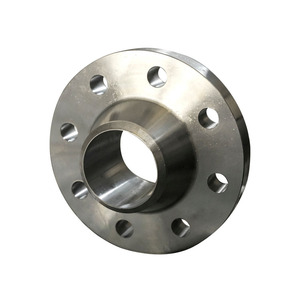
RF Ansi Asme B16.5 Weld Neck Flange
ASME B16.5 Forging

RF Ansi Asme B16.5 Class 150 300 600 2500 Flange Weld Neck Flange

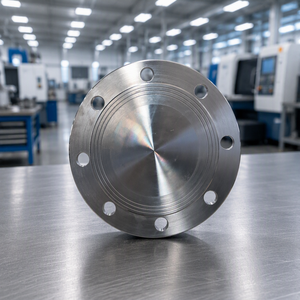
Forged 304 316L Stainless Steel Blind Flange
Austenitic Stainless

Stainless Steel Blind Flange Forged 304 316L Blind Flange for Water Treatment & Oil Gas Pipeline End Closure

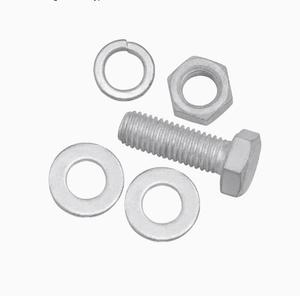
Grade 8.8 HDG Hex Bolt Nut Set DIN 7990
Structural HDG Class 8.8

Grade 8.8 Hot-dip Galvanized Hexagonal Bolts Set High Strength Bolt and Nut Combination DIN 7990 HDG Outer Hex Bolts

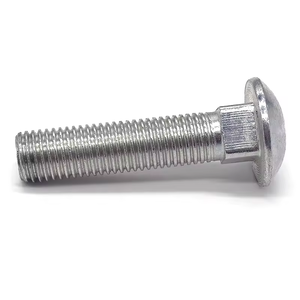
DIN 603 Square Neck Carriage Bolt
DIN 603 / A2-70

China Manufacturer's M10 M12 M18 M20 A2-70 Stainless Steel Carbon Steel Square Neck Carriage Bolt Plain Finish DIN 603 Standard

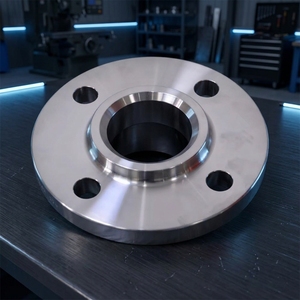
Precision Drilled 4 Hole Steel Flange
HVAC Piping & Flanges

Precision Drilled 4-Hole 1/2" Bolt Diameter Polished Surface Rust Resistant Steel Flange For HVAC System Industrial Piping

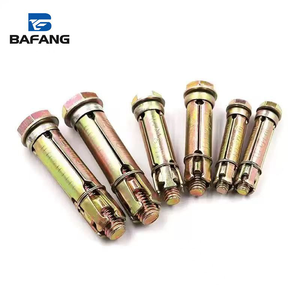
Heavy Duty Expansion Anchor Bolt
Seismic Concrete Anchors

Heavy-Duty 3-Piece Expansion Anchor Bolt, Yellow Zinc Plated for Corrosion Resistance Carbon Steel with High Strength

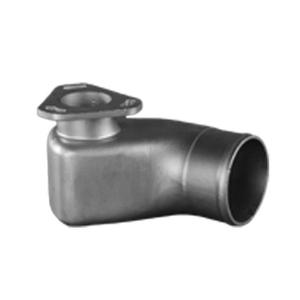
Custom SCS13 Stainless Steel Exhaust Elbow
OEM Investment Casting

Custom SCS13 Stainless Steel Exhaust Elbow Investment Casting OEM Corrosion Resistant High Temperature Marine Industrial

Technical Whitepaper • Structural Fastening Systems

The Engineering Anatomy of High-Tensile Structural Bolting Assemblies

In modern civil engineering, seismic structural fabrication, deep-water offshore platforms, and hydrocarbon processing facilities, the integrity of a joined connection is dictated by the predictable metallurgical behavior of its structural fasteners. As a premier structural bolts manufacturer and global exporter established since 2010, our engineering protocols align with stringent American (ASTM / ASME), European (EN / DIN), and International (ISO) design criteria. The structural bolt is not merely a piece of threaded bar stock; it is a meticulously engineered spring mechanism designed to generate and maintain a specific clamp force over decades of dynamic load cycling, thermal fluctuations, and atmospheric corrosiveness.

2010
Established Year
M2–M100
Metric & Imperial Calibers
TOP 3
HDG Exporter Capability
100%
EN 10204 3.1 Traceability

Under the European standard EN 14399 (High-strength structural bolting assemblies for preloading) and North American standard ASTM F3125 (which consolidated ASTM A325, A325M, A490, A490M, F1852, and F2280 into a unified standard), the mechanical performance envelope is non-negotiable. Whether delivering quenched and tempered property class 8.8, 10.9, or 12.9 heavy hex bolts or engineering high-temperature ASTM A193 Grade B7 / B8 / B8M stud sets paired with ASTM A194 Grade 2H heavy nuts, every step of the upset-forging and thread-rolling sequence determines the joint's ultimate shear and fatigue resistance.

Metallurgical Superiority: Grain Flow Optimization & Cold Heading

A critical differentiator in structural fastener manufacturing lies in the transition between the head and the shank. Cut bolts manufactured via traditional machining compromise raw material grain lines, causing high notch stress concentrations under cyclic loading. In contrast, our Mumbai manufacturing facility utilizes warm and cold forging upset matrices that maintain unbroken, continuous metallurgical grain flow through the head-to-shank fillet transition radius. This continuous grain boundary increases yield strength, significantly suppresses fatigue crack initiation, and delivers certified Charpy V-notch impact toughness even at sub-zero operating thresholds down to -46°C (-50°F) in low-temperature service grades (such as ASTM A320 L7).

Standard / Grade Material Class Tensile Strength (Min) Yield Strength (Min) Matching Nut Standard Core Industrial Application
ASTM F3125 Grade A325 Medium Carbon Steel, Q&T 120 ksi [825 MPa] (≤1") 92 ksi [635 MPa] ASTM A563 Grade DH High-rise building steel framing, bridges, heavy machinery
ASTM F3125 Grade A490 Alloy Steel (AISI 4140/4340), Q&T 150 ksi [1,035 MPa] 130 ksi [895 MPa] ASTM A563 Grade DH / A194 2H Seismic moment frames, crane runway girders, heavy rail
EN 14399-4 Class 10.9 HV Heat-Treated Alloy Steel 1,000 MPa 900 MPa EN 14399-4 Class 10 Nut Preloaded European structural connections, wind towers
ASTM A193 Grade B7 Chromium-Molybdenum Steel 125 ksi [860 MPa] 105 ksi [720 MPa] ASTM A194 Grade 2H Refinery pressure vessels, ASME B16.5 flanges, power plants
ASTM A193 Grade B8M Cl. 2 AISI 316 Stainless (Strain Hardened) 110 ksi [760 MPa] 95 ksi [655 MPa] ASTM A194 Grade 8M Offshore oil & gas, coastal LNG terminals, marine splash zones
DIN 7990 Grade 8.8 HDG Structural Carbon Alloy (Zinc Dipped) 800 MPa 640 MPa DIN 7990 / ISO 4032 Gr. 8 Power transmission towers, substations, industrial roofing

Our Competitive Advantages: Global Compliance & Production Capability

As a PED 2014/68/EU certified manufacturer and recognized member of the Fastener Manufacturers Association of India (FMAI), our organization bridges the gap between massive volume production and zero-defect aerospace-grade traceability. With over a decade of continuous export operations shipping from Mumbai to North America, the Gulf Cooperation Council (GCC), West Africa, and Far East Asia, our export management infrastructure resolves the logistical, technical, and regulatory hurdles commonly faced by international engineering procurement construction (EPC) contractors.

PED & ISO Quality Certification

Full European Pressure Equipment Directive (PED 2014/68/EU) approval ensuring pressure-boundary compliance for critical petrochemical, refinery, and boiler installations.

Broad Size Spectrum: M2 to M100

In-house cold heading and high-capacity hydraulic hot upset forging systems delivering standard and non-standard bolts from M2 precision studs up to M100 large-bore anchor systems.

Hot-Dip Galvanizing (HDG) Leadership

Ranked among India's top 3 exporters of hot-dip galvanized fasteners, featuring automated centrifuging for uniform coating thickness (ASTM A153 Class C / EN ISO 10684) with precision thread chasing.

100% Heat-Traceable EN 10204 3.1 MTC

Complete traceability back to steel melt heats with dual-certified lab reports covering Spectro chemical analysis, tensile testing, 0.2% offset yield, proof load, and Charpy impact.

Comprehensive Exotic Metallurgies

Alongside carbon and 304/316/316L stainless steel, we manufacture fasteners in Super Duplex 2507, Inconel 625/718, Hastelloy, Silicon Bronze, Phosphor Bronze, and Grade 5 Titanium.

Integrated Piping Component Supply

Synergistic production of matching ASME B16.5 weld neck, blind, slip-on flanges and butt weld pipe fittings (ASTM A234 WPB / A420 WPL6) ensuring 100% flange-to-bolt compatibility.

Procurement Strategy 2025–2035

Future Structural Bolt Procurement Trends: Navigating Supply Chain Resiliency

Procurement directors and project managers in energy, civil transport, and industrial EPC face a radically shifting global supply dynamic. The historic model of buying fasteners purely on spot-market commodity prices has led to catastrophic project delays, brittle failures caused by unverified hydrogen embrittlement, and non-compliance penalties under expanding international climate frameworks. Below are the transformative trends reshaping structural bolting procurement over the coming decade:

Regulatory & ESG

1. Carbon Border Adjustment Mechanism (CBAM) & Green Steel Mandates

With the European Union's CBAM entering definitive enforcement and North American clean-procurement regulations expanding, fastener buyers are now mandated to report embedded Scope 1, 2, and 3 emissions. Structural bolts produced using blast-furnace routes face steep import tariffs compared to those manufactured via electric arc furnaces (EAF) utilizing high scrap fractions and renewable energy. Forward-thinking procurement teams are establishing long-term supplier agreements with Indian and Asian manufacturers that can verify low-carbon steel billets and provide certified Environmental Product Declarations (EPDs).

Digital Assurance

2. Digital Product Passports & Immutable Heat-Batch Traceability

Counterfeit fastener scandals and fraudulent Mill Test Certificates have resulted in multimillion-dollar retrofits on bridges and petrochemical platforms. By 2030, paper MTCs will be largely obsolete. Leading global buyers are specifying digital material tracking with laser-etched QR identifiers or 2D matrix codes directly on the fastener head for M20+ bolts. This allows site erection crews to scan installed fasteners with hand-held optical readers, instantly verifying torque-tension calibration curves, chemical heat numbers, and ultrasonic NDT records directly from the manufacturer's cloud ledger.

Supply Chain Design

3. Strategic "China+1" Sourcing & Indian Forging Dominance

Geopolitical diversification, anti-dumping duties on Chinese fasteners in both North American and European jurisdictions, and maritime freight volatility have permanently altered global sourcing lanes. India has solidified its standing as the world's most stable, technologically equipped, and cost-efficient alternative for forged structural bolts and ASME flanges. Fastener buyers are establishing programmatic vendor-managed inventory (VMI) hubs near major deep-water ports (such as Mumbai/JNPT) to safeguard multi-year infrastructure delivery schedules.

Installation Efficiency

4. Transition to Pre-Assembled Tension-Control (TC) Bolting Sets

Jobsite labor costs and operator fatigue remain significant cost drivers in structural steel erection. Procurement demand is rapidly migrating from standard loose hex bolt and nut packaging to pre-assembled, factory-lubricated Tension Control (TC) assemblies (ASTM F3125 Grade F1852 / EN 14399-10). These assemblies utilize a splined tip that shears off cleanly at the calibrated pre-tension threshold when installed with an electric shear wrench, eliminating human error in manual torque wrench calibration and accelerating joint sign-off by structural inspectors.

Technological & Material Trends in Structural Fastener Manufacturing

As structural designs push towards longer spans, deeper waters, and seismic-resilient modular skyscrapers, fastener metallurgy and protective coatings are experiencing unprecedented innovation:

  • Micro-Alloyed Steels & Boron Additions: To attain property class 10.9 and 12.9 without increasing carbon content (which elevates susceptibility to brittle fracture), manufacturers are utilizing low-carbon boron-treated manganese steels. This preserves high ductility (elongation > 14%) while achieving tensiles exceeding 1,040 MPa.
  • Hydrogen Embrittlement Mitigation (ASTM F1940): High-strength bolts (>1,000 MPa tensile or >320 HBW hardness) are vulnerable to catastrophic delayed hydrogen cracking during electroplating or acid pickling. Modern production lines utilize mechanical cleaning (shot blasting) and bake-out furnace protocols (200°C for 8 to 24 hours immediately post-treatment) combined with real-time incremental step-load testing.
  • Non-Electrolytic Zinc Flake Coatings (Geomet / Dacromet / Delta-Protekt): To eliminate hydrogen embrittlement entirely while outperforming hot-dip galvanizing, advanced zinc flake barrier coatings are becoming standard. Providing over 1,500 hours of ASTM B117 salt spray neutral fog resistance at a thin 8–15 micron coating thickness, they avoid thread-fit clearance issues without requiring tapped oversize nuts.
  • Embedded Smart Ultrasonic Load Sensors: Emerging structural bolts feature piezoelectric transducers permanently mounted to the bolt head. By sending high-frequency acoustic waves down the bolt shank, technicians can measure precise bolt elongation and residual pre-load clamp force non-invasively during routine bridge maintenance, without releasing joint preload.
Engineering Guidance & Due Diligence

Frequently Asked Questions: Structural Bolts Procurement & Export Compliance

Essential technical clarifications compiled by our metallurgical and export quality assurance engineers to assist procurement teams in specifying structural assemblies correctly.

What is the fundamental engineering difference between ASTM A325 and ASTM F3125 Grade A325? +
Prior to 2015, ASTM A325 was an independent standard strictly governing heavy hex structural bolts. In 2015, ASTM officially withdrew A325, A490, A325M, A490M, F1852, and F2280, consolidating them under ASTM F3125/F3125M. Under this unified umbrella, Grade A325 is now a designated grade within F3125. The mechanical properties (120 ksi minimum tensile for ≤1" diameter and 105 ksi for diameters 1-1/8" to 1-1/2") remained equivalent, but ASTM F3125 introduced standardized rotational capacity testing protocols, strict coating qualification mandates (such as zinc flake approvals under Annex A1), and unified chemical restrictions to ensure better seismic joint performance.
Why must structural nuts for Hot-Dip Galvanized (HDG) bolts be tapped oversize? +
Hot-dip galvanizing deposits a relatively thick protective metallurgical zinc layer (typically 45 to 65 microns per ASTM A153 Class C or EN ISO 10684). If internal nut threads and external bolt threads were both cut to standard Class 2A / 2B or 6g / 6H tolerances, the zinc build-up in thread roots would cause thread interference, galling, and impossible field assembly. Per standard ASTM A563 (or ISO 965-5), structural bolts are galvanized on standard thread pitches, while the mating heavy hex nuts are tapped oversize (typically +0.40mm to +0.55mm depending on diameter) after galvanizing. To prevent premature corrosion of the bare steel exposed inside the tapped nut threads, the zinc coating on the bolt thread sacrificially protects the internal nut threads via cathodic galvanic protection.
How does EN 14399 System HV differ from System HR in European preloaded connections? +
EN 14399 structural bolting assemblies are divided into two distinct engineering philosophies: System HR (High Resistance, developed predominantly in France and the UK) and System HV (Hochfest Vorgespannt, developed in Germany). System HV utilizes thicker nut geometries and shorter thread engagement designed to fail by thread stripping if severely overloaded, providing warning before catastrophic shank snapping. System HR relies on a thicker bolt shank and deeper thread engagement, ensuring that failure occurs via shank tension fracture. The two systems have distinct bolt geometries, nut heights, and torque-friction coefficients (μ) and must never be intermixed on the same joint.
What is a Rotational Capacity (ROCAP) test, and when is it mandatory? +
The Rotational Capacity (ROCAP) test, governed by ASTM F3125 Annex A2 and AASHTO specifications, is an on-site or factory quality assurance test designed to verify three crucial parameters of a structural bolting assembly: (1) ductility, (2) the presence and effectiveness of thread lubricant, and (3) joint capacity to achieve required design tension without thread stripping or bolt fracture. Conducted using a Skidmore-Wilhelm hydraulic calibrator, the bolt is tensioned to 1.15 times the required installation tension, and then rotated past that point through a mandatory number of degrees (up to 360° for long bolts). If the assembly shears, strips, or the nut seizes before reaching the rotational limit, the entire lot is rejected. ROCAP testing is mandatory on all high-strength structural assemblies used in highway bridges, seismic moment frames, and critical DOT infrastructure.
How can buyers definitively verify material authenticity on Mill Test Certificates (MTC)? +
A genuine MTC issued under EN 10204 Type 3.1 must come from an independent quality inspection department not influenced by manufacturing sales. It must clearly state the raw material manufacturer's original heat number, melting process (EAF/AOD), chemical composition limits, mechanical results (tensile, yield, elongation, reduction of area), hardness survey, and Charpy impact values where applicable. International buyers should cross-reference the heat number stamped into the bolt head with the physical test report, demand third-party PMI (Positive Material Identification) via handheld XRF analyzers prior to container sealing, and verify that the manufacturer holds third-party audit credentials (e.g., TÜV Rheinland, Lloyd's Register PED approval, or DNV-GL).
What are the minimum export packing specifications to prevent thread damage during ocean transit? +
Heavy structural bolts (particularly calibers M24 / 1" and above) carry substantial kinetic mass during rough maritime container transit. Substandard packing causes nicked external threads that lock during jobsite erection. Our export packing standard utilizes heavy-duty 25 kg multi-wall corrugated cardboard cartons lined with moisture-barrier polyethylene bags (infused with Vapor Corrosion Inhibitors / VCI). Cartons are palletized onto heat-treated, fumigated ISPM-15 compliant wooden pallets, edge-protected with heavy composite angle-boards, shrink-wrapped in 50-micron stretch film, and bound by quadruple high-tensile steel strapping. For long stud bolts (M36+), custom wooden crates with separated compartments and plastic thread-protection caps are utilized.

Ready to Secure Your Structural Bolting & Flange Supply Chain?

Connect with our technical sales and metallurgy desk in Mumbai for project quotations, customized dimension drawings, or certified Mill Test Certificate documentation. We deliver direct to major ports across North America, Europe, the Middle East, and Southeast Asia.

Inquire Now