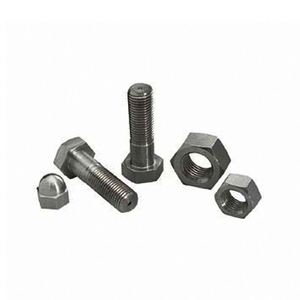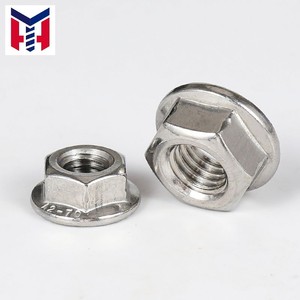
Direct factory supply from our Mumbai manufacturing facilities to Indonesian marine yards, mineral processing plants, and energy infrastructure corridors.
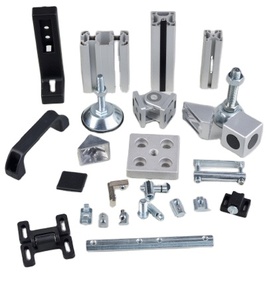
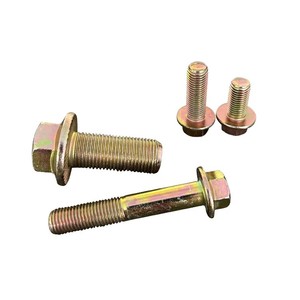
Combining metallurgical precision, high-volume production lines, and adherence to international regulatory frameworks.
Our facility operates under rigorous European Pressure Equipment Directive (PED) compliance and is a premier member of the Fastener Manufacturers Association of India (FMAI).
Ranked among the top three HDG fastener exporters in India, offering specialized centrifuging techniques to ensure clean thread engagement for tropical and offshore conditions.
Every batch of ASTM A307 bolts comes complete with EN 10204 Type 3.1 Mill Test Certificates detailing spectral chemical analysis, tensile testing, and proof load performance.
The specification ASTM A307 represents the global industry benchmark for standard low-carbon steel fasteners. Encompassing bolts, studs, and threaded rods with a designated minimum tensile strength of 60 ksi (414 MPa), ASTM A307 is specifically formulated for light-to-medium structural connections, piping flange unions (ASME B16.5 Class 150), equipment anchorings, and utility infrastructure. For engineering contractors and EPC procurement directors in Indonesia, selecting and deploying the appropriate sub-classification within ASTM A307 is vital to maintaining structural stability, complying with Indonesian National Standards (SNI), and overcoming accelerated corrosion driven by high ambient humidity and marine exposure.
ASTM A307 designates three distinct material grades, each tailored to particular structural and pressure regimes:
| Property / Grade | ASTM A307 Grade A | ASTM A307 Grade B | Reference Test Standard |
|---|---|---|---|
| Nominal Diameter Range | 1/4" to 4" (M6 to M100 equivalent) | 1/4" to 4" (M6 to M100 equivalent) | ASME B18.2.1 / ASME B1.1 |
| Tensile Strength, Min | 60 ksi (414 MPa) | 60 ksi (414 MPa) | ASTM F606 / F606M |
| Tensile Strength, Max | None specified | 100 ksi (690 MPa) | ASTM F606 / F606M |
| Elongation in 2 in. (50 mm), Min | 18% | 18% | ASTM A370 |
| Hardness (Rockwell B) | 69 to 100 HRB | 69 to 95 HRB | ASTM E18 |
| Mating Nut Standard | ASTM A563 Grade A Hex Nut | ASTM A563 Grade A Heavy Hex Nut | ASME B18.2.2 / ASTM A563 |
| Anti-Corrosive Coatings | Hot Dip Galvanized (ASTM F2329 / A153) | Zinc Electroplated (ASTM B633) / PTFE | ISO 1461 / ISO 10684 |
At Viha Steel & Forging, our ASTM A307 fastener line starts with chemically verified low-carbon steel billets. Material is processed through cold heading for sizes up to 1" (M24) and high-temperature precision hot forging for large-diameter configurations up to 4" (M100). Hot forging ensures an uninterrupted longitudinal grain flow along the transition radius from the hex head to the shank, minimizing mechanical fatigue and stress concentration.
Thread configurations are rolled using precision flat and cylindrical thread dies rather than cut. Thread rolling produces a burnished surface profile with cold-worked roots, enhancing shear yield performance. Threads are manufactured to Class 2A tolerances for imperial bolts and Class 6g for metric equivalents, providing clearance for subsequent hot-dip galvanizing baths without requiring aggressive post-coating re-threading that could weaken the mechanical core.
From mining operations in Kalimantan to maritime shipyards in the Riau Archipelago, our fasteners secure key regional assets.
Indonesia’s nickel, bauxite, and coal corridors utilize vast networks of HDPE-lined and rubber-lined carbon steel pipelines. ASTM A307 Grade B bolts are standard for flange assemblies connecting low-pressure tailing conduits, slurry manifolds, and discharge valves, delivering calibrated pre-loads that protect composite liners from compression damage.
Hubs: Balikpapan, Morowali, SorowakoShipyards across Batam require heavy inventory volumes of Hot-Dip Galvanized ASTM A307 studs and carriage fasteners for auxiliary seawater intakes, structural deck fixtures, ballast water containment, and dry-dock modular staging. Our galvanizing processes meet ASTM F2329 specifications to counter tropical maritime salt-spray corrosion.
Hubs: Batam Free Trade Zone, Tanjung Balai KarimunCrude Palm Oil (CPO) mills and downstream biodiesel processing complexes in Riau and North Sumatra integrate low-pressure steam utility connections and storage tank manifolds. ASTM A307 Grade A bolts offer a cost-effective, dependable solution for structural steel frame anchoring and ASME Class 125/150 utility water lines.
Hubs: Medan, Dumai, PekanbaruWith the development of Indonesia's new capital Nusantara in East Kalimantan, demand has surged for standardized utility fasteners. Large-diameter ASTM A307 anchor bolts and threaded rods provide foundation anchoring for precast utility trenches, structural pole assemblies, water supply lines, and secondary support networks across the new administrative capital.
Hubs: Nusantara (Sepaku), Samarinda, PenajamJava's industrial corridor and eastern geothermal initiatives deploy A307 fasteners in auxiliary water circulation plants, HVAC cooling infrastructure, exhaust duct supports, and cable tray bracket mountings where the elevated yield strength of alloy steel is unnecessary, helping prevent unnecessary project expenditure.
Hubs: Cilegon, Surabaya, Kamojang, UlumbuMaritime freight terminals operate in high-humidity, marine-splash zones. Our hot-dip galvanized ASTM A307 structural connection bolts secure fender wood facers, conveyor skirt clamps, crane runway cable trays, and terminal warehouse framing, delivering long-term resistance to coastal corrosion.
Hubs: Jakarta (Tanjung Priok), Surabaya (Tanjung Perak)The industrial transformation across the Indonesian archipelago continues to shift procurement parameters for heavy engineering components. Understanding these macro trends allows project procurement managers to stay ahead of regulatory requirements and material availability constraints:
As Indonesia’s Ministry of Public Works and Public Housing (PUPR) updates structural codes, procurement teams increasingly favor fasteners conforming to internationally verified specifications (such as ASTM A307, ASTM A325, and ISO 898-1). The use of uncertified non-standard carbon steel bolts is declining, driven by stricter project audits and mandatory Mill Test Certificates traceable to verifiable melt numbers.
Government mandates prioritizing domestic mineral value addition have led to significant expansion in high-pressure acid leach (HPAL) and rotary kiln-electric furnace (RKEF) processing plants across Central Sulawesi, North Maluku, and South Sumatra. While core pressure reactors require exotic nickel alloys and ASTM A193 B7/B8 bolting, extensive auxiliary utilities, administrative complexes, and effluent transport pipelines are standardizing on ASTM A307 Grade B systems to balance project costs.
Indonesia's tropical climate features relative humidity levels routinely between 75% and 90%, compounded by coastal salt air. This environment quickly degrades standard electro-zinc coatings (often under 8 microns). Consequently, Indonesian project teams are standardizing on heavy hot-dip galvanizing per ASTM F2329 or ISO 1461, requiring an average zinc coating thickness of at least 45 to 65 microns. Viha Steel & Forging utilizes specialized centrifuging units that leave clean, uniform thread profiles, eliminating the need for post-galvanizing chasing that can expose the core steel substrate.
Clear, direct answers regarding customs documentation, surface protection, and mechanical verification for imports.
ASTM A307 Grade A bolts are standard carbon steel fasteners designed for general utility, structural, and anchor bolt applications, requiring a minimum tensile strength of 60 ksi with no upper tensile limit. Grade B bolts are engineered specifically for piping flange joints (typically cast-iron or low-pressure steel flanges), featuring a strict upper tensile cap of 100 ksi. This ceiling prevents over-torquing during gasket seating, protecting brittle flange faces from cracking.
Yes, with engineering review. ISO 898-1 Property Class 4.6 closely matches ASTM A307 Grade A in tensile behavior (nominal 400 MPa tensile vs. 414 MPa for A307). However, switching to high-strength property classes like 8.8 or ASTM A325 can induce excessive flange stresses in cast-iron piping systems. In addition, thread profiles differ between metric coarse pitches and Unified National Coarse (UNC) imperial sizes, requiring matching mating nuts.
Every container shipment is accompanied by a certified EN 10204 Type 3.1 Inspection Certificate traceable to the raw material melt heat number, alongside packing lists, commercial invoices, and preferential Certificate of Origin (COO) documentation. This ensures seamless processing through Tanjung Priok (Jakarta) or Tanjung Perak (Surabaya) and complies with local SKK Migas and SNI inspection protocols.
Per ASTM specifications (such as ASTM A563), the hot-dip galvanized coating adds significant thickness to bolt threads. We roll the bolt threads to standard Class 2A sizes prior to coating, while mating nuts (typically ASTM A563 Grade A Heavy Hex) are tapped oversize after galvanizing per ASTM A563 Table X1.1 guidelines. This approach ensures smooth manual assembly on job sites while maintaining full thread engagement.
Our standard production lead time for made-to-order fastener runs ranges from 2 to 3 weeks, while common sizes are held in inventory. Transit times from Nhava Sheva (Jawaharlal Nehru Port, Mumbai) to Jakarta (Tanjung Priok) or Surabaya typically take 12 to 16 days via regular direct container sailings. Urgent requirements can also be dispatched through air freight to Soekarno-Hatta International Airport.
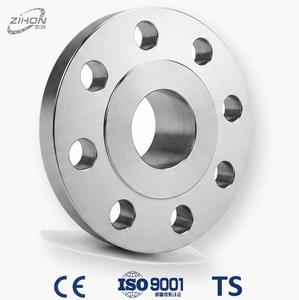
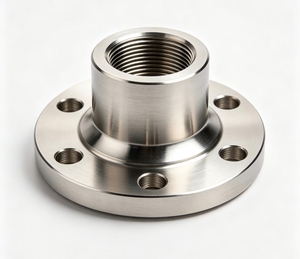
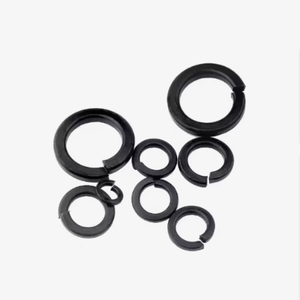
Yes. As a comprehensive forging and fastener manufacturer, Viha Steel & Forging supplies complete connection packages. This includes ASME B16.5 and JIS B2220 forged flanges, ASTM F844 and F436 plain and hardened washers, spring lock washers, and complementary stud bolts, providing single-source accountability for your piping and structural projects.
Connect directly with our engineering sales desk for mill-direct pricing, project take-offs, and containerized freight schedules to all primary Indonesian ports.
Get a Quote