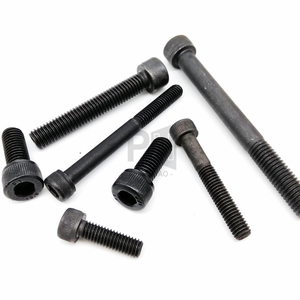
Precision Socket Head
High Tensile Grade 12.9 Carbon Steel DIN912 Socket Cap Bolt
Sizes: M2 - M8 | Standard: DIN 912 / ISO 4762 | Tensile: 1220 MPa min.

Engineered to withstand excessive shear, cyclically loaded bridge joints, heavy industrial crane runways, and harsh Australian conditions from the Pilbara red dust to coastal Bass Strait winds.
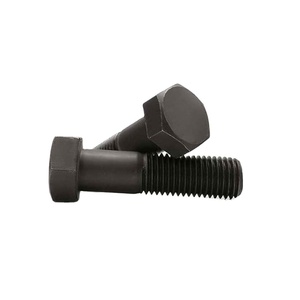
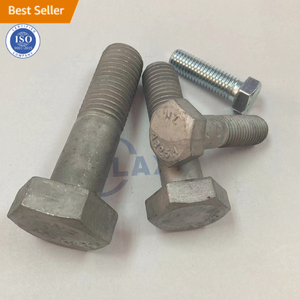
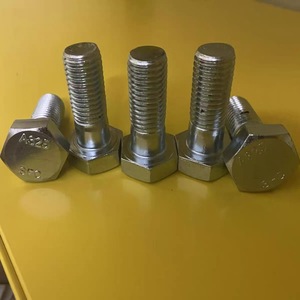
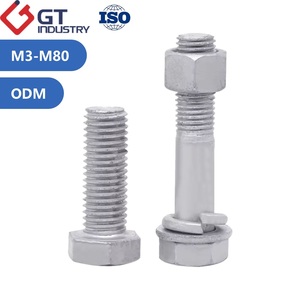
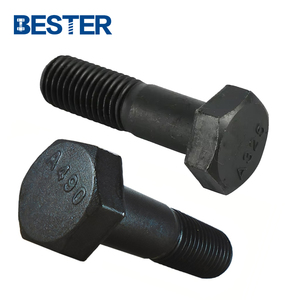
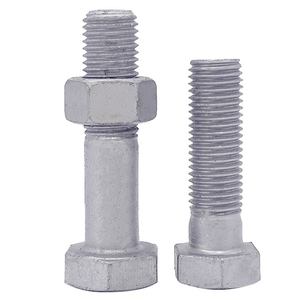
A technical guide for Australian structural engineers, fabricators, and project certifiers handling high-strength friction-grip bolted splices.
Unlike standard ASTM A325 (which uses medium-carbon steel), ASTM A490 is manufactured from quenched and tempered alloy steels (such as AISI 4140, 4142, or 4340). This yields an exceptional tensile strength of 150 to 173 ksi (1040 to 1210 MPa) with a yield point above 130 ksi (895 MPa).
Because ASTM A490 fasteners have an absolute tensile strength exceeding 1000 MPa, conventional acid pickling and standard hot-dip galvanizing per ASTM A153 can induce catastrophic internal Hydrogen Embrittlement (IHE/EHE) under preloaded tension.
Australian projects frequently encounter American design specs (AISC) integrated into AS 4100 structural workflows. While AS/NZS 1252.1 defines Property Class 8.8 structural sets, A490 represents Property Class 10.9 performance.
| Standard / Class | Core Chemistry | Tensile Strength (MPa / ksi) | Proof Load (Stress) | Standard Mating Nut | Primary Australian Deployment |
|---|---|---|---|---|---|
| ASTM A490 Type 1 | Quenched & Tempered Alloy Steel (Cr-Mo) | 1040 - 1210 MPa (150 - 173 ksi) | 830 MPa (120 ksi) | ASTM A563 DH / A194 2H | Mining reclaimers, dynamic rail bridges, portal crane joints |
| ASTM A490 Type 3 | Weathering Steel (Cu-Cr-Ni Atmospheric) | 1040 - 1210 MPa (150 - 173 ksi) | 830 MPa (120 ksi) | ASTM A563 Grade DH3 | Unpainted architectural steel, exposed outback highway overpasses |
| ASTM A325 / AS 1252 | Medium Carbon Steel, Heat Treated | 830 MPa min (120 ksi for ≤ 1") | 600 MPa (85 ksi) | ASTM A563 Grade C / AS 1252 | General commercial framing, logistics sheds, industrial portals |
| EN 14399-4 10.9 HV | European Quenched Alloy Steel | 1000 - 1200 MPa | 830 MPa | EN 14399-4 Class 10 | European EPC wind turbine lattice, port ship-to-shore cranes |
From cyclonic winds off the North West Shelf to corrosive salt mist in Port Kembla, our ASTM A490 supply chain guarantees non-yielding connection security.
Australian resource extractors operate some of the largest train loadout facilities, conveyor gantries, and car dumpers in the world. Dynamic vibration from crushing iron ore and coal breaks inadequate Class 8.8 assemblies. ASTM A490 friction-grip preloaded assemblies ensure connections resist slip under perpetual dynamic shock loads.
Under Australian Standard AS 5100 (Bridge Design), structural fatigue is paramount. Our A490 bolts provide controlled thread root radiuses, roll-formed after heat treatment to induce compressive stress, dramatically improving fatigue thresholds on freight rail links across New South Wales, Victoria, and Queensland.
Australia's transition to massive wind turbine towers and coastal battery energy storage systems (BESS) demands rigorous high-preload bolting. Where high wind shear creates cyclical overturning moments, A490 Grade Type 1 and Type 3 fasteners anchor essential structural joints safely.
Key drivers currently defining how Australian Tier-1 EPCMs and procurement officers purchase high-tensile structural bolts.
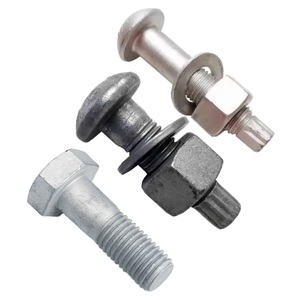
With sky-high labor and site-inspection costs in Melbourne, Sydney, and Brisbane, fabricators are rapidly replacing traditional heavy hex bolts with A490 TC Bolts (ASTM F3125 Grade F2280). Electric shear wrenches allow one-worker installation and visual inspection, cutting erection labor expenses by over 30%.
Following high-profile safety audits across Australian civil programs, major contractors enforce strict verification against fraudulent non-compliant fasteners. Complete batch heat traceability directly traceable to an ISO 17025 accredited laboratory is now mandatory to avoid on-site project shutdowns.
Western Australian and Queensland green hydrogen plants specify ultra-durable fastening solutions resistant to localized stress corrosion cracking. Engineers specify precisely formulated alloy steel bolts with micro-encapsulated inorganic barrier coatings for multi-decade life expectancy.
Combining heavy forging capabilities, certified metallurgical quality controls, and dedicated export logistics.
Our manufacturing operations strictly comply with PED (Pressure Equipment Directive) and Indian Fastener Manufacturers Association standards, backed by full ISO 9001:2015 QA systems.
Tensile stress verification, proof load testing, Rockwell hardness (HRC 33-38 for A490), Charpy impact, and MPI non-destructive evaluation are executed internally per batch.
From M2 micro-fasteners to massive M100 forged structural bolts, including imperial 1/2" through 4" diameters, in carbon, Cr-Mo alloy, 304/316 stainless, and exotic bronzes.
Corrosion-inhibiting vacuum packaging, custom steel-strapped wooden palletization, and pre-cleared customs documentation delivered directly to Fremantle, Melbourne, Sydney, and Brisbane ports.
Direct answers regarding compliance, certifications, surface treatments, and lead times.
Under AS 4100 (Steel Structures), structural bolts are categorized primarily around Property Class 8.8 (AS/NZS 1252). When designs adopt AISC standards or require higher slip critical resistance without expanding bolt hole patterns, ASTM A490 is designated as Property Class 10.9 structural bolting, providing higher clamping force per diameter.
No. Standard hot-dip galvanizing per ASTM A153 or AS/NZS 4680 is strictly prohibited by ASTM specifications for A490 bolts due to the risk of hydrogen embrittlement. Instead, we supply A490 bolts with multi-layer Dacromet, Geomet (ASTM F1136), or mechanically deposited zinc coatings that protect against salt spray without hydrogen immersion.
Yes. Every batch dispatched to Australia is accompanied by full 3.1 certification detailing original steel melt heat numbers, chemical composition analysis, heat-treatment quenching records, elongation, tensile tests, and hardness checks.
A490 Type 1 is manufactured from quenched and tempered alloy steel (Cr-Mo alloy), requiring an applied anti-corrosion coating for outdoor exposure. Type 3 is manufactured from atmospheric weathering steel with enhanced copper/nickel content that forms a self-protecting patina, commonly preferred in remote inland infrastructure.
To ensure failure never occurs at the threads, ASTM A490 bolts must be assembled with ASTM A563 Grade DH or ASTM A194 Grade 2H heavy hex nuts. Extra-thick ASTM F436 Type 1 or Type 3 hardened structural washers are provided to prevent crushing of connected steel plates during high tensioning.
We maintain comprehensive stocks of standard ASME B18.2.6 lengths from 2" to 10" for urgent needs. Ocean freight transit to major ports (Fremantle, Melbourne, Port Botany, Brisbane) typically ranges between 14 to 22 sailing days, with rapid air-courier dispatch available for breakdown emergencies.
Connect with our senior technical sales team to request project-specific pricing, complete 3.1 test certifications, dimensional drawings, or custom manufacturing schedules tailored to Australian delivery timetables.
Inquire Now