
Explore high-yield forged line components, ASME/DIN standard closures, matched fasteners, and specialized fittings tailored for extreme North Sea operating conditions.
A comprehensive technical breakdown for pipeline engineers, integrity managers, and EPC contractors procuring high-yield transmission flanges for the Norwegian Continental Shelf.
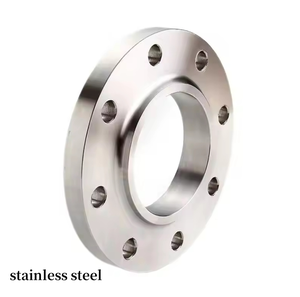
The standard specification ASTM A694 / A694M covers forged or rolled carbon and alloy steel pipe flanges, forged fittings, valves, and components engineered explicitly for high-pressure transmission service. Unlike commodity carbon steels such as ASTM A105, the ASTM A694 specification is partitioned into distinct yield strength tiers ranging from Grade F42 (290 MPa) up to Grade F70 (485 MPa). These microalloyed compositions are calibrated to interface perfectly with high-strength line pipes manufactured under API 5L (X42 through X70) and DNV-ST-F101 submarine pipeline systems.
In high-pressure, critical-service offshore sectors across Norway, selecting the appropriate A694 grade provides significant weight reduction without compromising burst capacity or fatigue life. When operating under stringent NORSOK M-601 and ISO 15156 sour service regimes, chemical composition management is paramount. By enforcing strict Carbon Equivalent values (CEIIW ≤ 0.41% and Pcm ≤ 0.20%), the material exhibits superior field weldability while mitigating hydrogen-induced cracking (HIC) and sulfide stress cracking (SSC).
| ASTM A694 Grade | Min. Yield Strength (MPa / ksi) | Min. Tensile Strength (MPa / ksi) | Elongation in 2" (min. %) | Charpy V-Notch Impact @ -46°C | Matched API 5L Line Pipe |
|---|---|---|---|---|---|
| F42 | 290 MPa (42 ksi) | 415 MPa (60 ksi) | 20% | ≥ 45 J Average (35 J Single) | API 5L Gr. X42 / L290 |
| F52 | 360 MPa (52 ksi) | 455 MPa (66 ksi) | 20% | ≥ 45 J Average (35 J Single) | API 5L Gr. X52 / L360 |
| F60 | 415 MPa (60 ksi) | 515 MPa (75 ksi) | 20% | ≥ 50 J Average (40 J Single) | API 5L Gr. X60 / L415 |
| F65 | 450 MPa (65 ksi) | 530 MPa (77 ksi) | 18% | ≥ 50 J Average (40 J Single) | API 5L Gr. X65 / L450 |
| F70 | 485 MPa (70 ksi) | 565 MPa (82 ksi) | 18% | ≥ 55 J Average (45 J Single) | API 5L Gr. X70 / L485 |
Engineered to withstand the demanding conditions of the North Sea, the Norwegian Sea, and deepwater Barents Sea developments.
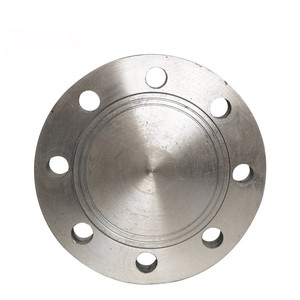
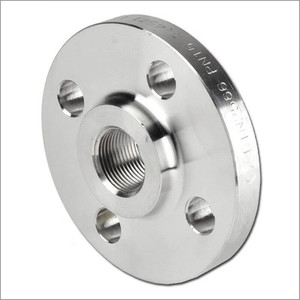
ASTM A694 F65 and F70 weld neck and swivel ring flanges are deployed extensively across subsea tieback modules in fields such as Johan Sverdrup and Troll. Their high yield strength allows thinner wall sections at pipeline interfaces, drastically reducing overall subsea manifold footprint and lifting weight requirements during ROV installation.
Export lines feeding European hubs via Kårstø and Kollsnes processing plants require heavy-wall large diameter (24" to 48") ASME B16.47 Series A flanges. High-yield carbon steels ensure continuous pressurized transit under dense-phase gas environments, preventing brittle fracture initiation in dynamic sea-current regions.
For installations in Hammerfest and the Barents Sea, ambient conditions routinely demand design temperatures plunging to -46°C or -50°C. Our quenching and tempering (Q&T) protocol delivers Charpy V-Notch impact energies well in excess of 60 Joules, exceeding standard NORSOK M-650 MDS requirements for extreme arctic resilience.
Adapting high-strength metallurgy to meet stringent ESG requirements, subsea carbon storage (CCS), and clean hydrogen infrastructure.
The acceleration of carbon capture initiatives across Norway requires flanges that withstand the thermodynamic instability of dense-phase CO2. Rapid depressurization causes intense cryogenic cooling (Joule-Thomson effect). Microalloyed A694 F52/F60 forgings undergo enhanced grain-refinement processing to prevent brittle thermal fracturing down to -60°C.
As Norway evaluates the blending of clean hydrogen into export lines, atomic hydrogen embrittlement poses substantial risks to conventional carbon forgings. Our ultra-clean vacuum-degassed forging ingots maintain sulfur levels below 0.005%, achieving exceptional resistance to hydrogen micro-void formation under prolonged dynamic pressure cycling.
Equinor and Norwegian offshore operators require every critical pressure boundary item to possess a digital passport. All our delivered A694 high yield flanges feature deep-stamped 3D QR matrices, linking line maintenance systems straight to raw melt heat numbers, heat treatment temperature recordings, and calibrated ultrasonic NDT maps.
Combining state-of-the-art forging lines, strict material traceability, and accredited technical QA processes established over years of worldwide deliveries.
As a PED-approved manufacturer and member of the Fastener Manufacturers Association of India (FMAI), every high-yield flange is forged under rigorous quality regimes. We guarantee 100% material traceability from raw billet inspection to certified EN 10204 3.1 and 3.2 Mill Test Certificates with witnessed Charpy impact and tension testing.
Forging high-yield steel requires exact thermal profiles. Our computer-controlled heat treatment furnaces employ high-speed polymer/water quenching combined with precise tempering dwell cycles. This produces a micro-lath martensitic/bainitic grain structure that delivers uniform yield strength without localized hardness spikes exceeding 22 HRC (NACE MR0175 compliance).
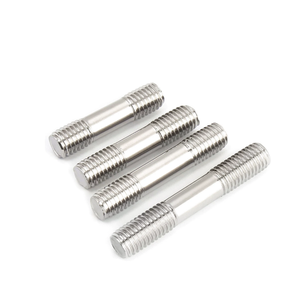
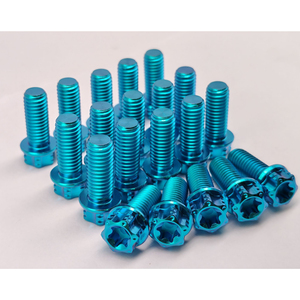
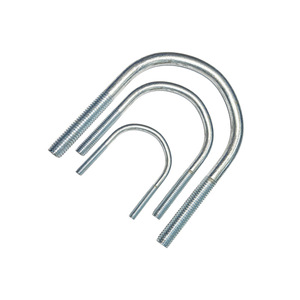
Avoid sourcing mismatches and galvanic discrepancies. We manufacture and export paired high-tensile bolting, including ASTM A193 B7/B8/B8M, ASTM A325, and EN 14399-4 HV assemblies. As one of the largest hot-dip galvanizing and high-integrity coating exporters, we deliver matched packages directly to Stavanger, Bergen, and Oslo ports.
Addressing the technical, regulatory, and logistics standards required by Norwegian operators and engineering contractors.
Connect with our metallurgists and international sales desk. Submit your project schedules, piping classes, and dimension drawings for fast, compliant technical bidding.
Get a Quote