
Direct mill supply of structural flange assemblies, metric stud bolts, and vibration-resistant fasteners manufactured under strict PED and ISO quality controls with comprehensive 3.1 certification.
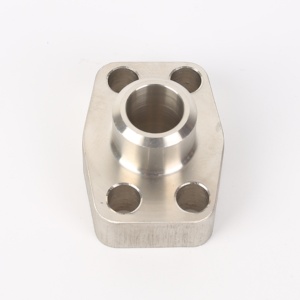
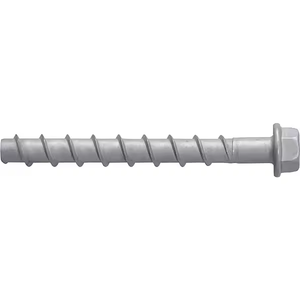
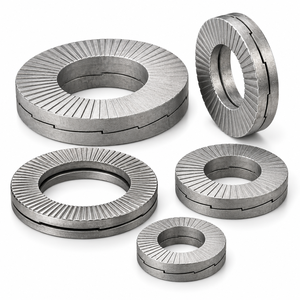
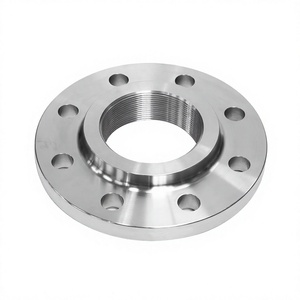
From the harsh marine splash zones of the North Sea to nuclear expansion and municipal water asset renewals, our bolting hardware meets the stringent operating demands of British engineering.
In the United Kingdom, flange bolts are not merely commodity fasteners; they are structural safety components deployed in highly regulated operating environments governed by the Health and Safety Executive (HSE) and Environment Agency guidelines. Whether securing ANSI/ASME B16.5 high-pressure hydrocarbon pipework, assembling BS EN 1092-1 ductile iron water lines, or erecting BS EN 14399 structural steel frameworks, joint integrity hinges entirely on thread tolerances, alloy grain uniformity, and specialized anti-corrosion barrier coatings.
UK offshore wind assets in Dogger Bank, Hornsea, and the Scottish East Coast require Class 10.9 and Grade B7/B8M flange bolts treated with PTFE or Zinc-Nickel coatings capable of withstanding 2,000+ hours of ISO 9227 salt spray exposure in CX marine splash environments.
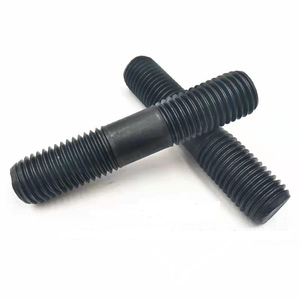
Processing plants along the Humber estuary, Grangemouth, and Teesside rely on high-tensile ASTM A193 B7 and A320 L7 stud bolts paired with A194 2H nuts. Our fasteners resist cryogenic brittle failure down to -101°C and elevated thermal cycling up to 550°C.
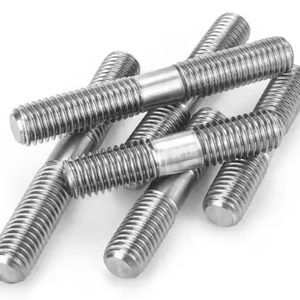
Supplying water utilities such as Thames Water, Severn Trent, and Scottish Water with A2-70 (304) and A4-80 (316) metric flange bolts under BS EN 15048 and BS EN 1092-1 PN10/PN16 ratings, guaranteeing complete immunity to microbiological soil attack and potable water chemical treatments.
Tier-1 contractors executing high-speed rail lines (HS2), bridge retrofits, and nuclear new-builds (Hinkley Point C) deploy our EN 14399-4 HV preloaded assemblies and DIN 25201 anti-vibration locking systems to prevent catastrophic bolt back-off under high dynamic shear.
Cross-reference guide for UK procurement managers selecting certified fastener materials against BS EN, DIN, and ASTM design criteria.
| Specification Grade | Base Alloy Chemistry | Min. Tensile Strength (Rm) | Proof Stress / Yield (Re) | Elongation (A5) | Standard UK Usage Context |
|---|---|---|---|---|---|
| BS EN ISO 898-1 Cl. 8.8 | Medium carbon steel, quenched & tempered | 800 MPa | 640 MPa | 12% min | General industrial flange bolting, automotive chassis & machine structures |
| BS EN ISO 898-1 Cl. 10.9 | Boron / Alloy steel, quenched & tempered | 1040 MPa | 940 MPa | 9% min | High-stress structural joints, hydraulic SAE flanges & civil framework |
| ASTM A193 Gr. B7 | AISI 4140 / 4142 Chromium-Molybdenum | 125 ksi (860 MPa) | 105 ksi (720 MPa) | 16% min | High-pressure, elevated-temperature refinery pipe flanges & heat exchangers |
| ASTM A320 Gr. L7 | AISI 4140 Alloy, Impact tested @ -101°C | 125 ksi (860 MPa) | 105 ksi (720 MPa) | 16% min | North Sea cryogenic LNG process manifolds & subsea terminal flanges |
| BS EN ISO 3506-1 A2-70 | AISI 304 Austenitic Stainless Steel | 700 MPa | 450 MPa | 0.4d min | Clean water networks, food processing lines & architectural connections |
| BS EN ISO 3506-1 A4-80 | AISI 316 Mo-stabilized Stainless Steel | 800 MPa | 600 MPa | 0.3d min | Coastal infrastructure, marine chemical pipework & subsea splash areas |
A strategic overview of post-Brexit technical compliance, carbon-intensity accounting, and supply chain diversification for British buyers.
Following updates to the UK Construction Products Regulation, structural engineers now mandate dual UKCA and CE conformity for both non-preloaded (BS EN 15048) and preloaded (BS EN 14399) bolting sets. We deliver complete Declaration of Performance (DoP) dossiers traceable to manufacturing melt batches.
Environmental Agency constraints on hexavalent chromium have driven UK adoption of sustainable zinc-flake coatings (ISO 10683) and thermal diffusion galvanizing (Sherardizing BS EN ISO 17668). These prevent hydrogen embrittlement in Grade 10.9 fasteners while guaranteeing 1,500+ hour corrosion endurance.
With UK EPCs pursuing net-zero targets under PAS 2080, tier-1 contractors demand Environmental Product Declarations (EPDs) for structural steel bolting. Our production utilizes energy-efficient induction forging furnaces and verified recycled scrap inputs, supporting corporate Scope 3 decarbonization.
Combining world-scale production capacity, comprehensive PED-approved metallurgical governance, and friction-free direct sea-freight logistics to major British container ports.
Full manufacturing compliance under the European Pressure Equipment Directive (PED 2014/68/EU) and active Fastener Manufacturers Association membership, ensuring certified metallurgical provenance.
Every shipment is accompanied by a mill test certificate (MTC) conforming to EN 10204 Type 3.1, detailing optical emission spectrometry (OES) chemical breakdowns and tensile, yield, and Charpy impact values.
Equipped with high-speed multi-station cold formers and heavy tonnage vertical forging presses capable of fabricating custom flange bolts and stud rods spanning M2 up to massive M100 diameters.
Dedicated export logistics serving container terminals at the Port of Felixstowe, Southampton, London Gateway, and Liverpool, handling customs documentation and DDP/CIF incoterms smoothly.
Addressing engineering specifications, post-Brexit certification protocols, lead times, and quality assurance criteria.
For high-tensile fasteners (core hardness >320 HV), electroplating carries a severe risk of atomic hydrogen absorption. We implement mandatory de-embrittlement baking at 200°C–220°C for 4 to 24 hours immediately post-acid pickling, or apply non-electrolytic zinc flake coatings (such as Geomet or Delta-Protekt per ISO 10683) which completely eliminate hydrogen embrittlement hazards.
Yes. Every production run ships standard with an EN 10204 Type 3.1 inspection certificate issued by our independent factory QA department. Should your project specification (e.g., high-risk North Sea gas manifolds or nuclear plants) mandate third-party inspection, we regularly collaborate with Lloyd's Register, DNV, and Bureau Veritas to witness testing and issue Type 3.2 certificates.
Standard production lead time ranges between 15 and 25 business days depending on volume, diameter mix, and coating requirements. Ocean transit from major Chinese shipping hubs (Ningbo/Shanghai) to Felixstowe, Southampton, or London Gateway typically averages 26 to 32 days. For critical MRO shutdowns, emergency air freight is available via Heathrow (LHR) or Manchester (MAN).
DIN 6921 hexagon flange bolts feature an integrated, one-piece cold-forged flange collar that distributes clamping pressure across a wider surface area. This eliminates the need for separate flat washers, minimizes joint settling, simplifies automated robotic assembly on plant floors, and provides significantly greater resistance against shear slip under thermal or vibrational expansion.
Completely. Our metric flange bolt diameters, shank lengths, and thread clearances are engineered in precise accordance with BS EN 1514-1 gasket dimensions and BS EN 1092-1 flange bolt circle configurations across PN6, PN10, PN16, PN25, and PN40 pressure ratings, guaranteeing uniform gasket compression without hole binding.
Yes. Alongside standard metric coarse and fine threads conforming to ISO 965-1 (tolerance classes 6g for bolts and 6H for nuts), we routinely tool and roll imperial thread profiles including UNC, UNF, and continuous 8-UN threads (ASME B1.1) commonly specified in legacy petrochemical refineries across England and Scotland.
Connect with our technical engineering department to review project drawings, mill cert archives, coating specifications, or to schedule a direct quotation with full shipping cost breakdown to your UK facility.