
Precision-machined loose plate assemblies, forged slip-on configurations, high-nickel alloys, and ASME/ANSI lap joint assemblies certified under stringent third-party quality testing.
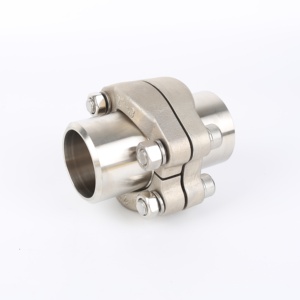
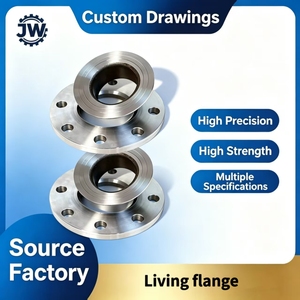
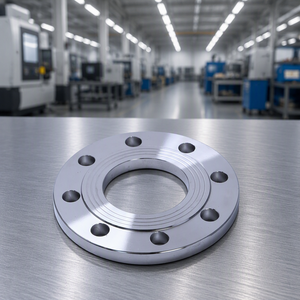
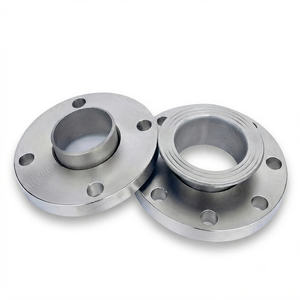
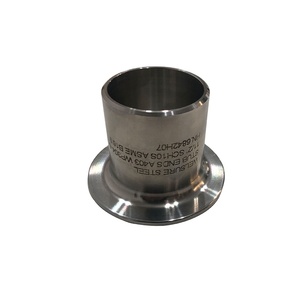
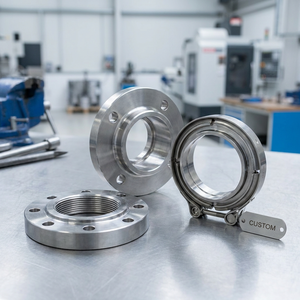
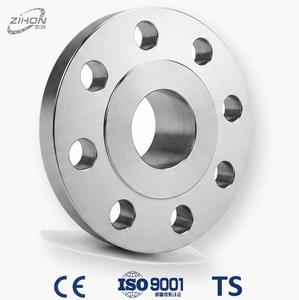
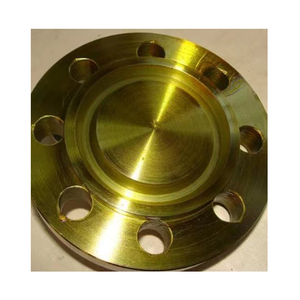
In Ghana's rapidly evolving industrial landscape, fluid routing systems encounter aggressive operating conditions that mandate dependable yet cost-effective mechanical joints. Lap joint flanges—configured as a two-piece mechanical joint comprising a loose backing flange and a butt-welded pipe stub end—provide exceptional functional superiority. By allowing the outer flange ring to swivel freely around the stub end, field engineers in Accra, Tema, Takoradi, and the Western Region mining basins resolve bolt hole misalignment challenges without applying torsional stress to pipe spools.
Across Ghana's intensive mineral processing facilities—such as gold extraction corridors in Obuasi, Tarkwa, and Ahafo—slurry lines transport highly abrasive tailings, cyanide leaching media, and corrosive acid wash effluents. In such setups, our WP316/316L and duplex stainless steel stub ends are deployed with cost-effective ASTM A105 forged carbon steel backing rings. This engineering setup isolates high-alloy contact solely to wetted metallic areas, reducing capital expenditure while maintaining resilience against abrasive wear. Whenever pipeline inspection, maintenance, or acid wash flushing is executed, technicians rapidly disconnect and rotate the backing ring without cutting or re-welding the main pipeline.
Ideal for gold processing pipelines, tailings discharge, and acid leach circuits. The swivel mechanism drastically reduces routine turnaround downtimes during scheduled slurry pipe section indexing.
Employed in high-salinity seawater injection systems, FPSO deck piping, and hydrocarbon treatment units where ASTM A182 F316L and Incoloy 800 metallurgy combat chloride stress cracking.
Vital for municipal seawater desalination infrastructure and thermal power station cooling loops in Tema. Offers superior corrosion containment combined with easy access for cathodic inspections.
Driven by Ghana's Petroleum Commission Local Content Regulations (L.I. 2204) and expanding mineral refining ventures under the Minerals Commission, engineering procurement methods have transitioned toward standardized modularity. EPC contractors in Ghana increasingly require piping systems capable of rapid on-site assembly without hot work permits in explosive hazardous zones. Lap joint flanges meet these operational protocols by completely eliminating perimeter field welding around bolt holes, avoiding localized heat-affected zones that induce premature stress cracking in marine environments.
Additionally, the modernization of the Tema Oil Refinery (TOR), ongoing expansions of offshore gas-gathering corridors by Ghana National Gas Company (GNGC), and the construction of combined-cycle power facilities around Kpone demand comprehensive metallurgical traceability. Supply chain decision-makers are actively moving away from unbranded regional merchants toward direct certified Chinese manufacturing exporters. China’s integrated forging and CNC machining facilities offer verified metallurgical heat identification, compliant wall-thickness tolerances according to ASME B16.5 and B16.9, and complete material conformity backed by chemical spectrographic analysis.
Our manufacturing works implement end-to-end quality control workflows designed to exceed the compliance standards demanded by international engineering inspection agencies. Following stringent raw material testing on every billet, forging units leverage closed-die hydraulic and ring-rolling technology to maintain unbroken radial grain flow. This refined grain alignment eliminates directional embrittlement, delivering maximum impact resistance and fatigue stability under surging hydraulic pressures.
Every lap joint flange and stub end features clear, permanent heat numbers stamped along the rim. Detailed EN 10204 3.1 Mill Test Certificates verify chemical composition and mechanical properties before shipment dispatch.
Equipped with high-precision CNC lathe arrays, we ensure internal hub bore radii match matching stub end fillets smoothly, preventing physical binding and assuring 100% flush gasket compression across sealing faces.
Export packaging features heavy anti-corrosion VCI oil baths, durable edge bevel guards, and heavy fumigated seaworthy wooden crates engineered to survive moisture exposure during transit to Tema Port.
Consult with our engineering and export team to obtain comprehensive dimensional catalogs, material test records, and competitive CIF Tema / Takoradi quotation pricing.
Contact Us