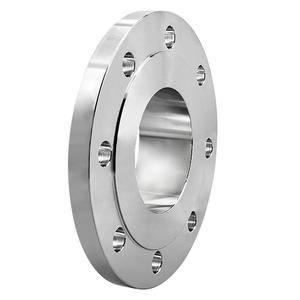
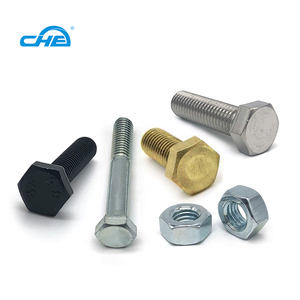
Precision-machined forged flanges paired with high-tensile European standard bolting sets, batch-tested and dispatched with full EN 10204 3.1 certification for rapid Dutch customs clearance.
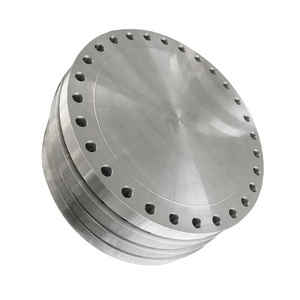
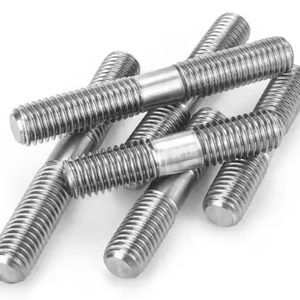
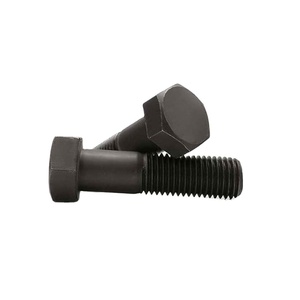
A rigorous metallurgical overview of structural stress distribution, tapered hub load dissipation, grain flow integrity, and compliance requirements under European harmonized standards.
Weld neck flanges (WNF)—designated as Type 11 under the harmonized European standard EN 1092-1 and detailed under American standards ASME B16.5 / B16.47 Series A & B—represent the structural pinnacle of forged piping components. Unlike slip-on, socket weld, or plate flanges, a weld neck flange features a long, conical tapered hub that transitions seamlessly into the nominal wall thickness of the mating pipe. In the Netherlands, where chemical processing clusters in the Port of Rotterdam (Botlek, Europoort, Maasvlakte) and Chemelot (Geleen) operate continuously under high thermal cycling and aggressive chemical vectors, weld neck flanges are legally and mechanically mandated for high-consequence containment envelopes.
From a mechanical engineering standpoint, the tapered hub provides a smooth, gradual dimensional and structural transition. This design eliminates abrupt mechanical discontinuities, thereby dissipating localized bending moments, shear forces, and thermal expansion stresses away from the weld root. When welded to seamless pipe via a full-penetration V-groove butt weld, the internal bore of the flange is precision CNC-machined to match the inside diameter of the pipe schedule precisely (ranging from Schedule 10S to Schedule XXS). This eliminates internal recirculation turbulence, boundary-layer drag, and localized erosion-corrosion phenomena that frequently degrade lesser joint designs in corrosive chemical fluids, LNG cryogenic streams, and superheated steam lines.
Our Chinese manufacturing facilities utilize advanced computerized electro-hydraulic drop forging hammers and high-tonnage multi-directional hydraulic forging presses to process high-purity vacuum-degassed billets. Unlike cast flanges or machine-turned plate cuts, true hot forged weld neck flanges exhibit an unbroken, continuous metallurgical grain flow pattern. During forging, the crystalline lattice follows the outward contours of the flange ring and turns longitudinally into the tapered hub and weld preparation bevel.
This continuous radial and axial grain flow guarantees superior Charpy V-notch impact toughness (meeting strict sub-zero toughness requirements down to -46°C for ASTM A350 LF2 Class 1 and -196°C for 304L/316L stainless steel), exceptional resistance to cyclic thermal shock, and immunity to catastrophic lamellar tearing during high-pressure thermal upsets. Every forging heat is rigorously heat-treated via computer-controlled normalizing, solution annealing, or quenching and tempering cycles to achieve an optimized metallurgical microstructure featuring uniform grain size (ASTM E112 Grade 7 or finer).
| Design Standard | Type Designation | Pressure Rating Class / PN | Standard Materials & Grades | Dutch & EU Mandated Testing | Typical Process Application |
|---|---|---|---|---|---|
| ASME B16.5 / B16.47 | Weld Neck (WN) RF / RTJ | Class 150 to Class 2500 | ASTM A105N, A350 LF2, A182 F316L/F304L, Duplex F51/F53 | EN 10204 3.1, UT (ASME VIII), Charpy V-Notch, PMI | Refinery hydrocrackers, LNG bunkering, steam cracking |
| EN 1092-1 | Type 11 (Welding Neck) | PN 6, 10, 16, 25, 40, 63, 100, 160 | P245GH, P250GH, P280GH, 1.4404, 1.4462, 16Mo3 | PED 2014/68/EU Annex I, EN 10204 3.1/3.2, Intergranular Corr. | European utility networks, district heating, chemical tanks |
| DIN 2631 to 2638 | Vorschweißflansche | ND 6 through ND 160 | St37-2, C22.8 (1.0460), 1.4571 (316Ti), Alloy 625 | DIN 50049 / EN 10204, Dimensional verification per DIN 2501 | Legacy maintenance, German-Dutch cross-border grids |
| MSS SP-44 / API 6A | Weld Neck High Test | Class 150 to 900 / 2000 to 10000 PSI | ASTM A694 F52, F60, F65, F70, AISI 4130 | NDT 100% MT & UT, Hardness testing (NACE MR0175 / ISO 15156) | North Sea offshore gas manifolds, subsea wellhead lines |
How our forged weld neck flanges fulfill mission-critical roles across key geographical and operational corridors in the Netherlands.
Handling intense refining, crude distillation, and aromatics production across Europe's largest port. Our ASTM A105N and ASTM A182 F316L weld neck flanges provide leak-free raised face (RF) and ring-type joint (RTJ) sealing for extreme temperature steam lines and toxic hydrocarbon containment, fully certified under Dutch Stoomwezen legacy criteria and PED 2014/68/EU.
Installed on topside high-voltage direct current (HVDC) converter platforms and offshore gas extraction platforms. Fabricated from seawater-resistant UNS S31803 / S32205 Duplex and Super Duplex S32750 steel, these flanges offer verified PREN ≥ 42, withstanding severe North Sea saline splash zones, salt fog, and pitting without mechanical breakdown.
Fertilizer plants, plastics synthesis, and specialty chemical synthesis plants requiring strict metallurgical purity. We provide EN 1092-1 Type 11 flanges in P280GH, 1.4404, and titanium/nickel alloys featuring precision-controlled carbon equivalents (CE < 0.41%) for superior field weldability and stress-corrosion cracking immunity in nitric acid and urea environments.
Operating down to -162°C on the Maasvlakte breakwater. Our ASTM A350 LF2 Class 1 and ASTM A182 F304L cryogenic weld neck flanges undergo liquid nitrogen Charpy impact testing to ensure zero brittle fracture risk in liquefied methane transfer manifolds, vaporizers, and regasification skids.
Critical flood control pumping complexes, brackish water desalination systems, and industrial wastewater treatment managed by regional Hoogheemraadschappen. We furnish large-diameter PN 10/PN 16 weld neck flanges with hot-dip galvanized or fusion-bonded epoxy (FBE) protective coatings engineered for a 50-year maintenance-free submerged lifespan.
Key regulatory frameworks, hydrogen transition mandates, and carbon boundary mechanisms guiding Dutch engineering procurement managers.
Gasunie’s national hydrogen pipeline network requires flanges with exceptional surface density and low hydrogen embrittlement susceptibility. Our micro-alloyed carbon steels and 316L grades undergo specialized sulfide stress cracking (SSC) and hydrogen-induced cracking (HIC) testing in strict conformity with NACE MR0175 / ISO 15156.
Dutch safety inspectors (Lloyd’s Register Nederland, TÜV Rheinland, DNV) require unconditional compliance with Module H/H1. Every forging exported to Dutch territory is fully stamped with CE marks, material heat identifiers, and backed by European Notified Body certified documentation.
In alignment with the EU Carbon Border Adjustment Mechanism (CBAM), our mill accounts for primary embedded carbon emissions from blast furnace to CNC machining, supplying verified GHG emissions data to ease the carbon tax reporting obligations of Dutch importers.
Consolidated maritime routing from Tianjin/Shanghai directly into Rotterdam terminals (ECT Delta, RWG). Comprehensive customs management under DDP/DAP terms ensures Dutch buyers receive pre-cleared, wooden-box packaged goods ready for immediate plant assembly without intermediate warehousing delays.
Direct technical answers addressing certification standards, import logistics, flange face geometries, and metallurgical validation.