
Explore our manufactured solutions engineered in strict compliance with ASTM, DIN, ISO, and AS/NZS technical specifications for high-pressure, critical-temperature, and corrosive service environments.
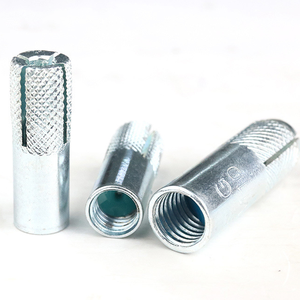
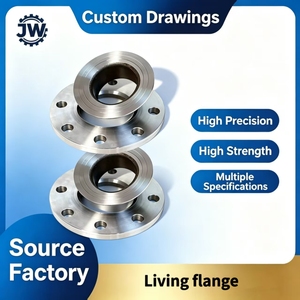
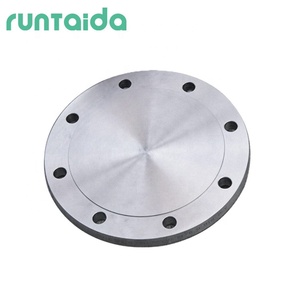
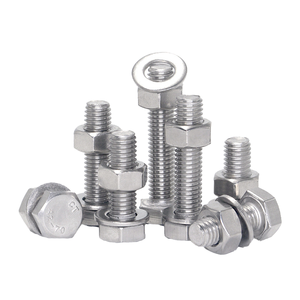
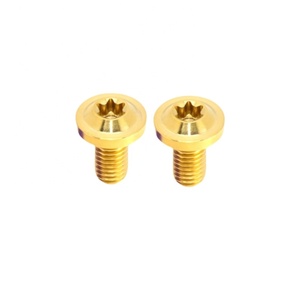
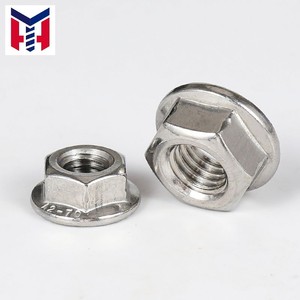
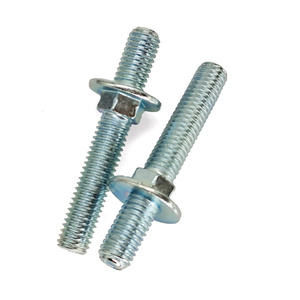
ASTM A193 Grade B7 represents the premier international standard for quenched and tempered chromium-molybdenum alloy steel (AISI 4140/4142) bolting materials, engineered for use in pressure vessels, valves, flanges, and piping infrastructure under elevated temperature and cyclic pressure. For engineering procurement officers and asset integrity teams across New Zealand, sourcing B7 fasteners demands more than off-the-shelf commoditized supply: it necessitates verified metallurgy capable of withstanding acute thermal fluctuation, seismically active ground motion, aggressive maritime salt air, and geothermal sulphide environments.
As an accredited global manufacturer and exporter holding European Pressure Equipment Directive (PED 2014/68/EU) certifications and active membership in the Fastener Manufacturers Association of India (FMAI), our Mumbai manufacturing facilities supply New Zealand EPC contractors, industrial distribution networks, and maintenance operations with mill-traceable fasteners manufactured from M2 up to M100 diameters in metric and imperial thread forms.
To ensure high clamping load retention without stress relaxation, each batch of AISI 4140/4142 alloy steel undergoes rigorous austenitizing, liquid quenching, and tempering at a minimum temperature of 593°C (1100°F). The table below outlines the core chemical limits and physical mechanical parameters validated by our in-house ISO 17025 accredited metallurgical laboratories:
| Grade / Spec | Alloy Chemistry (wt %) | Tensile Strength (Min.) | Yield Strength 0.2% (Min.) | Elongation / Reduction | Hardness Range |
|---|---|---|---|---|---|
| ASTM A193 B7 (Standard) | Cr: 0.80–1.10% Mo: 0.15–0.25% C: 0.38–0.48% |
125 ksi (860 MPa) [≤ 2½"] 115 ksi (795 MPa) [2½–4"] |
105 ksi (720 MPa) [≤ 2½"] 95 ksi (655 MPa) [2½–4"] |
16% min (2" gauge) 50% min Reduction of Area |
321 HBW max (35 HRC max) |
| ASTM A193 B7M (NACE MR0175) | Cr: 0.80–1.10% Mo: 0.15–0.25% Controlled C / S / P |
100 ksi (690 MPa) | 80 ksi (550 MPa) | 18% min 50% min Reduction |
235 HBW max (22 HRC max) |
| ASTM A320 L7 (Low-Temp) | Cr-Mo Alloy Steel Liquid Quenched & Tempered |
125 ksi (860 MPa) | 105 ksi (720 MPa) | 16% min 50% min Reduction |
Charpy V-Notch ≥ 27 J tested at -101°C |
| ASTM A194 Grade 2H (Mating Nut) | Medium Carbon Steel Quenched & Tempered |
Proof Load: 175 ksi (UNC) 150 ksi (8-UN) |
Engineered Clamping Fit | Dimensional to ASME B18.2.2 | 248–327 HBW (24–35 HRC) |
Precision thread geometry is cold-rolled or warm-rolled utilizing CNC threading stations to class 2A tolerances for studs and bolts, and class 2B for matching ASTM A194 Grade 2H heavy hex nuts. By eliminating thread-root micro-notches typical of cut threads, rolled threads confer up to 30% higher fatigue resistance—a critical engineering prerequisite for equipment subject to vibration and dynamic harmonic resonance.
New Zealand features distinct geographic, volcanic, and environmental parameters that challenge traditional fastening practices. Our custom OEM manufacturing directly accommodates the following regional applications:
Power stations across Wairakei, Ohaaki, and Te Mihi utilize high-enthalpy steam rich in hydrogen sulphide (H2S), chlorides, and silica. We supply modified ASTM A193 B7M and duplex stainless studs engineered to meet NACE MR0175/ISO 15156 thresholds, mitigating Sulphide Stress Cracking (SSC) in turbine housings and geothermal brine pipelines.
Major dairy plants across Waikato, Taranaki, and Canterbury require high-pressure boilers, steam manifolds, and CIP (Clean-in-Place) sanitary processing loops. We provide dual-grade ASTM A193 B7 bolts for utility steam connections and ASTM A193 B8/B8M (AISI 304/316) studs for sanitary washdown environments resisting aggressive cleaning chemicals.
Under NZS 3404 (Steel Structures Standard) and AS/NZS 1252 structural bolting frameworks, structural frames in Wellington and Christchurch demand ductile performance and high proof-load integrity. Our custom heavy hex bolts and anchor assemblies absorb cyclical seismic energy without sudden brittle cleavage fracture.
Operating assets in the Taranaki Basin and deep-water marine facilities at the Ports of Auckland, Tauranga, and Lyttelton endure severe atmospheric ISO 12944 C5-M marine corrosivity. We manufacture B7 studs protected with thermoset Fluoropolymer (PTFE/Xylan) and hot-dip galvanized coatings to prevent galvanic degradation.
Processing mills around Kawerau and Kinleith subject piping assemblies to intense cyclical vibration, caustic digester liquors, and superheated steam. Our ASTM A193 B7 and A320 low-temperature bolting ensure bolted flange integrity, preventing hazardous leaks in pressurized digest lines.
New Zealand’s hydroelectric dams (Clutha, Waitaki, Waikato river systems) and subterranean municipal water assets demand large-diameter (M36 to M100) forged anchor bolts with engineered yield strength for Penstock flanged couplings and turbine shut-off gates.
Procurement practices across New Zealand are evolving in response to strict regulatory oversight, sustainability targets, and supply chain realities. Key market transitions include:
Following post-earthquake structural audits and PECPR plant safety mandates, New Zealand engineers refuse uncertified commercial fasteners. Every shipment now requires fully serialized 3.1 Mill Test Certificates detailing cast heat numbers, chemical composition by optical emission spectroscopy, and physical yield/tensile test graphs.
Reliance on intermediate stockists in Australasia often results in significant price markups and restricted inventory for non-standard lengths or custom flange diameters. NZ EPC firms are establishing direct factory-to-port supply pipelines, reducing procurement overhead by 20–35% while securing guaranteed batch manufacturing windows.
With C4 and C5 coastal atmospheric conditions affecting inland facilities up to 50 km from the shoreline, standard zinc electroplating is insufficient. The New Zealand market has rapidly pivoted toward Hot Dip Galvanizing conforming to AS/NZS 4680, paired with post-plate baking procedures to completely eliminate Hydrogen-Induced Cracking (HIC).
Manufactured by Viha Steel & Forging in Mumbai, our products benefit from over a decade of metallurgy expertise, European PED accreditations, and full-cycle in-house forging infrastructure. We ensure dimensional accuracy, structural durability, and defect-free thread integrity through eight standardized QA stages:
Spectro-chemical verification of 4140/4142 bar stock against heat melt certificates before line induction.
Hot and cold upsetting forging ensures uninterupted internal grain flow line alignment along bolt heads.
Computerized quench and temper cycles maintain consistent martensitic structure and hardness tolerances.
Threads rolled under hydraulic pressure; verified with calibrated pitch micrometers and Go/No-Go gauges.
100% Magnetic Particle Inspection (MPI) or dye penetrant testing to uncover sub-surface forging anomalies.
Tensile, 0.2% offset yield, proof load, elongation, and Charpy impact testing conducted per ASTM A370.
Automated hot dip galvanizing or PTFE/Xylan polymer coating with scheduled de-embrittlement baking.
Double-barrier corrosion inhibitor wrapping, heavy-duty wooden crate boxing for transit to NZ ports.
Consult with our technical engineering sales desk today. Send your material bills, custom drawings, coating requirements, and volume schedules to receive an itemized commercial quotation including CIF delivery to Auckland, Tauranga, or Lyttelton.
Get a Quote