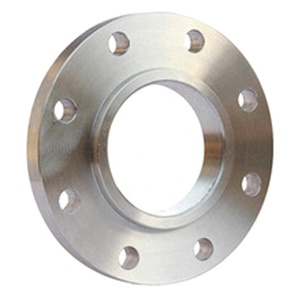
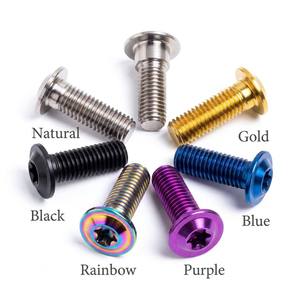
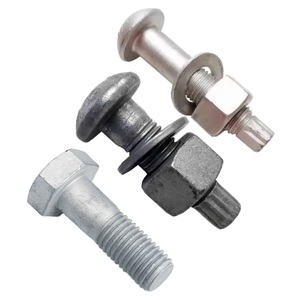
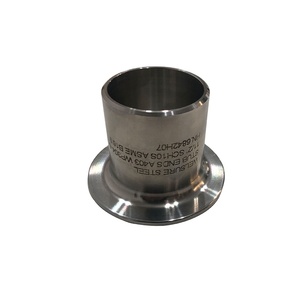
Explore our export-certified product matrix—from precision branch-connection pipe fittings to ASME-compliant forged flanges and high-tensile structural hardware.
A technical review for mechanical engineers, EPC contractors, and public works directors managing fluid flow splits, hydraulic surges, and environmental degradation across Luzon.
As industrial expansion accelerates throughout the Greater Manila Area—encompassing heavy maritime transit at the Port of Manila, extensive reclamation developments along Manila Bay, and high-density chilled water networks in Bonifacio Global City (BGC) and Makati—the mechanical reliability of butt weld pipe fittings serves as the frontline defense against hydraulic failure. Among these components, custom OEM pipe tees (both equal and reducing configurations conforming to ASME B16.9 and MSS SP-75) represent the most hydromechanically vulnerable junction in any pressurized loop. Selecting the correct metallurgical grade, hydraulic radius, and wall schedule is critical to ensuring operational safety under the unique thermal and seismic regimes of the Philippine archipelago.
When fluid negotiates a 90-degree branch split within a tee, secondary flow patterns and Dean vortices induce high localized shear stress, particularly at the crotch region. Under turbulent conditions common in bulk municipal distribution (such as MWSS concession lines operated by Maynilad and Manila Water), improper hot-extrusion or cold-forming methods result in intrados and extrados wall thinning below minimum design tolerances. Our custom OEM fabrication process applies finite-element analysis (FEA) to control hydraulic draw speeds, ensuring that equal tees in ASTM A234 Grade WPB and reducing configurations in ASTM A403 WP316/316L maintain uniform structural integrity that exceeds ASME Section VIII design mandates.
Manufactured via hydraulic bulbing and hot-extrusion without longitudinal welds. Eliminates the heat-affected zone (HAZ) risk under high-pressure pulsating conditions in power and chemical process circuits.
Seamless transitions machined to schedule variations (SCH 10S through SCH XXS). Designed to eliminate sudden fluid shear and pressure drops in HVAC district cooling and industrial feedlines.
Carbon steel structural bodies internally clad or overlayed with Inconel 625, Hastelloy, or SS316L for high-salinity seawater intake and industrial effluent systems operating in coastal Bataan and Batangas.
The climatic profile of Metro Manila features prolonged tropical typhoons, atmospheric humidity frequently exceeding 85%, and elevated airborne chloride contents spanning the shores of Manila Bay. Standard commercial fittings often experience rapid micro-pitting and stress corrosion cracking (SCC). Our factory executes stringent melt chemistry management—capping carbon equivalency (CE) below 0.42% for weldable carbon steels and ensuring minimum pitting resistance equivalent numbers (PREN ≥ 24) for austenitic grades.
| Material Specification | Yield Strength Min. (MPa) | Tensile Strength (MPa) | Critical Heat Treatment | Primary Manila Application Field |
|---|---|---|---|---|
| ASTM A234 Grade WPB | 240 | 415 - 585 | Full Normalizing / Stress Relief | District cooling, high-rise fire systems (BGC/Ortigas) |
| ASTM A420 WPL6 | 240 | 415 - 585 | Normalized with Charpy V-Notch @ -45°C | Cryogenic loops, LNG import terminals (Batangas Corridor) |
| ASTM A403 WP304/304L | 205 | 515 | Solution Annealed @ 1040°C Rapid Quench | Potable water supply pipelines (MWSS/Maynilad projects) |
| ASTM A403 WP316/316L | 205 | 515 | Solution Annealed, Passivated | Marine ballast, desalination plants, coastal reclamation |
| MSS SP-75 WPHY 52/65 | 360 - 450 | 455 - 530 | Quenched & Tempered | High-pressure transmission gas/petroleum distribution |
To accurately fulfill supply demands in the National Capital Region (NCR), custom OEM pipe tee manufacturing must adapt to four primary infrastructure pillars:
A. Manila Bay Coastal Reclamation & Drainage Works: Massive civil projects (such as the New Manila Bay City of Pearl and airport access routes) require large-diameter (24" to 60") fabricated lateral and equal tees. Due to contact with brackish tidal backflow, fittings are hot-dip galvanized to ASTM A153 or lined with fusion-bonded epoxy (FBE) to isolate the base metal from galvanic reaction.
B. High-Rise MEPFS Networks: Vertical construction in Makati and Taguig demands pressure-rated fittings capable of withstanding working pressures up to 300 psi in static head configurations. Our OEM tees undergo hydrostatic pressure proof testing to 1.5 times the design rating to verify resistance against hydraulic hammer events caused by rapid booster valve closures.
C. Petrochemical & Power Nodes: Supplying the energy corridor linking Batangas, Cavite, and the Pandacan industrial depots demands full traceability. Every carbon and alloy steel tee is accompanied by authentic 3.1 Mill Test Certificates detailing Charpy V-notch impact test values and 100% radiographic examination (RT) of all seam welds.
Under the Philippine government's long-term infrastructure directives, public utilities and private concessions are transitioning from low-grade fabricated piping to internationally certified components. Three major trends define procurement dynamics in Manila:
Following updated Philippine National Structural Code (NSCP) guidelines, critical utility branches must endure severe peak ground acceleration (PGA). Ductile, hot-forged fittings reduce mechanical notch sensitivity during seismic shifts along the West Valley Fault.
General contractors (including EEI Corporation and Megawide) increasingly demand direct QR-coded heat traceability on every individual fitting to eliminate counterfeit market risks in local hardware hubs like Binondo.
Due to space constraints in downtown Manila construction zones, mechanical teams require OEM factories to pre-weld pipe tees, stub ends, and weld neck flanges into ready-to-hoist skid sections.
Technical and logistical clarifications for engineering procurement officers operating across the Philippines.
Shipments destined for the Manila South Harbor or Manila International Container Port (MICP) require an authentic Mill Test Certificate (EN 10204 3.1), commercial invoices, packing lists with heat-number mapping, and Certificate of Origin (Form E or relevant trade agreements). Pressure fittings also require design registration approvals depending on client EPC guidelines.
Yes. OEM fabrication accommodates disparate main-run and branch-reduction wall thicknesses (e.g., Run SCH 40 with Branch SCH 80). These tees undergo internal CNC transition boring according to ASME B16.25 to prevent turbulent eddy currents and ensure reliable orbital butt welding.
All carbon steel fittings are treated with black rust-preventative phosphate or anti-rust varnish, end-capped with heavy-duty polyethylene protectors, and vacuum-sealed with desiccant packs within seaworthy wooden crates to prevent flash rust during Pacific container crossings.
Standard quality protocols include 100% dimensional and bevel angle gauge checks, ultrasonic testing (UT) on critical forged crotches, wet magnetic particle inspection (MPI) for ferromagnetic alloys, and liquid penetrant testing (PT) for stainless steel components.
Why Tier-1 industrial buyers, refineries, and EPC contractors choose our precision forging and forming infrastructure.
Established manufacturing facilities operating under verified European Pressure Equipment Directive standards and active Fastener Manufacturers Association of India membership since 2010.
Equipped with computerized normalizing furnaces, quenching pits, and in-house spectrometers to verify carbon equivalents, yield strengths, and elongation properties on every melt heat.
Established supply chain corridors directly routing shipments from our production hubs to the Port of Manila, enabling predictable lead times for critical project timelines.
Submit your material schedules, wall thicknesses, and connection drawings. Our engineering desk verifies specifications against ASME/ASTM standards within 24 hours.
Send an Inquiry