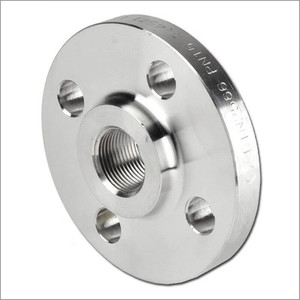

Verified manufacturing lines compliant with DIN, ISO, and ASTM standards. Supplied with EN 10204 3.1 certification and batch heat traceability for the Chilean industrial supply chain.
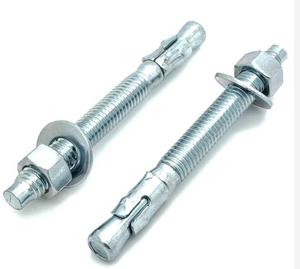
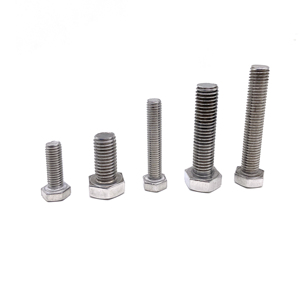
A comprehensive technical evaluation of fully threaded hexagon head screws under rigorous operational stresses.
The DIN 933 standard defines the dimensional, metallurgical, and thread geometry requirements for full-thread hexagon head screws (tornillos de cabeza hexagonal con rosca total). In global heavy industrial design, particularly within the Andean corridor of South America, DIN 933 represents the foundational metric fastening geometry. Unlike DIN 931, which incorporates an unthreaded partial shank, DIN 933 provides complete engagement throughout the entire cylinder length from the under-head bearing fillet to the chamfered point. This continuous thread structure offers critical advantages in pre-tapped blind hole applications, compact flange assembly, motor casing mountings, and anti-vibration structural connections where variable clamping depths are mandatory.
Modern engineering applications demand absolute adherence to mechanical property classes under ISO 898-1 for carbon and alloy steels, and ISO 3506-1 for corrosion-resistant stainless alloys. In heavy industrial environments, Property Class 8.8 and Class 10.9 are specified for structural shear and dynamic cyclic fatigue resistance. Property Class 8.8 requires a nominal tensile strength of 800 MPa with a yield strength ratio of 80% (yielding at minimum 640 MPa), manufactured from medium carbon or low-alloy quenched and tempered steel. Property Class 10.9 requires a tensile strength of 1000 MPa and minimum yield of 900 MPa, utilizing boron-alloyed or chromium-molybdenum steels capable of maintaining core ductility even under severe anti-seismic preloads. For high-corrosion, acidic leaching, and coastal environments, austenitic formulations such as A2-70 (AISI 304, tensile 700 MPa) and A4-80 (AISI 316, tensile 800 MPa, minimum 2-3% Molybdenum) serve as the benchmark against stress-corrosion cracking and localized pitting.
| Standard & Class | Material Formulation | Tensile Strength (Rm) | Yield Strength (Re / Rp0.2) | Elongation (A5 min) | Typical Industrial Target in Chile |
|---|---|---|---|---|---|
| DIN 933 Class 8.8 | Medium Carbon Steel, Quenched & Tempered | 800 – 830 MPa | 640 MPa | 12% | Mining conveyors, flotation frames, processing plants |
| DIN 933 Class 10.9 | Cr-Mo / Boron Alloy Steel (Q&T) | 1040 – 1070 MPa | 940 MPa | 9% | Seismic steel framing (NCh 433), ball mill liners, crushers |
| DIN 933 Grade A2-70 | Austenitic Stainless Steel (AISI 304) | 700 MPa | 450 MPa | 40% | Central Valley wine & agro-food facilities, pulp & paper |
| DIN 933 Grade A4-80 | Marine Grade Austenitic (AISI 316 + Mo) | 800 MPa | 600 MPa | 30% | Antofagasta / Mejillones seawater desalination, SX-EW plants |
| ASTM A193 B7 Equivalent | AISI 4140/4142 Chromium-Molybdenum | 860 MPa (125 ksi) | 720 MPa (105 ksi) | 16% | ENAP refinery flanges, high-temperature thermal loops |
From the arid, ultra-saline Atacama Desert to the high-humidity maritime ports of Valparaíso and Biobío, DIN 933 fasteners must overcome diverse and destructive operating conditions.
Chile produces over 25% of the world's copper, centered in the Antofagasta, Calama, and Atacama regions. In copper heap leaching and solvent extraction/electrowinning (SX-EW) circuits, standard fasteners fail catastrophically due to sulfuric acid aerosols, severe ultraviolet solar radiation, and fine airborne abrasive quartz dust. Our DIN 933 A4-80 (AISI 316L) and Hot-Dip Galvanized Class 10.9 assemblies provide impervious protection against chemical embrittlement and stress cracking in SAG mills, vibratory screens, and slurrying flumes.
Chile sits along the Nazca-South American subduction zone, enforcing the stringent Norma Chilena NCh 433 (anti-seismic design of buildings) and NCh 2369 (industrial seismic design). Fasteners cannot rely on high tensile strength alone; they must maintain high notch toughness and cyclic shear energy dissipation. DIN 933 Class 8.8 and 10.9 manufactured with strictly controlled boron-alloyed or Cr-Mo microstructures withstand ground acceleration amplitudes and dynamic shearing without suffering premature brittle rupture.
To supply water to high-altitude copper mines, Chile has invested heavily in mega-scale reverse osmosis desalination plants along the Pacific coastline. High chloride concentration (C5-M marine atmospheric exposure according to ISO 12944) causes swift crevice corrosion in standard zinc-electroplated screws. We engineer DIN 933 bolts in A4-80 Stainless Steel, Incoloy 800, and Hot-Dip Galvanized (HDG) layers exceeding 85 microns to guarantee corrosion resistance in high-pressure seawater intake pumps and outfall pipelines.
Strategic structural shifts shaping how Chilean EPC firms, mining houses, and distributors purchase fastening systems.
Chile aims to produce the world’s most cost-competitive green hydrogen by 2030, leveraging solar capacity in the Atacama Desert and wind potential in Magallanes. Utility-scale photovoltaic tracking systems and wind turbine nacelles require hundreds of thousands of DIN 933 full-thread bolts equipped with high torque tension retention and zinc flake (geomet/dacromet) protective coatings that do not trigger hydrogen embrittlement.
Major Chilean mining conglomerates such as CODELCO, Antofagasta Minerals, and BHP Escondida require their Tier-1 suppliers to provide exhaustive digital traceability. Mill Test Certificates (MTC) conforming strictly to EN 10204 3.1 with specific melt heat numbers, spectroscopic chemical assays, and ultrasonic non-destructive testing are now legally mandatory prerequisites for port clearance and site entry.
To buffer against regional distributor markups and erratic inventory in Santiago or San Antonio, Chilean procurement teams are bypassing domestic intermediaries. Sourcing direct FCL (Full Container Load) shipments from ISO 9001 and PED-approved global manufacturers provides up to 25–35% direct procurement cost reductions alongside scheduled deliveries aligned with planned project shutdowns.
Combining world-class forging infrastructure, comprehensive testing laboratories, and complete marine shipping logistics.
Operating since 2010 with certified Quality Management Systems. As an active member of the Fastener Manufacturers Association of India (FMAI) and certified under the Pressure Equipment Directive (PED), all manufacturing strictly complies with international high-pressure safety standards.
Equipped with proprietary automated hot-dip galvanizing lines designed specifically for structural threaded items. We guarantee uniform zinc coverage (ISO 10684) with perfectly clear, non-binding thread tolerances suitable for immediate field installation.
Beyond standard carbon and stainless DIN 933 screws, our integrated forging facilities supply ASME B16.5 flanges, Incoloy 800, phosphor bronze, silicon bronze, and titanium fasteners, providing complete piping and fastening packages under single-vendor accountability.
Every single batch undergoes optical emission spectrometry for chemical formulation, computerized tensile and proof load testing, Charpy V-notch impact analysis (-46°C to room temp), and ultrasonic non-destructive testing (NDT) to prevent metallurgical failures.
Essential guidance covering technical compliance, customs clearance, shipping routes, and coating selections for Chilean procurement officers.
Standard export production schedules range between 20 to 30 days depending on the volume and custom hot-dip galvanizing requirements. Direct ocean freight from our export hubs to the primary Chilean container ports—San Antonio and Valparaíso—averages 28 to 35 days, while shipments routed directly to Northern mining terminals such as Antofagasta, Iquique, or Mejillones take approximately 32 to 38 days.
Yes. Although Chilean building standards frequently make reference to North American ASTM standards (such as ASTM A325 or ASTM A307) due to historical EPC influence, the Ministry of Housing and Urban Development (MINVU) and Instituto Nacional de Normalización (INN) formally recognize ISO 898-1 metric standards. DIN 933 Property Class 8.8 and 10.9 are structurally interchangeable equivalents with ASTM A325 and A490 respectively.
For outdoor structural installations, Hot-Dip Galvanizing (HDG) per ISO 10684 with a minimum coating thickness of 85 µm is recommended to prevent degradation under high solar UV and abrasive silica dust. For leaching and electro-refining circuits exposed to sulfuric acid vapors, zinc will degrade quickly; in these areas, Grade A4-80 (AISI 316) stainless steel or fluoropolymer (PTFE/Xylan) coated alloy fasteners are required.
Yes. Every single dispatch of DIN 933 bolts includes fully documented EN 10204 3.1 inspection certificates. Our quality dossier includes raw material melt heat numbers, full ladle chemical analysis, tensile strength, yield point, elongation percentage, core and surface hardness (HRB/HRC), and salt spray corrosion test results.
Chile maintains an open economy with a standard Most Favored Nation (MFN) tariff rate of 6%. However, depending on bilateral trade agreements and Certificates of Origin (COO) supplied with the shipping documentation, imported fasteners can often clear Chilean customs (Servicio Nacional de Aduanas) under preferential or reduced tariff treatment. All shipments are accompanied by consularized commercial invoices, packing lists, and certified COOs.
Yes. Alongside standardized DIN 933 full-thread bolts ranging from M2 up to M100, we specialize in customized cold and hot forging. We can manufacture extended lengths, special thread pitches (metric fine, UNC, UNF, and 8-UN thread profiles), and engineered configurations tailored directly to CAD drawings or site engineering specifications.
High-strength steels with tensile strength exceeding 1000 MPa (such as DIN 933 Property Class 10.9) are susceptible to hydrogen-induced delayed brittle failure when subjected to standard acid pickling during galvanization. To prevent this, our manufacturing uses mechanical blast cleaning instead of acid pickling, followed by strict post-plating de-embrittlement baking at 200°C–220°C for a minimum of 4 to 8 hours in precision-controlled furnaces.
Whether you require standard container replenishment of DIN 933 full-thread bolts for distributor inventory, or custom high-grade alloy bolting for a major Chilean mining, energy, or civil infrastructure project, our team is ready to evaluate your bill of materials.
Contact Us