
From coastal seawater RO trains at Kurnell to process infrastructure along Port Botany, our precision-machined duplex, super duplex, and stainless flanges adhere strictly to ASME, DIN, and AS standards with verifiable microstructure balance.
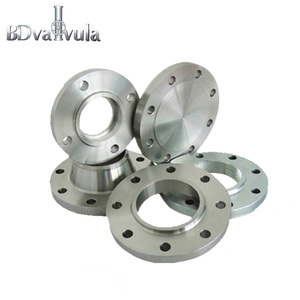
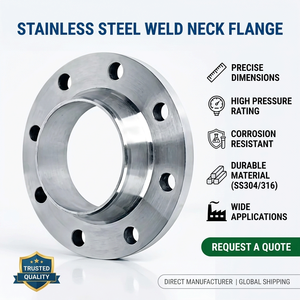
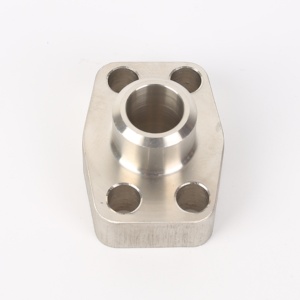
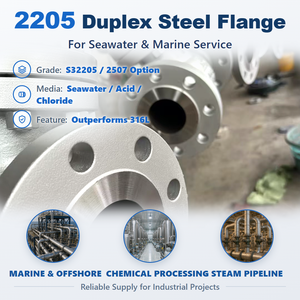
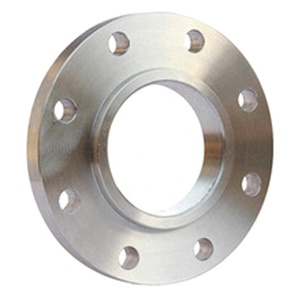
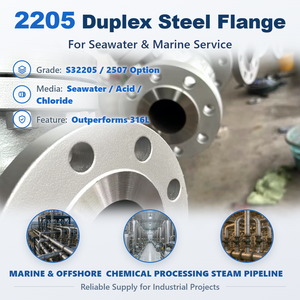
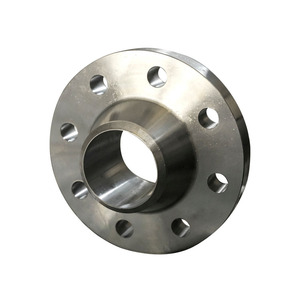
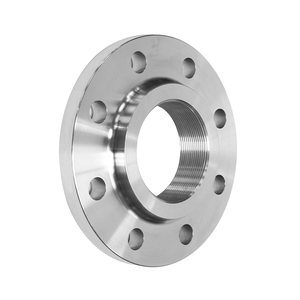
Industrial piping systems deployed throughout the Sydney metropolitan basin and the coastal zones of New South Wales operate within aggressive chloride-rich atmospheric and marine immersion conditions. Traditional austenitic stainless steels (such as AISI 304 and 316) routinely face severe limitations when subjected to elevated operating pressures, tidal turbulence, and high ambient chloride concentrations. The occurrence of Chloride Stress Corrosion Cracking (CSCC) and localized pitting in stagnant seawater crevice zones demands an advanced metallurgical solution: Austenitic-Ferritic Duplex Stainless Steel Flanges.
Manufactured in strict accordance with ASTM A182 (Grades F51, F60, F53, F55) and international dimensional standards including ASME B16.5, ASME B16.47, AS 4087, and AS 2129, duplex steel combines the beneficial mechanical attributes of ferrite with the corrosion resistance and formability of austenite. The resulting microstructure exhibits a balanced 50/50 phase ratio, delivering roughly twice the yield strength of standard austenitic grades while providing profound resistance to micro-pitting, erosion, and fatigue.
| Alloy Grade | UNS / Designation | Typical Chemical Composition (%) | Min. Yield (MPa) | PREN Value | Primary Sydney Application Profile |
|---|---|---|---|---|---|
| Standard Duplex 2205 | UNS S32205 / S31803 (F51/F60) | 22Cr - 5.5Ni - 3.2Mo - 0.18N | ≥ 450 | 35 – 38 | Wastewater aeration, seawater cooling intake, chemical handling |
| Super Duplex 2507 | UNS S32750 (F53 / 1.4410) | 25Cr - 7.0Ni - 4.0Mo - 0.28N | ≥ 550 | ≥ 42 | Kurnell Desalination high-pressure RO headers, deep ocean outfalls |
| Super Duplex F55 | UNS S32760 (1.4501 / Zeron 100) | 25Cr - 7.5Ni - 3.8Mo - 0.7Cu - 0.7W | ≥ 550 | ≥ 42 | Port Botany acidic/caustic transfer lines, severe erosive slurry |
| Austenitic 316L (Baseline) | UNS S31603 (1.4404) | 16.5Cr - 10.5Ni - 2.1Mo | ≥ 220 | 23 – 25 | Light industrial wash water, non-critical potable plumbing |
In the marine waters of Sydney Harbour (Port Jackson) and Botany Bay, surface water chloride levels consistently fluctuate between 19,000 to 20,500 ppm, compounded by organic fouling and bio-film build-up on flange faces and gasket seats. Pitting corrosion vulnerability is directly measured via the PREN formula:
While conventional Grade 316L rarely achieves a PREN above 25—making it susceptible to crevice attack under elastomeric gaskets within months of immersion—our UNS S32205 (Duplex 2205) maintains a verified PREN of 35 to 38. For mission-critical seawater reverse osmosis high-pressure manifolds, our UNS S32750 Super Duplex guarantees a PREN ≥ 42.0. This guarantees a Critical Pitting Temperature (CPT) exceeding 50°C per ASTM G48 Method A, providing permanent immunity to localized micro-pitting under normal Sydney operating conditions.
Forging duplex flanges requires meticulous thermal window governance. Heating raw billets between 1020°C and 1100°C, followed by rapid water quenching, prevents the deadly precipitation of brittle intermetallic phases—predominantly sigma phase (σ) and chi phase (χ)—which occur between 600°C and 950°C. In accordance with ASTM A923 Method C (Ferric Sulfate - 50% Sulfuric Acid Test) and Method A (Sodium Hydroxide Etch), each forging heat batch produced in our facilities is certified free of detrimental micro-phases, guaranteeing Charpy V-notch impact toughness values down to -46°C.
Deploying high-performance flange joints across New South Wales' most demanding municipal, chemical, and maritime networks.
High-pressure booster pumping trains, energy recovery devices (ERDs), and membrane housing manifolds at facilities such as Kurnell. Super Duplex S32750 flanges resist hyper-saline brine rejects up to 70,000 ppm TDS without pitting or stress crack degradation.
Deep ocean outfall shafts and digestion circuits at Sydney Water facilities (including North Head, Bondi, and Malabar). S32205 blind, slip-on, and weld neck flanges easily counteract concentrated hydrogen sulfide (H2S), chlorides, and microbial-induced corrosion (MIC).
Liquid hydrocarbon bunkering, caustic storage, and acidic chemical tanker offloading lines. Precision ASME B16.5 Class 300 to 1500 raised face weld neck flanges withstand extreme thermal cycles, dynamic hydraulic hammer, and aggressive ship-to-shore transfer stresses.
A primary friction point in Sydney piping engineering procurement involves the intersection of imported process skids (commonly built to ASME B16.5 / B16.47) and domestic New South Wales utility works governed by AS 4087 (Metallic Flanges for Waterworks) and historical AS 2129 (Table D, E, H).
Our manufacturing lines provide dual-certified and custom-drilled flange forgings to bridge these system interfaces seamlessly:
Every flange face is CNC machined with micro-dimensional accuracy, ensuring zero joint leakage under cyclic hydrostatic testing and operational bolt load variations.
How evolving capital expenditure priorities in NSW are driving the transition from standard austenitics to super duplex alloys.
Public and private utilities across Sydney—including Sydney Water and infrastructure consortiums operating in Western Sydney Aerotropolis—are aggressively adopting stringent 50-to-100-year design life criteria. While 316L stainless presents a lower upfront capital cost (CapEx), recurring maintenance, gasket crevice corrosion failures, and catastrophic stress cracking yield astronomical operational expenditure (OpEx). Duplex 2205 and Super Duplex 2507 are now the mandated default for sub-surface, splash zone, and saline conduits because their elevated mechanical strength allows for thinner wall schedules (Schedule 10S/40S vs Schedule 80S), reducing total structural weight while eliminating unplanned replacement shutdowns.
The development of regional clean hydrogen demonstration networks between Newcastle, Sydney, and Wollongong requires piping materials resistant to high-pressure embrittlement and corrosive demineralized electrolyte feeds. Duplex flanges engineered with tight ferrite control (40% to 55%) provide the ideal high-pressure structural boundary for Power-to-X (PtX) electrolyzer balance-of-plant skids, where leakage or micro-fracturing presents unacceptable safety hazards.
Global logistical delays have led Sydney EPC contractors to demand verifiable mill pedigree and rapid supply execution. Project procurement directors are moving away from untraceable third-party stockists, preferring directly audited manufacturers holding comprehensive PED (Pressure Equipment Directive) credentials, documented FMAI industrial standing, and end-to-end heat-number traceability back to ingot melting.
Why Australian procurement specialists, project engineers, and global contractors choose our precision forging facilities.
Fully accredited manufacturing procedures and quality assurance frameworks approved for pressure containment equipment under European and international safety directives.
Proud member of the Fastener & Forging Manufacturers Association, driving metallurgical benchmarks, process standardization, and high-integrity fabrication practices.
100% of forged flanges ship with verified Mill Test Certificates (MTC) conforming to EN 10204 Type 3.1, directly correlating chemical heats, mechanical tensile curves, and Charpy tests.
Equipped with closed-die and open-die hydraulic hammers, CNC turning centers, and precision heat-treatment furnaces capable of processing bores from DN15 to DN4000 without subcontracting delay.
Every duplex flange supplied to the Sydney market undergoes comprehensive mechanical, metallurgical, and non-destructive evaluations before export packing:
Common inquiries from New South Wales plant operators, mechanical piping engineers, and stockists.
Standard ASME B16.5 duplex flanges feature different Bolt Circle Diameters (PCD) and bolt hole dimensions compared to Australian AS 2129 (Table D/E) and AS 4087 patterns. However, we custom-forge and CNC drill duplex blanks to exact AS 4087 PN16/21/35 and AS 2129 specifications, allowing direct drop-in bolting to Sydney Water conduits without awkward transition spools.
While Duplex 2205 is ideal for brackish water, general chemical lines, and municipal wastewater, coastal installations at Port Botany and Kurnell handling warm, stagnant, or aerated raw seawater demand a PREN ≥ 42. Super Duplex S32750 prevents localized pitting under marine deposits where operating temperatures exceed 25°C–30°C.
To prevent galvanic reaction and crevice failure, duplex flanges are best matched with PTFE, graphite-filled spiral wound gaskets (with 316L or 2205 winding), or grooved metal kammprofile gaskets. For bolting, ASTM A193 B8M (Class 2) or high-strength Duplex UNS S32205 fasteners are recommended over standard zinc-plated carbon steel studs.
Every shipment arrives with comprehensive dossier verification: 3.1 Mill Test Certificates per EN 10204, raw material melt heat reports, NDT non-destructive examination logs, heat treatment charts, ferrite certification, and dimensional inspection sign-offs conforming to ISO 9001 quality frameworks.
Duplex 2205 provides a minimum yield strength of 450 MPa, nearly double that of TP316L (220 MPa). This elevated mechanical rating allows engineers to design piping spools with thinner wall thicknesses while maintaining identical internal design pressures, substantially reducing payload weight and crane lifting costs during installation.
Duplex stainless steels retain excellent impact toughness down to -46°C, meeting the requirements of LNG transfer infrastructure at coastal import/export points. For cryogenic temperatures below -50°C, we supply austenitic 304L/316L or specialized high-nickel alloys to avoid the ductile-to-brittle transition typical of ferritic phases.