◆ Metallurgical Integrity of Property Class 10.9 in Modern Seoul Engineering
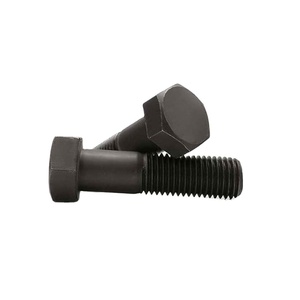
In high-density urban infrastructure and advanced mechanical manufacturing across the Seoul National Capital Area, fastener failure is simply not an option. Grade 10.9 bolts represent a pivotal engineering equilibrium between ultra-high tensile yield and necessary structural ductility. Manufactured strictly from quenched and tempered alloy steels—typically incorporating Chromium-Molybdenum matrices such as 40Cr, 42CrMo, or AISI 4140—Grade 10.9 fasteners offer a nominal tensile strength of 1000 MPa with an actual minimum tensile capability of 1040 MPa, coupled with a yield proof ratio of 90% (940 MPa minimum yield strength).
Seoul's rigorous architectural landscape, characterized by mega-structures like the Lotte World Tower, deep underground transport networks such as the GTX (Great Train eXpress), and complex seismic-resistant steel framing, requires high-integrity mechanical hardware. In accordance with ISO 898-1 and KS B 0233 specifications, every production batch destined for the South Korean market must be monitored for consistent carbon equivalent levels, precise core-to-surface hardness ratios (typically 32 to 39 HRC), and minimum Charpy V-notch impact toughness values exceeding 27 Joules at -20°C. This ensures complete reliability against brittle fracture under dynamic urban loads and fluctuating seasonal temperature extremes.
◆ Technical Benchmark: Property Class 10.9 vs. Equivalent International Standards
Procurement teams in Seoul frequently navigate multiple overlapping engineering frameworks, including Korean Standards (KS), Japanese Industrial Standards (JIS), European Norms (EN), and American ASTM/ASME codes. Understanding the exact mechanical boundaries prevents disastrous fastener substitutions on the construction site or plant floor.
| Property Parameter | ISO 898-1 Class 10.9 | EN 14399-4 (HV 10.9) | ASTM A490 Heavy Hex | KS B 1010 (F10T) |
|---|---|---|---|---|
| Nominal Tensile Strength | 1,000 – 1,200 MPa | 1,000 – 1,200 MPa | 1,035 – 1,210 MPa (150 ksi) | 1,000 – 1,200 MPa |
| Proof Stress (0.2% Offset) | 940 MPa | 900 MPa | 895 MPa (130 ksi) | 900 MPa |
| Core Hardness Range | 32 to 39 HRC | 32 to 39 HRC | 33 to 38 HRC | 30 to 39 HRC |
| Primary Raw Metallurgy | Medium carbon alloy (Cr, Mo, B) | Quenched & Tempered alloy steel | Alloy Steel (AISI 4140/4340) | Boron or Cr-Mo Alloy Steel |
| Standard Seoul Applications | Machinery, robotics, heavy equipment | Structural preloaded steel framing | High-capacity civil engineering | Tension control bridge connections |
◆ Advanced Mitigation of Hydrogen-Induced Delayed Fracture (HIDF)
A critical engineering consideration for Class 10.9 and Class 12.9 hardware deployed across the Korean industrial sector is the threat of Hydrogen Embrittlement. Whenever high-strength steel with a tensile strength exceeding 1000 MPa undergoes standard acid pickling or conventional electro-galvanizing, atomic hydrogen can diffuse into the high-stress regions of the crystal lattice. Under sustained service tension, this phenomenon leads to sudden, catastrophic delayed failure without preliminary plastic deformation.
Our manufacturing and processing lines implement modern surface-engineering countermeasures. Electroplated fasteners undergo rigorous de-embrittlement baking at 200°C to 220°C within four hours of electroplating, sustained continuously for 8 to 24 hours depending on the bolt cross-section. Furthermore, for mission-critical marine, tunnel, and industrial environments around Seoul and Incheon, we recommend and supply advanced non-electrolytic zinc flake coatings (such as Geomet or Dacromet) according to ISO 10683. These passivating solutions avoid acid immersion entirely, preventing atomic hydrogen generation while providing over 1,500 hours of neutral salt spray resistance without red rust formation.
◆ Supply Chain Dynamics and Specialized Application Arenas in Seoul
Seoul acts as the technological management and design headquarters for South Korea's heavy industrial, construction, and automotive giants. The specification and deployment of Grade 10.9 fasteners within this region concentrate in four specialized sectors:
1. Megastructure & Civil Transit Networks: The rapid expansion of high-speed transit arteries, deep underground transfer stations, and long-span highway bridges across the Han River demands structural high-strength bolted connections capable of handling perpetual vibration, dynamic cyclic shearing, and heavy environmental exposure. EN 14399-4 HV bolt assemblies and ASTM A490 structural studs provide the verified clamping force required to maintain joint integrity without slip.
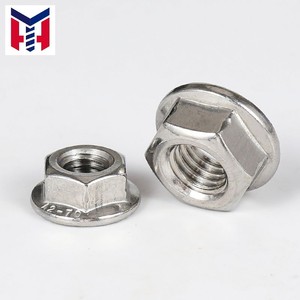
2. Smart Factory Machinery & High-Precision Robotics: Within the industrial corridors bordering southwestern Seoul, Gwangmyeong, and Anyang, high-precision automation equipment, high-speed press tools, and robotic handling arms operate under perpetual shock loads. Class 10.9 socket head cap screws and DIN 6921 flange configurations provide the fatigue life and clamping retention required to eliminate catastrophic machine shutdowns.
3. Advanced Automotive Assembly: As the engineering nerve center for major automotive manufacturers, the Seoul-Gyeonggi hub sets rigorous testing bars for structural drivetrain, sub-frame, and suspension fasteners. Grade 10.9 flange bolts and custom locking nuts engineered with precision thread pitch guarantees uniform torque-tension relationships during robotic high-torque assembly.
4. Semiconductor Cleanroom Support Frameworks: The nearby tech campuses in Suwon, Hwaseong, and Pyeongtaek rely on clean, ultra-stable sub-fab structures. Here, Grade 10.9 structural bolts coated with cleanroom-compatible non-outgassing finishes secure deep structural steel mezzanines against micron-level micro-vibrations, ensuring uncompromised semiconductor yield.