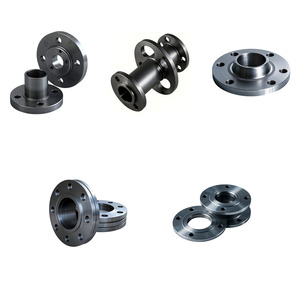
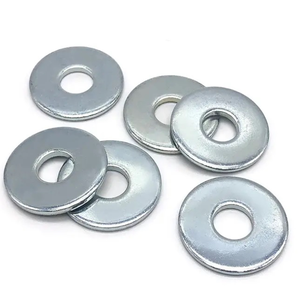
Complementary high-strength assembly products engineered to international standards, deployed alongside Grade 12.9 high-tensile bolting lines.
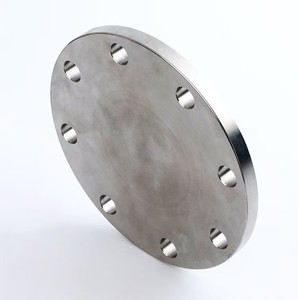
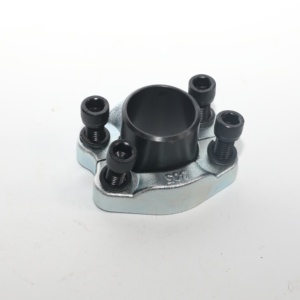
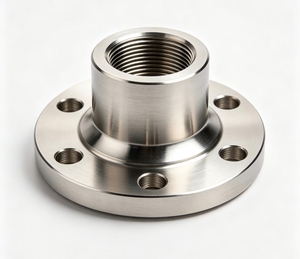
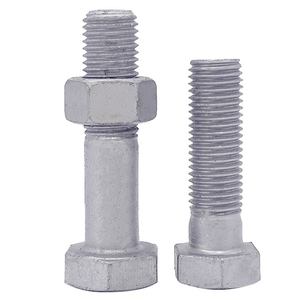
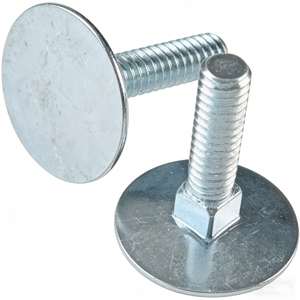
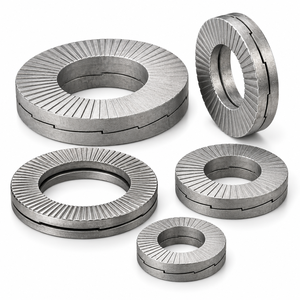
A rigorous examination of high-strength alloy fasteners operating in critical cyclic-load environments across the African continent.
In the discipline of mechanical fastening, ISO 898-1 Property Class 12.9 represents the practical zenith of tensile strength achievable in quenched and tempered structural alloy steels. Designated with a nominal ultimate tensile strength of 1200 MPa (with an actual minimum specification of 1220 MPa) and a yield strength ratio of 90% (1100 MPa minimum yield point), Grade 12.9 fasteners are explicitly selected when joints face extraordinary static clamping force, high cyclic fatigue, and strict weight-to-performance spatial limitations. For engineering design teams across South Africa—from Johannesburg’s heavy machinery design bureaus to Durban’s marine logistics drydocks—specifying Grade 12.9 requires comprehensive understanding of alloy metallurgy, clean grain architecture, and thread production mechanics.
The manufacturing foundation of Viha Steel & Forging’s Grade 12.9 program relies upon micro-alloyed medium carbon steels—primarily AISI 4140, AISI 4340, 42CrMo4, and 34CrNiMo6. Raw materials are procured exclusively as fully killed, vacuum-degassed wire rod and bar stock with tightly controlled grain sizes (ASTM 5 to 8). To ensure that tensile capacity does not compromise impact resistance, the sulfur (S) and phosphorus (P) tramp elements are restricted below 0.025% each. This level of purity dramatically reduces the density of non-metallic manganese sulfide inclusions, thereby eliminating stress micro-notches that could propagate catastrophic micro-cracking when tightened to standard preloads exceeding 70% of proof load.
| Metric Property Class | Yield Strength (Rp0.2, min) | Tensile Strength (Rm, min) | Elongation (A5, min) | Hardness Range (Rockwell C) | Impact Toughness (Charpy V-Notch -20°C) |
|---|---|---|---|---|---|
| Class 8.8 (Medium Carbon) | 640 MPa | 800 MPa | 12 % | 22 – 32 HRC | ≥ 30 Joules |
| Class 10.9 (Boron / Alloy) | 940 MPa | 1040 MPa | 9 % | 32 – 39 HRC | ≥ 27 Joules |
| Class 12.9 (Alloy Steel 42CrMo4) | 1100 MPa | 1220 MPa | 8 % | 39 – 44 HRC | ≥ 15 Joules (Special Tested) |
A defining operational metric for Grade 12.9 socket head cap screws (DIN 912 / ISO 4762), hex head bolts (DIN 931 / ISO 4014), and countersunk fasteners (DIN 7991) is the post-heat treatment thread rolling methodology. At our manufacturing facility, threads are rolled exclusively *after* through-hardening (quenching and tempering) rather than in the soft state prior to thermal processing. Thread rolling cold-works the root radius, directing the metal's unbroken longitudinal grain lines around the contour of the crest and root. This imparts severe compressive residual stresses precisely at the thread roots—the primary stress-concentration junction—elevating dynamic fatigue resistance by up to 35% compared to cut or pre-quench rolled thread profiles.
Grade 12.9 bolting solutions validated across extreme mechanical stress zones within the SADC industrial base.
Across the Witwatersrand Basin and the Bushveld Igneous Complex (Rustenburg, Polokwane), Grade 12.9 bolts anchor drive housings, gyratory crusher concaves, and semi-autogenous grinding (SAG) mill liner plates. In crushing circuits experiencing sustained multi-directional shock vibrations, the 1100 MPa yield threshold prevents joint loosening and shear pin displacement under violent rock collision loads.
The heavy-haul coal corridor (Mpumalanga to Richards Bay) and manganese line (Sishen to Saldanha Bay) subject freight locomotive bogies and wheel brake caliper assemblies to relentless cyclic fatigue. High-tensile 12.9 socket head bolts provide the requisite torque retention and clamping tension, enduring intense thermal expansion cycles and vibrational harmonic shifts without fatigue failure.
Operating within coal-fired turbine halls at Eskom power stations and synthetic hydrocarbon reactors at Sasol Secunda, Grade 12.9 high-tensile studs and bolts secure ultra-high-pressure hydraulic pumps, reciprocating compressor cylinder heads, and main bearing brackets requiring verified torque-to-clamp consistency up to 350°C continuous service.
Because Property Class 12.9 fasteners exhibit a Rockwell C hardness range of 39 to 44 HRC (Vickers 385 to 435 HV), they are metallurgically classified as susceptible to Hydrogen-Induced Stress Corrosion Cracking (HSCC) and Hydrogen Embrittlement (HE) per ISO 15330. When atomic hydrogen infiltrates the grain boundaries of highly stressed martensitic steel, sustained tensile loading causes rapid sub-critical crack extension without plastic deformation—often occurring hours or days post-installation under nominal static loads.
For South African procurement officers handling open-cast strip mining and coastal process infrastructure, surface treatment selection is vital:
Strategic transformations driving transition from conventional fasteners to audited high-tensile alloy systems.
With deep-level platinum and gold operations transitioning toward automated Continuous Mining Machinery and remotely operated drill rigs, downtime costs surpass R150,000 per hour. Tier-1 mining houses now explicitly reject untraceable generic fasteners, establishing strict procurement frameworks favoring certified Grade 12.9 socket hardware with traceable heat batch lot control.
Logistical congestion across South African rail and port systems has accelerated supply chain reconfiguration. EPC contractors and distributor networks are increasingly bypassing local re-sellers to establish direct volume supply partnerships with global manufacturers like Viha Steel & Forging. Direct containerized routing via Durban and Coega delivers predictable MRO replenishment and stable landed pricing.
South African Bureau of Standards (SABS) alignment under SANS 1700 (parts 1 through 14) has formalized the mandatory transition toward ISO-compliant fastener specifications. Engineering specifications for public works, energy expansion, and infrastructure increasingly mandate full test certificates per SANS 1700-14-1, penalizing non-compliant commercial imports.
Precision manufacturing, international certification compliance, and fully verified metallurgy backed by decades of forging leadership.
Accredited under the Pressure Equipment Directive (PED 2014/68/EU) and proud member of the Fastener Manufacturers Association of India (FMAI), manufacturing since 2010 to exacting standards.
Every single consignment ships with comprehensive Mill Test Certificates incorporating spectral chemistry, tensile proof loads, 0.2% yield offset, and core/surface Rockwell hardness verification.
From high-speed precision cold heading for standard M3 to M24 socket screws to multi-ton drop-forged heavy structural bolts up to M100, we cover entire plant bills of materials.
Established freight logistics corridors with direct ocean bill of lading deliveries into Durban Port, Cape Town, and Port Elizabeth, complete with South African Customs (SARS) tariff optimization.
Direct technical answers addressing standards compliance, customs tariffs, logistics, and metallurgical integrity.
Yes. The South African National Standard SANS 1700 directly transposes the international ISO 898-1 standard for property classes of carbon and alloy steel fasteners. Our Grade 12.9 products meet or exceed every mechanical threshold (1220 MPa tensile, 1100 MPa yield, 39–44 HRC hardness) mandated by SANS 1700-14-1, ensuring full cross-compliance for civil engineering and mining project tenders.
Hot-Dip Galvanizing involves molten zinc at ~450°C, which can cause temper back (loss of strength and hardness) in high-tensile 12.9 steel tempered near 425°C. Furthermore, pre-galvanizing acid pickling introduces hydrogen atoms, sparking severe hydrogen embrittlement risks. Non-electrolytic zinc flake coatings (such as Geomet / Dacromet) bypass acid entirely and cure at lower temperatures, safeguarding the 1220 MPa core metallurgy while offering superior corrosion resistance.
Our industrial fasteners are typically cleared under SARS Customs Tariff Chapter 73, specifically heading 7318.15 (other screws and bolts, whether or not with their nuts or washers). Viha Steel & Forging supplies complete commercial packing lists, certified weight declarations, Certificate of Origin, and mill documentation to facilitate smooth South African customs clearance.
Standard ocean transit time from Nhava Sheva (Mumbai) to Durban Port is typically 14 to 21 days. For urgent plant breakdown situations across Gauteng or the Platinum Belt, air freight consignments (from 50 kg to 2,000 kg) can be dispatched directly into O.R. Tambo International Airport (JNB) within 4 to 6 working days.
Grade 12.9 fasteners require tight friction coefficient control (k-factor). We conduct torque-tension testing per ISO 16047 to determine the friction coefficient under defined tightening speeds. Surface finishes (such as black oxide with corrosion-preventative oil immersion or specialized PTFE/MoS2 topcoats) are verified to maintain an assembly friction coefficient of 0.10 to 0.14, preventing clamp-load scatter during hydraulic torquing.
Yes. In addition to standard metric lengths up to 300 mm, our facility includes specialized hot-forging presses and thread-rolling equipment capable of producing custom high-tensile 12.9 fasteners up to M100 in diameter, with shank lengths extending to 1,000 mm. We manufacture to OEM engineering drawings, including special head countersinks, collar flanges, and reduced-shank fatigue configurations.
Whether you require standard DIN 912 Grade 12.9 socket head cap screws for mining maintenance or specialized high-tensile structural bolts forged to custom engineering specifications, our technical engineering desk is available to assist.
Send an Inquiry