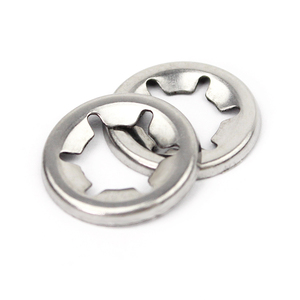
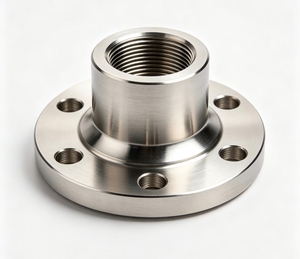
From heavy structural nuts and anti-vibration locking systems to heavy-duty anchor bolts and ANSI/DIN flanges, discover our manufacturing portfolio designed to meet exacting civil, mechanical, and petrochemical requirements.
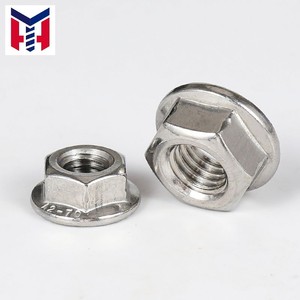
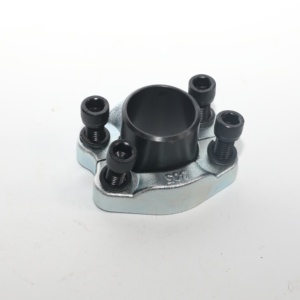

As the primary logistical nexus and industrial center of the North American Midwest, the Chicago metropolitan area—spanning Cook, DuPage, Will, and Lake Counties—demands structural and process hardware capable of withstanding extreme cyclical stresses, strict civil safety mandates, and harsh environmental variables. Heavy Hex Nuts, governed dimensionally by ASME B18.2.2 and metallurgically through ASTM A194 and ASTM A563, constitute the indispensable backbone of structural steel frameworks, petrochemical processing pipelines, pressure boundary bolting, and intermodal transport systems across the Chicagoland corridor.
Unlike standard finished hex nuts, a heavy hex nut features increased dimensions across the flats (width across flats $W = 1.5D + 0.125$ inches) and greater nominal thickness. This increased contact footprint distributes high clamp loads over a broader bearing area, effectively reducing surface bearing pressure against joined components and drastically mitigating the risk of thread stripping under rigorous proof-load conditions. In mission-critical installations ranging from the Skyway Bridge and deep-tunnel stormwater projects to the heavy refineries of the nearby Whiting and Joliet industrial basins, specifying the correct heavy hex nut grade is not merely an engineering preference—it is a mandatory risk-mitigation protocol.
Specifying heavy hex nuts requires deep evaluation of chemical compositions, heat treatment regimes, proof load stress capacities, and localized thread pitch classes. In structural and pressure vessel engineering across Illinois, two overarching ASTM families dictate procurement: ASTM A194 (predominantly utilized in pressure vessel flanges, petrochemical refining, and extreme-temperature service) and ASTM A563 (specialized for structural bolting, civil construction, and bridge erection).
| Nut Specification | Material & Chemistry | Heat Treatment | Proof Load Stress (UNC) | Brinell / Rockwell Hardness | Primary Chicago Application |
|---|---|---|---|---|---|
| ASTM A194 Gr. 2H | Medium Carbon Steel (C: 0.40% min) | Quenched & Tempered (Tempered ≥ 850°F) | 175,000 psi (plain) / 150,000 psi (galv) | 248 to 327 HBW (24 to 35 HRC) | Petroleum refineries, high-pressure steam flanges, ASME boilers |
| ASTM A194 Gr. 7 | AISI 4140/4142 Cr-Mo Alloy Steel | Quenched & Tempered (Tempered ≥ 1100°F) | 175,000 psi (with Charpy impact at -150°F) | 248 to 327 HBW (24 to 35 HRC) | Cryogenic storage, LNG transfer lines, sub-zero winter civil projects |
| ASTM A194 Gr. 8 / 8M | AISI 304 / AISI 316 Stainless Steel | Carbide Solution Annealed (Strain Hardened) | 80,000 psi / 75,000 psi | 126 to 223 HBW (max 95 HRB) | Lake Michigan marine intake, wastewater treatment, chemical processing |
| ASTM A563 Gr. DH | Medium Carbon / Alloy Steel | Quenched & Tempered (Tempered ≥ 850°F) | 175,000 psi | 248 to 352 HBW (24 to 38 HRC) | AISC structural steel buildings, IDOT highway overpasses, truss joints |
| ASTM A563 Gr. C | Medium Carbon Steel | As-Rolled or Quenched & Tempered | 144,000 psi | 143 to 352 HBW (78 HRB to 38 HRC) | General civil fastening, secondary structural supports, light rail |
For mating integrity, thread pitch standards play a critical operational role. For structural diameters up to 1 inch, Unified National Coarse (UNC Class 2B) is universal. However, for diameters exceeding 1 inch in high-pressure flanged piping (ASME B16.5 and B16.47), the 8-Thread Series (8-UN) is typically specified. The 8-UN thread form maintains a uniform 8 threads per inch across large diameters, preventing excessive thread engagement depth, ensuring uniform bolt tensioning during hydraulic torquing, and maximizing resistance to stripping under cyclic thermal oscillation.
Chicago's geographic location at the nexus of the Mississippi River watershed, Lake Michigan, and national railway lines creates unique micro-climatic and operational demands. Heavy hex nuts supplied to this region must perform across distinct industrial environments:
The Illinois Department of Transportation (IDOT) maintains hundreds of highway overpasses and bascule bridges throughout Cook County. Structural joints require ASTM A563 Grade DH heavy hex nuts matched with ASTM F3125 Grade A325 structural bolts, treated with Hot-Dip Galvanizing (ASTM F2329) or thermal diffusion coatings to endure heavy mechanical vibration and aggressive calcium chloride spray from winter de-icing operations.
Serving the heavy refinery corridor along the southern tip of Lake Michigan (including Calumet City and neighboring northwest Indiana refineries), ASTM A194 Grade 2H and Grade 7 heavy hex nuts are paired with ASTM A193 B7 and L7 stud bolts on high-pressure hydrocrackers, coker units, and catalytic reformers operating at pressures up to 2500 Class and temperatures fluctuating between -50°F and 1000°F.
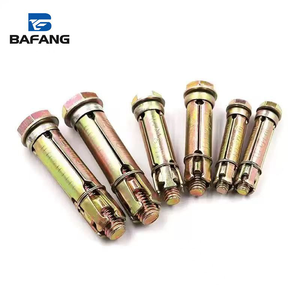
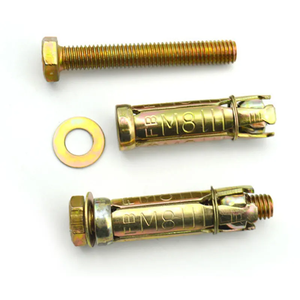
Continuous expansions across O'Hare International Airport cargo zones, intermodal rail yards in Bedford Park, and logistics centers in Elk Grove Village depend on heavy-duty 3-piece expansion anchor bolts and ASTM A307/A325 heavy hex hardware for high-bay automated racking systems, overhead gantry cranes, and massive structural column base plates.
The Metropolitan Water Reclamation District of Greater Chicago (MWRD) oversees immense wastewater and stormwater management facilities, including the Deep Tunnel Project. These facilities mandate ASTM A194 Grade 8M (AISI 316) stainless steel heavy hex nuts to eliminate crevice corrosion and pitting caused by hydrogen sulfide and industrial effluents.
Downtown Chicago's architectural heritage requires strict adherence to AISC seismic and wind-load specifications. Structural engineers specify heavy hex nuts with direct tension indicators (DTIs) and rotational capacity (ROCAP) testing on-site to verify proper clamp load during high-rise structural erection subjected to Lake Michigan wind shears.
Urban steam grids supplying heating to commercial districts require high-temperature resistance. Chrome-moly heavy hex fasteners ensure long-term creep resistance and prevent flange gasket blowout under thermal expansion and water hammer shocks common in deep-well utility tunnels.
Procuring industrial fasteners for deployment in the Chicago area involves navigating severe environmental factors and rapidly evolving regulatory frameworks. Strategic sourcing teams must factor in three macro drivers:
Chicago winters routinely experience severe sub-zero cold snaps, with ambient temperatures falling below -20°F and wind chills reaching -50°F. Under these thermal shocks, standard carbon steel fasteners risk crossing their Ductile-to-Brittle Transition Temperature (DBTT), making them vulnerable to catastrophic brittle fracture under dynamic impact or cyclic wind loads. Consequently, Chicago engineering specifications increasingly mandate Charpy V-Notch (CVN) impact testing for structural and pressure-retaining hardware. ASTM A194 Grade 7 alloy nuts and ASTM A320 Grade L7 studs, quenched and tempered with strict grain-refinement controls, guarantee proven notch toughness down to -150°F, ensuring structural integrity during mid-winter freezes.
The extensive application of rock salt (sodium chloride) blended with liquid calcium chloride on Illinois tollways, arterial expressways, and freight terminals accelerates electrochemical and galvanic corrosion on exposed anchor bolts and bridge joints. Traditional thin-film electroplating (5–8 microns of zinc) breaks down rapidly within months of exposure. The industry has shifted toward heavy-duty Hot-Dip Galvanizing per ASTM F2329 (providing a metallurgical alloy bond exceeding 50 microns of zinc) or fluoropolymer/PTFE multi-layer barrier coatings (such as Xylan®). To guarantee free-running assembly on galvanized fasteners, ASTM A563/A194 heavy hex nuts must be tapped oversize after hot-dip galvanizing in accordance with ASTM A563 diametral allowance schedules, followed immediately by water-soluble wax or molybdenum disulfide lubrication to prevent thread galling during high-speed torque installation.
With billions of dollars allocated through the Infrastructure Investment and Jobs Act (IIJA) for modernizing Illinois transit, rail bridges, and wastewater systems, procurement managers must maintain comprehensive traceability. Every heat number, chemical batch, mechanical yield, tensile value, and Charpy test certificate must be fully documented via EN 10204 Type 3.1 Mill Test Certificates. Fasteners without verifiable trace documents face immediate rejection by IDOT and federal inspectors on-site.
As an internationally accredited manufacturer and supplier of heavy industrial fasteners, forged flanges, and precision hardware, our operational footprint bridges world-class forging technology with strict adherence to Western engineering standards. Our facility provides seamless distribution into North American industrial centers, including Chicago, Joliet, Gary, and Rockford.
Fully certified under the Pressure Equipment Directive (PED 2014/68/EU) and proud member of the Fastener Manufacturers Association of India (FMAI), upholding international compliance.
Comprehensive manufacturing capabilities spanning small-scale machine components up to M100 (and equivalent 4-inch imperial heavy hex fasteners) in standard and extra-heavy lengths.
Every single production batch undergoes rigorous non-destructive testing (NDT), wet chemical analysis, and proof-load testing, accompanied by full EN 10204 3.1 Mill Test Certificates.
Recognized among the largest exporters of hot-dip galvanized fasteners, featuring dedicated in-house centrifuge galvanizing baths and precision thread re-tapping facilities.
Our hot forging presses guarantee continuous grain flow across the critical head-to-shank transition zone of bolts, while our cold-forming and thread-rolling lines yield high-fatigue-resistant internal and external thread profiles. Whether your Chicago warehouse needs bulk container shipments of standard ASTM A194 2H nuts or your engineering project requires custom phosphor bronze, silicon bronze, titanium, or duplex stainless hardware, we provide engineered reliability without supply chain disruption.
Below are technical, metallurgical, and logistical answers to the most common questions raised by Midwest procurement managers, mechanical contractors, and structural engineers.
Whether you require full container-load deliveries for Chicago distribution hubs, technical mill cert verification for bridge construction, or custom alloy forgings for industrial process plants, our metallurgical engineers are available to review your project specifications.