
Supplying Tier-1 contractors, mechanical fabricators, and MRO distributors across the Greater Toronto Area with fully certified components accompanied by EN 10204 Type 3.1 Mill Test Certificates.
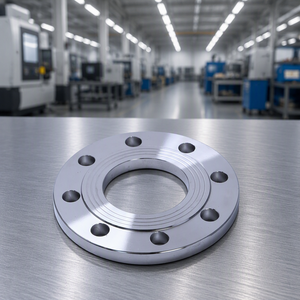 SS Butt Weld
Butt welding plate lap joint and flat welded flanges manufactured from premium stainless steel grades, engineered for severe chemical processing and thermal expansion cycles.
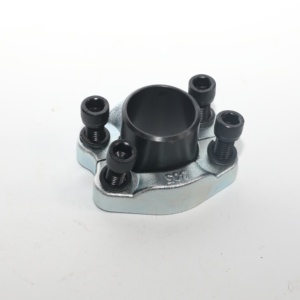 SAE Locking
Heavy-duty hydraulic and high-pressure fluid coupling systems engineered with thickened flange heads to maintain clamp integrity under mechanical shock.
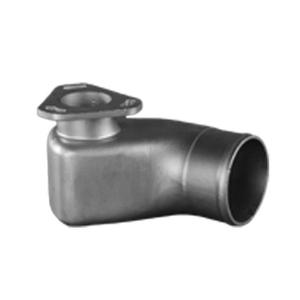 SCS13 Casting
High-integrity investment-cast exhaust elbows offering superior oxidation resistance and mechanical yield strength for marine propulsion and industrial exhaust piping.
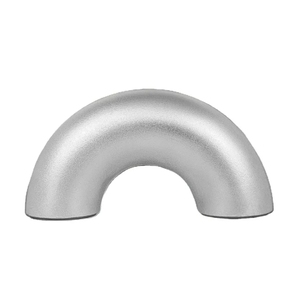 ASME B16.9
Seamless SCH40/SCH80 standard carbon and stainless steel industrial bends precision-forged for high-pressure distribution lines and central heating plants.
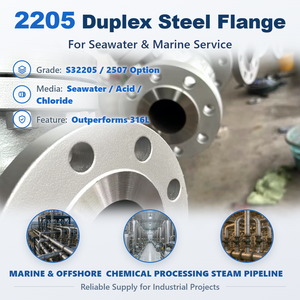 Duplex 2205
Engineered for high-chloride water management facilities and industrial desalination, providing dual-phase microstructure strength against pitting corrosion.
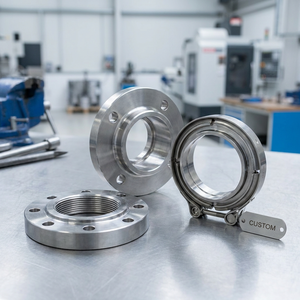 CNC Machined
Tight-tolerance Model C-0603 flanges precision-turned on multi-axis CNC lathes, designed for vibration-resistant V-band sanitary and processing lines.
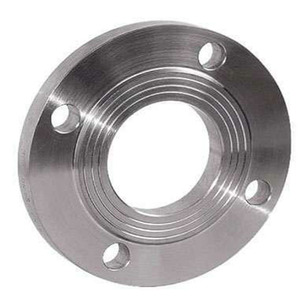 ANSI Class 150-900
Forged ASTM A105 carbon steel slip-on flanges with 4-8 multi-hole bolt patterns, rated from 150lb to 900lb for utility steam and municipal water conduits.
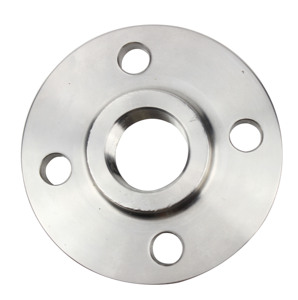 DIN PN10
Metric DIN-standard threaded flanges engineered for quick non-welded assembly in ventilation circuits, low-pressure gas, and localized piping systems.
High tensile fasteners represent the fundamental load-transferring links in heavy engineering, structural steel framing, nuclear facilities, and civil infrastructure throughout Southern Ontario. In severe structural environments, a fastener is never merely a threaded rod or headed bolt; it is an engineered component operating under high static tension, cyclic dynamic fatigue, thermal gradients, and aggressive atmospheric corrosion. In the Greater Toronto Area (GTA), where seasonal temperatures oscillate from -35°C in sub-zero winter freezes to +35°C during humid summers, selecting fastener property classes requires an exhaustive metallurgical understanding of yield-to-tensile ratios, Charpy V-notch impact energy absorption, and microstructural ductility.
Our manufacturing protocols adhere to rigorous quenching and tempering (Q&T) metallurgy. Whether forging property class 8.8, 10.9, or 12.9 according to ISO 898-1, or producing ASTM A193 Grade B7/B16 and ASTM F3125 (formerly A325/A490) structural bolts, our factory controls the martensitic transformation process to eliminate brittle intergranular boundaries. By optimizing grain boundaries through controlled induction reheating and polymer/oil quenchants, we prevent premature micro-fissuring and retard hydrogen-assisted stress corrosion cracking (SCC).
Engineering Directive for Canadian Procurement: Structural joints subject to CSA S16 (Design of Steel Structures) demand verified notch toughness at -20°C or lower. Fasteners lacking documented low-temperature impact testing pose catastrophic risks of brittle fracture under shock-loading and de-icing salt exposure.
| Property Class / Spec | Material Chemistry | Tensile Strength (Min) | Proof Load / Yield Strength | Core Hardness | Target Local Application |
|---|---|---|---|---|---|
| Class 8.8 | Medium carbon steel, quenched & tempered (Boron treated) | 800 MPa (116 ksi) | 640 MPa (93 ksi) | 22 - 32 HRC | Automotive subframes, light industrial equipment, plant piping brackets. |
| Class 10.9 | Chromium-Molybdenum (AISI 4140 / 4142), low alloy | 1,040 MPa (151 ksi) | 940 MPa (136 ksi) | 32 - 39 HRC | Preloaded structural joints, heavy machinery, transit track assemblies. |
| Class 12.9 | Alloy steel with Ni-Cr-Mo additions, refined grain | 1,220 MPa (177 ksi) | 1,100 MPa (160 ksi) | 39 - 44 HRC | High-stress engine blocks, crane gantry tracks, hydraulic manifold flanges. |
| ASTM A193 B7 | AISI 4140/4142 Cr-Mo, liquid quenched & tempered | 125 ksi (860 MPa) | 105 ksi (720 MPa) | ≤ 35 HRC / 321 HBW | Refinery pressure vessels, district steam loops, ASME B16.5 flange joints. |
| ASTM F3125 A325 | Heat-treated carbon or boron-alloyed structural steel | 120 ksi (825 MPa) | 92 ksi (635 MPa) | 25 - 34 HRC | Structural building skeletons, highway bridges, transit overhead catenary. |
| ASTM A193 B8M | AISI 316 Austenitic Stainless Steel, carbide solution annealed | 75 - 90 ksi | 30 - 65 ksi | ≤ 90 HRB | Wastewater aeration tanks, chemical transfer, Lake Ontario marine exposure. |
For fasteners hardened above 320 HV (such as property class 10.9 and 12.9 or ASTM A490 bolts), electroplating processes introduce nascent atomic hydrogen into the steel crystalline matrix. Under tensile pre-load, this hydrogen migrates to triaxial stress concentration zones at thread roots, triggering sudden intergranular failure with zero plastic deformation. In our production facility, electroplated high-tensile components are immediately transferred to automated, calibrated baking ovens within 1 hour of acid pickling or plating, undergoing hydrogen relief baking at 200°C to 220°C for a verified duration of 8 to 24 hours. For critical infrastructure projects in Toronto where exposure to calcium chloride and road salt is severe, we advocate mechanical galvanizing, hot-dip spin galvanizing (per ASTM A153/F2329), or non-electrolytic zinc flake coatings (such as Geomet or Dacromet), completely eliminating acid-induced hydrogen uptake.
Toronto stands as Canada's economic epicenter, anchored by an unprecedented multi-billion-dollar transit expansion, industrial manufacturing along the Highway 401 corridor, and the lifecycle refurbishment of commercial nuclear power reactors. Our high-tensile bolting and forged flange components are specifically engineered to resolve the operational bottlenecks faced by engineers in these sectors:
The Ontario Line, Eglinton Crosstown LRT, and GO Expansion require vibration-proof EN 14399-4 HV structural bolt assemblies and ASTM A325 fasteners for track anchoring, overhead catenary gantries, and sub-surface tunnel lining brackets.
Ontario Power Generation's Candu reactor refurbishment projects mandate ASTM A193 B7 and B16 stud bolts with ASTM A194 Grade 2H/7 nuts, manufactured with 100% heat traceability, eddy-current NDT verification, and zero surface decarburization.
Downtown Toronto's dense high-rise development relies on preloaded high-tensile structural assemblies conforming to CSA S16 and ASTM F3125 Grade A325/A490, maintaining bolted connection stiffness against Lake Ontario wind shear loads.
Expansions at the Ashbridges Bay and Highland Creek Treatment Plants deploy our Duplex 2205 flanges, 316 stainless stud bolts, and butt-weld fittings to resist concentrated ferric chloride, hydrogen sulfide, and municipal wastewater corrosion.
The industrial procurement landscape in Ontario is undergoing significant structural shifts driven by supply chain risk management, decarbonization imperatives, and evolving Canadian engineering standards:
Post-pandemic volatility along the St. Lawrence Seaway and major maritime lanes has compelled Toronto engineering procurement teams to abandon pure single-source offshore strategies. Tier-1 contractors along the Mississauga-Brampton industrial belt are prioritizing vetted global manufacturing partners capable of holding safety buffer inventory in regional hubs while supplying verifiable Mill Test Certificates directly from the forge.
With Canada's aggressive net-zero 2050 benchmarks and provincial green building mandates, public infrastructure tenders increasingly scrutinize the embodied carbon of structural fasteners. Our facility utilizes electric arc furnace (EAF) steel bar inputs, optimized induction heating loops, and cold-forging automation that cuts electrical energy consumption per metric ton of fasteners by over 28%.
While Canadian structural drawings traditionally cite CSA S16 and CSA G40.20/G40.21, cross-border modular fabrication has accelerated the adoption of consolidated standards like ASTM F3125. Buyers now demand dual-certified fastener inventory (meeting both ASTM mechanical metrics and Canadian notch-toughness criteria) to streamline cross-border design approvals.
Operating since 2010 as a specialized steel forging and precision machining company, we have expanded into an internationally recognized manufacturer exporting high-tensile bolting and forged piping products to heavy industrial sectors across the globe. Our facilities combine centuries-old forging know-how with cutting-edge German and Japanese computerized machine tools.
Our pressure equipment components comply with European Pressure Equipment Directive (PED 2014/68/EU) Annex I, essential for pressure vessel fabrication. As active members of the Fastener Manufacturers Association of India (FMAI), we uphold rigid manufacturing codes across every production run.
Every forging and fastener batch undergoes rigorous non-destructive testing (NDT), wet magnetic particle inspection, ultrasonic sound-wave analysis, Charpy impact testing at cryogenic temperatures, and computerized optical emission spectroscopy to verify chemical composition before dispatch.
From micro-machined M2 fasteners for instrumentation enclosures up to massive M100 heavy hex studs and 60-inch forged slip-on flanges, our multi-die cold headers and 5,000-ton hydraulic forging presses deliver seamless dimensional flexibility according to ASME, DIN, ISO, and client-specific drawings.
Practical technical answers to common queries raised by Ontario project managers, QA/QC inspectors, and structural engineers:
We supply fasteners forged from fine-grained killed alloy steels with balanced manganese-to-carbon ratios. We conduct Charpy V-notch impact testing at -20°C, -40°C, or -46°C in accordance with ASTM A320 (e.g., Grade L7) or CSA S16, ensuring average absorbed energy levels meet or exceed 27 Joules (20 ft-lbs) to completely eliminate low-temperature brittle fractures.
Every shipment is accompanied by a certified EN 10204 Type 3.1 Inspection Certificate containing fully traceable heat numbers, chemical ladle analysis, physical tensile and yield test curves, proof load validation, elongation percentages, reduction of area metrics, and coating thickness records.
For structural steel exposed to aggressive road salts, hot-dip galvanization conforming to ASTM A153/A153M or ASTM F2329 provides over 50 years of sacrificial cathodic protection. Where tight thread tolerances prevent hot-dip coatings, we apply zinc-flake coatings (ASTM F1136) which offer 1,500+ hours of salt spray resistance (ASTM B117) with zero hydrogen embrittlement risk.
Yes. In addition to mass-produced standard inventory, our CNC turning and tool-making facility manufactures bespoke fastener geometries, custom stepped stud bolts, modified flange necks, and specialized alloy items in silicon bronze, Monel, Inconel, and titanium directly to your CAD drawings or physical samples.