Engineered for extreme operating environments across Polish heavy industries, all products conform to ASTM, ASME, DIN, and EN technical norms with full mill certification.
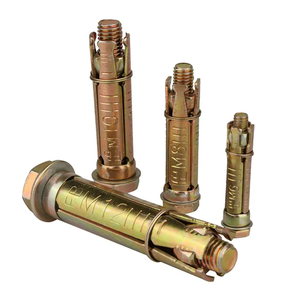
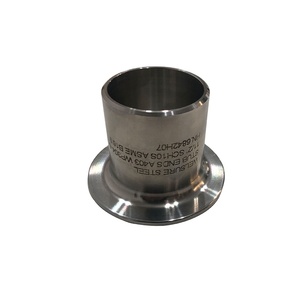
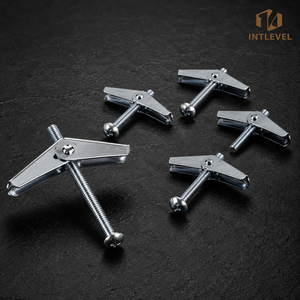
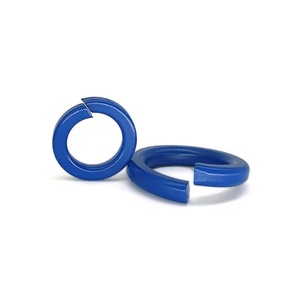
In high-pressure piping assemblies, boiler installations, cryogenic LNG containment vessels, and coastal maritime structures across Poland, the selection of mechanical fasteners is subject to rigorous European and international pressure equipment legislation. ASTM A193 Grade B8 specifies alloy steel and austenitic stainless steel bolting materials for pressure vessels, valves, flanges, and fittings intended for high-temperature, cryogenic, or severe corrosion service.
Manufactured from AISI 304 (UNS S30400 / EN 1.4301 / X5CrNi18-10) austenitic stainless steel, ASTM A193 Grade B8 provides superior toughness at cryogenic temperatures down to -196°C (-320°F) while resisting thermal degradation up to 538°C (1,000°F). For Polish EPC contractors and mechanical engineers, discerning between Class 1 (Carbide Solution Treated) and Class 2 (Strain Hardened) is paramount to ensuring joint integrity under VDI 2230 preload conditions.
The manufacturing process determines the mechanical properties of ASTM A193 B8 bolts. Class 1 fasteners are fully solution-annealed following hot forging or machining. During solution treatment at 1040°C–1120°C followed by rapid water quenching, chromium carbides are held in solid solution, maximizing resistance to intergranular attack (sensitization). Class 1 fasteners exhibit high ductility (minimum 30% elongation) and lower yield strength (minimum 205 MPa / 30 ksi), making them the primary choice for cryogenic service and chemical environments where stress corrosion cracking risks must be minimized.
Conversely, Class 2 fasteners undergo post-solution cold working (strain hardening) to deform the austenitic lattice, inducing high tensile and yield performance without altering chemical composition. Tensile strengths reach up to 860 MPa (125 ksi) for smaller diameters, making them ideal for high-pressure flanged joints requiring elevated gasket seating stresses without bolt yielding.
| Property Parameter | ASTM A193 B8 Class 1 | ASTM A193 B8 Class 2 (≤ 3/4") | ASTM A193 B8 Class 2 (> 3/4" to 1") | EN / ISO 3506 Equivalent |
|---|---|---|---|---|
| Base Material / UNS | AISI 304 / S30400 | AISI 304 / S30400 | AISI 304 / S30400 | 1.4301 / A2-70 / A2-80 |
| Heat Treatment | Carbide Solution Annealed | Solution Treated & Strain Hardened | Solution Treated & Strain Hardened | Cold Drawn / Work Hardened |
| Min. Tensile Strength | 75 ksi (515 MPa) | 125 ksi (860 MPa) | 115 ksi (795 MPa) | 700 – 800 MPa |
| Min. Yield Strength (0.2%) | 30 ksi (205 MPa) | 100 ksi (690 MPa) | 80 ksi (550 MPa) | 450 – 600 MPa |
| Min. Elongation (2 in.) | 30.0% | 12.0% | 15.0% | 0.3 – 0.4d |
| Max. Hardness | 223 HBW / 96 HRB | 321 HBW / 35 HRC | 321 HBW / 35 HRC | Per ISO 3506 Property Class |
| Impact Resistance (KV at -196°C) | ≥ 27 Joules (Cryogenic Qualified) | Not routinely tested for cryogenic | Not routinely tested for cryogenic | Available upon 3.1 request |
| Standard Mating Nut | ASTM A194 Grade 8 | ASTM A194 Grade 8 (Strain Hardened) | ASTM A194 Grade 8 (Strain Hardened) | ISO 4032 / EN 1661 Gr. A2-70 |
European design codes (such as EN 13445 for unfired pressure vessels and EN 13480 for metallic industrial piping) are widely mandated in Poland by the Office of Technical Inspection (Urząd Dozoru Technicznego - UDT). However, American standards (ASME Section VIII, ASME B31.3) dominate international engineering packages. Our dual-certified manufacturing enables seamless compliance:
From the Baltic shoreline to the industrial valleys of Silesia, our ASTM A193 B8 fastening solutions ensure zero-failure mechanical stability in Poland's strategic installations.
The Polish Baltic Sea is witnessing transformative offshore wind park developments (including Baltic Power and MFW Bałtyk). Offshore substations, transition pieces, and marine cranes in Gdańsk, Gdynia, and Szczecin-Świnoujście demand ASTM A193 B8/B8M bolts with PTFE/Xylan fluoropolymer barrier coatings to prevent catastrophic galvanic and chloride-induced pitting corrosion.
At the President Lech Kaczyński LNG Terminal in Świnoujście and the planned Gdańsk FSRU (Floating Storage Regasification Unit), liquefied natural gas is stored at -162°C. ASTM A193 B8 Class 1 bolts retain exceptional Charpy impact toughness (> 27 Joules at -196°C), resisting brittle fracture risks inherent to lower-grade carbon steels under cryogenic thermal shocks.
Modernization projects at major Polish refineries (PKN Orlen complex in Płock and Grupa Lotos facilities) utilize ASTM A193 B8 stud bolts in hydrocracker units, sulfur recovery plants, and desulfurization columns. Austenitic stability ensures operational uptime against hot hydrogen, amine gases, and sour crude distillation fractions.
As Poland accelerates its thermal modernization, combined heat and power (CHP) installations across Warsaw, Wrocław, and Kraków require dependable flanged connections. ASTM A193 B8 bolting provides steady relaxation resistance under high-temperature cycling, preventing costly steam leaks and hazardous downtime.
Nitrogen fertilizer plants operated by Grupa Azoty demand fasteners immune to nitric acid, urea synthesis loops, and ammonia gas streams. Our electropolished and passivated ASTM A193 B8 bolts eliminate surface contamination, sustaining robust passive chromium-oxide surface layers under aggressive chemical contact.
Poland's rolling stock manufacturers (Pesa Bydgoszcz, Newag) and industrial pump fabricators rely on OEM/ODM Grade B8 fasteners with custom pitch geometries, anti-vibration lock wire holes, and matched ASTM A194 Gr. 8 heavy hex nuts to sustain severe operational shear and dynamic braking shock loads.
Under the Polish Energy Policy (PEP2040), substantial capital is deployed toward clean hydrogen valleys (Wielkopolska, Lower Silesia) and the forthcoming Lubiatowo-Kopalino nuclear power plant. Hydrogen infrastructure mandates ultra-pure stainless steel fasteners free of internal micro-voids to mitigate hydrogen embrittlement. Nuclear-grade documentation demands rigorous ultrasonic and eddy-current testing traceability back to raw billet furnaces.
Polish project directors are moving away from non-certified generic fastener imports. Compliance with the Pressure Equipment Directive (2014/68/EU) and inspection protocols under Urząd Dozoru Technicznego (UDT) require fasteners to have comprehensive 3.1 chemical and mechanical certificates. Any discrepancy in heat numbers or lack of positive material identification (PMI) results in severe project handover delays.
Standard stainless steel fasteners suffer from thread galling (cold welding) during automated high-speed torque installation. Polish mechanical contractors increasingly request OEM bolts pre-treated with Xylan 1424, PTFE, or molybdenum disulfide (MoS₂) solid film lubricants. These coatings guarantee predictable friction coefficients (µ = 0.10 - 0.14) and eliminate the need for manual anti-seize paste application on site.
Fluctuating nickel surcharges and European distributor markups have led Polish procurement departments to establish direct OEM/ODM supply lines with integrated forging mills. Direct factory sourcing allows tailored dimensional execution (such as full-thread studs to ASME B18.31.2, metric continuous studs to DIN 976, or custom lengths up to 4,000mm) with guaranteed batch lead times and favorable landed cost structures.
Established since 2010, our state-of-the-art forging and machining complex integrates full-spectrum metallurgical engineering, meeting the highest international pressure vessel expectations.
Certified under European Pressure Equipment Directive (PED 2014/68/EU) and active member of the Fastener Manufacturers Association of India (FMAI). Every product meets stringent European Union safety baselines for pressurized systems.
Operating multi-station cold headers and induction hot forging presses up to 1,500 tons. Rolled threads rather than cut threads guarantee unbroken grain flow lines, increasing fastener fatigue endurance by over 30% under cyclic stresses.
Equipped with optical emission spectrometers (OES), computerized universal tensile test benches, Charpy impact test apparatus down to -196°C, Vickers/Rockwell hardness testers, and non-destructive testing (MPI, DPI, UT) facilities.
Shipments routed directly to ports of Gdańsk and Gdynia or airfreighted to Warsaw Chopin Airport. Fasteners packed in heavy-duty poly-lined wooden cases, desiccated, batch-labeled, and barcode-traceable to eliminate maritime corrosion.
Beyond ASTM A193 B8 (AISI 304), we forge and machine ASTM A193 B8M (AISI 316), B8T (Titanium stabilized), B7 (Cr-Mo alloy), A325 structural bolts, DIN 6921 flange bolts, phosphor bronze, silicon bronze, and Duplex 2205 / Super Duplex 2507.
Complete custom machining capabilities supporting bespoke shoulder bolts, tap-end studs, wafer flange bolts, metric/imperial transitions, and engineering modifications built strictly to customer CAD models.
Clear, definitive answers addressing European import regulations, metallurgical verifications, and contractual delivery terms.
Yes. Our manufacturing system is accredited under Pressure Equipment Directive (PED) 2014/68/EU. We furnish 3.1 inspection certificates in accordance with EN 10204, documenting tensile properties, 0.2% yield strength, elongation, and impact values conforming to PED Annex I safety requirements.
Absolutely. We routinely host third-party inspection agencies including TÜV Rheinland, Bureau Veritas, DNV, and SGS to witness mechanical proof tests, verify melt chemistry, inspect dimensions, and countersign EN 10204 3.2 inspection certificates prior to container sealing.
ASTM A193 Grade B8 is manufactured from AISI 304 austenitic steel containing 18% Cr and 8% Ni. ASTM A193 Grade B8M incorporates 2.0% to 3.0% Molybdenum (AISI 316), significantly raising the Pitting Resistance Equivalent Number (PREN). For harsh marine splash zones along the Baltic coastline, Grade B8M is strongly recommended to prevent pitting from marine chlorides.
We offer multiple engineering solutions: proprietary PTFE / Xylan fluoropolymer coatings, molybdenum disulfide dry lubricants, or precision silver plating. Additionally, pairing ASTM A193 B8 Class 2 studs with ASTM A194 Grade 8 or 8M nuts manufactured with a minor hardness differential prevents micro-welding of mating threads during mechanical torquing.
We manufacture both Imperial and Metric thread standards. This includes ASME B1.1 UNC/UNF series, 8-UN series for high-pressure flanged connections (diameters ≥ 1"), and Metric standard coarse/fine pitch to ISO 261 / DIN 13. Thread classes 2A/2B (Imperial) and 6g/6H (Metric) are strictly monitored with hardened GO / NO-GO gauges.
Standard stocked sizes (M12 to M36; 1/2" to 1-1/2") can be packaged and dispatched within 7–10 days. Custom forgings and large-diameter threaded rods take 3–4 weeks for production. Sea freight transit times from our Mumbai hub to Port of Gdańsk or Gdynia average 28–35 days. Express air courier delivery is available within 4–6 business days for critical maintenance outages.
Yes. We supply comprehensive commercial invoices, packing lists with individual crate weights and net tallies, Certificates of Origin (COO), preferential tariff documentation where applicable, and mill certificates matched to container manifests, ensuring expedited clearance through Polish customs authorities.
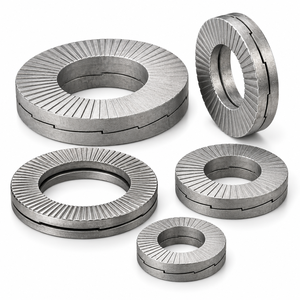
Yes, we provide completely matched bolting assemblies. ASTM A193 B8 bolts are supplied with ASTM A194 Grade 8 heavy hex nuts and ASME B18.21.1 / DIN 125 / DIN 25201 anti-vibration washers, ensuring full metallurgical compatibility and balanced load distribution across the flanged face.
Direct mill pricing, full PED 2014/68/EU documentation, complete material traceability, and prompt container delivery to Gdańsk, Gdynia, and inland industrial hubs. Contact our technical engineering desk today for quotation packages and dimensional catalogs.