
Certified butt weld pipe fittings, forged flanges, structural bolting, and heavy-duty anchoring units engineered to withstand demanding operational conditions across Algerian oil, gas, and energy networks.
As the largest nation in Africa and an energy supplier to Europe and global markets, Algeria presents complex operating environments for pipeline transportation, chemical refining, and energy infrastructure. From the remote upstream hydrocarbon fields of Hassi Messaoud and the massive natural gas gathering reserves of Hassi R'Mel, down to the coastal liquefaction facilities in Arzew and Skikda, fluid transport systems operate under high pressures, cyclically fluctuating thermal states, abrasive desert environments, and aggressive chemical mediums containing hydrogen sulfide (H2S), carbon dioxide (CO2), and chloride-laden coastal brine.
Within these critical pressure boundaries, seamless pipe fittings—spanning long radius elbows, equal and reducing tees, concentric and eccentric reducers, caps, and forged pipeline flanges—serve as essential structural nodes. The absence of a longitudinal welded seam prevents longitudinal stress concentrations, ensuring continuous isotropic mechanical strength capable of handling high hoop and axial stresses.
Engineering procurement specifications enforced across Algerian state operators (such as Sonatrach, Sonelgaz) and international EPC contractors demand rigorous adherence to international standards, primarily ASME B16.9 (Factory-Made Wrought Buttwelding Fittings), ASME B16.5 (Pipe Flanges and Flanged Fittings), ASME B16.11 (Forged Fittings, Socket-Welding and Threaded), MSS-SP-75, and EN 10253.
Material choices must mirror the intended operational environment:
1. Carbon Steel (High-Yield & Low-Temperature): ASTM A234 Grade WPB and WPC represent the backbone of standard processing units. However, for upstream gas gathering lines where ambient desert temperatures experience extreme day-night shifts, and for LNG terminal service involving cryogenics, ASTM A420 WPL6 and WPL3 are specified due to their verified Charpy V-Notch impact toughness down to -46°C and -100°C respectively. For high-pressure cross-country pipelines, high-yield fittings conforming to MSS-SP-75 (grades WPHY 42, WPHY 52, WPHY 60, and WPHY 65) match modern API 5L line pipe chemistry.
2. Sour Service Alloys (NACE MR0175 / ISO 15156): Algerian sour crude and wet gas fields carry substantial H2S concentrations. Steels must resist Sulfide Stress Cracking (SSC) and Hydrogen-Induced Cracking (HIC). Material chemistry must maintain a strict Carbon Equivalent (CE), ultra-low sulfur levels (S ≤ 0.002%), and a maximum bulk hardness limit of 22 HRC.
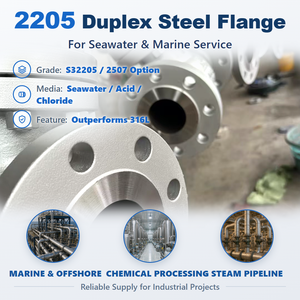
3. Stainless & Duplex Alloys: For coastal power stations, desulfurization units, and seawater reverse osmosis (SWRO) desalination facilities in Algiers, Oran, and Mostaganem, standard carbon steel experiences rapid pitting and crevice corrosion. Wrought austenitic grades (ASTM A403 WP304L, WP316L) and Duplex/Super Duplex alloys (ASTM A815 UNS S31803, S32205, UNS S32750) provide the necessary Pitting Resistance Equivalent Number (PREN ≥ 40 for super duplex) to endure hypersaline and chlorinated process fluids.
| Standard / Grade | Material Classification | Tensile Strength (MPa) | Yield Strength (MPa) | Impact Test Requirements | Typical Algerian Application |
|---|---|---|---|---|---|
| ASTM A234 WPB | Carbon Steel (C-Mn) | 415 - 585 | ≥ 240 | Standard Room Temp | Refinery piping, domestic gas transmission lines |
| ASTM A420 WPL6 | Low-Temp Carbon Steel | 415 - 585 | ≥ 240 | Charpy V-Notch @ -46°C | Arzew LNG facilities, winter desert gas processing |
| MSS-SP-75 WPHY 60 | High-Yield Microalloyed | ≥ 515 | ≥ 415 | Per Project Spec (0°C / -20°C) | High-pressure Sonatrach cross-country transmission |
| ASTM A403 WP316L | Austenitic Stainless Steel | ≥ 485 | ≥ 170 | Cryogenic Tested to -196°C | Acid gas scrubbers, coastal chemical plants |
| ASTM A815 UNS S32205 | Duplex Stainless Steel | ≥ 655 | ≥ 450 | Charpy V-Notch @ -40°C | Seawater desalination plants, sour produced water |
Projects across the Sahara basin—including Berkine, Illizi, and Rhourde Nouss—require seamless elbows, tees, and heavy wall reducers (SCH 80 to SCH XXS) capable of resisting particulate sand erosion, extreme thermal fluctuations, and sour hydrocarbons without premature fatigue failure.
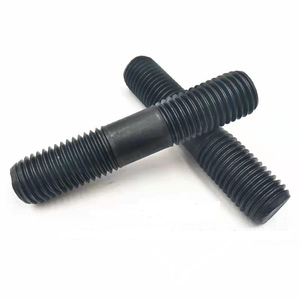
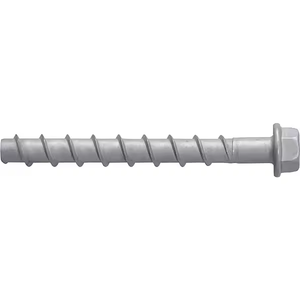
Centering around Arzew and Skikda petrochemical clusters, seamless pipe fittings and companion ASTM A193 B7/B8M stud bolting secure cryogenic heat exchangers, fractionation towers, and ammonia/fertilizer synthesis circuits subject to sustained pressure loads.
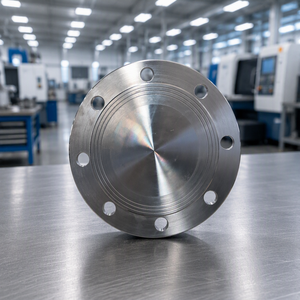
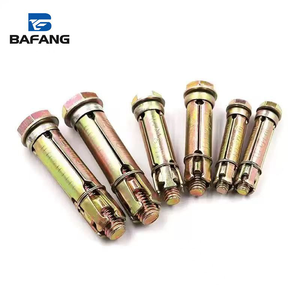
Algeria's emergency water infrastructure and combined-cycle power facilities rely heavily on corrosion-resistant alloy piping components, high-tensile anchors, and heavy-duty blind flanges to maintain watertight, high-pressure operation against marine saltwater intake.
The procurement landscape within the Algerian Democratic and Popular Republic is rapidly shifting under updated national hydrocarbon laws and industrial diversification programs. Key trends include:
Expansion of Trans-Mediterranean Gas Corridors: Investments in the expansion and modernization of export infrastructures—such as the Enrico Mattei (Transmed) and Medgaz trunklines—continue to drive demand for large-diameter seamless butt-weld fittings and high-yield induction bends. Procurement directors increasingly look for suppliers that can handle non-destructive testing (NDT), ultrasonic examination, and 100% X-ray inspection on fitting bodies.
Compliance with National Content and Import Regulations: Algerian customs procedures and project operators mandate certified origin verification, EUR.1 or corresponding commercial certification, and strict adherence to Sonatrach’s approved vendor list parameters. Document packages—including EN 10204 3.1 Material Test Certificates, Hydrostatic Testing results, and Third-Party Inspection (TPI) by bodies like BV, SGS, or TÜV—must be verified before shipping.
Transition to Hydrogen-Ready Pipeline Infrastructure: Ongoing feasibility studies regarding the SouthH2 Corridor (connecting Algeria's planned green hydrogen production to Germany and Italy) have initiated technical evaluations of hydrogen embrittlement in pipeline fittings. This transition increases the demand for seamless components characterized by exceptionally clean steel metallurgy, controlled microstructures, and low carbon equivalents.
Viha Steel & Forging brings over a decade of dedicated metallurgical manufacturing and global export experience to Algerian procurement managers. Operating with PED approval and active membership in the Fastener Manufacturers Association of India (FMAI), our manufacturing setup integrates complete process control under one roof.
Our competitive advantages include:
Integrated Metallurgy & Forging: We process raw materials sourced exclusively from Tier-1 certified steel mills. From hot-extrusion and cold-forming of seamless pipe fittings to high-capacity drop-forging of flanges, continuous grain flow is preserved to deliver enhanced fatigue endurance and tensile integrity.
Wide Metric & Imperial Sizing: We maintain complete production tooling covering pipe fittings from 1/2" NB up to 36" NB across standard wall schedules (SCH 10 through SCH 160/XXS). Our bolting manufacturing covers M2 up to M100 along with standard imperial UNC, UNF, and 8-UN threaded stud bolts.
In-House Laboratory Testing: Every batch is validated through non-destructive testing (Ultrasonic, Magnetic Particle, Liquid Penetrant), mechanical assessment (tensile, yield, elongation, Charpy V-Notch impact testing down to cryogenic temperatures), and chemical spectroscopic analysis. Every consignment ships with a certified EN 10204 3.1 Mill Test Certificate guaranteeing heat-to-part traceability.
Algerian customs (ports of Algiers, Skikda, Oran) require a detailed Commercial Invoice, Packing List, Bill of Lading, Certificate of Origin, and an EN 10204 3.1 Inspection Certificate traceable to the individual heat numbers. Depending on letter of credit terms, a Certificate of Conformity or Third-Party Inspection Report (SGS, Bureau Veritas) is also routinely specified.
Our raw material billets are sourced with chemistry controls restricting phosphorus and sulfur, followed by heat treatment (quenching and tempering or solution annealing). We conduct laboratory hardness measurements across the fitting cross-section to confirm values remain below 22 HRC, alongside optional HIC/SSC testing per NACE TM0284 / TM0177.
Standard carbon steel butt-weld fittings receive a black rust-preventive lacquer, transparent rust-inhibiting varnish, or hot-dip galvanizing per ASTM A153 / ISO 1461. Machined flange surfaces and end bevels are treated with heavy rust-preventative grease and protected with plastic end caps before being packed into seaworthy ISPM-15 heat-treated wooden crates.
Yes. In addition to standard schedules (SCH 40, SCH 80, SCH 160), we manufacture seamless fittings with custom intermediate wall thicknesses, transition bevels (per ASME B16.25), and heavy-duty configurations based on engineering drawings for high-pressure installations.
Connect with our technical export division. Whether you are outfitting a natural gas gathering pipeline, a refinery maintenance turnaround, or an EPC water utility buildout in Algeria, our engineers are ready to assist with sizing, material optimization, and fast commercial delivery terms.
Send an Inquiry