Direct mill supply of corrosion-resistant, high-tensile bolting solutions, industrial flanges, and precision-threaded components tested for harsh marine and chemical environments.
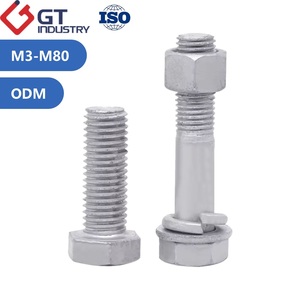
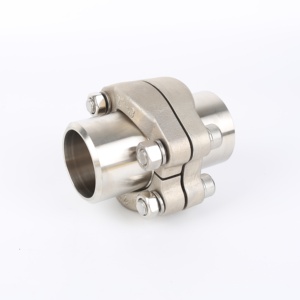
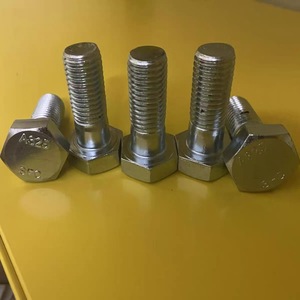
As a specialized manufacturer and global exporter of high-integrity industrial bolting, our manufacturing plant provides heavy industrial EPCs, civil mechanical contractors, and regional master distributors in Southern California with fully certified ASTM A193 Grade B8M bolts. The American Society for Testing and Materials (ASTM) A193 specification encompasses alloy steel and stainless steel bolting materials designed specifically for high-pressure, high-temperature, and severely corrosive applications. Grade B8M, manufactured from wrought AISI 316 austenitic stainless steel with added molybdenum (2.00% to 3.00%), provides exceptional resistance against pitting and crevice corrosion compared to standard B8 (AISI 304) materials.
For procurement officers, structural designers, and reliability engineers operating in the Greater Los Angeles metropolitan area—from Long Beach and El Segundo to Carson and Torrance—material selection is strictly driven by the aggressive combination of high-salinity coastal marine atmospheres, chemical vapors from refining corridors, and strict municipal seismic resilience standards. Our state-of-the-art cold-forming and hot-forging facilities operate under rigorous PED (Pressure Equipment Directive) approval, ensuring that every B8M stud bolt, hex cap screw, and threaded rod meets or exceeds ASTM A193 mechanical and metallurgical thresholds.
A critical consideration during technical procurement is selecting between Class 1 (carbide solution treated) and Class 2 (carbide solution treated and strain hardened). Class 1 bolts offer optimal corrosion resistance through complete austenitic recrystallization, making them ideal for high-pressure flanged connections subjected to cryogenic or medium operating temperatures. Class 2 fasteners, through precision cold working (strain hardening), achieve significantly enhanced yield and tensile strengths—reaching up to 125 ksi minimum tensile strength for smaller diameters—thereby preventing bolt stretch, joint relaxation, and flange leakage in cyclic mechanical environments.
| Grade & Class | Material Composition | Tensile Strength (Min) | Yield Strength (0.2% Offset) | Elongation in 4D (Min) | Hardness (Max) |
|---|---|---|---|---|---|
| ASTM A193 B8M Class 1 | AISI 316 (16-18% Cr, 10-14% Ni, 2-3% Mo) | 75 ksi (515 MPa) | 30 ksi (205 MPa) | 30% | 90 HRB / 223 HBW |
| ASTM A193 B8M Class 2 (≤ 3/4") | AISI 316 Strain Hardened | 110 ksi (760 MPa) | 95 ksi (655 MPa) | 15% | 321 HBW / 35 HRC |
| ASTM A193 B8M Class 2 (3/4" - 1") | AISI 316 Strain Hardened | 100 ksi (690 MPa) | 80 ksi (550 MPa) | 20% | 321 HBW / 35 HRC |
| ASTM A193 B8M Class 2 (1" - 1-1/4") | AISI 316 Strain Hardened | 95 ksi (655 MPa) | 65 ksi (450 MPa) | 25% | 321 HBW / 35 HRC |
| ASTM A193 B8M Class 2 (1-1/4" - 1-1/2") | AISI 316 Strain Hardened | 90 ksi (620 MPa) | 50 ksi (345 MPa) | 30% | 321 HBW / 35 HRC |
| Matching Nut: ASTM A194 Gr. 8M | AISI 316 Austenitic Stainless | Proof Load: Specified | Quenched / Strain Hardened | Per ASTM A194 | HRB 90 / HRC 35 max |
The industrial landscape of Los Angeles is characterized by a unique nexus of oceanic infrastructure, heavy chemical processing, municipal clean-water initiatives, and specialized green-energy transport. We regularly supply tailored ASTM A193 B8M assemblies across these distinct regional sectors:
As the busiest container gateway in the Western Hemisphere, port infrastructure requires heavy hex bolting that resists continuous marine splash zones, salt fog, and tidal submergence. Our B8M Class 2 stud bolts anchor dockside gantry cranes, marine fuel manifolds, and submerged piling braces where standard galvanized carbon steel degrades rapidly from galvanic cell formation.
Processing sour crude oil and refined chemicals demands strict compliance with ASME B31.3 process piping standards. B8M bolting paired with A194 Grade 8M heavy hex nuts prevents stress-corrosion cracking (SCC) across hydrocracker units, catalyst regenerators, heat exchangers, and storage vessel manways exposed to elevated hydrogen sulfide (H₂S) levels.
Coastal Southern California continually expands reverse-osmosis desalination and advanced water reclamation plants. High-pressure seawater feed pumps and brine-rejection discharge manifolds generate extreme chloride concentrations. Grade B8M stainless fasteners eliminate pitting in membrane vessel closures, ductile iron pipe couplings, and high-pressure valves.
The procurement criteria for structural and pressure-retaining fasteners across California have evolved considerably under recent state regulatory frameworks and macroeconomic logistics shifts:
1. Strict Decarbonization & Green Hydrogen Transitions: As the Los Angeles Basin advances hydrogen fuel transport lines and SAF (Sustainable Aviation Fuel) retrofits at regional refineries, fastener requirements demand stringent metallurgical purity. Hydrogen embrittlement is an inherent danger in high-hardness carbon fasteners; therefore, austenitic B8M stainless steel (non-magnetic, low carbon) is rapidly replacing traditional B7 bolting in clean-fuel manifolds and cryogenic liquefaction facilities.
2. Zero Tolerance for Non-Traceable "Ghost Fasteners": Under California building codes and federal safety mandates, city building inspectors and QA auditors in Los Angeles County reject any shipment lacking heat-stamped identification and full MTC (Mill Test Certificate) traceability conforming to EN 10204 Type 3.1. Our factory employs automated CNC roll-marking, stamping every stud and bolt with our trademark, grade designation (B8M or B8M2), and lot identification directly matched to melt-source spectroscopic records.
3. Total Cost Optimization via Trans-Pacific Express Freight: California distributors continually balance high local stocking costs against lead times. Sourcing directly from our specialized factory allows master wholesalers in Los Angeles, Vernon, and Santa Fe Springs to eliminate two-tier domestic distributor markups while securing container-load scheduled departures that land at the Port of Long Beach in under 16 days.
Building on our heritage as a PED-approved, FMAI-recognized industrial fastener and forged flange manufacturing group, our operations provide international distributors and engineering contractors with unmistakable strategic advantages:
Every raw material coil and forged bar passes optical emission spectrometry (PMI), ultrasonic non-destructive testing (NDT), and tensile pull verification. We eliminate grain boundary carbide precipitation via vacuum solution annealing furnaces calibrated to ASTM A193 specifications.
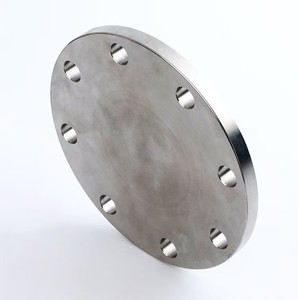
Beyond B8M fasteners, we manufacture high-tensile 8.8/10.9/12.9 carbon steel, heavy hex A325/A490 structural assemblies, PTFE/Xylan fluoropolymer-coated offshore studs, and ASME B16.5 forged flanges. Buyers consolidate complete project bills of materials within a single container shipment.
Fasteners destined for Los Angeles are vacuum-bagged with desiccant, packed in heavy-duty 25kg reinforced corrugated cartons, and palletized on heat-treated, fumigated ISPM-15 compliant hardwood pallets, wrapped in heavy shrink film to ensure pristine arrival.
Connect with our senior technical bolting engineers today to receive a prompt commercial quote, review material test reports, or schedule sample dispatches for laboratory validation.
Send an InquiryBoth are austenitic stainless steels, but B8 is fabricated from AISI 304 alloy, whereas B8M incorporates 2.0% to 3.0% molybdenum (AISI 316). The presence of molybdenum significantly enhances resistance to pitting and crevice corrosion in chloride-heavy marine environments, such as the coastal corridors of San Pedro, Long Beach, and Santa Monica Bay.
Class 1 fasteners are solely carbide solution treated and possess a relatively low yield strength (30 ksi minimum). When tightening large-diameter flanges to high torque values, Class 1 studs can yield and stretch. Class 2 fasteners undergo strain hardening, raising the yield strength up to 95 ksi (for sizes ≤ 3/4"), maintaining pre-load and preventing joint leakage under thermal cycling.
For federally funded projects governed strictly by Buy America requirements, domestic steel melted and manufactured in the USA is typically mandated. However, for private utility expansion, refining turnarounds, marine commercial construction, and municipal MRO projects in Southern California, our fasteners are fully accepted under ASTM, ASME, and PED certifications with complete EN 10204 3.1 chemical/physical documentation.
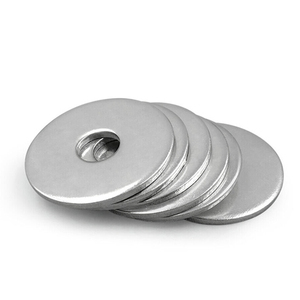
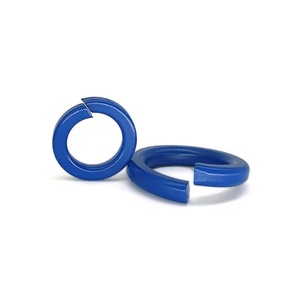
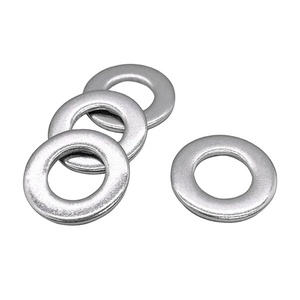
Per ASTM standards and ASME Section VIII engineering best practices, B8M bolts must be assembled with ASTM A194 Grade 8M heavy hex nuts to ensure matching thread dilation properties and galvanic compatibility. For vibration-critical or high-corrosion offshore systems, heavy-pattern 316 flat washers or PTFE-coated split lock washers are utilized.
We manufacture both metric (coarse and fine pitch per ISO) and imperial threads per ASME B1.1. For diameter sizes 1 inch and below, UNC (Unified National Coarse) Class 2A thread fit is standard. For diameters 1-1/8" and above, our factory standardizes on 8-UN (8 threads per inch), which is the dominant engineering standard across North American petrochemical and flange applications.
Standard ocean transit from our primary dispatch seaports directly to the Port of Los Angeles or Long Beach takes approximately 12 to 16 days. For urgently needed replacement bolts during unscheduled refinery shutdowns or pipeline turnarounds, we maintain an emergency air-freight program directly arriving at LAX within 72 to 96 hours of QA sign-off.