
High-integrity bolting assemblies, wedge-locking systems, and forged connection components calibrated to international DIN, EN, ISO, and ASTM tolerances for export to Indian ports.
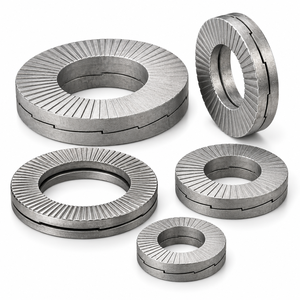
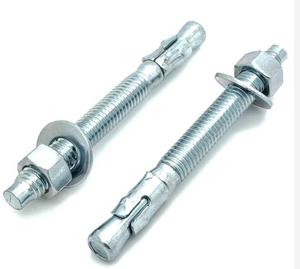
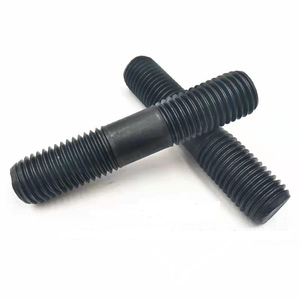
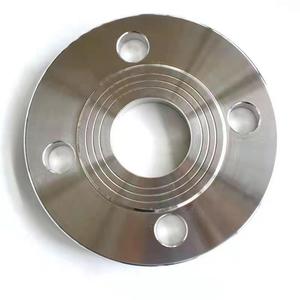
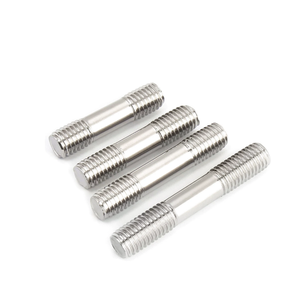
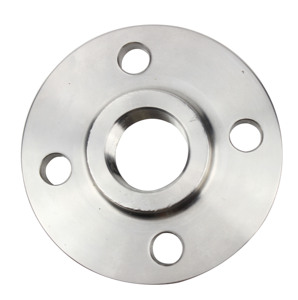
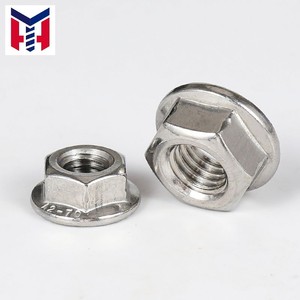
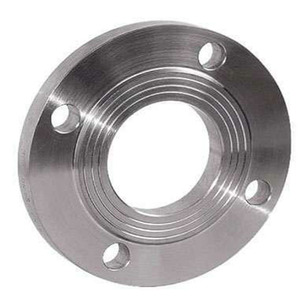
In modern structural steel fabrication, preloaded bolted connections are mandatory for joints subjected to dynamic shear, seismic reversal, and cyclical fatigue. High-strength structural bolting for preloading according to the European standard EN 14399 is strictly divided into two distinct engineering philosophies: the HR system (High Resistance, EN 14399-3) and the HV system (Hochfest Vorgespannt, EN 14399-4). For Indian EPC contractors, structural consulting firms, and public works authorities designing under Eurocode-aligned specifications or modern high-speed infrastructure guidelines, selecting China’s leading EN 14399-4 10.9 HV manufacturers provides a definitive metallurgical edge in clamp load consistency, safety margins, and total project lifecycle cost.
Core Structural Distinction: The EN 14399-4 HV system uses a shorter thread engagement length with a specialized thicker structural nut (Class 10) compared to HR assemblies. Failure during over-tightening is designed to occur by thread stripping of the nut rather than instantaneous brittle bolt shank fracture, providing a critical tactile and measurable warning indicator to installation crews on Indian project sites.
Manufacturing Grade 10.9 HV bolts requires strict control over raw material hardenability, precision induction heating, automated continuous quenching and tempering (Q&T), and controlled atmosphere heat treatment. High-tensile alloy steels—typically 32CrB4, 34CrNiMo6, 40Cr, or 42CrMo4—are melted and cold-drawn or hot-forged under continuous optical pyrometer surveillance. The finished assembly must fulfill an ultimate tensile strength of $R_m \ge 1000\text{ MPa}$ to $1200\text{ MPa}$ and a yield strength ratio $R_{p0.2} \ge 900\text{ MPa}$, accompanied by a minimum elongation after fracture ($A \ge 9\%$) and Charpy V-notch impact energy absorption of at least $27\text{ J at } -20^\circ\text{C}$ (or $-40^\circ\text{C}$ for sub-zero design conditions).
| Parametric Attribute | EN 14399-4 (HV System) | EN 14399-3 (HR System) | IS 3757 / IS 4000 (Indian Standard) | ASTM F3125 / A490 Heavy Hex |
|---|---|---|---|---|
| Nominal Property Class | 10.9 HV (Quenched & Tempered) | 8.8 HR / 10.9 HR | Class 8.8S / 10.9S | Grade A325 / A490 Type 1 |
| Preload Mechanism | Controlled plastic elongation in nut/thread | Ductile elongation along bolt shank | Torque / Turn-of-nut direct tension | Turn-of-nut / Calibrated Wrench / DTI |
| Nut Height Ratio ($m/d$) | ~0.85d (Special thick HV nut) | ~1.0d (Standard HR nut) | ~0.8d to 0.85d (IS 6623 heavy nut) | ~0.98d (Heavy Hex A563 DH) |
| K-Class Tightening Factor | K1 ($0.10 \le k \le 0.16$) or K2 ($k_m \pm 0.06$) | K1 ($0.10 \le k \le 0.16$) or K2 / K0 | Empirical coefficient (~0.15–0.18) | Mean nut factor (~0.12–0.16 with wax) |
| Assembly Verification | Mandatory EN 14399-2 Suitability Test | Mandatory EN 14399-2 Suitability Test | Proof load per IS 1367 Part 3 | Rotational Capacity Test (ASTM F3125) |
| Failure Mode Safeguard | Nut thread strip warning under gross plastic strain | Bolt shank necking / tensile fracture | Tensile cleavage at thread root | Tensile fracture in threaded zone |
A vital element of the EN 14399-4 system is the suitability for preloading test (EN 14399-2). Bolts, nuts, and through-hardened washers ($300\text{--}370\text{ HV30}$ per EN 14399-6) must be manufactured, heat-treated, lubricated, and packaged together as a single functional assembly from the same production lot. When torque is applied via precision electric or hydraulic torque wrenches, the tightening behavior must strictly adhere to certified $k$-factor envelopes:
India's infrastructure landscape is experiencing an unprecedented structural transformation driven by the National Infrastructure Pipeline (NIP), PM Gati Shakti National Master Plan, and mega urban transport initiatives. These high-load, high-vibration applications demand fastener reliability that far exceeds ordinary commercial grade 8.8 bolts.
The Mumbai-Ahmedabad High Speed Rail (MAHSR) bullet train corridor and high-density metro viaducts (Delhi-NCR, Mumbai Metro Rail Corporation, Chennai Metro Phase II) employ prefabricated composite steel truss bridges. EN 14399-4 10.9 HV bolts absorb dynamic rail harmonic frequencies and prevent micro-slip under extreme cyclical loading.
Long-span river crossings across the Brahmaputra, Ganga, and iconic coastal bypass bridges demand corrosion-resistant, high-tensile connection packages. Grade 10.9 HV fasteners combined with advanced Zinc Flake or hot-dip galvanized finishes with precise thread clearance deliver non-loosening preload in marine atmospheric exposure.
India’s 500 GW non-fossil capacity expansion across Gujarat, Tamil Nadu, and Rajasthan requires massive wind turbine tower flange bolting (M30 to M64) and super-critical thermal power plant boiler framework connections (NTPC, BHEL) capable of withstanding constant aerodynamic shear and high temperatures.
In Pre-Engineered Building (PEB) super-structures—such as expansive logistics hubs for e-commerce, warehousing facilities in the Delhi-Mumbai Industrial Corridor (DMIC), and heavy automotive manufacturing plants in Pune and Chennai—EN 14399-4 10.9 HV assemblies eliminate the danger of joint sag and slip-critical structural distortion. When properly tensioned to $F_{p,C} = 0.7 \cdot f_{ub} \cdot A_s$, these bolts create immense clamping friction between spliced gusset plates, transforming independent structural members into monolithic load-bearing frames.
Procurement heads and chief quality managers within Tier-1 Indian EPC entities (such as L&T Construction, Tata Projects, Afcons Infrastructure, and NCC) navigate complex regulatory and metallurgical dynamics when importing high-tensile structural hardware.
1. Transition from Conventional HDG to Non-Electrolytic Zinc Flake Coatings:
Historically, hot-dip galvanizing (HDG) to ISO 10684 was standard for outdoor steel structures across coastal India. However, for property class 10.9 bolts, conventional acid pickling prior to HDG introduces an extreme risk of Hydrogen Embrittlement (HE), where atomic hydrogen migrates to regions of maximum triaxial tensile stress at the thread root. Leading Chinese export manufacturers serving the Indian subcontinent utilize mechanized non-electrolytic zinc flake coatings (such as Geomet, Dacromet, or Delta-Protekt conforming to ISO 10683) or conduct strictly logged dehydrogenation baking ($200^\circ\text{C}\pm10^\circ\text{C}$ for 4 to 8 hours immediately post-pickling). Zinc flake delivers up to 1,500 hours of neutral salt spray resistance (ASTM B117) with zero hydrogen diffusion risk and tight friction coefficient tolerances ($\mu = 0.10\text{--}0.14$).
2. BIS Quality Control Orders (QCO) and International Standard Harmonization:
The Department for Promotion of Industry and Internal Trade (DPIIT) under the Indian Ministry of Commerce and Industry implemented the Fasteners (Quality Control) Order, enforcing compliance with Bureau of Indian Standards (BIS) specifications. While domestic manufacturers produce standard carbon steel hex bolts (IS 1363 / IS 1364), India experiences significant capacity constraints in large-diameter, high-speed-quenched EN 14399-4 10.9 HV assemblies (M24 through M64). Chinese manufacturers holding valid BIS licenses, CE certificates per Construction Products Regulation (CPR 305/2011), and ISO 9001/IATF 16949 quality accreditations ensure seamless customs clearance through Nhava Sheva (JNPT), Mundra, and Chennai ports with zero demurrage disputes.
3. The Shift to Digital MTCs and Heat-Traceable Lot Control:
Indian structural auditors and third-party inspection agencies (such as TUV India, Bureau Veritas, DNV, and RITES) require digital MTCs conforming to EN 10204 Type 3.1 or Type 3.2. Every exported HV bolt head is cold-embossed with unique manufacturer identification, "10.9 HV", and verifiable heat melt lot numbers. This allows construction teams at remote Indian job sites to verify chemical spectrometry, proof load test data, and impact test energy via instant QR code lookup.
Operating with advanced multi-station cold-forming headers, high-tonnage automated warm-forging presses, and continuous computer-controlled mesh-belt heat treatment lines, our manufacturing facility represents the pinnacle of Chinese high-strength fastener production dedicated to the Indian market.
Every heat coil of boron alloy and chromium-molybdenum steel is analyzed using optical emission spectrometers before heading to cold-heading or hot-forging lines. Grain structure conforms strictly to ASTM E112 Grade 8 or finer.
Unlike lower-tier bolts threaded prior to quenching, our 10.9 HV threads are rolled after quench-and-temper hardening for critical diameters, imparting compressive residual stress and boosting cyclical fatigue endurance by over 35%.
Our in-house quality assurance center houses calibrated computer-controlled tensile-torque testing systems that verify preload force ($F_{bi}$), clamp load ($F_{p,C}$), and $k$-factor lubrication stability on every export production batch.
Clear, technically rigorous answers covering BIS compliance, testing methodologies, torque-angle calculation, and logistics protocols for seamless Indian port clearance.
EN 14399-4 HV is an integrated European preload assembly (bolt, nut, and washer tested together) governed by strict $k$-factor tightening curves under EN 14399-2. ASTM A325/A490 primarily governs bolt mechanicals independently, relying on field Turn-of-Nut or DTI washers. HV nuts have higher proof load margins and a designated stripping failure mode under severe over-tensioning, preventing catastrophic brittle shear.
We strictly follow ISO 10684 guidelines. Prior to hot-dip galvanizing, structural bolts are blast-cleaned mechanically rather than aggressively acid pickled. Where pickling is required, we use inhibited acid followed by an immediate baking cycle at $200^\circ\text{C}\pm10^\circ\text{C}$ for at least 4 hours. Alternatively, we supply high-performance non-electrolytic Zinc Flake coatings (ISO 10683) where no atomic hydrogen is generated.
Yes. While standard orders are shipped with EN 10204 Type 3.1 Mill Test Certificates detailing melt chemical analysis, tensile strength, yield point, elongation, impact energy at $-20^\circ\text{C}$, and preloading suitability, we regularly coordinate third-party witness inspection (TUV, DNV, Bureau Veritas, SGS) to issue Type 3.2 certificates for major Indian infrastructure contracts.
Our EN 14399-4 nuts are coated with factory-applied, dry-film industrial wax lubrication calibrated to meet k-Class K1 ($0.10 \le k \le 0.16$). For specialized EPC projects requiring the torque-angle method, we supply K2 assemblies with individually verified torque-rotation characteristics to ensure zero galling and uniform clamping force across thick flange packs.
Imports into Nhava Sheva (Mumbai), Mundra, or Chennai under HS Code 731815 require compliance with the Fasteners Quality Control Order. We provide full mill certification, clear marking on bolt heads (manufacturer logo, grade 10.9 HV, heat code), seaworthy fumigated wooden crates, and assist your clearing agents with BIS conformances to ensure swift clearance without laboratory holdups.
Maritime transit time from Shanghai or Ningbo to Nhava Sheva (JNPT) or Mundra is typically 14 to 18 days. Transit to Chennai or Kolkata is approximately 12 to 16 days. For standard catalog sizes (M16 to M36), production cycles range from 15 to 25 days, enabling full delivery to site within 35 to 45 days from purchase order confirmation.
Optimize your procurement costs without sacrificing metallurgical safety. Submit your bill of materials (BOM), required coatings, and delivery schedule to receive complete technical submittals, sample testing reports, and competitive CIF Indian port quotation pricing within 24 hours.
Get a Quote